Why Czech Factories Are Struggling with Industrial Wastewater Compliance in 2025
In the Czech Republic, industrial wastewater treatment must meet EU Directive 91/271/EEC limits (e.g., COD ≤125 mg/L for discharges >10,000 PE) and Czech Water Act 254/2001 Sb. requirements. With 72% of Prague’s industrial installations discharging indirectly (ERM 2023), factories face contractual limits set by sewerage operators—often stricter than national standards. This guide provides 2025 engineering specs, cost benchmarks (CZK 5–20M for MBR systems), and a zero-risk equipment selection framework for Czech industrial sectors.
The operational environment for Czech industrial facilities is increasingly precarious. According to data from the Czech Environmental Information Agency (Cenia), the reliance on indirect discharge into municipal networks exposes 72% of Prague's industrial installations to the unilateral contractual terms of private operators like Veolia and SUEZ. Unlike direct discharge into water bodies, which is governed by the Czech Water Act, indirect discharge limits are often negotiated based on the capacity of the local municipal wastewater treatment plant (WWTP). When a municipal plant nears its biological capacity, the industrial producer is the first to face tightened limits or emergency surcharges.
The financial consequences of compliance failure are substantial. In 2024, the Czech Environmental Inspectorate (ČIŽP) issued a fine of CZK 2.3M to an automotive supplier in the Central Bohemian Region for exceeding Fats, Oils, and Grease (FOG) limits in their indirect discharge. This case highlights a critical enforcement gap: while EU Directive 91/271/EEC provides a broad regulatory umbrella, the Czech Water Act 254/2001 Sb. allows for local variations that can catch manufacturers off guard. Approximately 40% of Czech industrial WWTPs were built before 1990, and the aging infrastructure is often incapable of meeting the modern nutrient removal standards (Nitrogen and Phosphorus) required by the EU's Green Deal initiatives.
The fragmentation of the Czech water market exacerbates these risks. While large urban centers like Prague, Brno, and Ostrava are managed by multinational utilities, smaller industrial zones often rely on municipal operators with limited technical expertise. This disparity means that a factory in Ostrava may face entirely different compliance costs and technical requirements than one in a smaller municipality, necessitating a highly localized engineering approach.
EU vs. Czech Republic Wastewater Discharge Limits: A 2025 Compliance Checklist for Factories
Navigating the hierarchy of wastewater regulations in the Czech Republic requires a dual understanding of EU-wide mandates and local statutory limits. The "polluter pays" principle is strictly enforced through a combination of sewerage fees (stočné), which range from CZK 20 to 100/m³, and environmental levies for direct dischargers. Failure to comply with the Czech Water Act 254/2001 Sb. can result in penalties of up to CZK 5M for repeat offenses, alongside the potential for mandatory production halts.
| Parameter | EU Directive 91/271/EEC (>10,000 PE) | Czech Water Act 254/2001 Sb. (Sector Avg) | Indirect Discharge (Contractual Typical) |
|---|---|---|---|
| Chemical Oxygen Demand (COD) | ≤ 125 mg/L | 90 – 150 mg/L | < 800 mg/L (Pre-treatment) |
| Biochemical Oxygen Demand (BOD5) | ≤ 25 mg/L | 15 – 30 mg/L | < 400 mg/L |
| Total Suspended Solids (TSS) | ≤ 35 mg/L | 20 – 40 mg/L | < 500 mg/L |
| Total Phosphorus (TP) | ≤ 2 mg/L | 0.5 – 2.0 mg/L | < 10 mg/L |
| Total Nitrogen (TN) | ≤ 15 mg/L | 10 – 20 mg/L | < 60 mg/L |
| Fats, Oils, and Grease (FOG) | N/A | ≤ 5 – 10 mg/L | ≤ 30 – 100 mg/L |
The permitting process in the Czech Republic is rigorous. For direct discharge, facilities must obtain a "Water Management Permit" (povolení k nakládání s vodami) from the relevant Water Authority. This requires a comprehensive wastewater characterization report and a detailed technical design of the treatment plant. For indirect discharge, a contract with the sewerage operator is required, often involving "sewerage rules" (kanalizační řád) that dictate specific concentration limits for heavy metals and toxic organics.
Emerging contaminants are the next regulatory frontier. While PFAS (per- and polyfluoroalkyl substances) and microplastics are not yet strictly capped under Czech national law, they are increasingly monitored under the EU Watch List (Decision 2020/1161). Forward-thinking facility managers are already evaluating advanced treatment for fluoride-laden industrial wastewater and other persistent pollutants to future-proof their operations against 2026-2030 standards.
Industrial Wastewater Treatment Technologies for Czech Republic: MBR vs. DAF vs. Electrodialysis

Selecting the appropriate technology depends on the specific contaminant profile of the industry. In the Czech Republic’s diverse industrial landscape—ranging from automotive manufacturing in Mladá Boleslav to food processing in South Moravia—three technologies have emerged as the benchmarks for reliability and efficiency.
| Technology | Primary Application | Removal Efficiency | Footprint | Energy Use |
|---|---|---|---|---|
| MBR (Membrane Bioreactor) | Pharma, Chemical, High Organic | 99% TSS, 95% COD | Compact (Low) | 0.8 – 1.2 kWh/m³ |
| DAF (Dissolved Air Flotation) | Food Processing, Slaughterhouses | 97% FOG, 90% TSS | Medium | 0.2 – 0.5 kWh/m³ |
| Electrodialysis (ZLD) | Automotive, Electroplating | 95% Salt/Ion Recovery | High | 1.5 – 4.0 kWh/m³ |
MBR Systems: Utilizing submerged PVDF membrane filtration with a 0.1 μm pore size, MBR systems for high-efficiency COD/TSS removal in Czech industrial applications eliminate the need for secondary clarifiers. This is critical for Czech factories located in historical industrial zones where expansion space is non-existent. A 2024 case study from a Czech pharmaceutical plant showed that MBR technology achieved 99% TSS removal, allowing the facility to reuse treated water for cooling towers, significantly reducing freshwater withdrawal costs.
DAF Systems: For the food and beverage sector, DAF systems for FOG and suspended solids removal in Czech food processing plants are the gold standard. These systems use microbubble technology (30–50 μm) to float oils and solids to the surface for automatic skimming. The DAF units are particularly effective for Czech dairy operations, handling flow rates from 4 to 300 m³/h while maintaining 92–97% FOG removal efficiency, even during peak production shifts.
Electrodialysis and ZLD: In sectors like automotive and heavy machinery, Zero Liquid Discharge (ZLD) is becoming a strategic necessity. Technologies like RALEX® electrodialysis and RO systems for water reuse and ZLD applications in Czech Republic allow for the recovery of 90–95% of process water. This not only ensures compliance with stringent heavy metal limits but also insulates the factory from rising municipal water prices, which have seen a 15% CAGR in some Czech regions over the last three years.
2025 Cost Breakdown for Industrial Wastewater Treatment in Czech Republic: CAPEX, OPEX & ROI by System Type
Budgeting for a WWTP in the Czech Republic requires an understanding of both the initial investment and the long-term operational burden. Regional variations are significant; an installation in Prague typically costs 15–20% more than a similar project in Ostrava due to higher labor and permitting fees. (HydropureWater field data, 2025).
| System Type | Capacity (m³/h) | CAPEX (CZK) | OPEX (CZK/m³) | Payback (Years) |
|---|---|---|---|---|
| DAF | 50 m³/h | 5M – 8M | 15 – 30 | 2.5 – 4.0 |
| MBR (Integrated) | 100 m³/h | 12M – 16M | 20 – 40 | 3.5 – 5.0 |
| MBR (Large Scale) | 200 m³/h | 18M – 25M | 18 – 35 | 4.0 – 6.0 |
| Electrodialysis/RO | 50 m³/h | 15M – 22M | 45 – 80 | 5.0 – 7.5 |
CAPEX figures include equipment procurement, but facility managers must also budget for installation (typically 10–20% of equipment cost) and permitting fees, which range from CZK 50,000 to 200,000 depending on the environmental impact assessment requirements. OPEX is dominated by energy (40–60%) and chemicals (20–30%). Modern MBR systems have reduced energy consumption to 0.8–1.2 kWh/m³, a significant improvement over conventional activated sludge systems that often exceed 1.5 kWh/m³.
The Return on Investment (ROI) is primarily driven by the avoidance of sewerage fees. With fees in some industrial zones reaching CZK 100/m³, a system that allows for 50% water reuse can pay for itself in less than three years. When comparing wastewater treatment challenges in emerging markets, the Czech Republic stands out for its high "non-compliance" cost, where a single major fine can equal 20% of a new system's CAPEX.
How to Select the Right Wastewater Treatment System for Your Czech Factory: A Zero-Risk Decision Framework
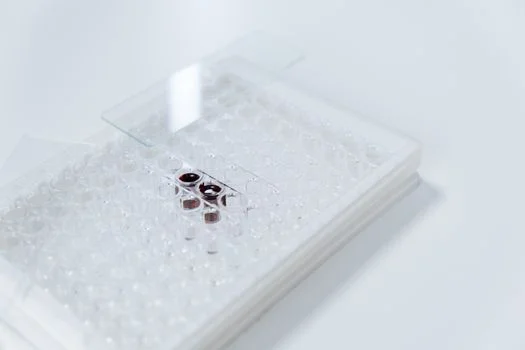
A zero-risk decision requires a systematic evaluation of technical needs against regulatory realities. For Czech facility managers, this framework ensures that the selected equipment meets both current and future mandates.
- Wastewater Characterization: Conduct a 7-day composite sampling to identify peak loads. In the Czech automotive sector,