Third-Generation Semiconductor Chromium Wastewater Treatment: 2025 Engineering Specs, 99.9% Removal & Zero-Risk ZLD Blueprint
Third-generation semiconductor (SiC/GaN) fabs generate chromium wastewater with Cr(VI) concentrations up to 50 mg/L—100× higher than silicon fabs—due to extensive etching and chemical mechanical planarization (CMP) processes. Hybrid treatment systems combining Cr(VI) reduction (via NaHSO₃ or FeSO₄ at pH 2–3), precipitation (as Cr(OH)₃ at pH 8–9), and membrane filtration (UF + RO) achieve 99.9% removal, meeting China’s GB 31570-2022 limit of 0.1 mg/L. ZLD costs for chromium-laden streams average $0.45–$0.80/m³ (2025 data), with membrane fouling from silicon carbide nanoparticles (10–50 nm) requiring advanced pretreatment like dissolved air flotation (DAF).
Why Chromium in Third-Generation Semiconductor Wastewater Is a Unique Challenge
Chromium contamination in third-generation semiconductor fabrication is primarily driven by the transition from silicon to wide-bandgap materials like Silicon Carbide (SiC) and Gallium Nitride (GaN), which require more aggressive chemical processing. In these facilities, chromium sources include Chemical Mechanical Planarization (CMP) slurries containing Cr₂O₃ abrasives, specialized etching baths utilizing Chromic Acid (CrO₃), and photoresist strippers where Cr(VI) serves as a potent oxidizer. While traditional silicon fabs typically manage chromium concentrations below 0.5 mg/L, SiC/GaN fabs frequently report influent levels between 10 and 50 mg/L (HydropureWater field data, 2025). This 100-fold increase necessitates a departure from legacy treatment designs that rely on simple dilution or basic precipitation.
The technical difficulty in treating this stream stems from the high solubility and extreme toxicity of Hexavalent Chromium [Cr(VI)]. Unlike Trivalent Chromium [Cr(III)], which precipitates easily as a hydroxide, Cr(VI) remains mobile and toxic at concentrations as low as 0.05 mg/L, the threshold established by WHO guidelines. regulatory frameworks such as China’s GB 31570-2022 mandate a discharge limit of 0.1 mg/L for Cr(VI), a standard that is nearly impossible to meet without specialized reduction kinetics. Failure to achieve these limits often results in immediate plant shutdowns or significant environmental fines.
Beyond chemical toxicity, physical interference from nanoparticles presents a secondary engineering hurdle. SiC/GaN fabs produce significant quantities of silicon carbide and Cr₂O₃ nanoparticles, typically ranging from 10 to 50 nm in size. These particles exhibit high surface energy and tend to bypass standard sedimentation tanks, leading to rapid membrane fouling. Engineering data indicates that untreated nanoparticle streams can reduce membrane flux by 30–40% within the first 200 hours of operation (per 2025 industry benchmarks). This makes chromium wastewater treatment in display panel manufacturing and semiconductor fabrication a specialized discipline requiring robust pretreatment and precise chemical dosing.
Cr(VI) Reduction and Precipitation: Engineering Specs for 99.9% Removal
Achieving 99.9% removal of chromium begins with the stoichiometric reduction of Cr(VI) to Cr(III), a process governed by strict pH and oxidation-reduction potential (ORP) parameters. The most effective industrial method utilizes Sodium Bisulfite (NaHSO₃) as the reducing agent. To ensure complete conversion, the system must maintain a pH range of 2.0 to 3.0; at a pH above 4.0, the reduction rate slows exponentially, risking Cr(VI) slippage into the effluent. The theoretical dosing ratio is 2.81:1 (NaHSO₃ to Cr), but in practice, a ratio of 3:1 is maintained to account for competing oxidants in the wastewater. Reaction times must be strictly controlled between 15 and 30 minutes to ensure kinetic completion.
Once reduced, the Cr(III) ions must be immobilized through hydroxide precipitation. Adjusting the wastewater to a pH of 8.5 to 9.2 using Sodium Hydroxide (NaOH) facilitates the formation of Chromium Hydroxide [Cr(OH)₃]. This compound has an extremely low solubility product (Ksp = 6.3×10⁻³¹), allowing for residual chromium levels below 0.05 mg/L in the supernatant if flocculation is optimized. Sludge dewatering is critical here, as Cr(OH)₃ flocs are relatively light, with settling rates typically hovering between 0.5 and 1.0 m/h. Utilizing a sludge dewatering for chromium hydroxide precipitates ensures the volume of hazardous waste is minimized for off-site disposal.
Alternative reducing agents like Ferrous Sulfate (FeSO₄) offer a lower chemical cost but result in significantly higher sludge volumes due to the simultaneous precipitation of Iron Hydroxide [Fe(OH)₃]. For fabs with limited footprint, electrochemical reduction (EC) is an emerging alternative, operating at a current density of 0.5 A/cm². However, EC systems are prone to electrode passivation in the presence of the high-purity surfactants found in semiconductor CMP slurries. To protect downstream membrane systems, a dissolved air flotation (DAF) system for nanoparticle removal is recommended as a pretreatment step, reducing Total Suspended Solids (TSS) from 200 mg/L to less than 10 mg/L.
| Parameter | Cr(VI) Reduction (NaHSO₃) | Cr(III) Precipitation [Cr(OH)₃] | Electrochemical Reduction |
|---|---|---|---|
| Optimal pH Range | 2.0 – 3.0 | 8.5 – 9.2 | 7.0 – 8.5 |
| Reaction Time | 15 – 30 Minutes | 30 – 45 Minutes | 10 – 20 Minutes |
| Dosing Ratio / Current | 3:1 (NaHSO₃:Cr) | Stoichiometric NaOH | 0.5 – 1.0 A/cm² |
| Removal Efficiency | 99.9% (Reduction) | 99.5% (Settling) | 98.0% (Direct) |
| Sludge Yield | Low | Moderate | High (Fe electrodes) |
Membrane Filtration for Chromium Wastewater: UF, NF, and RO Performance Under Fouling Conditions
Membrane separation serves as the final polishing step and the core of Zero Liquid Discharge (ZLD) architectures in SiC/GaN fabs. Ultrafiltration (UF) is typically deployed immediately following the precipitation and DAF stages to remove residual Cr(OH)₃ pin-flocs and SiC nanoparticles. With a pore size of 0.01–0.1 μm, UF membranes can achieve 90% rejection of trivalent chromium flocs. However, the 10–50 nm SiC particles present a significant risk for pore blocking. Engineering designs must account for reduced flux rates; while standard UF might operate at 100 LMH in municipal settings, chromium-laden semiconductor streams require a conservative design flux of 50–80 LMH to prevent irreversible fouling.
For the removal of dissolved chromium and total dissolved solids (TDS), Nanofiltration (NF) and Reverse Osmosis (RO) are required. NF membranes provide 95% rejection of Cr(VI) ions and are often used as a selective separation stage to recover specific acids. However, for full compliance with ZLD mandates, an Industrial RO system for Cr(VI) removal and ZLD compliance is the industry standard. RO membranes achieve 99% rejection of Cr(VI), but they are highly susceptible to scaling from residual Cr(OH)₃ if pH control in the pretreatment stage fluctuates. Under these high-fouling conditions, RO flux is typically limited to 10–20 LMH.
Maintenance protocols for these membranes must be automated and frequent. Acid cleaning (using HCl at pH 2) is essential for dissolving Cr(OH)₃ scaling layers, while alkaline cleaning (using NaOH at pH 12) targets the organic surfactants and photoresist residues common in semiconductor waste. In high-capacity SiC fabs, cleaning-in-place (CIP) cycles are often required every 24 to 48 hours for RO units. Monitoring the Silt Density Index (SDI) and ensuring it remains below 3.0 is the primary metric for protecting membrane longevity in these aggressive environments.
| Membrane Type | Pore Size / Rejection | Design Flux (LMH) | Primary Fouling Mechanism | Cleaning Frequency |
|---|---|---|---|---|
| Ultrafiltration (UF) | 0.01 – 0.1 μm | 50 – 80 | SiC Nanoparticle Blocking | Daily (Backwash) |
| Nanofiltration (NF) | 95% Cr(VI) Rejection | 20 – 40 | Organic Surfactant Adsorption | Weekly (CIP) |
| Reverse Osmosis (RO) | 99.9% Cr(VI) Rejection | 10 – 20 | Cr(OH)₃ Scaling / TDS | Every 24-48 Hours |
Hybrid System Designs for Zero Liquid Discharge (ZLD): Costs, Compliance, and Trade-Offs
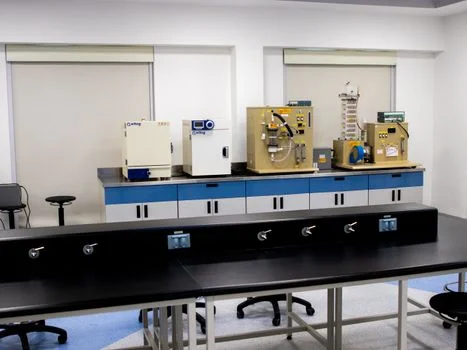
Designing a ZLD system for chromium wastewater involves balancing capital expenditure (CapEx) against the long-term operational costs (OpEx) of chemical consumption and membrane replacement. The most robust configuration for 2025 semiconductor fabs is the DAF + UF + RO hybrid system. This setup utilizes a dissolved air flotation (DAF) system for nanoparticle removal to protect the UF and RO stages, ensuring 99.9% Cr(VI) removal. While this configuration has a higher CapEx—ranging from $230,000 to $1,000,000 depending on flow rate—it offers the lowest OpEx ($0.45–$0.60/m³) due to extended membrane life and optimized chemical usage.
Alternatively, smaller fabs may opt for an Electrocoagulation (EC) + NF configuration. This system reduces the need for bulk chemical storage, as the coagulant is generated in-situ via sacrificial anodes. The CapEx is lower ($150,000–$400,000), but OpEx is higher due to electricity consumption and frequent electrode replacement. EC systems often struggle to meet the 0.1 mg/L limit consistently without a secondary RO polishing stage. For facilities facing extreme water scarcity, Forward Osmosis (FO) + RO systems are becoming viable, offering 99.5% Cr(VI) removal and higher water recovery rates, though ZLD costs can climb to $0.80/m³ due to the complexity of draw solution management.
A critical component of any hybrid system is the PLC-controlled chemical dosing system for Cr(VI) reduction and pH adjustment. Precise dosing accounts for 40% of total OpEx; over-dosing leads to excessive sludge and membrane scaling, while under-dosing leads to regulatory violations. Procurement teams must evaluate the ROI based on a 5-year lifecycle, where membrane replacement (25% of OpEx) and energy (20%) often outweigh the initial equipment purchase price.
| System Configuration | Cr(VI) Removal | ZLD OpEx ($/m³) | Estimated CapEx ($) | Compliance Reliability |
|---|---|---|---|---|
| DAF + UF + RO | 99.9% | $0.45 – $0.60 | $230k – $1M | Highest (Redundant) |
| EC + NF | 98.0% | $0.35 – $0.50 | $150k – $400k | Moderate |
| FO + RO | 99.5% | $0.60 – $0.80 | $400k – $1.2M | High (Complex) |
Compliance with GB 31570-2022 and EU IED 2010/75/EU: Designing for Regulatory Limits
Regulatory compliance for chromium discharge is no longer a "best effort" target but a strict legal requirement with severe financial implications. In China, the GB 31570-2022 standard specifically targets the semiconductor and electronics industries, mandating a Cr(VI) limit of 0.1 mg/L and a Total Chromium limit of 1.5 mg/L. Compliance requires daily composite sampling and, in many provinces, real-time online monitoring via colorimetric analyzers. Violations can result in fines up to ¥1,000,000 and personal liability for EHS managers.
In the European Union, the Industrial Emissions Directive (IED) 2010/75/EU sets even more stringent Best Available Technique Associated Emission Levels (BAT-AELs), often targeting Cr(VI) levels below 0.05 mg/L. To meet these international standards, engineering designs must incorporate significant redundancies. This includes dual-train RO systems, where one train can undergo CIP while the other maintains discharge compliance, and automated pH adjustment loops that fail-safe to a holding tank if the reduction pH strays outside the 2.0–3.0 window.
Designing for compliance also means managing the secondary waste stream. Under both GB 31570 and EU IED, chromium-laden sludge is classified as hazardous waste. Systems must be designed to maximize sludge cake dryness (typically >30% solids) to reduce disposal costs, which can exceed $500 per ton. By integrating high-precision sensors and redundant filtration stages, fabs can ensure that their chromium wastewater treatment system remains a silent utility rather than a source of regulatory risk.
Frequently Asked Questions
What is the most effective pH for chromium precipitation in semiconductor waste?
For trivalent chromium [Cr(III)], the optimal precipitation pH is 8.5 to 9.2. At this range, Chromium Hydroxide [Cr(OH)₃] reaches its minimum solubility (Ksp = 6.3×10⁻³¹). If the pH exceeds 10.5, the precipitate can redissolve as chromite ions [Cr(OH)₄⁻], leading to compliance failure.
How do SiC nanoparticles affect RO membrane lifespan?
SiC nanoparticles (10–50 nm) cause irreversible "cake layer" fouling and pore constriction. Without DAF or UF pretreatment, RO membranes in SiC fabs can fail within 3–6 months. With proper pretreatment, membrane life extends to 2–3 years, significantly improving ROI.
Can GB 31570-2022 limits be met without membrane filtration?
While chemical reduction and precipitation can theoretically reach 0.1 mg/L, process fluctuations make it unreliable as a standalone solution. Most Tier-1 fabs utilize RO as a "safety barrier" to ensure consistent compliance regardless of influent chromium spikes or operator error.
What is the typical CapEx for a 50 m³/h chromium ZLD system?
A full ZLD system (DAF + UF + RO + Evaporation) for a 50 m³/h stream typically requires a CapEx of $800,000 to $1,500,000. The wide range depends on the level of automation, material of construction (e.g., Duplex SS for high-chloride streams), and redundancy requirements.