Why Industrial RO Systems Fail Without Understanding the Physics
A leading semiconductor manufacturer in Taiwan faced persistent yield losses, ultimately traced back to microscopic impurities in their process water. Despite investing in a high-capacity RO system, the permeate quality consistently fell short, leading to costly batch rejections. The root cause? An inadequate understanding of the fundamental physics governing reverse osmosis, treating it as a mere filtration process rather than a precise thermodynamic separation. This misconception is far too common, leading to undersized pumps, incorrect membrane selection, and premature system failure. For instance, a pharmaceutical plant in Mumbai experienced 40% operational downtime due to severe membrane fouling, directly attributable to pre-treatment being sized for an expected feedwater TDS of 1,000 mg/L, when the actual influent consistently measured 2,500 mg/L. This highlights that RO is not 'just a filter'; it's a delicate balance against natural forces. The primary force to overcome is osmotic pressure, a thermodynamic phenomenon that scales linearly with the concentration of dissolved solids (TDS) according to the Van't Hoff equation: π = iCRT. Without respecting this fundamental pressure, any RO system will underperform. The actual water purification occurs via the solution-diffusion model, where water molecules permeate through a semi-permeable membrane's active polyamide layer, while dissolved salts and other contaminants are rejected based on their size (as small as 0.0001 μm) and charge, a process known as Donnan exclusion.
Osmotic Pressure Demystified: The Core Physics of Industrial RO
Understanding and calculating osmotic pressure (π) is paramount for any engineer specifying or troubleshooting an industrial RO system. This fundamental pressure represents the tendency of a solvent (water) to move from an area of lower solute concentration to an area of higher solute concentration across a semi-permeable membrane. The Van't Hoff equation quantifies this: π = iCRT, where:
- i is the Van't Hoff factor, representing the number of ions a solute dissociates into (e.g., 1.8 for NaCl).
- C is the molar concentration of the solute in mol/L.
- R is the ideal gas constant (0.0821 L·atm/mol·K).
- T is the absolute temperature in Kelvin.
For example, consider feedwater with 2,000 mg/L of Sodium Chloride (NaCl) at 25°C (298.15 K). First, convert mg/L to mol/L: 2,000 mg/L = 2 g/L. The molar mass of NaCl is approximately 58.44 g/mol. So, C = 2 g/L / 58.44 g/mol ≈ 0.0342 mol/L. Plugging these values into the formula:
π = 1.8 × 0.0342 mol/L × 0.0821 L·atm/mol·K × 298.15 K ≈ 15.6 atm
To convert atmospheres to PSI, multiply by approximately 14.7: 15.6 atm × 14.7 PSI/atm ≈ 229 PSI. This calculated osmotic pressure is the minimum pressure required to halt the natural flow of water into the concentrated solution. However, to achieve a practical water flow rate (flux) through the RO membrane, the applied operating pressure must significantly exceed this value. Typically, industrial RO systems operate at pressures 1.5 to 2 times the osmotic pressure, meaning for 2,000 mg/L TDS feedwater, a pump pressure of 350-450 PSI would be expected to drive permeate flow. Temperature plays a crucial role: a 10°C increase in feedwater temperature can reduce the required operating pressure by approximately 20% by lowering the osmotic pressure and increasing water's diffusion rate. However, higher temperatures can also increase the risk of scaling.
| Feedwater TDS (mg/L) | Molar Concentration (mol/L) | Osmotic Pressure (PSI) | Typical RO Operating Pressure (PSI) |
|---|---|---|---|
| 500 | 0.0085 | 58 | 100 - 150 |
| 1,000 | 0.0171 | 116 | 175 - 250 |
| 2,000 | 0.0342 | 232 | 350 - 450 |
| 5,000 | 0.0855 | 580 | 850 - 1,000+ (often requires multi-stage or specialized membranes) |
TFC Membranes: How Polyamide Layers Achieve 99.5% Salt Rejection
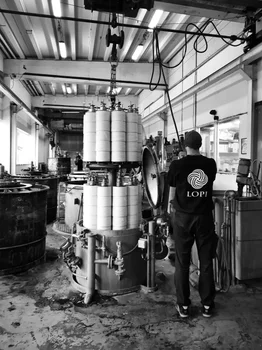
The heart of any RO system is its semi-permeable membrane, typically a Thin-Film Composite (TFC) membrane. These advanced materials are engineered with a precise, multi-layer structure to facilitate high water permeability while rejecting a broad spectrum of dissolved contaminants. The TFC membrane consists of a polyester non-woven fabric support layer (120–150 μm thick) providing mechanical strength, a polysulfone microporous support layer (40–50 μm thick) for further structural integrity, and critically, an ultra-thin polyamide active layer (around 0.2 μm thick) where the separation occurs. The solution-diffusion model explains its function: water molecules first dissolve into the polyamide layer, diffuse through it, and then desorb on the permeate side. Dissolved salts, being less soluble in the polyamide and larger than water molecules, are effectively rejected. This rejection is further enhanced by the negative charge of the polyamide layer, which repels negatively charged ions (anionic rejection) via Donnan exclusion. Manufacturers offer various TFC membranes tailored for specific applications. High-rejection membranes (offering 99.7% salt rejection) are ideal for producing ultrapure water for industries like pharmaceuticals or electronics, though they may have a slightly lower flux. Conversely, high-flux membranes (typically 99.2% rejection) provide up to 20% higher water production rates and are suitable for applications like boiler feedwater or cooling tower makeup where slightly lower rejection is acceptable. Membrane flux rates, commonly measured in Gallons per Square Foot per Day (GFD), typically range from 10–30 GFD for industrial applications, with higher flux often correlating with a higher propensity for fouling. A critical factor for membrane longevity is resistance to chlorine, which irreversibly damages the polyamide active layer. Therefore, effective dechlorination of feedwater, often achieved through activated carbon filtration or sodium metabisulfite dosing, is essential to extend membrane lifespan, which ideally ranges from 3 to 5 years.
| Membrane Type | Typical Salt Rejection (%) | Typical Flux Range (GFD) | Primary Applications | Key Considerations |
|---|---|---|---|---|
| High Rejection | 99.7+ | 10 - 15 | Ultrapure water (Semiconductor, Pharma), High-purity boiler feedwater | Lower flow rate, requires higher operating pressure for equivalent flux |
| Standard Industrial | 99.2 - 99.5 | 15 - 25 | Boiler feedwater, Cooling tower makeup, General industrial processes | Balanced performance, widely applicable |
| High Flux | 99.0 - 99.2 | 20 - 30+ | High-flow applications, Brackish water treatment, Pre-treatment for CDI/EDI | Higher flow rate, can be more susceptible to fouling if pre-treatment is inadequate |
Industrial RO System Components: What Each Part Actually Does
An industrial RO system is an integrated assembly of specialized components, each playing a vital role in water purification. Understanding these components is key to evaluating proposals and ensuring operational reliability. The high-pressure pump is the workhorse, driving water against osmotic pressure. Centrifugal pumps are standard for flow rates from 6,000 to 100,000+ Gallons Per Day (GPD) due to their efficiency, reliability, and lower maintenance requirements compared to positive displacement pumps in this range. Membrane housings, typically constructed from fiberglass-reinforced plastic (FRP) for cost-effectiveness or stainless steel for extreme durability and higher pressures, contain the RO membranes. While FRP housings are common and cost-effective, stainless steel offers superior longevity (20+ years) at a significantly higher initial cost (approximately 3x). Pre-treatment is non-negotiable for RO system longevity. This usually includes multimedia filters to remove suspended solids and turbidity, activated carbon filters to adsorb chlorine and organic compounds, and antiscalant dosing systems to prevent mineral precipitation on the membrane surface. Post-treatment may involve pH adjustment (e.g., using CO₂ degassing or caustic dosing) to prevent corrosion of downstream equipment or UV disinfection to ensure microbial inactivation for critical applications. Modern RO systems are increasingly managed by control systems. While manual operation is possible, Programmable Logic Controllers (PLCs) can reduce operational expenditures (OPEX) by 15–25% through automated cleaning cycles, pressure monitoring, and optimized performance adjustments, ensuring the longevity of components like the pre-treatment multimedia filters and automatic chemical dosing systems.
Single-Pass vs. Double-Pass RO: Which System Do You Really Need?
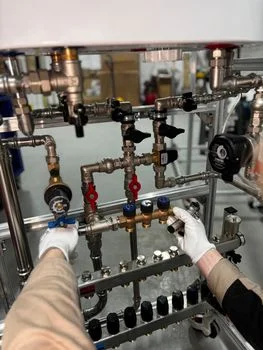
The choice between a single-pass and a double-pass RO system is dictated by the required permeate water quality and the feedwater characteristics. A single-pass RO system processes the feedwater through one set of RO membranes. It typically achieves a salt rejection of 98–99.5%, producing water suitable for a wide range of industrial applications, including boiler feedwater, cooling tower makeup, and general process water. Recovery rates for single-pass systems generally range from 50–75%, depending on feedwater quality and membrane configuration. In contrast, a double-pass RO system involves a second stage where the permeate from the first RO pass is fed into a second set of RO membranes. This configuration significantly enhances salt rejection, often exceeding 99.9%, yielding ultra-pure water with very high resistivity (e.g., >18 MΩ·cm). Double-pass systems are essential for the stringent purity demands of the semiconductor, pharmaceutical, and high-pressure power generation industries. However, the trade-off for this extreme purity is a lower overall recovery rate, typically between 30–50%, as the concentrate from the first pass is further concentrated in the second. This leads to higher initial capital expenditure (CAPEX), with double-pass systems costing 40–60% more upfront than single-pass systems. Yet, they can significantly reduce downstream polishing costs (e.g., ion exchange or electro-deionization) by 30–50%. A semiconductor fab in Taiwan, for example, reduced its deionized (DI) water costs by 22% by transitioning from a single-pass RO followed by extensive EDI polishing to a double-pass RO system. When selecting, consider feedwater TDS, the absolute purity required, your budget, and available space, as double-pass systems essentially double the footprint.
| Feature | Single-Pass RO | Double-Pass RO |
|---|---|---|
| Salt Rejection | 98% - 99.5% | >99.9% |
| Permeate Quality | Industrial Grade | Ultra-Pure Water (e.g., >18 MΩ·cm resistivity) |
| Typical Recovery Rate | 50% - 75% | 30% - 50% |
| CAPEX | Lower | Higher (40-60% more) |
| OPEX (Water Production Cost) | Lower per m³ of permeate | Higher per m³ of permeate, but can reduce downstream polishing costs |
| Applications | Boiler feedwater, cooling towers, general industrial processes | Semiconductors, pharmaceuticals, high-purity power generation, critical rinse water |
| Footprint | Standard | Larger (approx. 2x single-pass) |
How to Size an Industrial RO System: A Step-by-Step Engineering Guide
Sizing an industrial RO system requires a systematic approach, integrating feedwater analysis with desired permeate output. Follow these steps for accurate system specification:
- Measure Feedwater Characteristics: Obtain accurate measurements of feedwater Total Dissolved Solids (TDS) and temperature. Use these to calculate the osmotic pressure (π = iCRT) as described previously. This value dictates the minimum pressure the high-pressure pump must overcome.
- Determine Required Permeate Flow Rate: Define the daily or hourly volume of purified water needed for your process. For example, a boiler system might require 50 m³/h of demineralized water.
- Select Membrane Flux Rate: Choose an appropriate membrane flux based on the application and feedwater quality. For industrial systems, a flux of 15–25 GFD is common. Higher flux can increase production but also fouling risk. Calculate the total membrane area required: Total Membrane Area (ft²) = Permeate Flow Rate (GPD) / Membrane Flux (GFD).
- Determine System Recovery Rate: The recovery rate (percentage of feedwater converted to permeate) is critical for water conservation and minimizing concentrate discharge. Typical industrial recovery rates range from 50% to 85%, depending heavily on feedwater TDS and scaling potential. Higher TDS feedwater necessitates lower recovery rates to prevent exceeding mineral solubility limits. Specialized software or recovery rate calculators can assist in optimizing this parameter.
- Size the High-Pressure Pump: The pump must provide sufficient pressure to overcome osmotic pressure, drive the desired flux, and account for pressure losses within the system. A general guideline for pump discharge pressure is: Pump Pressure = Osmotic Pressure + (100–200 PSI for flux) + (20–50 PSI for system pressure drop). For a system with 3,000 mg/L TDS feedwater (approx. 340 PSI osmotic pressure), requiring 50 m³/h (approx. 55000 GPD) of permeate at 75% recovery, this would translate to a total membrane area of roughly 300 m² and a pump pressure requirement of approximately 550-650 PSI.
Preventing Scaling and Fouling: The Hidden Costs of Poor Pre-Treatment
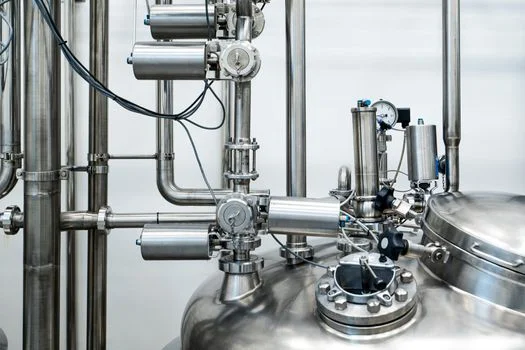
Scaling and fouling are the Achilles' heel of RO systems, responsible for an estimated 60–80% of operational failures and significantly increasing OPEX. Scaling occurs when sparingly soluble salts, such as calcium carbonate (CaCO₃), barium sulfate (BaSO₄), or strontium sulfate (SrSO₄), exceed their solubility limits in the concentrating brine. Symptoms include a rapid increase in feed-side pressure drop (exceeding 15%) and a decrease in permeate flow (over 10%). Fouling, on the other hand, is the accumulation of organic matter, colloids, silt, or biological growth on the membrane surface. This manifests as a gradual decline in flux (over 20%) and potentially an increase in salt passage. Proactive pre-treatment is the most effective defense. Antiscalant dosing, using polymers like polyacrylic acids or phosphonates, can inhibit crystal nucleation and growth, effectively increasing the system's recovery rate by 10–20% by preventing scale formation. Typical dosing rates are 2–5 mg/L. When scaling or fouling does occur, regular cleaning protocols are essential. Acid cleaning (pH 2–3) is effective for mineral scale, while alkaline cleaning (pH 10–11) targets organic fouling. For industrial RO systems, cleaning frequencies typically range from every 3 to 6 months. Implementing robust pre-treatment, such as using multimedia filters to protect RO membranes from turbidity and colloids, and ensuring proper antiscalant and pH adjustment dosing via automatic chemical dosing systems, can dramatically reduce cleaning frequency and extend membrane life. A textile plant in Bangladesh, for instance, reduced its RO membrane cleaning from monthly to quarterly by integrating a multimedia filter and an antiscalant dosing regimen.
Industrial RO System Costs: CAPEX, OPEX, and ROI Calculations
Understanding the financial implications of an industrial RO system is crucial for procurement managers. The initial Capital Expenditure (CAPEX) typically breaks down as follows: membranes account for about 40%, high-pressure pumps 30%, pre-treatment equipment 20%, and control systems and piping 10%. The Operational Expenditure (OPEX), however, is dominated by energy costs, comprising around 50% of the total, primarily for running the high-pressure pumps. Membrane replacement represents another significant OPEX component (20%), followed by chemicals (15% for antiscalants, cleaning agents, etc.), labor (10%), and general maintenance (5%). To illustrate energy costs: a 50 m³/h RO system operating at 600 PSI might consume approximately 30 kW of power. At an electricity rate of $0.10/kWh, this equates to roughly $20,000 in energy costs per year. Calculating the Return on Investment (ROI) is key for justifying the expenditure. For applications requiring ultra-pure water, comparing the cost of a double-pass RO system against traditional methods like single-pass RO followed by ion exchange (DI resin) is insightful. A double-pass RO system can reduce DI resin regeneration costs by up to 40%, often leading to a payback period of 2–3 years. It's vital to also factor in the hidden costs associated with inadequate pre-treatment. Uncontrolled scaling and fouling can inflate annual OPEX by 20–40% due to increased energy consumption, more frequent membrane replacements, and higher chemical usage for emergency cleanings.
| Cost Category | CAPEX (%) | OPEX (%) |
|---|---|---|
| Membranes | 40% | 20% |
| High-Pressure Pumps | 30% | - |
| Pre-Treatment (Filters, Dosing) | 20% | 15% (chemicals) |
| Piping, Vessels, Controls | 10% | 10% (labor/maintenance) |
| Energy (Pump Power) | - | 50% |
| Maintenance & Spare Parts | - | 5% |
Frequently Asked Questions
Q: What’s the difference between industrial RO and home RO systems?
A: Industrial RO systems operate at significantly higher pressures (150–600 PSI vs. 50–100 PSI for home units) to handle higher TDS feedwater (up to 5,000 mg/L vs. <1,000 mg/L). They utilize larger membranes (8-inch diameter typically) and advanced PLC controls for automation and efficiency. Industrial systems also mandate robust pre-treatment (e.g., multimedia filters) to protect membranes from contaminants common in raw water sources.
Q: How do I calculate the osmotic pressure for my feedwater?
A: Use the Van't Hoff equation: π = iCRT. For feedwater with 2,000 mg/L NaCl at 25°C (298.15 K), the osmotic pressure is approximately 16.5 atm or 243 PSI. Remember to convert TDS to molar concentration (C) and use the appropriate Van't Hoff factor (i) for your specific solute.
Q: What’s the typical lifespan of an industrial RO membrane?
A: With proper pre-treatment, operation, and cleaning protocols, industrial RO membranes typically last 3–5 years. However, exposure to chlorine, severe scaling, or heavy fouling can drastically reduce their lifespan to 1–2 years. Membranes should be replaced when their salt rejection drops below 98% or their flux declines by more than 20% from their clean performance.
Q: Can RO remove bacteria and viruses?
A: Yes, RO membranes have an extremely small pore size (0.0001–0.001 μm), effectively rejecting over 99.9% of bacteria (e.g., E. coli) and viruses (e.g., norovirus). However, for critical applications like pharmaceuticals or potable water, post-treatment disinfection methods like UV or chlorine dioxide for RO permeate are often recommended to ensure a complete microbial barrier.
Q: How do I choose between single-pass and double-pass RO?
A: Select a single-pass RO system when 98–99.5% salt rejection is sufficient for applications like boiler feedwater or cooling tower makeup. Opt for a double-pass RO system when ultra-pure water, with resistivity exceeding 18 MΩ·cm, is required, such as for semiconductor manufacturing or pharmaceutical ingredient production.
Related Equipment
- HydropureWater’s industrial RO systems with PLC-controlled operation and 95% recovery rates — view specifications, capacity range, and technical data
- pre-treatment multimedia filters to protect RO membranes from turbidity and colloids — view specifications, capacity range, and technical data
- automated antiscalant and pH adjustment dosing to prevent RO membrane fouling — view specifications, capacity range, and technical data
Need a customized solution? Request a free quote with your specific flow rate and pollutant parameters.