Hospital Wastewater Treatment in Georgia USA: 2025 Engineering Specs, Compliance & Cost-Optimized Systems
Hospitals in Georgia must treat wastewater to meet EPA’s Clean Water Act standards and GA EPD’s stricter reuse/discharge limits, including 99.9% pathogen removal (e.g., E. coli <126 CFU/100mL) and pharmaceutical residue thresholds (e.g., carbamazepine <10 ng/L). Piedmont Atlanta Hospital’s on-site reclamation system, which intercepts 100% of wastewater for cooling tower reuse, demonstrates compliance while reducing sewer fees by 30%—a model for Georgia’s 180+ hospitals facing rising regulatory scrutiny and water costs.Why Georgia Hospitals Are Rethinking Wastewater Treatment in 2025
Georgia’s 2024 sewer rate increases, such as Atlanta’s 12% hike, are adding an estimated $250K–$1M/year to hospital operating costs for 50–200-bed facilities, according to GA EPD 2023 rate filings. This financial pressure is compounded by GA EPD’s 2025 enforcement push, which specifically targets hospitals for pharmaceutical residues like metformin and various antibiotics under the Clean Water Act’s Pretreatment Standards (40 CFR Part 467). For instance, a CFO at a major Atlanta-area hospital recently noted, “Our sewer bill jumped 40% after Atlanta’s rate hike last year—now we’re seriously evaluating on-site treatment to cut costs and secure our water supply.” Piedmont Atlanta Hospital’s proactive $12M water reclamation system, detailed in a Gresham Smith case study, serves as a significant benchmark for other healthcare facilities across Georgia. This system saves the hospital approximately $800K/year in sewer fees and reduces potable water use by 30%, showcasing a viable pathway to both compliance and cost savings. This model is increasingly relevant for Georgia’s 180+ hospitals, many of which are caught in a 'water cost spiral' where rising sewer fees, increasing potable water rates, and potential compliance fines (which can reach $25K/day for GA EPD violations) create an unsustainable financial burden. Investing in advanced wastewater treatment not only mitigates these escalating costs but also enhances operational resilience and environmental stewardship.Georgia’s Hospital Wastewater Regulations: EPA vs. GA EPD Limits

| Parameter | EPA 40 CFR Part 467 (Pretreatment) | GA EPD Tier 2 Reuse Permit (Example) | City of Atlanta Pretreatment (Example) |
|---|---|---|---|
| BOD | ≤30 mg/L | ≤10 mg/L | ≤30 mg/L |
| TSS | ≤30 mg/L | ≤5 mg/L | ≤30 mg/L |
| pH | 6–9 | 6.5–8.5 | 6–9 |
| Turbidity | N/A | ≤2 NTU | N/A |
| E. coli | N/A | <126 CFU/100mL (monthly geo-mean) | N/A |
| Legionella | N/A | <1 CFU/mL (monthly) | N/A |
| Carbamazepine | N/A | <10 ng/L (quarterly) | N/A |
| COD | N/A | ≤50 mg/L | ≤120 mg/L |
| Ammonia | N/A | ≤2 mg/L | ≤10 mg/L |
Hospital Wastewater Characteristics: What’s in the Effluent?
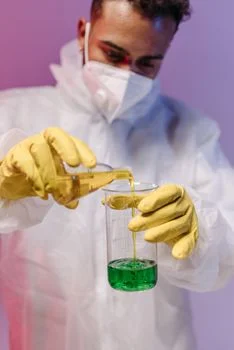
Hospital wastewater presents a distinct and complex challenge compared to typical municipal sewage due to its elevated concentrations of pathogens, pharmaceuticals, and specialized organic compounds. Studies, including WHO 2023 guidelines, indicate that hospital wastewater contains 10–100x higher pathogen loads than municipal sewage, with E. coli counts often ranging from 10^6–10^8 CFU/100mL and norovirus concentrations reaching 10^3–10^5 copies/L. These high microbial counts necessitate robust disinfection strategies to ensure public health and environmental safety. Beyond pathogens, pharmaceutical residues—including antibiotics, chemotherapy drugs, and contrast agents—are prevalent, ranging from 1–1,000 ng/L (EPA 2024 pharmaceutical wastewater study). Effective removal of these micropollutants often requires advanced oxidation processes (AOPs) such as ozone or UV/H₂O₂ combinations, which traditional biological treatment systems struggle to address. fats, oils, and grease (FOG) from hospital kitchens and laundries can reach concentrations of 500–1,500 mg/L, according to GA EPD 2023 FOG enforcement data. High FOG levels can clog membranes in advanced systems and significantly reduce the efficiency of disinfection processes. The unpredictable nature of hospital operations also leads to ‘shock loads’ from operating room discharges, which can include blood, saline solutions, and disinfectants, causing COD spikes exceeding 1,000 mg/L that can disrupt the delicate balance of biological treatment units. For effective removal of FOG and TSS, DAF systems for FOG and TSS removal in hospital effluent are often a critical pretreatment step.Treatment Technology Comparison: MBR vs. DAF + ClO₂ vs. Activated Sludge for Georgia Hospitals
| Technology | CAPEX (Estimated) | OPEX (Estimated) | Footprint | Pathogen Removal | Pharmaceutical Removal | GA EPD Compliance | Best For |
|---|---|---|---|---|---|---|---|
| MBR (Membrane Bioreactor) | $1.2M–$3.5M | $0.40–$0.70/m³ | Compact | 99.99% (4-log+) | Moderate to High | Excellent (Reuse & Discharge) | Large hospitals, high-quality reuse, stringent limits |
| DAF + ClO₂ | $0.5M–$1.5M | $0.30–$0.50/m³ | Medium | 99.99% (4-log+) | Low | Good (Discharge), Moderate (Reuse with tertiary) | Medium hospitals, FOG/TSS heavy effluent, cost-sensitive |
| Conventional Activated Sludge | $0.3M–$0.8M | $0.20–$0.40/m³ | Large | <90% (1-log) | Very Low | Poor (Reuse), Moderate (Discharge with tertiary) | Small clinics with basic discharge to robust municipal systems |
Cost Breakdown: CAPEX, OPEX, and ROI for Hospital Wastewater Systems in Georgia
The capital expenditure (CAPEX) for hospital wastewater treatment systems in Georgia typically ranges from $0.5M–$3.5M, heavily influenced by the chosen technology and the hospital's bed capacity. For instance, a medium-sized MBR system might cost around $1.2M, while a DAF + ClO₂ system could be closer to $0.8M for a similar 50–500 bed facility, based on GA EPD 2024 grant application data. These figures encompass equipment, installation, civil works, and initial commissioning. Operating expenditure (OPEX) generally falls within $0.30–$1.20/m³, with energy costs being a primary driver, particularly for aeration in biological processes, which can account for $0.15–$0.30/m³. Chemical costs, such as for chlorine dioxide, typically range from $0.10–$0.25/m³. While reuse systems for applications like cooling towers can save hospitals $0.50–$0.80/m³ in sewer fees by reducing potable water demand, they introduce additional OPEX of $20K–$50K/year for GA EPD Tier 2 permit compliance, covering mandatory microbial testing and detailed reporting. An ROI calculation for a 200-bed hospital treating 150 m³/day highlights the financial benefits of reuse: a $1.2M CAPEX investment can be recouped in 5–7 years through sewer fee reductions, a significantly faster payback period compared to 10+ years for systems designed solely for discharge, as demonstrated by the Piedmont Atlanta case study. Further cost optimization can be explored by considering RO systems for hospital water reuse, which can enhance water quality for more sensitive applications, though at a higher CAPEX.Step-by-Step: Designing a GA EPD-Compliant Hospital Wastewater System
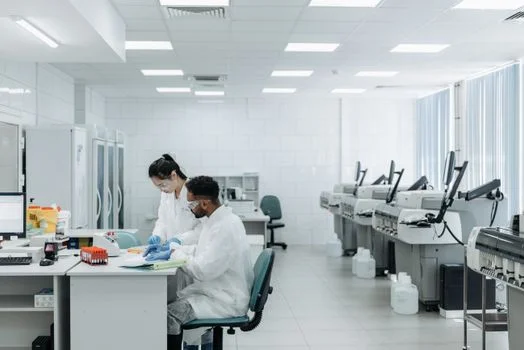
- Step 1: Characterize Effluent. Begin by conducting comprehensive 24-hour composite sampling of the hospital's wastewater to accurately determine baseline parameters including BOD, TSS, pathogens (e.g., E. coli, norovirus), and pharmaceutical concentrations (e.g., carbamazepine, metformin). This detailed characterization, following EPA 2023 sampling guidelines, is crucial for selecting appropriate treatment technologies and sizing components correctly.
- Step 2: Select Technology. Based on the effluent characteristics, the hospital's size, specific water reuse goals (e.g., cooling towers, irrigation), and available budget, select the most suitable treatment technology. Utilize the comparison table provided earlier in this article to match system capabilities (e.g., MBR for high-quality reuse, DAF + ClO₂ for FOG-heavy effluent) with project requirements.
- Step 3: Size the System. Determine the appropriate size of each treatment unit by calculating the hydraulic retention time (HRT) required for biological processes (e.g., 6–12 hours for MBR, 2–4 hours for DAF) and accounting for peak flow rates. It is critical to design for surges, such as operating room discharges, which can generate peak flows up to 2x the average flow, to prevent system overload.
- Step 4: Design Disinfection and Pharmaceutical Removal. Implement a robust disinfection stage, such as chlorine dioxide (ClO₂) for achieving 4-log virus inactivation, or UV for low-turbidity effluent. For pharmaceutical removal, integrate advanced processes like ozone or granular activated carbon (GAC) filtration, especially if GA EPD's pharmaceutical residue limits are a concern.
- Step 5: Submit GA EPD Permit Application. Compile a complete permit application package for GA EPD, including detailed engineering drawings, comprehensive wastewater sampling data, a robust operations and maintenance (O&M) plan, and an emergency response plan. Adhering to the GA EPD 2024 permit checklist is essential for a smooth approval process.
Frequently Asked Questions
What are the GA EPD limits for hospital wastewater discharge?
GA EPD enforces EPA’s 40 CFR Part 467 limits (e.g., BOD ≤30 mg/L, TSS ≤30 mg/L) and adds state-specific requirements like turbidity ≤2 NTU for reuse and pharmaceutical screening (e.g., carbamazepine <10 ng/L) (GA EPD 2024 Permit Guide).
How much does a hospital wastewater treatment system cost in Georgia?
CAPEX ranges from $0.5M–$3.5M (e.g., $1.2M for MBR, $0.8M for DAF + ClO₂), with OPEX of $0.30–$1.20/m³. Reuse systems save $0.50–$0.80/m³ in sewer fees but require $20K–$50K/year for compliance testing (GA EPD 2024 cost study).
Can hospitals in Georgia reuse treated wastewater?
Yes, but GA EPD requires a Tier 2 reuse permit with monthly microbial testing (e.g., Legionella <1 CFU/mL) and quarterly pharmaceutical screening. Piedmont Atlanta Hospital reuses 100% of its wastewater for cooling towers, cutting sewer fees by 30% (GA EPD 2024 Reuse Guidelines).
What’s the best disinfection method for hospital wastewater in Georgia?
Chlorine dioxide (ClO₂) is most effective, achieving 4-log virus inactivation (e.g., norovirus) at $0.12–$0.25/m³ OPEX. UV is cheaper ($0.05–$0.15/m³) but struggles with high-turbidity effluent (EPA 2023 Disinfection Study).
Do Georgia hospitals need a pretreatment permit for municipal sewer discharge?
Yes. Hospitals discharging to municipal sewers (e.g., Atlanta’s R.M. Clayton Center) must meet local pretreatment limits (e.g., COD ≤120 mg/L, ammonia ≤10 mg/L) to avoid surcharges. GA EPD conducts annual inspections (City of Atlanta 2024 Pretreatment Ordinance).