Display panel CMP wastewater contains ultrafine (<150 nm) silica/alumina particles, copper residues (5–50 mg/L), and surfactants, requiring specialized treatment to meet 2025 discharge limits (e.g., China MEE: Cu <0.5 mg/L, TSS <70 mg/L). Membrane systems like Microza hollow fiber or VSEP achieve >99% particle removal without chemical flocculation, enabling water reuse (RO recovery rates up to 85%) or zero liquid discharge (ZLD). For a 50 m³/h CMP line, CapEx ranges from $800K (DAF + MBR) to $1.2M (Microza + ion exchange + RO), with OpEx savings of $200K/year via water recycling.
Why CMP Wastewater Treatment Fails in Display Panel Plants: The Particle Size Problem
CMP slurry particles average 50–150 nm, making them too small for effective removal by conventional dissolved air flotation (DAF) and sedimentation. These ultrafine particles, often below 1 micron, defy the gravitational forces and microbubble adhesion mechanisms that govern traditional clarification systems, which are typically effective for particles in the 1–5 µm range. The prevalence of Brownian motion for particles under 1 µm prevents settling, while their low zeta potential often hinders effective coagulation without significant chemical dosing, leading to poor floc formation and carryover.
Industry reports indicate that display panel CMP wastewater contains 3–5x higher silica/alumina load than semiconductor CMP, with concentrations typically ranging from 1,200–2,500 mg/L compared to 300–800 mg/L in semiconductor applications. This elevated particle load significantly increases the risk of membrane fouling in downstream processes if not adequately pretreated, complicating system design and increasing operational costs. For instance, a 2023 LCD fab in Suzhou, China, failed China MEE compliance with a TSS discharge of 120 mg/L after relying solely on a conventional DAF system for CMP wastewater pretreatment. This failure necessitated a $400K retrofit to integrate a membrane pretreatment stage, demonstrating the inadequacy of DAF alone for ultrafine CMP particles.
The following table illustrates the typical particle size distribution in raw CMP wastewater and the limited efficacy of DAF in removing the ultrafine fraction.
| Parameter | Raw CMP Wastewater | DAF Effluent (Conventional) | Impact on Compliance/Reuse |
|---|---|---|---|
| Average Particle Size | 50-150 nm | 100-500 nm | Larger particles (flocs) removed, but ultrafine remain. |
| % Particles <150 nm | >80% | 50-70% | Significant portion remains, contributing to high TSS. |
| % Particles <1 µm | >95% | 70-85% | Still above acceptable levels for membrane protection. |
| TSS (mg/L) | 1,500-2,500 | 80-150 | Often exceeds 2025 discharge limits (e.g., China MEE <70 mg/L). |
2025 CMP Wastewater Characteristics: Particle Load, Metals, and pH by Process Step
Display panel CMP wastewater exhibits highly variable influent parameters, with copper loads ranging from 5–50 mg/L for LCD polishing and increased COD from organic solvents in OLED planarization. Understanding these specific characteristics by process type is critical for designing an effective and compliant treatment system for 2025 benchmarks. Semiconductor CMP, while related, often presents different challenges, such as higher copper concentrations or different pH ranges.
OLED CMP processes, for instance, introduce organic solvents such as isopropanol (IPA) and N-methyl-2-pyrrolidone (NMP) at concentrations of 100–300 mg/L. These organic compounds significantly increase the chemical oxygen demand (COD) of the wastewater, often requiring advanced oxidation or activated carbon pretreatment before membrane systems to prevent fouling and ensure effluent quality. The choice of abrasive also dictates the pH range of the wastewater; silica-based slurries typically result in alkaline wastewater (pH 9–11), while alumina-based slurries can lead to acidic conditions (pH 3–5). This pH variation necessitates precise PLC-controlled chemical dosing for CMP pH adjustment to optimize coagulation, maintain membrane compatibility (e.g., Microza membranes typically require a pH range of 6–8), and ensure efficient metal precipitation.
| Parameter | LCD Polishing CMP | OLED Planarization CMP | Semiconductor CMP (for comparison) | 2025 Regulatory Context |
|---|---|---|---|---|
| TSS (mg/L) | 1,200-2,500 | 800-1,500 | 300-800 | High TSS demands robust particle removal. |
| Copper (Cu, mg/L) | 5-50 | 10-60 | 20-100 | China MEE <0.5 mg/L, EU IED <0.2 mg/L. |
| Silica (SiO₂, mg/L) | 1,000-2,000 | 700-1,200 | 250-700 | Primary cause of membrane scaling. |
| pH Range | 9-11 (silica) | 7-9 (mixed) | 3-5 (alumina) / 9-11 (silica) | Requires precise pH adjustment for treatment. |
| COD (mg/L) | 50-150 | 100-300 | 30-100 | OLED COD requires specific organic removal. |
Treatment Train Comparison: Membrane vs. DAF vs. MBR for CMP Wastewater
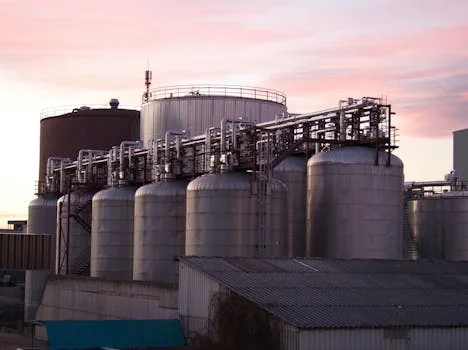
Membrane filtration systems like Microza hollow fiber and VSEP offer superior particle removal without chemical flocculation for display panel CMP wastewater, albeit at higher capital expenditure than DAF + MBR hybrid systems. These advanced membrane technologies are particularly effective against the ultrafine particles characteristic of CMP wastewater, achieving high-purity permeate suitable for direct reuse or further polishing. However, their selection involves a trade-off between CapEx, OpEx, and footprint considerations.
Microza hollow fiber membranes excel by eliminating the need for flocculants, saving approximately $0.50/m³ in chemical costs. However, a 50 m³/h Microza system typically requires a CapEx of around $1.2M, which is 2-3 times higher than a comparable DAF + MBR system. these membranes require frequent backwashing cycles to mitigate fouling, particularly from the high silica loads present in display panel CMP wastewater, which can lead to flux decline if not properly managed. In contrast, a DAF + MBR hybrid system, such utilizing DAF system for CMP wastewater pretreatment followed by DF series flat-sheet MBR modules for CMP wastewater polishing, offers a lower CapEx of approximately $800K for a 50 m³/h line. This system, however, necessitates PAC (poly-aluminum chloride) dosing at 0.3–0.5 kg/m³ for enhanced particle aggregation in the DAF stage and typically requires a larger footprint, around 120 m² compared to 40 m² for a compact Microza system. A notable case in point is a 2024 Samsung Display fab in Vietnam that achieved 92% water reuse (RO recovery) using a DAF → MBR → Industrial RO systems for CMP water reuse train, successfully reducing freshwater intake by 12,000 m³/month.
| Parameter | Microza Hollow Fiber (UF/MF) | VSEP (Vibratory Shear Enhanced Processing) | DAF + MBR Hybrid |
|---|---|---|---|
| TSS Removal % | >99.5% | >99% | 95-98% |
| Copper (Cu) Removal % (Particulate) | >90% | >90% | 80-90% |
| Typical Flux Rate (LMH) | 80-120 | 60-100 | 20-30 (MBR stage) |
| Footprint (m² for 50 m³/h) | 40 | 50 | 120 |
| Energy Use (kWh/m³) | 0.5-0.6 | 0.7-0.8 | 0.6-0.7 |
| Chemical Demand | Minimal (CIP chemicals) | Minimal (CIP chemicals) | PAC (0.3-0.5 kg/m³), pH adjusters |
| CapEx (for 50 m³/h) | ~$1.2M | ~$1.3M | ~$800K |
| Key Advantage | No flocculants, high clarity | Handles high solids, less fouling | Lower CapEx, robust biological treatment |
Copper Recovery from CMP Wastewater: Ion Exchange vs. Electrocoagulation for 2025 Compliance
Ion exchange (IX) systems achieve over 99% copper removal from CMP wastewater, consistently meeting stringent 2025 discharge limits like China MEE's <0.5 mg/L. IX technology utilizes specialized resins that selectively bind copper ions, effectively reducing effluent concentrations to below 0.1 mg/L. This high efficiency comes with operational considerations, including the need for frequent resin regeneration, typically every 2–3 days, which generates a concentrated hazardous waste stream requiring specialized disposal.
Alternatively, electrocoagulation (EC) offers a robust method for copper removal, achieving approximately 95% efficiency with a lower operational expenditure (OpEx) of around $0.20/m³ compared to $0.50/m³ for IX. EC works by dissolving sacrificial anodes (e.g., iron or aluminum) into the wastewater, forming coagulants that destabilize pollutants, including copper ions, which then precipitate as flocs. While EC generates sludge that requires dewatering, often utilizing a filter press for CMP sludge dewatering, it avoids the handling of hazardous regeneration chemicals. The 2024 EPA Effluent Limitation Guidelines (ELG) for copper sets a benchmark of <3.38 mg/L for certain industrial discharges, though many regional regulations, such as China MEE (<0.5 mg/L) and EU IED (<0.2 mg/L), are significantly more stringent, pushing fabs towards advanced removal techniques like IX or EC. For example, a BOE fab in Chengdu successfully reduced copper concentrations from 45 mg/L to 0.3 mg/L using an IX system with 2 m³/h resin columns, thereby avoiding an estimated $1.2M in annual regulatory fines.
| Method | Influent Cu (mg/L) | Effluent Cu (mg/L) | Cu Removal % | OpEx ($/m³) | 2025 Compliance Target |
|---|---|---|---|---|---|
| Ion Exchange (IX) | 5-50 | <0.1 | >99% | $0.50 | Meets China MEE (<0.5), EU IED (<0.2), EPA ELG (<3.38) |
| Electrocoagulation (EC) | 5-50 | 0.5-2.0 | 90-95% | $0.20 | Meets China MEE, EPA ELG; may need polishing for EU IED |
| Chemical Precipitation (NaOH + Sulfide) | 5-50 | 1.0-5.0 | 80-90% | $0.15 | Meets EPA ELG; often fails China MEE/EU IED |
Water Reuse vs. Zero Liquid Discharge: Cost-Benefit Analysis for CMP Wastewater
Implementing water reuse systems for a 50 m³/h display panel CMP line can yield annual OpEx savings of $200K through water recycling, achieving a 3.5-year ROI. This economic advantage stems primarily from reduced freshwater intake and lower discharge fees, making reuse an attractive option for facilities facing water scarcity or increasing environmental regulations. A typical reuse system, often comprising DAF → MBR → Industrial RO systems for CMP water reuse, represents a CapEx of approximately $1.5M with an OpEx of $0.80/m³, achieving a 60% reuse rate.
For more stringent environmental goals, Zero Liquid Discharge (ZLD) systems offer complete elimination of wastewater discharge risks, but at a significantly higher cost. A ZLD system, incorporating advanced evaporation and crystallization technologies, typically carries a CapEx of $3.5M and an OpEx of $2.50/m³. This OpEx is largely driven by the high energy consumption, often 15–20 kWh/m³, required for brine concentrators and crystallizers. While ZLD eliminates discharge entirely, the energy intensity and high capital investment necessitate a thorough cost-benefit analysis. Notably, RO recovery rates for CMP wastewater typically range from 70–85%, which is lower than the 90–95% seen with municipal water due to the high silica content that causes membrane scaling, as confirmed by 2024 membrane autopsy data. A successful example is an LG Display fab in Paju, which achieved 80% water reuse through an RO + MBR system, realizing a 3.5-year ROI and reducing freshwater intake by 18,000 m³/month by implementing a well-designed system layout.
| Scenario | System CapEx (50 m³/h) | Annual OpEx ($/year) | Water Savings ($/year) | Sludge Disposal Cost ($/year) | Key Benefit | Typical ROI (Years) |
|---|---|---|---|---|---|---|
| Direct Discharge (Treated) | $500K | $400K (water + discharge) | $0 | $50K | Lowest initial investment | N/A (no savings) |
| Water Reuse (DAF+MBR+RO) | $1.5M | $300K (energy, chem, maint) | $200K (60% reuse) | $70K | Significant water savings, reduced fees | 3-5 |
| Zero Liquid Discharge (ZLD) | $3.5M | $900K (high energy, chem, maint) | $300K (100% reuse) | $100K (salt cake) | Eliminates discharge, maximum compliance | 5-8 |
How to Select a CMP Wastewater Treatment System: A 2025 Decision Framework
Selecting an optimal CMP wastewater treatment system requires a structured 4-step decision framework, beginning with a thorough characterization of influent parameters. This systematic approach ensures that the chosen technology aligns with specific plant requirements, regulatory obligations, and economic objectives. Without accurate influent data, any system design carries inherent risks of underperformance or excessive cost.
- Step 1: Characterize Influent Wastewater. Conduct comprehensive lab testing to determine critical parameters such as particle size distribution (especially the fraction below 150 nm), copper load, silica concentration, pH range, and COD. Perform jar tests to evaluate the effectiveness of different coagulants and flocculants for DAF or conventional clarification, and assess membrane compatibility for direct membrane filtration options. This data forms the foundation for selecting appropriate pretreatment and main treatment technologies.
- Step 2: Define Effluent Targets and Compliance Limits. Clearly establish whether the goal is discharge to sewer, water reuse for non-critical processes, or zero liquid discharge (ZLD). Identify all relevant 2025 regulatory compliance limits, such as China MEE for TSS and copper, EU IED for heavy metals, or EPA ELG. These targets will dictate the required removal efficiencies and the complexity of the treatment train.
- Step 3: Compare Treatment Trains and Evaluate Vendors. Utilize cost-benefit tables, such as those presented in the previous section, to compare different treatment train configurations (e.g., DAF+MBR+RO vs. Microza+IX+RO). Develop a vendor evaluation checklist that includes system warranty, estimated membrane replacement costs, automation level, service support, and proven track record in display panel CMP applications.
- Step 4: Pilot Test Top Options. For critical applications or novel wastewater streams, implement a 4-week pilot testing protocol for the top 1-2 selected options. Monitor key performance indicators such as flux decline (for membranes), copper removal efficiency, chemical consumption, and sludge generation rates. A 2024 TCL fab in Shenzhen, for instance, selected DAF → MBR after piloting Microza systems and finding that silica fouling reduced flux by 40% in just 7 days, highlighting the importance of real-world testing for site-specific conditions.
Frequently Asked Questions
Understanding common challenges and solutions for display panel CMP wastewater treatment is crucial for effective system design and operation.
Q: What’s the biggest challenge in treating CMP wastewater from OLED vs. LCD panels?
A: OLED CMP introduces organic solvents (e.g., IPA, NMP) that significantly increase COD by 300–500 mg/L compared to LCD CMP wastewater. This requires specialized pretreatment, such as activated carbon adsorption or advanced oxidation, before membrane filtration to prevent fouling and ensure compliance.
Q: Can CMP wastewater be treated with conventional DAF systems?
A: No, conventional DAF systems are generally ineffective for CMP wastewater. The ultrafine particles (<150 nm) are too small to be efficiently captured by the microbubbles (10–100 µm) generated by standard DAF. Effective treatment requires membrane filtration or advanced DAF systems with precise PAC (poly-aluminum chloride) dosing (0.3–0.5 kg/m³) to enhance flocculation and particle aggregation.
Q: What’s the typical ROI for a CMP water reuse system?
A: For a 50 m³/h CMP wastewater treatment system, the typical ROI for a water reuse system is 3–5 years. This is driven by annual OpEx savings of $150–250K, primarily from reduced freshwater intake and lower discharge fees, achieving a 60–80% water reuse rate.
Q: How often do Microza membranes need replacement in CMP applications?
A: Microza membranes in CMP applications typically require replacement every 3–5 years. This lifespan is highly dependent on the influent silica load, the effectiveness of pretreatment, and the frequency and efficiency of cleaning-in-place (CIP) cycles. Regular monitoring of transmembrane pressure (TMP) helps predict membrane fouling and inform replacement schedules.
Q: What are the 2025 discharge limits for copper in CMP wastewater?
A: Key 2025 discharge limits for copper in CMP wastewater include: China MEE: <0.5 mg/L, EU IED: <0.2 mg/L, and EPA ELG: <3.38 mg/L. These stringent regulations necessitate highly efficient copper removal technologies like ion exchange or electrocoagulation to ensure compliance.