PCB Ammonia-Nitrogen Wastewater Treatment: 2025 Engineering Specs, 99% Removal & Cost-Optimized ZLD Systems
PCB manufacturing wastewater often contains 500–5,000 mg/L ammonia-nitrogen (NH₃-N), far exceeding discharge limits like China’s GB 21900-2008 (<25 mg/L) or the EPA’s 10 mg/L for categorical industrial users. Electrolytic systems, anammox processes, and immobilized cell reactors achieve 90–99% removal, but selection depends on influent variability, space constraints, and zero liquid discharge (ZLD) goals. For example, electrolytic systems reduce NH₃-N to <10 mg/L at 0.5–1.2 kWh/m³ energy consumption, while anammox reactors handle high loads with 60% lower sludge production but require precise pH/temperature control.Why PCB Ammonia-Nitrogen Wastewater Fails Compliance: A 2025 Engineering Reality Check
A PCB manufacturing plant in Guangdong, China, faced a temporary shutdown in late 2023 due to persistent ammonia-nitrogen (NH₃-N) discharge violations, with influent levels consistently around 1,200 mg/L against a strict GB 21900-2008 limit of <25 mg/L. This scenario is common across the electronics manufacturing sector, where NH₃-N is a prevalent pollutant. Primary sources of ammonia-nitrogen in PCB production include etching baths, particularly those utilizing ammonium chloride (NH₄Cl) or ammonium hydroxide (NH₄OH), electroless copper plating solutions, and specific photoresist stripping processes. These operations contribute to typical influent concentrations ranging from 500 mg/L to over 5,000 mg/L NH₃-N, significantly surpassing most global discharge limits. For instance, the US EPA often mandates <10 mg/L for categorical industrial users, while the EU's Industrial Emissions Directive sets typical limits around 15 mg/L. Non-compliance carries substantial environmental and financial risks. Elevated NH₃-N levels contribute to eutrophication in receiving waters, leading to algal blooms and oxygen depletion. Ammonia is also highly toxic to aquatic life, with an LC50 for sensitive fish species ranging from 0.05–0.5 mg/L. ammonia interferes with chlorine disinfection processes in downstream municipal wastewater treatment plants by forming stable chloramines, which reduce disinfection effectiveness and can create harmful disinfection byproducts.How Ammonia-Nitrogen Treatment Technologies Work: Mechanisms, Process Flows, and Engineering Parameters
Electrolytic Systems
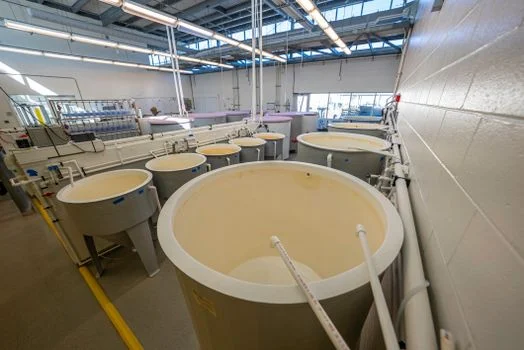
Electrolytic systems remove ammonia-nitrogen through electrochemical oxidation. The process typically begins with pH adjustment to a range of 8.5–9.5, which converts ammonium ions (NH₄⁺) to gaseous ammonia (NH₃) that is more readily oxidized. Inside the electrolytic cell, sodium hypochlorite (NaClO) is generated in situ from chloride ions (Cl⁻) present in the wastewater or added as NaCl (Cl₂ + 2NaOH → NaClO + NaCl + H₂O). This powerful oxidant then reacts with ammonia, oxidizing it to inert nitrogen gas (N₂) via the reaction: 2NH₃ + 3NaClO → N₂ + 3NaCl + 3H₂O. Key engineering parameters include current density, typically maintained between 100–300 A/m², and electrode materials. Dimensionally stable anodes (DSAs) such as titanium coated with mixed metal oxides (e.g., Ti/RuO₂-IrO₂) are common due to their high catalytic activity and corrosion resistance. Precise pH control, often achieved with PLC-controlled chemical dosing for precise pH adjustment in ammonia-nitrogen treatment, is essential to optimize both ammonia conversion and minimize electrode scaling.Anammox Process
The anaerobic ammonium oxidation (anammox) process is a highly efficient biological method where specialized anammox bacteria convert ammonium (NH₄⁺) and nitrite (NO₂⁻) directly into nitrogen gas (N₂) under anaerobic conditions: NH₄⁺ + NO₂⁻ → N₂ + 2H₂O. This process bypasses the need for external organic carbon sources and significantly reduces aeration energy and sludge production compared to conventional nitrification-denitrification. Optimal process parameters include a pH range of 7.5–8.5 and a temperature of 30–40°C. Hydraulic retention times (HRT) typically range from 1–4 hours, depending on the reactor configuration (e.g., granular sludge bed reactors). A critical consideration for PCB wastewater is the sensitivity of anammox bacteria to organic carbon (requiring a COD/NH₃-N ratio < 2) and heavy metals, particularly copper. Copper (Cu²⁺) concentrations must be maintained below 0.5 mg/L to prevent significant inhibition of anammox activity. Pre-treatment to remove organics and heavy metals is often necessary. The integration with submerged PVDF membrane filtration for high-efficiency solids removal in anammox systems can enhance performance and effluent quality.Immobilized Cell Reactors
Immobilized cell reactors utilize microorganisms (e.g., nitrifying, denitrifying, or anammox bacteria) entrapped within inert carrier materials such as modified activated carbon (MAC) or alginate beads. This technique offers several advantages over free-cell systems, including higher biomass retention, enhanced tolerance to toxic compounds, and improved removal efficiencies (often 20–30% better than free cells in laboratory settings). The immobilization protects the cells and allows for higher volumetric loading rates. However, limitations include potential mass transfer resistance, where substrate diffusion into the carrier can become rate-limiting, and the recurring cost of carrier materials. For PCB applications, immobilized nitrifying bacteria can convert ammonia to nitrite/nitrate, followed by anaerobic denitrification using immobilized denitrifying cells.Chemical Precipitation (MAP)
Chemical precipitation, specifically magnesium ammonium phosphate (MAP) precipitation, also known as struvite formation, offers a method for recovering ammonia-nitrogen as a valuable fertilizer. The reaction involves the stoichiometric combination of magnesium, ammonium, and phosphate ions: Mg²⁺ + NH₄⁺ + PO₄³⁻ → MgNH₄PO₄·6H₂O. Optimal conditions for struvite formation include a pH of 9–10 and a Mg:NH₄:PO₄ molar ratio of approximately 1:1:1. While effective for high ammonia concentrations, this method generates a significant amount of struvite sludge, requiring proper handling and disposal or valorization. It also demands precise chemical dosing and pH control. The following table summarizes key parameters for these technologies:| Technology | Key Mechanism | Optimal pH | Optimal Temp (°C) | Key Parameters | PCB-Specific Caveats |
|---|---|---|---|---|---|
| Electrolytic | Electrochemical Oxidation (NH₃ to N₂) | 8.5–9.5 | Ambient–40 | Current Density: 100–300 A/m² Electrode: Ti/RuO₂-IrO₂ |
Sensitive to high chloride demand if not naturally present. |
| Anammox Process | Anaerobic Ammonium Oxidation (NH₄⁺ + NO₂⁻ to N₂) | 7.5–8.5 | 30–40 | HRT: 1–4 hrs COD/NH₃-N < 2 |
Highly inhibited by Cu²⁺ (>0.5 mg/L) and some organic solvents. |
| Immobilized Cell Reactors | Biological (Nitrification/Denitrification or Anammox) | 6.5–8.5 | 20–40 | Carrier Material: MAC, Alginate Higher biomass density |
Mass transfer limitations; carrier cost. Pre-treatment for heavy metals. |
| Chemical Precipitation (MAP) | Struvite Formation (MgNH₄PO₄·6H₂O) | 9–10 | Ambient | Mg:NH₄:PO₄ Ratio: 1:1:1 | High sludge volume; requires precise chemical addition. |
Performance Benchmarks: Removal Efficiencies, Energy Use, and Sludge Production by Technology
Evaluating ammonia-nitrogen treatment technologies requires a detailed comparison of their operational performance across key metrics that directly impact compliance and overall operational expenditure (OPEX). Each technology presents a unique profile concerning removal efficiency, energy consumption, sludge generation, and chemical requirements. For typical PCB manufacturing wastewater, influent ammonia-nitrogen concentrations can range significantly. Electrolytic systems are highly effective, consistently achieving 95–99% removal efficiency and reducing NH₃-N to below 10 mg/L, often meeting stringent discharge limits. Their energy consumption is primarily driven by electricity for electrolysis, typically ranging from 0.5–1.2 kWh/m³. Sludge production is minimal, mainly consisting of metal hydroxides if heavy metals are co-precipitated, and chemical costs are associated with pH adjustment (NaOH or H₂SO₄) and potentially NaCl for hypochlorite generation if the wastewater lacks sufficient chloride. Anammox processes, when optimized, can achieve 90–97% ammonia removal, with effluent concentrations often below 10 mg/L. They are celebrated for their low energy footprint (0.2–0.5 kWh/m³) due to minimal aeration and significantly reduced sludge production (up to 60% less than conventional biological methods). However, their performance is highly sensitive to PCB-specific inhibitors; for instance, copper (Cu²⁺) concentrations above 0.5 mg/L can severely inhibit anammox bacteria, necessitating effective pre-treatment for heavy metals. Immobilized cell reactors can achieve comparable removal efficiencies of 90–98%, often outperforming free-cell systems in challenging industrial matrices. Energy consumption varies based on aeration requirements (if nitrification is involved) and pumping, typically falling in the 0.4–0.8 kWh/m³ range. Sludge production is moderate, depending on the biological process. Chemical costs are mainly for nutrient balancing and carrier replenishment. Chemical precipitation (MAP) can achieve high removal rates, often >90%, especially for very high influent concentrations. However, it generates substantial struvite sludge, which, while potentially recoverable as fertilizer, adds to handling and disposal costs. Energy consumption is minimal, but chemical costs (for Mg sources and phosphate) are typically higher than biological options. Hybrid systems, such as combining anammox with a polishing electrolytic step, can offer robust performance, achieving >99% removal, low energy consumption (0.4–0.8 kWh/m³), and minimal sludge, while mitigating the anammox process's sensitivity to specific inhibitors.| Technology | Influent NH₃-N (mg/L) | Effluent NH₃-N (mg/L) | Removal Efficiency (%) | Energy Consumption (kWh/m³) | Sludge Production (kg/m³) | Chemical Cost ($/m³) |
|---|---|---|---|---|---|---|
| Electrolytic | 500–5,000 | <10 | 95–99 | 0.5–1.2 | 0.05–0.15 | 0.10–0.40 |
| Anammox Process | 200–2,500 | <10 | 90–97 | 0.2–0.5 | 0.02–0.08 | 0.05–0.20 |
| Immobilized Cell Reactors | 500–3,000 | <15 | 90–98 | 0.4–0.8 | 0.05–0.10 | 0.08–0.25 |
| Chemical Precipitation (MAP) | >1,000 | <50 (often needs polishing) | >90 | 0.1–0.3 | 0.5–1.5 (struvite) | 0.20–0.50 |
| Hybrid (e.g., Anammox + Electrolytic Polishing) | 500–5,000 | <5 | >99 | 0.4–0.8 | 0.03–0.10 | 0.15–0.35 |
| Note: Values are typical ranges for industrial wastewater, subject to specific influent characteristics. Anammox performance is significantly inhibited by Cu²⁺ concentrations above 0.5 mg/L or high organic solvent content, common in PCB wastewater. Pre-treatment is crucial. | ||||||
Cost Breakdown: CAPEX, OPEX, and ROI for PCB Ammonia-Nitrogen Treatment Systems
CAPEX Breakdown
CAPEX includes the initial investment in equipment, civil works, and installation. For a typical 100 m³/day PCB wastewater treatment plant:- Electrolytic Systems: Range from $800–$1,500 per m³/day of capacity. This includes electrolytic cells, power supplies, pH adjustment units, and controls.
- Anammox Process: Typically $1,200–$2,000 per m³/day, reflecting specialized bioreactor designs, precise temperature control, and potentially pre-treatment for inhibitors.
- Immobilized Cell Reactors: Generally lower CAPEX at $600–$1,200 per m³/day, mainly due to simpler reactor designs but can increase with complex carrier regeneration systems.
- Chemical Precipitation (MAP): Can be $500–$1,000 per m³/day, primarily for reaction tanks, mixers, and sludge dewatering equipment.
OPEX Breakdown
OPEX encompasses ongoing costs such as energy, chemicals, labor, and sludge disposal. For a 100 m³/day plant:- Energy: Ranges from $0.05–$0.15/m³ for electrolytic systems (due to power consumption for electrolysis) and $0.02–$0.08/m³ for anammox (minimal aeration). Immobilized cell systems are generally $0.04–$0.10/m³.
- Chemicals: Electrolytic systems may incur $0.10–$0.40/m³ for pH adjustment (e.g., NaOH, H₂SO₄) and potentially salt for hypochlorite generation. Anammox systems have lower chemical costs, typically $0.05–$0.20/m³ for pH control and trace nutrients. Chemical precipitation (MAP) can be $0.20–$0.50/m³ due to magnesium and phosphate reagent requirements. A robust PLC-controlled chemical dosing for precise pH adjustment in ammonia-nitrogen treatment can optimize chemical usage.
- Labor: Routine monitoring, maintenance, and operational adjustments contribute $0.02–$0.08/m³.
- Sludge Disposal: Varies significantly by technology. Anammox generates the least sludge ($0.01–$0.05/m³), while chemical precipitation can be higher ($0.05–$0.20/m³).
ROI Calculation Example
Consider a 100 m³/day PCB plant with 1,000 mg/L NH₃-N influent, facing $50,000/year in compliance penalties.- Electrolytic System: Estimated CAPEX of $1.2M, OPEX of $0.80/m³. Annual OPEX = $0.80/m³ * 100 m³/day * 365 days = $29,200.
- Anammox System: Estimated CAPEX of $1.5M, OPEX of $0.50/m³. Annual OPEX = $0.50/m³ * 100 m³/day * 365 days = $18,250.
| Cost Category | Electrolytic System | Anammox Process | Immobilized Cell Reactors | Chemical Precipitation (MAP) |
|---|---|---|---|---|
| CAPEX ($/m³/day capacity) | $800–$1,500 | $1,200–$2,000 | $600–$1,200 | $500–$1,000 |
| OPEX ($/m³) | $0.50–$1.00 | $0.30–$0.70 | $0.40–$0.80 | $0.60–$1.20 |
| Energy ($/m³) | $0.05–$0.15 | $0.02–$0.08 | $0.04–$0.10 | $0.01–$0.03 |
| Chemicals ($/m³) | $0.10–$0.40 | $0.05–$0.20 | $0.08–$0.25 | $0.20–$0.50 |
| Labor ($/m³) | $0.02–$0.08 | $0.02–$0.08 | $0.02–$0.08 | $0.02–$0.08 |
| Sludge Disposal ($/m³) | $0.05–$0.15 | $0.01–$0.05 | $0.05–$0.10 | $0.05–$0.20 |
| ZLD Add-on CAPEX ($M) | $2–$5 (for 99% water recovery) | |||
| ZLD Add-on OPEX ($/m³) | $3–$8 (for 99% water recovery) | |||
Selecting the Right System: A Decision Framework for PCB Plants
Choosing the optimal ammonia-nitrogen treatment system for a PCB manufacturing facility requires a systematic evaluation aligned with specific site characteristics, regulatory demands, and financial objectives. This decision framework helps navigate the complexities of available technologies.Step 1: Characterize Influent Wastewater
Begin by thoroughly characterizing the influent wastewater. This includes precise measurement of ammonia-nitrogen concentration (NH₃-N), flow rate, and variability (e.g., batch dumps vs. continuous flow). Crucially, identify the presence and concentration of potential inhibitors such as heavy metals (e.g., Cu²⁺), organic carbon (COD), and specific organic solvents. For instance, if influent NH₃-N is consistently >2,000 mg/L, immobilized cell reactors or chemical precipitation (MAP) might be more robust initial choices for bulk removal. Conversely, if NH₃-N is <500 mg/L and inhibitors are low, electrolytic or anammox systems become highly competitive. High copper levels (>0.5 mg/L) necessitate robust pre-treatment before biological processes like anammox.Step 2: Assess Space Constraints
Evaluate the available footprint for the treatment facility. Biological systems like anammox, especially when integrated with an MBR Membrane Bioreactor Wastewater Treatment System, can offer a significantly smaller footprint (50–70% less than conventional activated sludge systems) due to higher biomass concentrations and efficient solid-liquid separation. Electrolytic systems are generally compact but require space for power supplies and chemical storage. Chemical precipitation systems require reaction tanks and sludge dewatering equipment, which can demand a moderate footprint.Step 3: Evaluate Compliance Goals
Determine the required effluent quality. If the goal is direct discharge to surface waters, highly efficient systems capable of achieving <10 mg/L NH₃-N, such as optimized electrolytic or anammox systems, are necessary. For PCB copper wastewater treatment systems with 99.9% recovery rates or other stringent ZLD requirements, a hybrid system often incorporating advanced oxidation or evaporation/crystallization is essential to meet near-zero discharge targets. Consult 2025 electronics wastewater discharge standards and compliance strategies to ensure long-term regulatory adherence.Step 4: Align with Budget and Operational Preferences
Consider the trade-offs between CAPEX and OPEX. If capital expenditure tolerance is low, immobilized cell reactors or chemical precipitation might be preferred initially, although their OPEX could be higher due to carrier replacement or chemical consumption. For facilities prioritizing low long-term operational costs, anammox systems offer attractive OPEX due to minimal energy and sludge production. Electrolytic systems provide a balance, with moderate CAPEX and OPEX, particularly where energy costs are reasonable.Decision Tree for PCB Ammonia-Nitrogen Treatment
A simplified decision tree can guide initial technology selection:- Influent NH₃-N Concentration:
- If >2,000 mg/L: Consider Chemical Precipitation (MAP) or Immobilized Cells for bulk removal.
- If <2,000 mg/L: Proceed to inhibitor assessment.
- Presence of Inhibitors (Cu²⁺, high COD):
- If Cu²⁺ >0.5 mg/L or high COD/NH₃-N ratio: Prioritize Electrolytic systems or pre-treatment before Anammox/Immobilized cells.
- If low inhibitors: Proceed to space constraints.
- Space Constraints:
- If severe space constraints: Consider Anammox (especially with MBR) or compact Electrolytic systems.
- If moderate space available: All options are viable; proceed to compliance goals.
- Compliance Goals (Effluent NH₃-N):
- If <10 mg/L (Direct Discharge): Electrolytic, Anammox, or Hybrid systems.
- If ZLD target: Hybrid system with evaporation/crystallization.
- If <50 mg/L (Pre-treatment for municipal discharge): Chemical Precipitation (MAP) or less optimized biological systems.
- Budget Alignment:
- Low CAPEX tolerance: Immobilized Cells, Chemical Precipitation.
- Low OPEX tolerance: Anammox.
- Balanced CAPEX/OPEX: Electrolytic.
Case Study: 99% Ammonia-Nitrogen Removal at a Guangdong PCB Plant
Frequently Asked Questions
What is the optimal pH for electrolytic ammonia-nitrogen removal?
The optimal pH range for electrolytic ammonia-nitrogen removal is typically 8.5–9.5. Below pH 8.0, ammonia primarily exists as ammonium ions (NH₄⁺), which are less reactive to direct electrochemical oxidation. Above pH 10.0, the risk of electrode scaling and side reactions increases, reducing efficiency and potentially damaging electrodes. Precise pH control is crucial for maximizing removal efficiency and minimizing operational issues.How does copper (Cu²⁺) impact anammox processes in PCB wastewater?
Copper (Cu²⁺) is a significant inhibitor for anammox bacteria. Concentrations exceeding 0.5 mg/L can severely reduce or even halt anammox activity by interfering with bacterial enzymes. Therefore, effective pre-treatment for heavy metals, such as chemical precipitation or ion exchange, is essential for PCB wastewater before introducing it to an anammox reactor to ensure stable and high-efficiency ammonia removal.What are the primary advantages of immobilized cell reactors over free-cell systems for ammonia-nitrogen treatment?
Immobilized cell reactors offer several advantages, including higher biomass retention within the reactor, which allows for higher volumetric loading rates and shorter hydraulic retention times. The protective carrier material also enhances the cells' tolerance to toxic compounds and pH fluctuations, leading to more stable and robust performance, often with 20–30% better removal efficiencies than free-cell systems in challenging industrial wastewaters.Can ZLD be achieved for PCB ammonia-nitrogen wastewater treatment, and what are the cost implications?
Yes, Zero Liquid Discharge (ZLD) is achievable for PCB ammonia-nitrogen wastewater treatment by integrating advanced technologies like evaporation and crystallization as a final polishing step. While these technologies can recover over 99% of the water for reuse, they significantly increase CAPEX (typically $2–$5 million for a medium-sized plant) and OPEX ($3–$8/m³), primarily due to high energy consumption. However, these costs can be offset by savings from water reuse and eliminated discharge fees.Related Equipment
- PLC-controlled chemical dosing for precise pH adjustment in ammonia-nitrogen treatment — view specifications, capacity range, and technical data
- On-site ClO₂ generation for residual disinfection in treated PCB wastewater — view specifications, capacity range, and technical data
- Submerged PVDF membrane filtration for high-efficiency solids removal in anammox systems — view specifications, capacity range, and technical data
Need a customized solution? Request a free quote with your specific flow rate and pollutant parameters.