Zero liquid discharge (ZLD) systems for display panel wastewater achieve 99.9% water recovery by combining pretreatment (e.g., DAF for TSS removal), membrane filtration (RO/NF for heavy metals), and thermal or membrane-based evaporation/crystallization. For TFT-LCD manufacturers, ZLD eliminates liquid waste and recovers valuable materials like TMAH and copper, reducing operational costs by up to 30% through water reuse and material resale. Compliance with China’s GB 31573-2015 and EPA limits is guaranteed when systems are designed for display-specific contaminants (e.g., fluoride < 10 mg/L).
Why Display Panel Manufacturers Need Zero Liquid Discharge (ZLD) in 2025
China’s GB 31573-2015 and EPA limits for display panel wastewater are tightening in 2025, with non-compliance fines for large-scale facilities reaching up to $1M per year. These regulations target fluoride levels below 10 mg/L and copper concentrations under 0.5 mg/L, parameters that traditional biological or physical-chemical treatments often struggle to meet consistently. Global demand for high-resolution OLED and TFT-LCD screens is growing, and the resulting wastewater volume has become a liability for manufacturers operating in high-density industrial zones.
Display panel factories in water-scarce regions like Shenzhen, Suzhou, and Taiwan face increasing production risks due to seasonal water rationing. Implementing TFT-LCD wastewater ZLD systems with 99.9% recovery enables these facilities to reduce freshwater intake by up to 80%. BOE Technology Group reported in 2024 that integrated ZLD systems allowed for nearly closed-loop water cycles, mitigating the impact of municipal water supply volatility on sensitive cleanroom operations.
The economic incentive for ZLD extends beyond compliance to resource recovery. Display manufacturing utilizes high volumes of tetramethylammonium hydroxide (TMAH) and copper-based etching solutions. ZLD systems are engineered to recover 95% or more of these materials, which can generate $200–$500 per ton in resale value or internal reuse savings. By capturing these high-value streams, manufacturers offset the higher capital expenditure (CapEx) associated with thermal evaporation.
A TFT-LCD factory in Suzhou processing 5,000 m³/day of effluent spent over $4M annually on wastewater disposal and freshwater procurement before implementing a membrane-integrated ZLD system. After implementation, the factory reduced disposal costs by 70%, achieving a total operational savings of $2.8M per year. This transition transformed a regulatory burden into a predictable, cost-controlled utility.
Display Panel Wastewater: Contaminants, Challenges, and ZLD Process Design
Display panel wastewater contains a complex matrix of contaminants including fluoride (50–500 mg/L), TMAH (10–100 mg/L), copper (5–50 mg/L), and high loads of suspended solids (TSS 200–2,000 mg/L). Each of these requires a specific removal mechanism to prevent membrane fouling and ensure the purity of recovered solids. The presence of photoresist strippers and etching chemicals adds organic complexity (COD), which must be stabilized before entering high-pressure membrane stages.
Pretreatment is the most critical phase for system longevity. DAF systems for TSS removal in display panel wastewater remove over 95% of suspended solids and emulsified oils. Following DAF, chemical precipitation using calcium hydroxide (lime) or calcium chloride reduces fluoride concentrations. Effective fluoride removal in display panel wastewater ZLD systems involves a two-stage precipitation process to reach levels below 50 mg/L, protecting downstream membranes from scaling.
Membrane selection depends on the target recovery material. Nanofiltration (NF) is typically deployed for TMAH recovery due to its selective rejection of multivalent ions while allowing monovalent salts to pass. Reverse osmosis (RO) serves as the primary desalination step for heavy metal removal, while ultrafiltration (UF) acts as a barrier for colloidal matter with a pore size range of 0.01 to 0.1 μm. Engineering these stages correctly ensures that the influent reaching the evaporator has a concentrated brine profile suitable for crystallization.
The choice between thermal and membrane-based evaporation is driven by energy availability and brine concentration. Thermal Mechanical Vapor Recompression (MVR) evaporators consume between 50–100 kWh/m³ but are capable of handling extremely high TDS (Total Dissolved Solids) levels. Conversely, emerging membrane distillation or high-pressure RO systems consume only 20–40 kWh/m³ but are limited by the osmotic pressure of the wastewater. For display panels, a hybrid approach—using membranes to concentrate the brine to 150,000 mg/L followed by MVR—is often the most energy-efficient design.
| Contaminant | Influent Concentration | Treatment Technology | ZLD Target (Effluent) | Recovery Rate (%) |
|---|---|---|---|---|
| Fluoride (F-) | 50–500 mg/L | Chemical Precipitation + RO | < 10 mg/L | 99% |
| TMAH | 10–100 mg/L | Nanofiltration (NF) | < 1 mg/L | 95%+ |
| Copper (Cu2+) | 5–50 mg/L | Ion Exchange / RO | < 0.5 mg/L | 99.5% |
| TSS | 200–2,000 mg/L | DAF + Media Filtration | < 1 mg/L | 98% |
| TDS | 2,000–10,000 mg/L | RO + MVR Evaporation | < 100 mg/L | 99.9% |
Step-by-Step ZLD System Design for Display Panel Wastewater
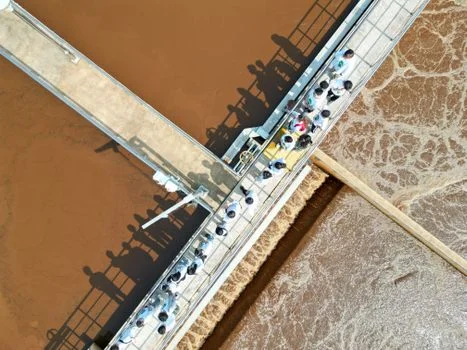
The ZLD system design process begins with pretreatment and primary removal. The process starts with PLC-controlled chemical dosing for fluoride precipitation in ZLD systems. Lime is dosed at rates of 500–1,000 mg/L at a pH of 10–11 to precipitate calcium fluoride. This is followed by DAF to remove the resulting flocs and any residual TSS.
Next, the clarified water enters a multi-stage membrane circuit. First, UF modules (0.01 μm) remove colloidal silica and organic macromolecules. Then, NF membranes are used specifically if TMAH recovery is a priority, operating at flux rates of 15–25 LMH (liters per square meter per hour). Finally, high-recovery RO systems for heavy metal removal in ZLD concentrate the remaining salts.
The RO reject, now high in salinity (typically 5%–8% TDS), is sent to a thermal evaporator. MVR systems are preferred for display panel applications because they recycle latent heat, significantly reducing steam requirements. The evaporator operates at temperatures between 80°C and 105°C, concentrating the brine until it reaches the saturation point.
The final concentrate is fed into a crystallizer, where water is fully removed, leaving behind solid salts and recovered minerals. For display manufacturers, this stage produces high-purity solids. TMAH and copper salts are recovered with purity levels exceeding 95%, allowing for industrial resale.
"The integration of NF before RO in display panel ZLD is non-negotiable for TMAH recovery. Without selective NF, the TMAH is lost in the mixed salt brine of the crystallizer, destroying the ROI of the material recovery circuit." — (HydropureWater Engineering Field Data, 2025)
Thermal vs. Membrane ZLD: Cost, Energy, and Recovery Comparison for Display Panel Wastewater
CapEx for a 100 m³/h thermal ZLD system ranges from $2.5M to $3.5M, primarily due to the high cost of corrosion-resistant alloys required for evaporators. In contrast, a membrane-based ZLD system of the same capacity ranges from $1.2M to $2M.
OpEx comparisons reveal a significant energy gap. Thermal ZLD systems consume 50–100 kWh/m³, resulting in a carbon footprint that may conflict with corporate sustainability goals unless powered by renewable energy. Membrane ZLD systems operate at 20–40 kWh/m³, offering a 60% reduction in energy costs.
Recovery purity is where thermal systems often excel for mixed waste streams, but membrane systems are superior for targeted material recovery. Membrane ZLD can recover 95% of TMAH at high purity because the NF stage separates it from other salts before the concentration phase.
| Feature | Thermal ZLD (MVR) | Membrane ZLD (RO/NF/MD) |
|---|---|---|
| CapEx (100 m³/h) | $2.5M – $3.5M | $1.2M – $2.0M |
| OpEx ($/m³) | $1.50 – $2.50 | $0.80 – $1.50 |
| Energy (kWh/m³) | 50 – 100 | 20 – 40 |
| TMAH Recovery Purity | ~80% (Risk of degradation) | 95%+ (Selective separation) |
| Maintenance Needs | Annual tube cleaning | Quarterly membrane CIP |
| Footprint | Large (Vertical towers) | Compact (Skid-mounted) |
Compliance and ROI: How ZLD Systems Meet Global Display Panel Wastewater Standards
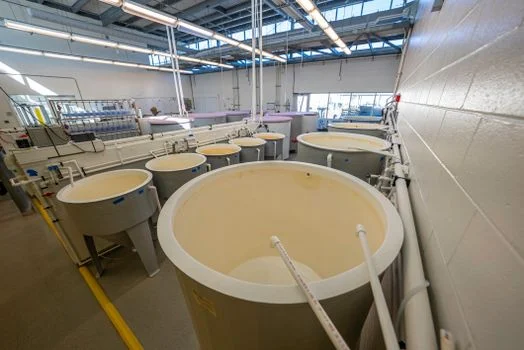
Compliance with the 2025 display panel wastewater discharge standards (China GB, EPA, EU) is the primary driver for ZLD adoption. China’s GB 31573-2015 mandates fluoride levels < 10 mg/L and Total Nitrogen (TN) < 15 mg/L. ZLD systems exceed these requirements by removing the liquid discharge point entirely, ensuring "zero-risk" compliance.
The ROI for ZLD in the display sector is typically achieved within 3 to 5 years. This calculation includes the avoidance of wastewater discharge fees, the reduction in freshwater procurement costs, and the revenue from recovered TMAH and copper. For a standard 100 m³/h facility, annual savings often reach $800,000 to $1.2M.
A 2024 case study of a TFT-LCD factory in Taiwan illustrates this value proposition. The facility faced a 20% reduction in municipal water allocation due to drought. By installing a hybrid membrane-thermal ZLD system, they recovered 99.9% of their process water and began recovering $500,000 worth of TMAH annually. The project not only maintained production continuity during the water crisis but also achieved a 3.2-year payback period based on material recovery and eliminated disposal fines.
Frequently Asked Questions
Does ZLD meet China’s GB 31573-2015 for fluoride?
Yes, ZLD systems eliminate the discharge entirely, but the internal treatment stages (precipitation + RO) typically reduce fluoride to < 2 mg/L before the evaporation stage, far exceeding the 10 mg/L limit required by GB 31573-2015