Display Panel Wastewater Recycling: 2025 Zero-Liquid-Discharge Engineering Blueprint with 99.9% Recovery
Display panel wastewater recycling systems achieve 99.9% water recovery and zero-liquid-discharge (ZLD) by combining membrane bioreactors (MBR), reverse osmosis (RO), and chemical precipitation. ITRI’s pilot plant demonstrates 100% liquid crystal recovery (9N purity), >90% indium recovery, and 100% glass recycling—converting waste into nano-porous adsorbents. These systems reduce disposal costs by 40-60% while meeting China GB 31573-2015, EPA, and EU discharge standards.
Why Display Panel Wastewater Recycling is a Manufacturing Imperative in 2025
Taiwanese display panel manufacturers generate approximately 8,000 tons of waste LCD panels annually, contributing to a global discard volume of 1 million tons according to EARTO data. This massive volume of waste represents both a significant environmental liability and an untapped resource pool. The industry's shift toward higher-resolution displays and larger form factors has scaled up the volume of wastewater generated during etching, stripping, and cleaning phases, making traditional "treat-and-discharge" models economically unsustainable.
LCD panels are classified as hazardous waste in the European Union and China due to the presence of liquid crystals, indium, and heavy metals. This classification subjects manufacturers to rigorous handling protocols and escalating disposal fees. Since 2020, the costs associated with landfilling and incineration for electronics manufacturing waste have risen by 30-50%. In China, the implementation of GB 31573-2015 has introduced a legal framework where non-compliance can result in fines reaching $50,000 per violation, alongside potential production halts.
Water scarcity in major display panel manufacturing hubs, such as Shenzhen and Taichung, has further catalyzed the transition to ZLD systems for TFT-LCD wastewater recycling. Freshwater costs in these regions have increased by an average of 25% since 2022. By implementing advanced recycling systems, plants can insulate themselves from water price volatility and ensure operational continuity during seasonal droughts. The transition from a linear waste model to a circular recovery model is no longer a corporate social responsibility (CSR) goal; it is a fundamental requirement for maintaining competitive margins in the 2025 display market.
Display Panel Wastewater: Composition, Contaminants, and Treatment Challenges
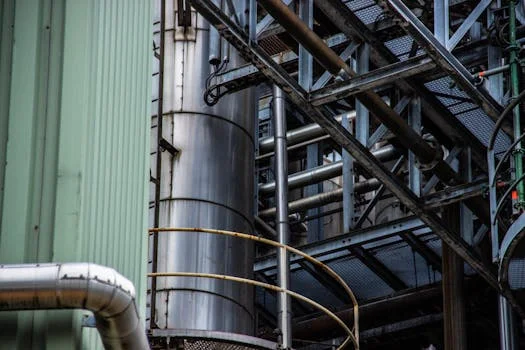
Wastewater generated during TFT-LCD manufacturing is characterized by a complex matrix of organic solvents, heavy metals, and specialized chemicals that render conventional biological treatment ineffective. The primary contaminants include liquid crystal (5-10 mg/L), indium (10-50 mg/L), fluoride (100-500 mg/L), and various heavy metals such as copper, nickel, and chromium. Additionally, high concentrations of organic solvents like Isopropyl Alcohol (IPA) and Tetramethylammonium Hydroxide (TMAH) contribute to high Chemical Oxygen Demand (COD) levels.
Liquid crystals pose a specific ecological threat, as these compounds are toxic to aquatic life with an LC50 of less than 1 mg/L for Daphnia magna. To be reused in the manufacturing process, liquid crystals must be recovered at a 9N purity level (99.9999999%), a benchmark established by ITRI’s 2023 technical standards. Indium recovery is another critical challenge; while indium concentrations vary depending on whether the wastewater originates from etching or cleaning processes, recovery becomes economically viable when concentrations exceed 30 mg/L, achieving a potential 90% recovery rate.
Fluoride and heavy metals represent the most significant compliance hurdles. China GB 31573-2015 imposes strict limits of less than 0.5 mg/L for fluoride and less than 0.1 mg/L for copper and nickel. These thresholds are often an order of magnitude lower than the raw wastewater concentrations, necessitating advanced pretreatment and multi-stage membrane filtration to reach compliance levels.
| Contaminant | Typical Raw Concentration | China GB 31573-2015 Limit | Treatment Challenge |
|---|---|---|---|
| Fluoride (F-) | 100–500 mg/L | <0.5 mg/L | Requires multi-stage precipitation |
| Indium (In) | 10–50 mg/L | N/A (Recovery Target) | Economic viability at >30 mg/L |
| Liquid Crystal | 5–10 mg/L | <0.01 mg/L (EU) | High toxicity; requires 9N purity |
| Copper (Cu) | 10–100 mg/L | <0.1 mg/L | Strongly chelated by solvents |
| COD | 500–2,000 mg/L | <50 mg/L | High TMAH and IPA content |
Step-by-Step Engineering Process for Display Panel Wastewater Recycling
The engineering of a high-recovery display panel wastewater system follows a rigorous sequence designed to isolate high-value materials before reclaiming the water for industrial reuse. This modular approach allows for the adjustment of treatment intensity based on the specific manufacturing process.
- Stage 1: Pretreatment (Screening and pH Adjustment) – The initial phase involves the removal of large suspended solids and the neutralization of pH to a range of 6-8. This protects downstream membranes from fouling and ensures optimal conditions for chemical reactions.
- Stage 2: Chemical Precipitation (Indium Recovery) – By adding sodium hydroxide (NaOH) to raise the pH to 8-9, indium can be precipitated as indium hydroxide. According to ITRI pilot data, this method achieves >90% indium recovery, which can then be refined for use in ITO targets.
- Stage 3: Liquid Crystal Extraction – Using specialized solvent-based extraction or high-precision membrane filtration, liquid crystals are separated from the aqueous phase. This process aims for 100% recovery at 9N purity, allowing for direct reinjection into the production line.
- Stage 4: Membrane Bioreactor (MBR) – MBR systems for display panel wastewater recycling utilize submerged PVDF membranes with a 0.1 μm pore size. This stage is critical for removing COD and TSS, producing a high-quality effluent suitable for secondary cleaning processes.
- Stage 5: Reverse Osmosis (RO) – RO systems for ultra-pure water recovery in display panel manufacturing achieve 90-95% water recovery. The resulting permeate typically features conductivity below 10 μS/cm, meeting the stringent requirements for ultra-pure water (UPW) systems.
- Stage 6: Sludge Dewatering – The concentrated brine and precipitated solids are processed through a sludge dewatering for display panel wastewater treatment system. High-pressure plate-and-frame filter presses reduce sludge volume by 70-80%, facilitating the production of glass adsorbents or safe disposal.
Treatment Technology Comparison: MBR vs. RO vs. Chemical Precipitation for Display Panel Wastewater
Selecting the appropriate technology requires an evaluation of the specific contaminants present and the desired end-use for the recycled water. While standalone technologies offer specific benefits, a hybrid approach is often required to meet the 99.9% recovery target essential for modern sustainability goals.
Membrane Bioreactors (MBR) are the gold standard for handling high-organic loads and removing fine suspended solids. However, they require consistent maintenance and membrane cleaning every 3 to 6 months to prevent biofouling from organic solvents like TMAH. Reverse Osmosis (RO) is indispensable for desalination and water reuse but is highly sensitive to fluoride scaling; without effective pretreatment, RO membranes can fail within weeks of operation. Chemical Precipitation is the most cost-effective method for heavy metal and indium recovery but does not contribute to water reuse goals and generates significant sludge volumes.
| Technology | Water Recovery Rate | Primary Target | CapEx (50-500 m³/h) | OpEx per m³ |
|---|---|---|---|---|
| MBR | 80–85% | COD, TSS, Bacteria | $500K – $2.0M | $0.30 – $0.60 |
| RO | 90–95% | Dissolved Solids, Ions | $800K – $3.0M | $0.50 – $0.90 |
| Chemical Precipitation | <10% | Indium, Heavy Metals, F- | $200K – $800K | $0.50 – $1.20 |
| Hybrid (MBR+RO+ZLD) | 99.9% | Full Resource Recovery | $1.2M – $4.5M | $1.00 – $1.80 |
Zero-Liquid-Discharge (ZLD) for Display Panel Wastewater: Cost Breakdown and ROI
The implementation of ZLD systems represents a significant capital commitment but offers a compelling return on investment (ROI) through resource recovery and the elimination of disposal liabilities. For a system processing 50 to 500 m³/h, the total CapEx ranges from $1.2 million to $4.5 million. This includes the integration of pretreatment, MBR, RO, and final thermal evaporation or high-pressure dewatering units.
Operating expenses (OpEx) for ZLD systems typically range between $0.80 and $1.50 per cubic meter of treated water. This cost is distributed across energy consumption, chemical reagents for precipitation, membrane replacement cycles, and labor. The ROI is driven by three primary factors: direct water savings, the market value of recovered indium, and the avoidance of hazardous waste disposal fines and fees.
| Cost Category | Percentage of OpEx | Key ROI Factor |
|---|---|---|
| Energy | 40% | Efficiency of RO pumps |
| Chemicals | 30% | Precipitant for Indium/F- |
| Membrane Replacement | 20% | MBR/RO membrane lifespan |
| Labor & Maintenance | 10% | Automated system monitoring |
Compliance Standards for Display Panel Wastewater Discharge: China GB, EPA, and EU Limits
Navigating global discharge standards for display panel wastewater is a critical task for engineering teams. China’s GB 31573-2015 is currently considered the most stringent standard globally for the electronic display industry, particularly regarding fluoride and heavy metal concentrations.
The EU Industrial Emissions Directive (2010/