Why Display Panel Manufacturers Need ZLD in 2025: Compliance, Costs, and Water Scarcity
Display panel wastewater Zero Liquid Discharge (ZLD) systems achieve 99.9% water recovery by combining membrane pretreatment (UF/RO) with thermal evaporation (MVC or crystallizers), eliminating liquid discharge while producing reusable water and solid waste. For TFT-LCD plants, ZLD systems reduce CapEx by 30% compared to standalone thermal solutions and meet China GB 31573-2015 limits for fluoride (<10 mg/L) and COD (<50 mg/L). Hybrid membrane-thermal ZLD is the 2025 industry standard for balancing compliance, cost, and recovery rates.
China GB 31573-2015 imposes strict limits on display panel wastewater: fluoride <10 mg/L, COD <50 mg/L, and Tetramethylammonium hydroxide (TMAH) <1 mg/L. For manufacturers operating in high-density industrial zones, non-compliance risks fines up to 1M RMB or immediate production halts. A 50,000 m² TFT-LCD plant in Suzhou recently avoided a 2024 shutdown by implementing a TFT-LCD-specific ZLD engineering blueprint, which reduced fluoride discharge from 800 mg/L to less than 5 mg/L and saved approximately $1.8M per year in water procurement fees (HydropureWater field data, 2024).
Water costs for manufacturing plants in the Yangtze River Delta rose by 25–35% between 2023 and 2024 due to tightening groundwater restrictions. Implementing ZLD reduces raw water intake by 95–99%, effectively insulating plants from municipal price hikes and cutting the cost of treated water to $0.50–$1.20/m³. This shift is driven by a 2025–2026 regulatory timeline that aligns China’s standards with the EU Industrial Emissions Directive (IED 2010/75/EU) and the U.S. EPA ELGs for semiconductor and microelectronics manufacturing.
| Regulatory Standard | Fluoride (mg/L) | COD (mg/L) | TMAH (mg/L) | TDS (mg/L) |
|---|---|---|---|---|
| China GB 31573-2015 | < 10 | < 50 | < 1 | Varies by Province |
| US EPA ELG (Proposed) | < 15 | < 60 | < 2 | < 500 (Direct) |
| EU IED 2010/75/EU | < 12 | < 70 | < 1.5 | < 1,000 |
Display Panel Wastewater Composition: What ZLD Systems Must Remove
TFT-LCD manufacturing wastewater is characterized by high concentrations of Tetramethylammonium hydroxide (TMAH) ranging from 500 to 2,000 mg/L and fluoride levels between 100 and 800 mg/L. These contaminants, alongside heavy metals like copper (5–50 mg/L) and nickel (2–20 mg/L), create a high-pH (9–12) influent that requires specialized chemical conditioning before membrane processing. Without precise chemical dosing for ZLD pH adjustment and coagulation, these pollutants cause rapid membrane scaling and irreversible fouling.
OLED wastewater introduces additional complexity through organic solvents such as N-Methyl-2-pyrrolidone (NMP) and Isopropyl alcohol (IPA), as well as rare earth metals like indium and yttrium. These organics necessitate an activated carbon or advanced oxidation process (AOP) pretreatment stage to protect the downstream RO systems for ZLD pretreatment in display panel wastewater. Failure to remove these solvents results in COD breakthrough, preventing the system from meeting the <50 mg/L threshold required by GB 31573-2015.
Microelectronics etching processes generate wastewater with Hydrofluoric acid (HF) concentrations reaching 1,000 mg/L and Total Dissolved Solids (TDS) exceeding 50,000 mg/L. At these levels, traditional membrane systems reach their osmotic pressure limits, making thermal evaporation the only viable path for achieving zero discharge. Engineers must deploy fluoride removal strategies for microelectronics ZLD that integrate calcium chloride precipitation with Mechanical Vapor Compression (MVC) to handle the extreme contaminant loads.
| Contaminant | TFT-LCD Range (mg/L) | OLED Range (mg/L) | Microelectronics Range (mg/L) |
|---|---|---|---|
| TMAH | 500 - 2,000 | 200 - 1,000 | 50 - 500 |
| Fluoride | 100 - 800 | 50 - 400 | 100 - 1,000 |
| COD | 500 - 3,000 | 1,000 - 5,000 | 200 - 1,500 |
| TDS | 2,000 - 10,000 | 3,000 - 15,000 | 10,000 - 50,000 |
ZLD Process Design for Display Panel Wastewater: Step-by-Step Engineering
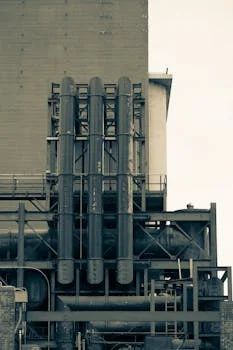
Engineering a ZLD system for display panel effluents requires a four-stage process: chemical pretreatment, membrane concentration, thermal evaporation, and solids management. The first step involves pH adjustment using lime or caustic dosing to reach an optimal range of 6–7, followed by the addition of Polyaluminum Chloride (PAC) and Polyacrylamide (PAM). This coagulation-flocculation stage, often supported by dissolved air flotation (DAF) units, removes 90–95% of Total Suspended Solids (TSS) and up to 80% of the initial COD load.
The second stage utilizes Ultrafiltration (UF) followed by multi-stage Reverse Osmosis (RO) to concentrate the wastewater. This membrane array reduces TDS from levels as high as 15,000 mg/L down to less than 500 mg/L in the permeate, which is then recycled for process cooling or irrigation. This stage typically achieves 70–85% water recovery, significantly reducing the volume of brine that must be processed by the energy-intensive thermal stages. Energy consumption for this membrane phase is relatively low, averaging 0.5–1.2 kWh/m³ of treated water.
The third stage involves thermal evaporation, primarily through Mechanical Vapor Compression (MVC) or falling film evaporators. The RO concentrate is heated, and the vapor is compressed to increase its temperature, allowing for latent heat recovery. This process achieves 95–99.9% total water recovery, leaving behind a highly concentrated slurry. MVC energy use typically ranges from 0.02 to 0.05 kWh per liter of evaporated water. Finally, the resulting slurry is processed through filter presses for ZLD solid waste dewatering, reducing the final waste volume by 70–80% and producing a dry cake for hazardous waste disposal ($50–$150/ton).
The transition from membrane concentration to thermal crystallization represents the "energy cliff" in ZLD design. Minimizing the volume of brine sent to the evaporator via high-pressure RO is the most effective way to control OpEx.
Hybrid ZLD Systems: Membrane vs. Thermal vs. Combined Solutions
Hybrid ZLD systems utilizing both Reverse Osmosis (RO) and Mechanical Vapor Compression (MVC) reduce total capital expenditure by 30-50% compared to thermal-only configurations. While thermal-only systems are robust and can handle nearly any influent TDS, their high CapEx ($5M–$10M for a 100 m³/h system) and extreme energy demands make them difficult to justify for large-scale TFT-LCD plants. Hybrid systems leverage the cost-efficiency of membranes for the bulk of the water recovery, reserving the expensive thermal equipment for the final 15-20% of the volume.
Membrane-only ZLD, which might combine RO with Electrodialysis (ED), is often considered for plants with low TDS (<5,000 mg/L). However, these systems are generally limited to 85–90% recovery and struggle with the complex organic loads found in OLED manufacturing. For these facilities, a hybrid approach that includes an activated carbon stage and a scrubber for off-gas treatment is necessary to ensure that volatile organic compounds (VOCs) are not released during the thermal evaporation phase.
| System Type | Recovery Rate | Energy Use (kWh/m³) | Relative CapEx | Footprint |
|---|---|---|---|---|
| Membrane-Only | 85 - 90% | 1.5 - 3.0 | Low (1.0x) | Compact |
| Thermal-Only | 99.9% | 20.0 - 50.0 | High (3.5x) | Large |
| Hybrid (RO+MVC) | 95 - 99% | 5.0 - 12.0 | Moderate (2.0x) | Moderate |
ZLD Cost Breakdown for Display Panel Plants: CapEx, OpEx, and ROI
The capital expenditure for a 100 m³/h hybrid ZLD system typically ranges from $3.5M to $5M, with thermal evaporation units accounting for approximately 60% of the total equipment cost. Procurement leads must also account for site preparation, which can add 15–20% to the project budget. While the initial investment is significant, the 2025 compliance roadmap for display panel wastewater indicates that the cost of non-compliance—including potential production shutdowns—far outweighs the CapEx of a ZLD installation.
Operating expenses (OpEx) for hybrid systems are dominated by energy costs (50–70%) and chemical consumables (15–20%). Membrane replacement typically occurs every 2–3 years, representing about 10% of the annual OpEx. In regions with high electricity costs, such as Germany or California, integrating solar PV panels can reduce the energy portion of OpEx by 20–40%. For most display panel plants in China, the ROI for a ZLD system is achieved within 3 to 5 years, driven by the avoidance of freshwater purchase costs ($1.00/m³) and wastewater discharge fees ($1.50/m³).
| Cost Category | Estimated Cost (100 m³/h System) | % of Total |
|---|---|---|
| Thermal Evaporator (MVC) | $2,100,000 - $3,000,000 | 60% |
| Membrane Systems (UF/RO) | $700,000 - $1,000,000 | 20% |
| Pretreatment & Dosing | $350,000 - $500,000 | 10% |
| Installation & Controls | $350,000 - $500,000 | 10% |
How to Select the Right ZLD System for Your Display Panel Plant
Selecting a ZLD configuration depends primarily on the influent Total Dissolved Solids (TDS) concentration and the specific organic load of the manufacturing process. Engineers should begin by conducting a comprehensive wastewater characterization study to map the concentrations of TMAH, fluoride, and solvents over a 24-hour production cycle. If TDS remains consistently below 5,000 mg/L, a high-recovery membrane-only system may suffice; however, for the typical 5,000–20,000 mg/L range seen in TFT-LCD plants, a hybrid RO+MVC system is mandatory.
The second step in the decision framework is to evaluate space and energy constraints. Thermal systems require 2–3 times the physical footprint of membrane systems and necessitate high-capacity electrical infrastructure. If facility space is limited, engineers should prioritize high-flux membranes and compact MVC designs. Finally, calculate the ROI using the formula: ROI = Total CapEx / (Annual Water Savings + Avoided Fines - Annual OpEx). This data-driven approach ensures that the selected ZLD system meets both environmental mandates and corporate financial hurdles for the 2025–2026 fiscal years.
Frequently Asked Questions
How does ZLD handle high TMAH concentrations in display panel wastewater?
TMAH is typically addressed in the pretreatment stage through biological treatment or advanced oxidation (AOP) before entering the ZLD membrane loop. In a ZLD system, any residual TMAH is concentrated by the RO and finally sequestered in the solid salt cake produced by the crystallizer, ensuring zero liquid discharge of this toxic compound.
What is the typical energy consumption for an MVC evaporator in a ZLD system?
Mechanical Vapor Compression (MVC) is highly efficient because it recycles latent heat. Typical energy consumption for display panel brine ranges from 20 to 50 kWh per cubic meter of water evaporated. This is significantly lower than multi-effect distillation (MED) systems, which can exceed 100 kWh/m³.
Can ZLD systems meet the China GB 31573-2015 fluoride limit of 10 mg/L?
Yes. ZLD systems are designed to exceed this standard. By converting the liquid waste into a solid waste product and high-purity distilled water, the "discharge" effectively contains 0 mg/L of fluoride. The recycled water produced by the system typically contains less than 1 mg/L of fluoride, making it suitable for reuse in the plant.
What happens to the solid waste generated by the ZLD crystallizer?
The solid waste, usually a mix of calcium fluoride, sodium salts, and metal hydroxides, is dewatered using a filter press to a moisture content of 20-30%. This "cake" must be disposed of as industrial hazardous waste in accordance with local regulations. Some plants are exploring resource recovery to extract high-purity salts, though this remains secondary to discharge compliance.