Top 5 Sewage Treatment Equipment Suppliers in Kuala Lumpur: 2025 Engineering Specs, Costs & Zero-Risk Selection Guide
In 2025, Kuala Lumpur’s top sewage treatment equipment suppliers offer systems achieving 92–97% TSS removal and COD ≤50 mg/L—meeting Malaysia’s stringent Standard A discharge limits (COD ≤100 mg/L, BOD ≤50 mg/L per EQA 1974). For industrial buyers, key differentiators include automation level (e.g., PLC-controlled DAF systems vs. manual WSZ plants), footprint (underground MBR systems save 60% space), and local compliance support. This guide compares 5 supplier categories with engineering specs, cost benchmarks, and a zero-risk selection framework tailored to KL’s regulatory and logistical landscape.
Consider a food manufacturing facility in the Klang Valley facing heavy Department of Environment (DOE) fines because their legacy grease traps failed to handle a 20% increase in production volume. The Fats, Oils, and Grease (FOG) carryover fouled downstream biological processes, leading to BOD levels double the permitted Standard B limit. To avoid shutdown orders, the facility required a rapid upgrade to a Dissolved Air Flotation (DAF) system integrated with automated chemical dosing. This scenario highlights the shift in KL’s industrial sector: procurement is no longer just about buying a tank; it is about securing a performance guarantee that satisfies the Environmental Quality Act (EQA) 1974.
How to Choose the Right Sewage Treatment Equipment for Your KL Project: A 5-Step Decision Framework
Selecting equipment without a diagnostic framework often leads to "over-engineering" (excessive CAPEX) or "under-performance" (compliance failure). A structured approach ensures the technology matches the influent chemistry and the site’s physical constraints.
Step 1: Map influent characteristics to treatment processes. Before contacting a supplier, identify your raw wastewater parameters. Food processing plants typically deal with high FOG and BOD, whereas electronics facilities focus on heavy metals and TSS. Use the table below to align your parameters with the necessary equipment.
| Parameter | Typical Industrial Range (KL) | Primary Treatment Equipment | Secondary/Tertiary Equipment |
|---|---|---|---|
| COD (Chemical Oxygen Demand) | 500 – 3,000 mg/L | DAF / Chemical Dosing | MBR / Integrated WSZ |
| BOD (Biochemical Oxygen Demand) | 250 – 1,500 mg/L | Anaerobic Pre-treatment | Aerobic Bioreactor |
| TSS (Total Suspended Solids) | 200 – 1,000 mg/L | Static Screens / DAF | Filter Press (Sludge) |
| FOG (Fats, Oils, Grease) | 50 – 500 mg/L | DAF System | Biological Polishing |
Step 2: Match discharge requirements to Malaysian DOE standards. Determine if your facility is located upstream of a water intake (Standard A) or downstream (Standard B). Hospitals and pharmaceutical plants in KL often require ozone disinfection or MBR technology to meet additional pathogen and micropollutant limits mandated by the EQA 1974.
Step 3: Assess site constraints. Urban sites in Kuala Lumpur or Petaling Jaya often lack the space for large clarification tanks. In these cases, a decision tree favors underground WSZ systems for noise-sensitive areas or MBR systems for high-density industrial parks where footprint is at a premium.
Step 4: Evaluate automation needs. Manual systems have lower upfront costs but higher OPEX due to labor and chemical wastage. PLC-controlled systems offer real-time monitoring of pH and DO (Dissolved Oxygen) levels, reducing chemical consumption by up to 30%. A cost-benefit analysis usually favors automation for plants processing >50 m³/day.
Step 5: Shortlist suppliers by local support. Ensure the supplier has a service team within the Klang Valley. Spare parts availability—specifically MBR membranes and dosing pumps—is critical to avoid downtime that could lead to environmental non-compliance.
Supplier Category 1: Dissolved Air Flotation (DAF) Systems for High-FOG Wastewater in KL
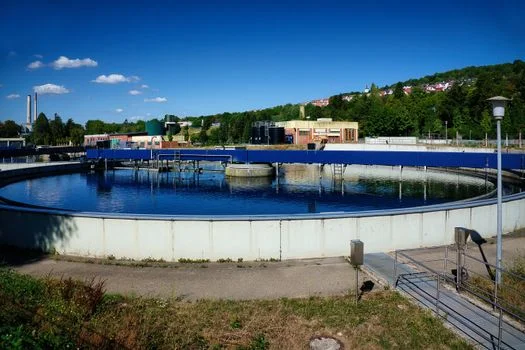
DAF systems are the industry standard for removing non-emulsified oils and suspended solids that are too light to settle. They work by introducing micro-bubbles into the wastewater, which attach to particles and float them to the surface for mechanical skimming.
Engineering specifications for KL-optimized DAF systems for high-FOG wastewater typically feature micro-bubble sizes of 20–50 μm. This precision allows for TSS removal rates of 95–98% and FOG removal of 90–95%. For KL palm oil mills and food processing plants, flow rates range from 4 m³/h for small batch operations to 300 m³/h for large-scale municipal pre-treatment. A technical guide to DAF systems for KL’s high-FOG industries highlights that while DAF is excellent for solids removal, it must be paired with biological treatment to meet the EQA 1974 COD limit of ≤100 mg/L.
| Industry Use Case | Recommended DAF Model | Flow Capacity (m³/h) | Automation Level |
|---|---|---|---|
| Commercial Kitchens / Food Prep | DAF-10 | 10 m³/h | Semi-Automated |
| Palm Oil Effluent (POME) | DAF-50 | 50 m³/h | Full PLC Control |
| Textile Dyeing Pre-treatment | DAF-100 | 100 m³/h | Full PLC Control |
In terms of cost, 2025 benchmarks for DAF systems in KL range from RM 300,000 to RM 800,000 for CAPEX, depending on material (SS304 vs. SS316). OPEX typically sits between RM 15 and RM 25 per cubic meter, covering electricity for the air compressor and chemical coagulants. High-end suppliers provide PLC automation that adjusts air-to-water ratios based on influent turbidity, whereas local fabricators may offer lower CAPEX but require constant manual adjustment.
Supplier Category 2: Underground Integrated Sewage Treatment Plants (WSZ Series) for Space-Constrained KL Sites
For hospitals, hotels, and residential developments in densely populated KL districts, surface-level treatment plants are often non-viable due to odor and aesthetic concerns. Underground integrated systems utilize the A/O (Anoxic/Oxic) process within a reinforced carbon steel or FRP tank buried beneath parking lots or green spaces.
The engineering specs for space-saving underground sewage plants for KL hospitals and hotels include a flow rate range of 1–80 m³/h. These systems achieve 85–92% COD removal and up to 95% BOD removal. Because they are buried, they offer a footprint 60% smaller than conventional activated sludge plants. For an engineering deep dive on underground sewage systems, one must look at the disinfection stage; medical facilities in KL must meet Standard A plus specific pathogen limits, often requiring integrated ozone or UV modules.
| Facility Type | Required Capacity | Compliance Standard | Key Feature |
|---|---|---|---|
| 20-Bed Private Clinic | WSZ-20 (20 m³/day) | Standard A + Disinfection | Low Noise (<45 dB) |
| 100-Room Boutique Hotel | WSZ-50 (50 m³/day) | Standard B | Odor Control Bio-filter |
| Residential Complex | WSZ-100 (100 m³/day) | Standard B | Remote Monitoring |
Cost benchmarks for 2025 indicate a CAPEX of RM 500,000 to RM 1.2 million for systems sized between 20 and 80 m³/h. OPEX is remarkably low (RM 10–20/m³) because these plants are designed for unattended operation. Suppliers in this category range from high-automation providers like HydropureWater to municipal-focused entities that partner with Indah Water Konsortium (IWK).
Supplier Category 3: MBR Membrane Bioreactors for Near-Reuse-Quality Effluent in KL
As water tariffs in KL rise and ESG (Environmental, Social, and Governance) mandates tighten, industrial players in the electronics and pharmaceutical sectors are turning to Membrane Bioreactors (MBR). MBR replaces the secondary clarifier of a traditional plant with a membrane barrier, typically made of PVDF with a 0.1 μm pore size.
These MBR systems for near-reuse-quality effluent in KL’s electronics sector deliver COD removal rates of 95–98% and BOD removal of 98–99%. The resulting water often exceeds Standard A requirements (COD ≤50 mg/L) and is suitable for non-potable reuse in cooling towers or irrigation, aligning with WHO Guidelines for Drinking-water Quality for recycled applications. For example, an MBR system processing 150 m³/day for a semiconductor plant can significantly reduce raw water intake costs.
| Application | Membrane Type | Effluent Quality (COD) | Reuse Potential |
|---|---|---|---|
| Electronics Mfg | Flat-sheet PVDF | < 30 mg/L | Cooling Tower Makeup |
| Pharmaceuticals | Hollow-fiber | < 40 mg/L | Process Wash Water |
| Food & Beverage | Reinforced PVDF | < 50 mg/L | Landscape Irrigation |
CAPEX for MBR systems in 2025 is higher, ranging from RM 1 million to RM 2.5 million for 100–500 m³/day capacities. OPEX is RM 20–35/m³, primarily due to the energy required for membrane scouring and the cost of membrane replacement every 5–7 years. While international brands offer long warranties, local KL suppliers providing flat-sheet membranes often offer better response times for chemical cleaning services.
Supplier Category 4: Chemical Dosing Systems for pH Adjustment and Sludge Conditioning in KL
Chemical dosing is the "brain" of the treatment process, ensuring that pH levels remain within the EQA-mandated 6.0–9.0 range and that solids are properly conditioned for separation. Precision is vital; over-dosing wastes money, while under-dosing leads to compliance failure.
Standard PLC-controlled chemical dosing for KL textile and palm oil mills features high-precision metering pumps with a variance of only ±1%. In textile dyeing, where pH swings can be radical, response times of less than 5 seconds are necessary to prevent damage to downstream biological cultures. These systems are also critical for sludge conditioning, where Polyaluminium Chloride (PAC) or polymers are added to increase the efficiency of dewatering equipment.
| Chemical Type | Target Industry | Primary Function | Control Mechanism |
|---|---|---|---|
| Sodium Hydroxide (NaOH) | Electroplating / Acidic Waste | pH Neutralization | ORP / pH Probe Feed |
| PAC / Alum | Municipal / Food Processing | Coagulation | Flow-proportional |
| Polymer (PAM) | Sludge Dewatering | Flocculation | Manual or Automated |
2025 CAPEX for skid-mounted dosing systems in KL starts at RM 50,000 and can reach RM 200,000 for multi-pump, PLC-integrated setups. OPEX (RM 5–15/m³) is dominated by chemical consumption. Automated skids significantly outperform manual dosing by preventing the "see-saw" effect of pH over-correction, which is a common cause of sludge bulking in KL industrial estates.
Supplier Category 5: Sludge Dewatering Equipment for KL’s Industrial and Municipal Wastewater
Sludge disposal is often the single largest OPEX item for KL wastewater plants. Under EQA 1974, scheduled waste must be handled by licensed contractors, and costs are calculated by weight. Reducing sludge volume through dewatering is therefore a direct strategy for cost control.
The plate-and-frame filter press is the preferred choice for achieving high cake dryness. These systems can achieve 25–40% solids concentration, reducing sludge volume by 70–80%. For a palm oil mill producing fibrous sludge, a belt press might be faster, but for municipal or chemical sludge, the filter press provides the lowest moisture content, ensuring the waste meets the <60% moisture requirement for landfill disposal in Malaysia.
| Dewatering Method | Cake Dryness (%) | Best For | Labor Intensity |
|---|---|---|---|
| Filter Press | 30 – 45% | Chemical / Biological Sludge | Medium (Manual/Auto) |
| Belt Press | 18 – 25% | Paper Mill / Fibrous Waste | Low (Continuous) |
| Screw Press | 20 – 30% | Oily Sludge / DAF Sludge | Low (Automated) |
2025 CAPEX for 10–50 m³/h dewatering systems ranges from RM 200,000 to RM 600,000. While the initial investment is significant, the OPEX savings from reduced disposal fees (typically RM 300–500 per ton in KL) often result in a payback period of less than 3 years. Automated presses reduce labor costs further by utilizing hydraulic plate shifters and automatic cloth washing.
2025 Cost Benchmarks for Sewage Treatment Equipment in Kuala Lumpur: CAPEX, OPEX, and ROI Calculators
Budgeting for a 2025 project in KL requires an understanding of both local labor markets and global material costs. While equipment constitutes the bulk of the budget, ancillary costs can fluctuate based on site conditions. A detailed cost breakdown for KL projects typically follows this distribution:
- Equipment Purchase: 60% (Includes tanks, pumps, membranes, and PLC)
- Installation & Commissioning: 20% (Local mechanical/electrical labor)
- Civil Works: 15% (Excavation for underground systems or concrete pads)
- Permitting & DOE Submission: 5% (Professional engineer sign-offs)
Operational costs in KL are influenced by utility rates, with electricity currently averaging RM 0.50/kWh. To calculate the Return on Investment (ROI) for an equipment upgrade, use the following formula:
ROI Payback (Years) = (Total CAPEX) / (Annual Disposal Savings + Annual Water Reuse Revenue - Annual OPEX Increase)
For example, a 200 m³/day electronics plant in Shah Alam investing RM 1.5 million in an MBR system can save RM 200,000 annually in water bills and RM 150,000 in sludge disposal. After accounting for RM 50,000 in additional energy and membrane maintenance, the system pays back in approximately 5 years. Hidden costs to watch for in KL include permitting delays, which can add 3–6 months to a project timeline, and the lead time for imported specialized sensors.
Zero-Risk Procurement Checklist for KL Sewage Treatment Equipment Buyers
To minimize procurement risk, EHS officers and procurement managers should follow this 5-point checklist before finalizing a supplier contract:
- Technical Vetting: Does the supplier provide a performance guarantee for Standard A/B? Request 3rd-party lab results from a similar KL installation. Verify that the MBR membranes or DAF components are in stock at Port Klang or a local warehouse.
- Contractual Protections: Ensure the contract includes liquidated damages (LD) for installation delays. Uptime guarantees should be set at a minimum of 90%, with 24-hour emergency response times for critical failures.
- Compliance Documentation: The supplier must provide a "Written Notification" and "Written Approval" support for the DOE. Check for EQA 1974 Section 25 compliance and ensure all operators receive certified training.
- Site Logistics: For underground systems, have soil tests been conducted to prevent buoyancy issues in KL’s high-water-table areas? Is there 3-phase power available for the DAF compressors?
- Post-Installation Support: The warranty should only begin after the DOE sign-off or a 30-day stable performance test. Ensure the spare parts kit includes essential seals, probes, and at least one backup dosing pump.
Frequently Asked Questions
What is the difference between Standard A and Standard B discharge in Malaysia?
Standard A applies to industrial and sewage discharge located upstream of water supply intakes, requiring stricter limits (e.g., COD ≤ 80–100 mg/L). Standard B applies to downstream areas with slightly relaxed limits (e.g., COD ≤ 200 mg/L). Most new KL industrial projects aim for Standard A to future-proof against regulatory tightening. See also: Standard A compliant underground plants.
How much does a 100 m³/day MBR system cost in Kuala Lumpur?
In 2025, a 100 m³/day MBR system typically costs between RM 1.2M and RM 1.8M for CAPEX. OPEX averages RM 25/m³, covering energy and membrane cleaning. The high quality of effluent often allows for water reuse, offsetting the initial investment. See also: KL wastewater cost breakdown.
Can DAF systems remove dissolved COD?
No, DAF is primarily a physical-chemical process for removing suspended solids and FOG. While it reduces the "particulate" portion of COD, dissolved organic matter requires biological treatment like an MBR or A/O process to meet EQA limits. See also: DAF for solids removal.
Why is sludge dewatering important for KL factories?
Sludge disposal in KL is expensive and strictly regulated under scheduled waste laws. Dewatering equipment like a filter press reduces sludge volume by up to 80%, directly cutting disposal costs and ensuring compliance with landfill moisture limits. See also: Automated filter presses.