How a Coarse Screen Inlet Captures Debris
A coarse screen inlet intercepts rags, plastics, and other large debris at the headworks using surface filtration across a bar rack. Mechanically cleaned units with 6–25 mm apertures hold channel approach velocity near 0.6–1.0 m/s, lift captured solids to a discharge chute, and typically cut influent TSS by 30–50% before pumps and secondary processes see the load.
Skipping that pretreatment lets fibrous rags wrap pump impellers and heat-exchanger plates. Amperage rises, motors overheat, and unplanned rebuilds follow. Plants that lack automated inlet works often face pump clogging costs in the $50K–$200K per year range, with emergency repairs reported about 40% higher than screened plants. Textile lines shed synthetic lint; electronics lines shed abrasive metal shards that can lacerate membranes ahead of sludge dewatering systems for downstream solids handling.
A textile plant in Gujarat upgraded to a GX Series Rotary Mechanical Bar Screen after bi-weekly pump failures from lint. Unplanned downtime fell about 70%, and centrifugal pump life rose from 18 months to more than 5 years. Under the EU Urban Waste Water Directive 91/271/EEC, agglomerations above 2,000 population equivalents (PE) must provide collecting systems and treatment; inlet screening remains standard practice so inert macroscopic solids do not inhibit biological stages.
Coarse screens also buffer TSS and COD. Removing organic debris before it macerates cuts primary loading, aeration energy, and chemical demand on a DAF system for downstream solids removal.
How Does Coarse Screen Wastewater Treatment Work?
Coarse screen wastewater treatment works by surface interception: any particle larger than the clear opening between bars is blocked while liquid passes. Unlike fine screens that may use depth filtration, a coarse rack relies on that geometric cut size plus controlled channel hydraulics.
Approach velocity (V) is the controlling design variable and should stay between 0.6 m/s and 1.0 m/s at peak hourly flow. Below about 0.4 m/s, grit settles in the channel and can turn septic. Above about 1.2 m/s, flexible films and rags can be forced through the bars (carryover). Engineers size the channel with V = Q / (B × H), where Q is peak hourly flow, B is channel width, and H is water depth at the screen.
According to the US EPA Combined Sewer Overflow Technology Fact Sheet Screens (EPA 832-F-99-040), approach velocity should be at least 0.38 m/s (1.25 ft/s) to limit deposition, while velocity through the bars should stay below 0.91 m/s (3 ft/s) to reduce carryover. Instrumentation on mechanically cleaned screens commonly limits differential head to about 6 in (about 150 mm) before a cleaning cycle starts, which aligns with the 100–150 mm trip points used on continuous-duty inlets.
As debris builds a mat on the bars, capture efficiency rises because the effective aperture narrows, but head loss also rises. Ultrasonic level sensors typically start the rake at a 100–150 mm differential. The GX Series Rotary Mechanical Bar Screen for continuous-duty fine screening uses dual overload protection. Electronic torque cut-out plus shear pins or cycle alarms protect the drive during hard jams such as timber or rock.
| Engineering Parameter | Standard Range | Operational Impact |
|---|---|---|
| Approach Velocity | 0.6 – 1.0 m/s | Prevents grit deposition and debris carryover. |
| Screen Angle | 60° – 80° | Balances debris retention with mechanical rake efficiency. |
| Allowable Head Loss | 100 – 150 mm | Triggers cleaning cycle to prevent upstream overflow. |
| Aperture Size | 6 mm – 25 mm | Determines the minimum particle size intercepted. |
| Rake Speed | 2 – 5 m/min | Determines the solids handling capacity of the unit. |
High-torque drives pull stainless rake teeth through the bar rack so grease-laden solids clear cleanly. That mechanical timing sets how much solids the unit can remove before the next storm peak arrives.
Coarse Screen Types Compared: Bar, Drum, and Rotary Systems
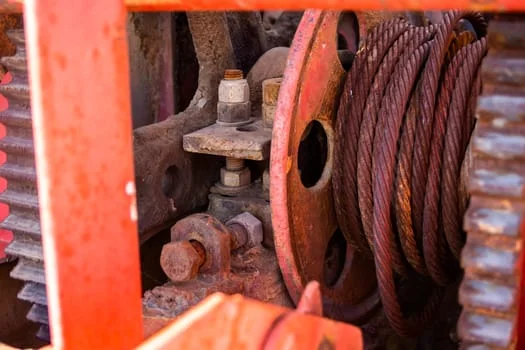
Screen architecture should match debris type and hydraulic load, not a generic catalog preference. Capture rate, footprint, and cleaning method diverge sharply across static bars, drums, multi-rake bars, and step screens.
Static Bar Screens: Parallel inclined bars are low CapEx but need manual or simple traveling-rake cleaning. They suit flows below 500 m³/h or emergency bypass duty. Labor demand and overflow risk rise quickly in storms if cleaning lags.
Rotary Drum Screens: Perforated or wedge-wire drums are common in food processing and pulp and paper. Influent enters the drum interior; solids lift to a central hopper as the drum turns. Capture can reach about 97% for 6 mm particles, but footprint and spray-wash systems grow with FOG load.
Mechanical Bar Screens (GX Series): Multi-rake chain-driven bars remain the workhorse for large industrial and municipal headworks. The GX Series handles high solids loading in channels up to about 10 m deep and accepts mixed debris from plastics to submerged rock. 304 or 316 stainless steel resists the H2S-rich headworks atmosphere.
| Screen Type | Flow Capacity | Solids Capture Rate | Ideal Use Case |
|---|---|---|---|
| Static Bar | Low (<500 m³/h) | 70-80% | Bypass channels, small municipal. |
| Rotary Drum | Medium (500-5,000 m³/h) | 95-97% | Food processing, slaughterhouses. |
| Mechanical Bar (GX) | High (>5,000 m³/h) | 90-95% | Large industrial inlets, primary municipal. |
| Step Screen | Medium | 85-90% | Shallow channels with high fibrous content. |
After coarse screening, many plants add DAF systems for removing finer solids after coarse screening so physical debris and chemically flocculated fines are handled in sequence.
When Should You Choose a Coarse Bar Screen?
A coarse bar screen is the right first choice when peak hourly flow is high, debris size varies widely, and the channel is deep enough for a multi-rake rack. Drum screens fit FOG-rich industrial streams better; static bars fit only small or bypass duty.
Step 1: Define Influent Characteristics. Map debris type and size distribution. Hair and grease (tanneries, food plants) favor rotary drums with brush and spray wash. Electronics or mining streams need abrasion-resistant materials and openings smaller than 5 mm when membranes sit downstream.
Step 2: Match Screen Type to Hydraulic Flow. Size for Peak Hourly Flow (PHF), not average day. Undersizing blinds the rack and floods the channel. Estimate clean-screen head loss with the Kirschmer relation h = β × (s/b)^(4/3) × (v²/2g) × sin(θ), where β is bar shape factor and θ is inclination.
Step 3: Evaluate Material Durability. Municipal wastewater usually accepts 304 stainless steel. High chloride or extreme pH industrial effluent needs 316L or duplex alloys to limit pitting. Reinforce rake teeth where heavy inorganic solids are expected.
Step 4: Assess Automation and Integration. PLC and SCADA links let operators track cleaning frequency, motor torque, and head loss. The GX Series Rotary Mechanical Bar Screen for continuous-duty fine screening supports that predictive maintenance loop instead of waiting for a jammed rake.
Step 5: Calculate ROI and TCO. CapEx commonly spans $15K–$100K depending on width, depth, and materials. Payback often falls in 18–24 months when pump maintenance drops 40–60% and aeration energy falls with lower solids load. At 1,000 m³/h, avoiding two major pump rebuilds per year can save about $30,000 in parts and labor.
What Water Efficiency Rules Apply to UK Data Centres?
UK data centres that take cooling or process water from the environment must check Environment Agency abstraction and impounding licensing before they abstract. Water-efficiency planning and reuse loops are now central to those applications because drought and resource pressure are rising across England.
Blowdown, wash-down, and domestic sewage from campus facilities still need solids control before reuse or discharge. A coarse screen inlet protects pumps and heat exchangers on those loops. It also protects compact biological units such as an Underground Package Sewage Treatment Plant (WSZ Series) that may serve the site after screening.
Selection checklist for industrial inlet works:
- Peak hourly flow and storm peaking factor
- Debris type (rags, grit, FOG, fibers, metal shards)
- Clear opening needed to protect downstream membranes or DAF
- Channel depth, width, and available head
- Material grade for chloride, H2S, and pH
- Automation, overload protection, and spare rake capacity
- Screenings handling, washing, and disposal route
Installation and Maintenance: Best Practices for 20+ Year Lifespan
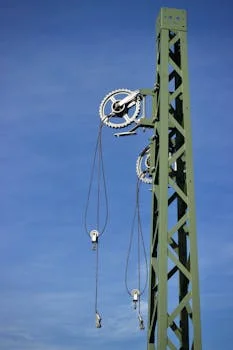
Screen life is set in the first 48 hours of installation. A rack out of square by even 3 mm produces uneven chain tension and early sprocket wear. Torque anchor bolts to manufacturer values (typically 30–50 Nm) and recheck after the first 100 operating hours as vibration settles the embeds.
Daily checks should confirm rake home position and a clear discharge chute. Sticky teeth after the scraper usually mean brush pressure needs adjustment. A sudden rise in baseline head loss often signals grease or scale on the bars and calls for a manual pressure wash.
Weekly work includes lubricating drive chains and bearings; food plants must use food-grade grease. Test overload protection monthly by verifying torque-sensor calibration so a lodged object trips the drive before the shaft twists or the chain snaps.
Annual underwater inspection should look for bent or thinned rake teeth, especially under high grit load. Teeth typically need replacement every 2–4 years. With that discipline, a mechanical bar screen can run 20+ years as the plant's first solids barrier. Where a compact downstream plant is also required, pair screened flow with an Underground Package Sewage Treatment Plant (WSZ Series) sized to the site's PE and reuse goals.
Who this is for: plant engineers and EPC buyers specifying headworks for municipal or industrial wastewater. Who should look elsewhere: teams seeking only membrane or chemical treatment without solids pretreatment. Next step: match aperture and screen type to PHF and debris profile, then request a channel-specific sizing check.
Frequently Asked Questions
What is the ideal approach velocity for a coarse screen?
The optimal approach velocity is 0.6 to 1.0 m/s under design peak flow. That band keeps grit suspended so it does not settle in the channel, yet stays below the regime where hydraulic force extrudes flexible debris through the bars. US EPA CSO screen guidance separately cites a minimum approach of 0.38 m/s and a through-bar limit of 0.91 m/s.
How does aperture size affect head loss in wastewater screening?
Head loss rises as open area falls, so a 6 mm opening resists flow more than a 20 mm opening at the same velocity. As the screen blinds, head loss grows quickly and the rake must clear the mat to restore capacity. Cleaning setpoints near 100–150 mm differential protect the upstream channel from overflow.
Why choose 316 stainless steel over 304 for industrial screens?
304 stainless steel is adequate for many municipal headworks. 316 (and 316L) adds molybdenum for better resistance to chlorides and acidic industrial effluent. Chemical and pharmaceutical plants use 316 grades to slow pitting and keep structural life aligned with a 20-year mechanical design.
What is the blinded screen effect?
Blinding is the debris mat that forms on the bars. The mat briefly raises capture of smaller particles, but it also throttles flow. If the rake fails to clear it, differential head climbs and the channel can flood or divert to bypass.
Can coarse screens reduce the COD of influent wastewater?
Yes. Coarse screens can cut influent COD by about 10–20% when they remove large organic solids before those solids break down. Capturing that load as screenings keeps it out of the soluble fraction that aeration and biological reactors must oxidize.