Why LED Wastewater Treatment? The Hidden Costs of Chemical Disinfection
Plant managers and environmental compliance officers are increasingly confronting the escalating expenses and regulatory pressures associated with traditional chemical disinfection methods for wastewater. The cost of chemicals like chlorine, ozone, and chlorine dioxide, coupled with the complexities of their storage, handling, and disposal, is becoming a significant operational burden. Industry averages for chemical disinfection dosing, storage, and disposal range from $0.50 to $2.00 per cubic meter (2025 industry average, per EPA WEFTEC 2024 data). the use of chlorine necessitates a subsequent dechlorination step to meet discharge limits, adding another $0.10 to $0.30 per cubic meter to operational expenditures, a cost confirmed in various industry cost breakdowns. Ozone systems, while potent, demand substantial energy, requiring 10–15 kWh per kilogram of O₃ produced, and their initial capital expenditure (CAPEX) can be two to three times higher than equivalent LED UV systems for comparable flow rates. Real-world compliance failures, such as exceeding permissible chlorine residuals or the unintended formation of disinfection byproducts (DBPs) like trihalomethanes (THMs) and haloacetic acids (HAAs), often result in costly fines and reputational damage. These issues are well-documented in EPA and EU case studies highlighting the challenges of maintaining consistent water quality with chemical treatments. In contrast, LED UV disinfection offers a ‘set-and-forget’ alternative, eliminating the need for chemical handling, storage infrastructure, and the risks associated with residuals and DBPs, presenting a more sustainable and cost-effective path to compliance.
How LED UV Disinfection Works: Engineering Specs for Wastewater Treatment
The efficacy of UV disinfection in wastewater treatment hinges on specific engineering parameters, primarily the emitted wavelength, light intensity, and the duration of contact between the UV light and the target microorganisms. Unlike traditional mercury UV lamps that emit at a single wavelength of 254 nm, UV LEDs offer a tunable germicidal range, typically emitting between 260–280 nm. This specific spectrum is highly effective at damaging the DNA and RNA of microorganisms, leading to inactivation. The required UV dose for effective pathogen reduction varies by organism and desired log kill. For instance, achieving a 3-log reduction of E. coli typically requires a dose of 10–30 mJ/cm², while inactivating more resistant organisms like Cryptosporidium necessitates higher doses, often in the range of 40–60 mJ/cm² (benchmarks based on EPA LT2ESWTR guidelines). The contact time is critical and is directly influenced by the flow rate of the wastewater and the design of the UV reactor. Typical contact times for achieving 99.9% pathogen inactivation range from 5 to 30 seconds. LED systems can be configured in modular arrays, allowing for scalability and redundancy. If one module fails, others can compensate, ensuring continuous disinfection. This contrasts with fixed systems where a single point of failure can disrupt operations. The principle of ‘dose reciprocity’—where the total UV dose is the product of intensity and exposure time (Dose = Intensity × Time)—is optimized by LED systems. They can achieve effective doses through either high-intensity, short-duration exposure or lower-intensity, longer-duration exposure, allowing for flexible reactor design and energy management. This precision in wavelength and dose control contributes to the superior efficiency and effectiveness of LED UV systems.
| Parameter | Typical Range/Value | Significance |
|---|---|---|
| UV LED Wavelength | 260–280 nm (peak germicidal) | Optimized for DNA/RNA absorption in microorganisms |
| Intensity (Example for 3-log E. coli) | 10–30 mJ/cm² | Required UV dose for effective inactivation |
| Intensity (Example for 4-log Cryptosporidium) | 40–60 mJ/cm² | Higher dose for more resistant pathogens |
| Contact Time | 5–30 seconds | Duration of UV exposure for 99.9% inactivation (flow rate dependent) |
| LED Lifespan | 50,000–100,000 hours | Long operational life, reducing replacement frequency |
| Modular Array Configuration | Yes | Enables scalability and redundancy |
For facilities considering alternatives to UV disinfection, understanding the performance of chemical disinfection alternatives like chlorine dioxide is crucial. While LED UV offers distinct advantages, evaluating all options ensures the best fit for specific treatment goals.
LED vs. Traditional Disinfection: Head-to-Head Comparison for Wastewater Plants
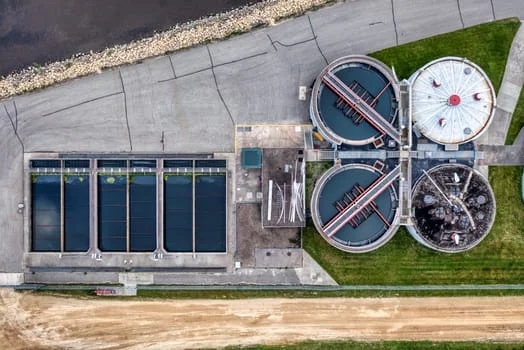
When evaluating disinfection technologies for industrial and municipal wastewater, a direct comparison of LED UV against traditional methods like chlorine, ozone, and chlorine dioxide reveals significant differences in performance, cost, and compliance implications. In terms of pathogen log reduction, LED UV systems can consistently achieve 3–5 log reductions for common indicators like E. coli and viruses, while chlorine typically achieves 2–4 log reductions and ozone can reach 4–6 log reductions. However, energy consumption presents a stark contrast. LED UV systems are highly energy-efficient, consuming 0.1–0.3 kWh/m³. Ozone generation, conversely, requires substantial energy, ranging from 0.3–0.5 kWh/m³, and chlorine dosing, while seemingly low at 0.05–0.1 kWh/m³ for pumps, doesn't account for the energy used in chemical production and transport. Capital expenditure (CAPEX) also varies: LED UV systems for typical flow rates (50–500 m³/h) range from $120,000 to $500,000, whereas ozone systems can range from $300,000 to $1.2 million, and chlorine systems (including storage and dosing) might be lower at $50,000 to $200,000. The operational expenditure (OPEX) is where LED UV truly shines. Its OPEX is considerably lower, estimated at $0.02–$0.08/m³ primarily for energy, compared to chlorine ($0.10–$0.30/m³, including chemical costs and dechlorination) and ozone ($0.15–$0.40/m³). Maintenance for LED UV is minimal, with LED modules boasting lifespans of 50,000–100,000 hours, eliminating the frequent lamp replacements required for mercury UV (every 8,000–12,000 hours) and reducing the complex maintenance of ozone generators (rebuilds every 3–5 years). Critically, LED UV ensures compliance by producing no harmful DBPs and leaving no residuals, unlike chlorine which forms DBPs and requires dechlorination, and ozone which can form bromate in bromide-rich waters. This makes LED UV a superior choice for stringent discharge standards and minimizing environmental impact.
| Parameter | LED UV | Chlorine | Ozone |
|---|---|---|---|
| Pathogen Log Reduction | 3–5 log | 2–4 log | 4–6 log |
| Energy Consumption (kWh/m³) | 0.1–0.3 | 0.05–0.1 (dosing pumps) | 0.3–0.5 |
| CAPEX (50-500 m³/h) | $120K–$500K | $50K–$200K | $300K–$1.2M |
| OPEX ($/m³) | $0.02–$0.08 (energy) | $0.10–$0.30 (chemicals, dechlorination) | $0.15–$0.40 |
| Maintenance | Low (long LED life) | Moderate (chemical handling, equipment) | High (generator rebuilds) |
| DBP Formation | None | Yes (THMs, HAAs) | Yes (Bromate in bromide water) |
| Residuals | None | Yes (requires dechlorination) | None |
For facilities where chemical disinfection is a primary consideration, understanding the operational profile of chemical disinfection alternatives is essential. Similarly, for facilities focusing on solids removal prior to disinfection, exploring options like MBR Membrane Bioreactor Wastewater Treatment System or Dissolved Air Flotation (DAF) System can complement disinfection strategies.
Real-World LED Wastewater Treatment: Case Studies with Measurable Results
Tangible results from operational facilities provide the most compelling evidence for the efficacy and cost-effectiveness of LED UV wastewater treatment solutions. A municipal wastewater treatment plant (WWTP) in Germany, operating at a flow rate of 500 m³/h, successfully implemented an LED UV system that achieved 99.9% E. coli reduction. This upgrade resulted in significant operational savings, including a 40% reduction in energy consumption compared to their previous mercury UV system, translating to approximately $80,000 per year in OPEX reduction (2024 data from EU Water Innovation Report). In Malaysia, a food processing plant integrated an LED UV system with a Dissolved Air Flotation (DAF) process, forming a hybrid system. This approach not only met stringent discharge standards but also achieved 95% Total Suspended Solids (TSS) removal while reducing the overall CAPEX by 30% compared to a standalone chemical treatment process. This demonstrates the cost-efficiency of combining technologies, as detailed in our LED + DAF case study in Malaysia. Further afield, a hospital in Andhra Pradesh deployed an LED UV system to treat its wastewater. The system consistently achieved a 99.99% pathogen kill rate, ensuring compliance with Andhra Pradesh Pollution Control Board (APPCB) standards without the need for any chemical dosing. This case study highlights the suitability of LED UV for sensitive environments like healthcare facilities, as documented in our hospital wastewater LED UV case study. These examples underscore the versatility and proven performance of LED UV technology across diverse applications and geographical regions.
LED Wastewater Treatment Cost Breakdown: CAPEX, OPEX & ROI Calculator
The financial justification for adopting LED UV wastewater treatment solutions lies in a detailed understanding of their cost structure and a clear calculation of Return on Investment (ROI). For systems ranging from 50 to 500 m³/h, the initial capital expenditure (CAPEX) typically falls between $120,000 and $500,000 (2025 industry averages). This investment covers the LED UV reactors, power supplies, control systems, and installation. Operational expenditure (OPEX) is remarkably low, primarily consisting of energy costs, estimated at $0.02–$0.08 per cubic meter. Maintenance costs are minimal, adding approximately $0.01–$0.03 per cubic meter, mainly for periodic cleaning and potential module replacement after their extensive lifespan of 50,000–100,000 hours. This significantly reduces the ongoing costs associated with chemical purchases, storage, handling, and residual management. The ROI can be calculated using a straightforward formula: (Annual Chemical Savings + Annual Energy Savings) / (CAPEX + Annual OPEX) = Payback Period. For instance, if a facility realizes annual savings of $150,000 from reduced chemical use and energy consumption, and the total investment (CAPEX + annual OPEX) is $300,000, the payback period would be two years. various financing options, including leasing agreements and government grants for energy-efficient and environmentally friendly upgrades, can further improve the financial viability of implementing LED UV systems. To assist in this financial planning, a downloadable ROI spreadsheet template is available, allowing for personalized cost-benefit analysis.
| Cost Component | Typical Range/Value | Notes |
|---|---|---|
| CAPEX (50-500 m³/h) | $120,000 – $500,000 | Includes reactors, controls, installation |
| OPEX - Energy ($/m³) | $0.02 – $0.08 | Significantly lower than chemical production/dosing energy |
| OPEX - Maintenance ($/m³) | $0.01 – $0.03 | Primarily cleaning; module replacement infrequent |
| LED Module Lifespan | 50,000 – 100,000 hours | Reduces downtime and replacement costs |
| ROI Calculation | (Annual Savings) / (Total Investment) | Determines payback period |
To facilitate detailed financial planning, a downloadable ROI spreadsheet template is available.
Choosing the Right LED Wastewater Treatment System: A Decision Framework
Selecting the optimal LED wastewater treatment solution requires a systematic approach, considering key technical and operational factors to ensure alignment with specific plant needs and regulatory requirements. The primary determinant is the flow rate, which dictates the size and configuration of the UV system. Systems are generally categorized for flow rates from 10–50 m³/h for smaller industrial applications, 50–500 m³/h for medium to large industrial and municipal facilities, and custom-designed systems for capacities exceeding 500 m³/h. Equally critical are the pathogen targets and the required compliance standards. Different microorganisms have varying sensitivities to UV light; for example, achieving a 3-log reduction for E. coli is less demanding than a 4-log reduction for Cryptosporidium or a 5-log reduction for viruses. Discharge permits, set by regulatory bodies like the EPA or EU directives, will specify the required log reductions for key indicator organisms. Redundancy is a crucial consideration for uninterrupted operation; modular LED arrays offer inherent redundancy, allowing for maintenance or failure of individual modules without compromising overall disinfection. Integration strategies are also vital. While standalone LED UV systems are effective for disinfection, they can be combined with other technologies in hybrid wastewater treatment systems to address multiple contaminants. For instance, integrating LED UV with MBR Membrane Bioreactor Wastewater Treatment System or Dissolved Air Flotation (DAF) System can provide advanced treatment for solids, nutrients, and other pollutants alongside disinfection, offering a comprehensive and cost-effective solution.
Frequently Asked Questions
What are the primary advantages of LED UV disinfection over chemical methods?
LED UV disinfection offers chemical-free operation, eliminating the risks associated with handling hazardous chemicals, the formation of harmful disinfection byproducts (DBPs), and the need for downstream dechlorination. It also typically results in lower operational costs due to reduced chemical expenses and energy efficiency.
How does the wavelength of UV LEDs impact disinfection efficiency?
UV LEDs emitting in the 260–280 nm range are highly effective because this spectrum is maximally absorbed by the DNA and RNA of microorganisms, leading to efficient inactivation. This is often more targeted than the broader spectrum of some mercury lamps.
What is the typical energy consumption of an LED UV wastewater treatment system?
Energy consumption for LED UV systems in wastewater treatment is typically very low, ranging from 0.1 to 0.3 kWh per cubic meter of treated water, making them significantly more energy-efficient than many traditional disinfection methods like ozonation.
How does the lifespan of LED UV modules compare to mercury UV lamps?
UV LED modules have a considerably longer operational lifespan, typically ranging from 50,000 to 100,000 hours, compared to mercury UV lamps which require replacement every 8,000 to 12,000 hours. This dramatically reduces maintenance frequency and associated costs.
Can LED UV systems meet stringent wastewater discharge compliance standards?
Yes, LED UV systems are capable of achieving high levels of pathogen inactivation (3–5 log reduction) necessary to meet stringent EPA, EU, and local discharge standards for industrial and municipal wastewater.
What is the typical CAPEX for an LED UV wastewater treatment system?
The capital expenditure for LED UV wastewater treatment systems varies with capacity, but for flow rates between 50 and 500 m³/h, it generally ranges from $120,000 to $500,000.
Are hybrid systems combining LED UV with other technologies beneficial?
Yes, hybrid systems, such as LED UV integrated with DAF or MBR technologies, can offer a more comprehensive treatment solution, addressing multiple contaminants simultaneously and potentially reducing overall CAPEX and OPEX compared to standalone systems for each treatment stage.
Related Equipment
- MBR systems for LED UV integration — view specifications, capacity range, and technical data
- DAF systems for hybrid LED treatment — view specifications, capacity range, and technical data
- chemical disinfection alternatives — view specifications, capacity range, and technical data
Need a customized solution? Request a free quote with your specific flow rate and pollutant parameters.