Why Photovoltaic Copper Wastewater Requires Zero Liquid Discharge (ZLD)
Photovoltaic copper wastewater treatment requires hybrid zero liquid discharge (ZLD) systems to meet China GB 31573-2015’s 0.5 mg/L copper limit. Solar-powered electrocoagulation achieves 92–98% copper removal at influent concentrations of 10–1,000 ppm, while reverse osmosis (RO) polishes effluent to <1 ppm. A 2025 cost analysis shows CAPEX of $1.2–$3.5M for a 50 m³/h system, with OPEX reduced by 40% using photovoltaic energy vs. grid power (data from Top 1 PDF and Veolia benchmarks).
The regulatory urgency for ZLD in the solar manufacturing sector is driven by the tightening of discharge limits across major production hubs. While China GB 31573-2015 sets the baseline at 0.5 mg/L, the EU Industrial Emissions Directive (IED) increasingly targets 0.2 mg/L for heavy metal effluents, creating a mandate for technology that exceeds traditional chemical precipitation. Beyond legal compliance, the environmental stakes are high; copper toxicity thresholds are remarkably low. According to 2024 EPA data, copper concentrations as low as 1.3 mg/L cause significant mortality in aquatic life, while human exposure to levels exceeding 10 mg/L can trigger acute gastrointestinal bleeding and long-term liver damage.
In a typical PV fabrication facility, copper enters the waste stream from three primary sources: copper etching baths (500–2,000 ppm Cu), wafer cleaning processes (50–300 ppm), and Chemical Mechanical Planarization (CMP) slurry (100–800 ppm). These high-load streams cannot be treated by conventional biological or simple filtration methods. A real-world scenario in 2024 involved a PV fab in Jiangsu that faced $2.1M in environmental fines and temporary closure after its conventional lime-precipitation system failed to handle a surge in etching bath discharge. By transitioning to a hybrid ZLD architecture, the facility reduced its effluent copper to 0.1 mg/L and eliminated liquid discharge entirely, effectively future-proofing the plant against evolving global discharge standards for photovoltaic wastewater.
Hybrid ZLD System Design: Step-by-Step Engineering Process
A high-efficiency hybrid ZLD system for photovoltaic copper wastewater integrates electrocoagulation, dissolved air flotation, and membrane polishing to achieve 99.9% water recovery. The engineering process begins with Stage 1: Solar-powered electrocoagulation (EC). This stage utilizes aluminum or iron electrodes to destabilize copper ions. Engineering parameters are critical here: a current density of 10–30 A/m² and a retention time of 20–40 min at a pH of 6–8 are optimal for maximizing copper removal efficiency while minimizing electrode consumption. Using solar PV to drive this electrochemical process allows for a direct DC-to-DC connection, reducing inverter losses common in grid-tied systems.
Stage 2 employs a DAF system for copper sludge separation to remove the flocculated metal hydroxides. By generating microbubbles in the 30–50 μm range and maintaining a loading rate of 5–10 m/h, the DAF system achieves rapid clarification that is superior to traditional sedimentation in handling the light, "fluffy" flocs produced during electrocoagulation. Stage 3 involves polishing via an industrial RO system for copper polishing to <0.1 ppm. We specify polyamide thin-film composite (TF) membranes with a flux rate of 15–25 LMH to ensure a 75–85% recovery rate of high-purity permeate which can be recycled back to the cleaning line.
The final stage, Stage 4, addresses the RO concentrate through evaporation and crystallization. Forced-circulation evaporators operating at 80–90°C concentrate the brine until copper sulfate recovery occurs. The resulting CuSO₄·5H₂O crystals meet industrial purity benchmarks, transforming a hazardous waste stream into a sellable byproduct. The following table outlines the stage-by-stage concentration reductions expected in a 50 m³/h design.
| Treatment Stage | Primary Technology | Influent Cu (ppm) | Effluent Cu (ppm) | Removal Efficiency |
|---|---|---|---|---|
| Primary Removal | Solar Electrocoagulation | 1,000 | 50 | 95.0% |
| Clarification | Dissolved Air Flotation (DAF) | 50 | 8 | 84.0% |
| Polishing | Reverse Osmosis (RO) | 8 | 0.1 | 98.7% |
| Zero Liquid Discharge | Evaporation/Crystallization | Brine (500+) | Solid Waste | 99.9% (Recovery) |
Solar vs. Grid-Powered Electrocoagulation: Energy Efficiency and Cost Comparison
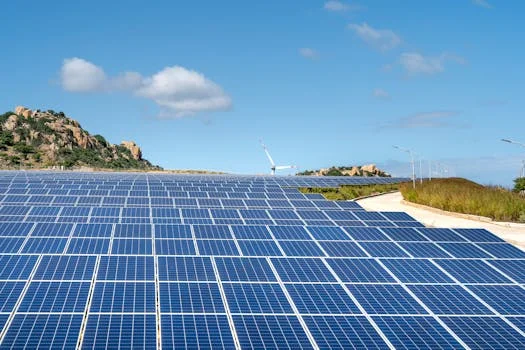
Integrating photovoltaic energy into electrocoagulation systems reduces operational energy costs by 40-60% compared to traditional grid-powered electrochemical processes. For a 50 m³/h system, solar PV sizing typically requires 1 kWp per 1 m³/h of wastewater treated. While this increases initial CAPEX, the elimination of high-voltage transformers and the reduction in electricity bills provide a significant ROI. Lithium-ion battery storage is recommended for 24/7 operation to bridge the gap during non-sunlight hours, though some facilities opt for lead-acid banks to reduce initial battery expenditure by 30% at the cost of a shorter lifecycle.
Energy consumption data shows that grid-powered electrocoagulation requires 0.5–1.5 kWh/m³, whereas solar-integrated systems operate at 0.3–0.8 kWh/m³ due to optimized DC power delivery. The cost benchmarks for electrochemical wastewater treatment indicate that while solar-powered EC has a higher CAPEX of $800–$1,200/m³/h (including batteries) vs. $500–$800/m³/h for grid power, the OPEX savings are transformative. Maintenance for the solar component is minimal, primarily involving panel cleaning every 30 days to prevent a 10–15% efficiency loss due to dust accumulation in industrial zones.
| Cost Metric (50 m³/h System) | Grid-Powered EC System | Solar-Powered EC (with Battery) |
|---|---|---|
| Initial CAPEX (Total System) | $1.2M – $1.8M | $2.1M – $3.5M |
| Energy Consumption (kWh/m³) | 1.2 average | 0.6 average (DC-optimized) |
| Annual Energy Cost (at $0.10/kWh) | $43,800 | $0 (Solar LCOE ~$0.04) |
| Maintenance Cost/Year | $15,000 | $18,000 (inc. panel cleaning) |
| Estimated Payback Period | 4.5 Years | 3.2 Years |
Copper Recovery and Byproduct Valorization: Turning Waste into Revenue
Recovering copper from photovoltaic wastewater as copper sulfate pentahydrate (CuSO₄·5H₂O) can offset up to 30% of a facility's annual wastewater treatment OPEX through byproduct sales. By using a plate and frame filter press for copper sludge dewatering prior to the final crystallization stage, plants can produce a high-solids cake that is easier to process in the evaporator. The final crystallization process yields CuSO₄·5H₂O with a purity of 98–99.5%, making it a valuable commodity for the agriculture and electroplating industries.
Current 2025 LME data places the market value of industrial-grade copper sulfate between $1,200 and $1,800 per ton. A 50 m³/h PV manufacturing line with an average influent of 500 ppm copper can yield approximately 1.5 to 3 tons of copper sulfate per month. this recovery process provides a massive reduction in hazardous waste disposal costs. Because the copper is removed as a sellable product, the volume of hazardous sludge requiring expensive landfilling is reduced by 80–90%. A 2024 case study of a PV fab in Zhejiang demonstrated that the facility generated $180,000 annually from copper sulfate sales, effectively covering a third of its ZLD system's operating costs while achieving a real-world ZLD system for copper recovery in electronics manufacturing.
Compliance and Discharge Standards: China GB 31573-2015 vs. Global Benchmarks
China GB 31573-2015 requires continuous online monitoring of copper concentrations, whereas the EU Industrial Emissions Directive (IED) often imposes stricter limits of 0.2 mg/L for discharge into sensitive water bodies. EHS managers must design systems that not only meet current local limits but are capable of scaling to meet international standards if the facility exports to regulated markets like the EU or North America. For instance, the EPA Clean Water Act (40 CFR 131) sets acute copper limits at 1.3 mg/L, but chronic limits for aquatic protection can be as low as 0.013 mg/L in specific jurisdictions.
To ensure audit-ready documentation, the photovoltaic manufacturing wastewater system must include automated sensors for pH, copper concentration (via colorimetric or ion-selective electrodes), and flow rate. For EU compliance, RO rejection rates must consistently exceed 99%, which may require a double-pass RO configuration compared to the single-pass systems often sufficient for China’s 0.5 mg/L limit. Selecting the right membrane chemistry is vital; polyamide membranes offer superior rejection but require strict pH control to prevent degradation.
| Regulation | Copper Limit (mg/L) | Monitoring Frequency | Key Requirement |
|---|---|---|---|
| China GB 31573-2015 | 0.5 | Continuous/Daily | Online data transmission to MEP |
| EU IED (General) | 0.2 | Weekly/Continuous | Best Available Tech (BAT) mandate |
| US EPA (Acute) | 1.3 | Monthly | NPDES permit compliance |
| Germany (Sensitive) | 0.05 | Daily | Advanced membrane polishing |
How to Select the Right Photovoltaic Copper Wastewater Treatment System: A Decision Framework
Defining influent parameters such as a 200 ppm copper load and 50 m³/h flow rate is the primary step in determining whether a facility requires electrocoagulation or traditional chemical precipitation. For engineers and procurement leads, the selection process should follow a logical progression based on raw water chemistry and site-specific constraints. If space is limited, a lamella clarifier for space-efficient copper sedimentation is often preferred over large DAF units, although DAF is more effective if the wastewater contains high levels of cleaning surfactants.
The decision between ZLD and partial discharge is typically dictated by geography and local water scarcity. In regions like Xinjiang, ZLD is often a permit requirement, whereas coastal facilities might be permitted for high-TDS discharge after copper removal. For energy sourcing, solar-powered systems are ideal for projects with a 10-year horizon where CAPEX is available, while grid-powered systems allow for faster deployment in urgent compliance scenarios. Use the following framework to guide your initial system configuration.
| Factor | Condition | Recommended Technology |
|---|---|---|
| Copper Load | >100 ppm | Electrocoagulation + DAF |
| Copper Load | <50 ppm | Chemical Precipitation + Lamella |
| Water Scarcity | High (Inland) | Full ZLD (RO + Evaporation) |
| Energy Goal | Carbon Neutrality | Solar-Powered EC + Battery |
| Space Profile | Constrained | High-Efficiency Lamella Clarifier |
When evaluating vendors, ensure they provide a comprehensive warranty—specifically a 2-year minimum on RO membranes and 5-year on solar panel efficiency. Requesting detailed case studies with industrial wastewater compliance data from similar PV installations is the best way to verify performance claims before committing to a multi-million dollar CAPEX investment.
Frequently Asked Questions

What is the maximum copper removal efficiency of electrocoagulation?
Electrocoagulation typically achieves 92–98% removal efficiency for copper in photovoltaic wastewater. When combined with a secondary polishing stage like reverse osmosis, the total system efficiency exceeds 99.9%, bringing effluent copper levels from 1,000 ppm down to less than 0.1 ppm, well within GB 31573-2015 limits.
Is solar-powered wastewater treatment viable for 24/7 operations?
Yes, by integrating lithium-ion or lead-acid battery storage, solar-powered systems can provide the consistent DC current required for electrocoagulation 24 hours a day. The system is designed to charge batteries during peak sunlight while simultaneously powering the EC reactors, ensuring no downtime during night shifts or cloudy periods.
Can the recovered copper sulfate be reused in the PV manufacturing process?
While the recovered CuSO₄·5H₂O is 98–99.5% pure, it is generally sold to external industries (agriculture, electroplating) rather than reused in PV etching, which requires ultra-high electronic-grade purity. However, the revenue from these sales significantly offsets the operational costs of the ZLD system.
Why is ZLD necessary if I already meet the 0.5 mg/L copper limit?
ZLD is increasingly adopted because it eliminates the risks associated with TDS (Total Dissolved Solids) and other trace metals that are often regulated alongside copper. ZLD allows for 99% water recovery, which is a critical operational advantage in water-stressed regions where industrial water tariffs are rising.