Heavy Metal Wastewater Treatment Cost 2025: Engineering Breakdown, Tech Comparison & ROI Calculator
Heavy metal wastewater treatment cost typically runs $0.50 to $5.00 per cubic meter under 2025 industrial conditions, depending on technology, influent metal load, and the discharge standard you must meet. Chemical precipitation usually costs $1.20–$2.50/m³, with CAPEX of $500K–$2M for about 500 m³/day. Membrane trains (RO/NF) often reach $3.00–$5.00/m³ and $1M–$4M in capital. Adsorption sits in the middle at $1.50–$3.50/m³ but needs media replacement. This guide gives process specs, cost benchmarks, and a simple ROI method for Cr⁶⁺, Pb, Hg, and Cu loads.
Why Heavy Metal Wastewater Treatment Costs Are Rising in 2025
Tighter heavy-metal discharge rules raise treatment spending because plants must add polishing steps and handle more hazardous sludge. The 0.015 mg/L lead and 0.002 mg/L mercury figures often cited as “EPA guidelines” match EPA drinking-water criteria, not metal-finishing wastewater ELGs. Industrial discharges are controlled under separate EPA effluent guidelines such as the Metal Finishing Effluent Guidelines (40 CFR Part 433) and site-specific permits. China’s GB 8978-1996 sets hexavalent chromium (Cr⁶⁺) at 0.5 mg/L as a Class I pollutant maximum. EU Directive 91/271/EEC governs urban wastewater collection and secondary treatment for BOD, COD, and TSS; it does not set copper or nickel limits of 0.5 mg/L. Metal limits in the EU come from permits and national rules, not that directive.
Influent strength still drives design across sectors. Plating lines often see chromium at 50–200 mg/L, mining streams may carry arsenic at 10–50 mg/L, and tanneries can discharge chromium at 100–500 mg/L. Energy usually takes 30–50% of OPEX when power markets are volatile, while chemical reagents take another 20–40% in precipitation plants. Hazardous heavy-metal sludge disposal commonly runs $200–$800 per ton, and RO membrane replacement alone can add $0.10–$0.30/m³. A 500 m³/day plating plant in Guangdong cut Cr⁶⁺ from 150 mg/L to 0.1 mg/L with precipitation plus ion exchange, and tight pH control with automated dosing cut that site’s OPEX by 35%.
| Parameter | Typical Range/Value | Impact on Cost |
|---|---|---|
| EPA Pb Discharge Limit | 0.015 mg/L | Higher treatment complexity |
| China GB Cr⁶⁺ Discharge Limit | 0.5 mg/L | Requires polishing steps |
| Plating Industry Cr Influent | 50–200 mg/L | Increases chemical/energy demand |
| Energy Cost (as % of OPEX) | 30–50% | Directly impacts operational budget |
| Sludge Disposal Cost | $200–$800/ton | Significant hidden OPEX |
Heavy Metal Treatment Technologies: Process Mechanisms and Efficiency Data
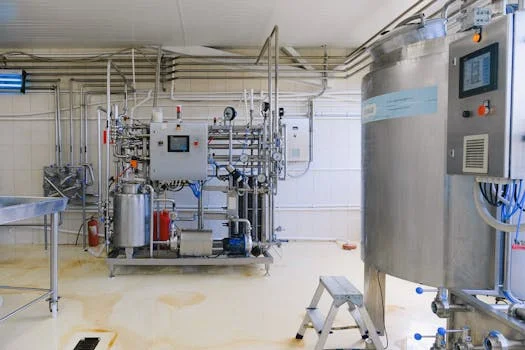
Chemical precipitation remains the workhorse for high metal loads because operators raise pH, usually to 9–11 for most metals, to form hydroxide or sulfide solids. Ferric chloride (FeCl₃) and calcium hydroxide (Ca(OH)₂) aid flocculation and settling under that chemistry. Chromium removal commonly reaches 90–98%, and lead removal 95–99%, when pH control stays stable. Sludge volume is typically 5–15% of influent; most plants we size for plating work sit at 8–12% by volume, so budget sludge handling early. Many sites add an automated chemical dosing system for heavy metal precipitation to hold pH and dose within a narrow band.
Adsorption binds dissolved metals onto porous media such as activated carbon, zeolites, or biochar and suits polishing or low-concentration feeds. Lead capacities often fall in the 20–100 mg/g range, while mercury capacities are usually 5–50 mg/g. Media still need regeneration (about 3–10 cycles for GAC) or replacement, and cost per kilogram of metal removed via adsorption can run $0.50–$2.00.
Nanofiltration and reverse osmosis separate dissolved metals through semi-permeable membranes when permits demand very low dissolved metals or when reuse is the goal. RO often rejects 95–99% of Cr⁶⁺ and 98–99.9% of copper, but energy use is higher at typically 0.5–2.5 kWh/m³, and scaling such as CaSO₄ plus organics raise fouling risk. Industrial RO systems for heavy metal removal are selected for that effluent quality trade-off.
Electrocoagulation generates coagulants from iron or aluminum electrodes and typically uses 1–3 kWh/m³, with electrode life often lasting 1–5 years. Electrodialysis moves charged metal ions across ion-selective membranes, while photocatalysis (for example TiO₂) and fine-pore nanofiltration (0.001–0.01 μm) appear mainly in hybrid trains. Pilot data look useful, but CAPEX is still 2–4 times conventional hardware, so full-scale uptake stays limited under 2025 budgets.
| Technology | Primary Mechanism | Metal Removal Efficiency | Energy Use (kWh/m³) | Sludge Generation (% influent) | Key Limitation |
|---|---|---|---|---|---|
| Chemical Precipitation | pH adjustment, flocculation | Cr: 90–98%, Pb: 95–99% | 0.1–0.3 | 5–15% | High sludge volume |
| Adsorption | Surface binding to media | Pb: 20–100 mg/g capacity | 0.2–0.5 | Minimal (spent media) | Media regeneration/replacement |
| Membrane Filtration (RO/NF) | Physical separation (pores) | Cr⁶⁺: 95–99%, Cu: 98–99.9% | 0.5–2.5 | Concentrate stream | Fouling, high energy |
| Electrochemical (EC/ED) | In-situ coagulation/ion separation | Variable (metal/process specific) | 1–3 | Moderate (EC) | Electrode lifespan, energy |
CAPEX and OPEX Breakdown by Technology: 2025 Cost Benchmarks
For a 500 m³/day heavy metal train, 2025 CAPEX still spreads widely by process choice. Chemical precipitation usually needs $500K–$2M, while adsorption runs about $300K–$1.5M depending on media volume and regeneration. Membrane filtration is the capital-heavy option at $1M–$4M because of membranes and high-pressure pumps, and electrochemical packages often land between $800K–$3M.
OPEX tells the longer ownership story for procurement teams. Precipitation typically costs $0.80–$2.00/m³, driven by reagents and sludge hauling, while adsorption OPEX is about $1.00–$3.50/m³ when media change-out dominates. Membrane filtration often costs $2.50–$5.00/m³ from energy and membrane replacement, and electrochemical OPEX commonly sits at $1.50–$4.00/m³ from power and electrodes.
Sludge disposal remains the quiet budget killer at $200–$800 per ton where the cake is hazardous. Plants cut haul volume with sludge dewatering to reduce disposal costs, then landfill or stabilize the cake, for example by cement encapsulation. RO membrane replacement adds $0.10–$0.30/m³ over a 3–7 year life, and NF membranes add $0.05–$0.20/m³ over about 5–10 years when pretreatment is solid. At $0.12/kWh, energy alone tracks the process band: precipitation 0.1–0.3 kWh/m³, adsorption 0.2–0.5 kWh/m³, membranes 0.5–2.5 kWh/m³, and electrochemical systems 1–3 kWh/m³.
| Technology | CAPEX (2025 USD, 500 m³/day) | OPEX ($/m³) | Primary OPEX Drivers | Energy Use (kWh/m³) |
|---|---|---|---|---|
| Chemical Precipitation | $500K–$2M | $0.80–$2.00 | Chemicals, sludge disposal | 0.1–0.3 |
| Adsorption | $300K–$1.5M | $1.00–$3.50 | Media replacement/regeneration | 0.2–0.5 |
| Membrane Filtration | $1M–$4M | $2.50–$5.00 | Energy, membrane replacement | 0.5–2.5 |
| Electrochemical | $800K–$3M | $1.50–$4.00 | Energy, electrode replacement | 1–3 |
ROI Calculator: How to Estimate Payback for Your Heavy Metal System

Payback for a heavy metal system equals (Annual Savings − Annual OPEX) / CAPEX. Annual savings cover avoided fines, lower hazardous-waste fees, and water-reuse value when reuse is real. Use site numbers rather than brochure averages when you build the case.
Example 1 covers a 200 m³/day plater with influent Cr⁶⁺ at 100 mg/L and a 0.1 mg/L limit. CAPEX is $800K for precipitation plus adsorption, annual OPEX is $120K, and avoided fines are $150K/year, so payback = $800,000 / ($150,000 − $120,000) = 4.5 years.
Example 2 covers a 1,000 m³/day mine treating arsenic from 30 mg/L to 0.05 mg/L with reuse. CAPEX is $3M for membranes plus precipitation, annual OPEX is $750K, avoided fines are $800K/year, and reuse value is $450K/year, so savings total $1.25M and payback = $3,000,000 / ($1,250,000 − $750,000) = 6 years.
Adjust for influent strength, permit limits, power price, reagent price, and local sludge fees before you freeze the design. If you want a model sized to your flow and metals, send the data through the project inquiry form and engineers can return a site-specific payback estimate.
How to Select the Right Technology for Your Heavy Metal Load
Start with the metal species (Cr⁶⁺ versus Pb versus Hg), then the concentration band and the permit you must hit. Streams below 50 mg/L often suit polishing with adsorption or membranes, while loads above 200 mg/L usually need robust primary precipitation first. Match removal depth to an EPA ELG, a China GB Class I limit, or a local consent, then weigh CAPEX versus OPEX and available plot space.
Above 200 mg/L, chemical precipitation is still the cheapest primary step, then polish with adsorption or ion exchange. Below 50 mg/L, adsorption or NF/RO often wins on effluent quality. Tight footprints favor membranes or modular electrochemical skids; modular wastewater treatment systems for heavy metals help when floor space is scarce. Labor limits push plants toward PLC-controlled chemical dosing systems for heavy metal precipitation instead of batch columns. DAF systems for heavy metal pretreatment cut suspended solids before precipitation or membranes. For metal-specific cost trees, see chromium-specific treatment costs and technologies and nickel removal costs and process optimization.
| Decision Factor | Recommendation for High Influent (>200 mg/L) | Recommendation for Low Influent (<50 mg/L) | Space-Limited Site | Labor-Limited Site |
|---|---|---|---|---|
| Primary Technology | Chemical Precipitation + Polishing | Adsorption or Membrane Filtration | Membrane or Electrochemical | Automated Chemical Dosing |
| Example Metals | Cr⁶⁺, Pb, Cu | Hg, trace metals | Any | Any |
| Typical CAPEX | Higher | Moderate to High | Moderate to High | Moderate |
| Typical OPEX | Moderate | Moderate | Higher | Moderate |
Who this is for: plating, mining, and tannery teams comparing precipitation, adsorption, membranes, and electrochemical packages on a common cost basis. Who should look elsewhere: plants whose main driver is organics or nutrients rather than metals. Next step: lock influent metals, permit limits, and sludge disposal quotes before you freeze CAPEX.
Frequently Asked Questions
What is the cheapest heavy metal wastewater treatment method?
Chemical precipitation is usually the lowest-cost primary step for streams above 100 mg/L, with OPEX of $0.80–$2.00/m³. Adsorption is often cheaper for polishing below 50 mg/L at $1.00–$3.50/m³. Both bands assume 2025 industrial power and sludge disposal at $200–$800/ton. Hybrid trains cost more but may be required to hit ultra-low permits.
How much does it cost to treat 1 m³ of heavy metal wastewater?
Expect $0.50 to $5.00/m³ in 2025, set by technology, influent strength, and discharge limits. Chemical precipitation averages about $1.50/m³ inside its $0.80–$2.00 band. Membrane filtration averages about $3.50/m³ inside its $2.50–$5.00 band. Local energy and chemical prices can move those averages by 10–20%.
What is the most effective technology for removing chromium from wastewater?
Chemical precipitation at pH 9–11 with FeCl₃ typically removes 90–98% of Cr⁶⁺ and remains the primary workhorse. Ion exchange or adsorption can push past 99% for polishing. RO/NF membranes remove 95–99.9% at higher energy use. Most engineered plants combine precipitation with a polishing step.
How often do membranes need to be replaced in heavy metal treatment?
RO membranes typically last 3–7 years and NF membranes 5–10 years when pretreatment controls fouling. Replacement cost is about $0.10–$0.30/m³ for RO and $0.05–$0.20/m³ for NF under normal cleaning cycles. Weak solids control upstream can cut RO life roughly in half and raise annual OPEX.
Can heavy metal sludge be reused?
Cement-encapsulated sludge can sometimes enter construction materials where local rules allow it. Most jurisdictions still class untreated heavy-metal sludge as hazardous waste and require specialized disposal at $200–$800/ton. Filter-press dewatering usually cuts sludge volume by 60–80% before haul-off and should be costed into OPEX.