Hydrofluoric Acid Wastewater Treatment Cost 2025: Engineering Breakdown, Tech Selection & ROI Calculator
Hydrofluoric acid (HF) wastewater treatment costs in 2025 range from $800,000 to $3.5M in CAPEX and $0.8–$2.5/m³ in OPEX, depending on technology and influent fluoride concentrations (50–5,000 mg/L). Chemical precipitation with lime or caustic soda achieves 90–98% fluoride removal at the lowest cost ($0.8–$1.2/m³), while zero liquid discharge (ZLD) systems—required for semiconductor fabs—can exceed $2.5/m³ but enable 95%+ water reuse. This guide provides engineering specs, cost breakdowns, and a tech selection framework for industrial applications.
Why HF Wastewater Treatment Costs More Than Standard Industrial Effluent
Hydrofluoric acid (HF) wastewater management requires specialized materials of construction because HF reacts with silicon-based materials like glass and concrete, as well as most common metals. Unlike standard industrial acids, HF is uniquely corrosive and toxic, demanding a higher level of engineering redundancy and safety protocols. In semiconductor manufacturing, HF is used for silicon wafer etching (1–5% concentration), while glass manufacturing utilizes higher concentrations (5–10%) for etching and frosting. These high influent concentrations drive up the cost of neutralization and sludge management compared to standard pH adjustment systems.
Regulatory compliance is a significant cost driver in 2025. In China, the GB 8978-1996 standard mandates a fluoride limit of 10 mg/L, while the US EPA sets a primary drinking water standard of 4 mg/L and various state-level industrial limits. The EU Urban Waste Water Directive often imposes limits as low as 15 mg/L for direct discharge. Non-compliance is expensive; fines in the United States range from $50,000 to $250,000 per violation, and in China, regulatory breaches can lead to immediate plant shutdowns. These risks necessitate the use of high-precision PLC-controlled chemical dosing for HF neutralization to ensure effluent consistency.
The physical properties of HF also increase capital expenditure (CAPEX). Standard stainless steel (304 or 316) will fail rapidly when exposed to HF. Engineers must specify Hastelloy C-276, high-density polyethylene (HDPE), or PTFE-lined piping and tanks. the toxicity of HF (OSHA PEL: 3 ppm) requires specialized vapor scrubbing systems and rigorous operator training. According to HydropureWater field data (2025), these safety and material requirements typically add 30–45% to the total system cost compared to a standard sulfuric acid neutralization plant.
HF Wastewater Treatment Technologies: Process Mechanisms and Fluoride Removal Efficiency
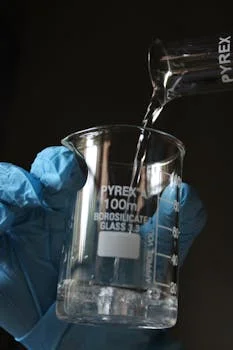
Fluoride removal efficiency varies from 90% in basic chemical precipitation to over 99.9% in multi-stage zero liquid discharge (ZLD) systems. The selection of technology is dictated by the starting concentration and the required discharge limit. Chemical precipitation remains the industry standard for high-strength waste. By adding calcium hydroxide (lime) or calcium chloride, the dissolved fluoride reacts to form calcium fluoride (CaF²) precipitates. While effective for removing the bulk of the fluoride, this process generates significant hazardous sludge, which requires sludge dewatering for fluoride waste minimization to reduce disposal costs.
For facilities requiring higher purity or water reclamation, membrane technologies are employed. Industrial RO systems for HF wastewater polishing and reuse can remove up to 99% of residual fluoride after initial precipitation. However, these membranes are sensitive to scaling from calcium precipitates, necessitating strict pH control and antiscalant dosing. Electrocoagulation is an emerging alternative, using sacrificial aluminum or iron anodes to destabilize fluoride ions. While it has a smaller footprint, the electrode replacement costs can make it more expensive for high-volume flows.
| Technology | Removal Efficiency | Typical Influent (mg/L) | Energy Use (kWh/m³) | Primary Mechanism |
|---|---|---|---|---|
| Chemical Precipitation | 90–98% | 100–5,000 | 0.5–1.0 | CaF² Sedimentation |
| Membrane Filtration (RO) | 95–99.5% | 10–100 | 1.5–3.0 | Semi-permeable separation |
| Electrocoagulation | 85–95% | 50–500 | 2.0–4.5 | Anodic destabilization |
| Adsorption (Alumina) | 90–97% | 5–50 | 0.2–0.5 | Ion exchange / Adsorption |
| Zero Liquid Discharge | 99.9%+ | Variable | 15.0–40.0 | Evaporation/Crystallization |
For more detailed technical specs on specific components, see our guide on industrial RO pressure data and efficiency or explore engineering specs for DAF systems used in fluoride sludge separation.
CAPEX and OPEX Breakdown: Hydrofluoric Acid Wastewater Treatment Costs by Technology
The total cost of ownership for HF wastewater treatment is primarily driven by chemical consumption in precipitation systems and energy intensity in thermal evaporation stages. For a standard 100 m³/h system in 2025, CAPEX for a chemical precipitation plant starts at approximately $500,000. This includes reaction tanks, dosing skids, and sedimentation units. In contrast, a ZLD system for the same flow rate can reach $5,000,000 due to the inclusion of mechanical vapor recompression (MVR) evaporators and crystallizers designed to handle corrosive brines.
OPEX is highly sensitive to the influent fluoride concentration. In a precipitation system, the stoichiometric requirement for lime increases linearly with fluoride levels. At 1,000 mg/L fluoride, chemical costs typically range from $0.30 to $0.60 per cubic meter. Sludge disposal is the "hidden" OPEX giant; calcium fluoride sludge is often classified as hazardous waste, costing between $200 and $500 per ton to transport and landfill. Effective dewatering to 30–40% solids is essential to keep these costs manageable.
| Cost Category (100 m³/h) | Chemical Precipitation | Membrane Filtration | ZLD System |
|---|---|---|---|
| CAPEX Range (USD) | $500K – $1.2M | $1.5M – $2.5M | $2.5M – $5.0M |
| Chemical OPEX ($/m³) | $0.30 – $0.60 | $0.20 – $0.30 | $0.50 – $0.80 |
| Energy OPEX ($/m³) | $0.05 – $0.10 | $0.50 – $1.00 | $1.00 – $2.00 |
| Sludge/Waste ($/m³) | $0.20 – $0.50 | $0.10 – $0.20 | $0.15 – $0.30 |
| Total OPEX ($/m³) | $0.80 – $1.50 | $1.20 – $2.00 | $2.00 – $3.50 |
Facilities must also budget for indirect costs. Compliance monitoring and laboratory testing for fluoride residuals can cost $50,000 to $100,000 annually. Emergency response plans, specifically for HF leak containment and neutralization, require an initial investment of $20,000 to $50,000 in safety equipment and specialized PPE for operators.
Tech Selection Framework: Choosing the Right HF Wastewater Treatment System for Your Plant
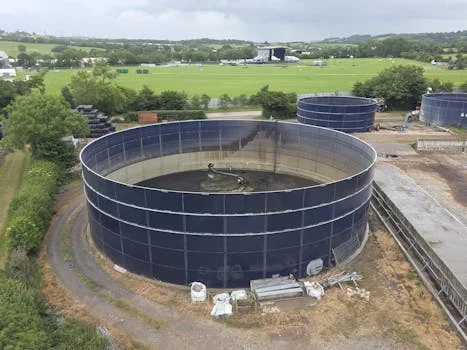
Selecting the optimal HF treatment configuration depends on a three-way balance between influent fluoride concentration, local discharge limits, and available facility footprint. A common mistake is over-engineering a system for low-concentration waste or under-estimating the sludge volume from high-concentration etching baths. Industrial users should follow a tiered decision-making process based on their specific manufacturing profile.
"For semiconductor fabs, the priority is often water reuse and ZLD to meet ESG goals, whereas glass etching plants typically focus on high-volume fluoride removal at the lowest possible chemical cost." — HydropureWater Engineering Review, 2025.
- Tier 1: High Concentration (>1,000 mg/L). Use two-stage chemical precipitation. The first stage uses lime for bulk removal, followed by a second stage of calcium chloride for fine polishing. This is typical for glass manufacturing.
- Tier 2: Moderate Concentration (100–1,000 mg/L). Chemical precipitation followed by general fluoride wastewater treatment options like DAF or sand filtration to meet standard discharge limits.
- Tier 3: Low Concentration / High Purity (<100 mg/L). Direct membrane filtration or activated alumina adsorption. This is common in electronics assembly or as a tertiary polishing step.
| Application | Flow Rate | Selected Tech | Estimated CAPEX |
|---|---|---|---|
| Semiconductor Fab | 500 m³/h | ZLD + RO Reuse | $12,000,000 |
| Glass Etching Plant | 50 m³/h | Precipitation + Filter Press | $1,500,000 |
| Chemical Synthesis | 20 m³/h | Electrocoagulation | $300,000 |
Before full-scale implementation, a pilot test (typically costing $50,000–$150,000) is highly recommended. Pilot data allows for the fine-tuning of chemical dosing rates and flux rates for membranes, often reducing full-scale OPEX by 15–20% through optimized reagent use. For more on fab-specific setups, see semiconductor-specific HF wastewater treatment costs.
ROI Calculator: Justifying Hydrofluoric Acid Wastewater Treatment Investment
The return on investment (ROI) for advanced HF wastewater systems is increasingly driven by the recovery of high-purity water and the avoidance of escalating non-compliance penalties. While the CAPEX of a ZLD or RO-based system is higher, the ability to reuse 80–95% of process water can offset municipal water costs, which are rising at 5–8% annually in industrial hubs. The basic ROI formula for an HF system is:
ROI = (Annual Water Savings + Avoided Fines + Chemical Recovery) / (CAPEX + Annual OPEX)
Consider a glass etching facility processing 50 m³/h. By implementing a ZLD system, they can recover nearly 400,000 m³ of water annually. At a municipal rate of $1.50/m³, this generates $600,000 in direct savings. in some high-tech applications, the recovery of fluosilicic acid or calcium fluoride for industrial reuse can provide a secondary revenue stream, though this requires high-volume consistency to be commercially viable.
- Avoided Fines: $100,000–$500,000 per year (conservative estimate for high-risk zones).
- Water Reuse: $0.50–$2.00 per cubic meter reclaimed.
- Operational Continuity: Avoiding plant shutdowns due to discharge limit breaches (value varies by production capacity).
Payback periods for chemical precipitation systems typically range from 2 to 4 years, depending on sludge disposal costs. For ZLD systems in water-scarce regions or high-cost utility areas, the payback period is usually 5 to 7 years. Beyond the numbers, these systems support corporate ESG goals and supply chain resilience, which are critical for maintaining contracts with global electronics and automotive OEMs.
Frequently Asked Questions
What is the most cost-effective way to remove fluoride from HF wastewater?
Chemical precipitation using lime (calcium hydroxide) is the most cost-effective method for high concentrations. It leverages the low solubility of calcium fluoride to achieve 90%+ removal. However, it produces significant sludge, so the "cost-effectiveness" depends heavily on your local hazardous waste disposal fees.
Can RO membranes handle hydrofluoric acid?
Standard RO membranes cannot handle high concentrations of HF as it will degrade the membrane structure and the glass-fiber pressure vessels. RO is used only after the wastewater has been neutralized to a pH of 6–9 and the bulk of the fluoride has been removed via precipitation. Even then, specialized acid-resistant spacers may be required.
How much does HF sludge disposal cost?
In 2025, hazardous waste disposal for fluoride-rich sludge ranges from $200 to $500 per ton. This is why using a high-efficiency filter press to achieve 40% solids content is critical; reducing the water weight in the sludge can save hundreds of thousands of dollars in annual OPEX.
Why is ZLD required for some semiconductor fabs?
Many semiconductor fabs are located in industrial parks with "zero discharge" mandates to protect local groundwater. Additionally, the ultra-pure water (UPW) requirements of fabs make water reclamation via ZLD more economically attractive than continuously purchasing and treating massive volumes of municipal water.