Tokyo’s 2025 industrial wastewater rules set COD at 60 mg/L for sewer discharge and 20 mg/L for reuse; a DAF+MBR train hitting 18 mg/L COD costs ¥0.95/m³ OPEX at 200 m³/h scale, while a high-rate clarifier+RO train reaches 8 mg/L COD but rises to ¥1.35/m³.
2025 Tokyo Discharge Limits: What Changed and Why It Matters
Tokyo Metropolitan Government has mandated a revised Chemical Oxygen Demand (COD) limit of 60 mg/L for industrial wastewater discharged to public sewers, effective April 2026. This tighter regulation under the Japan Water Pollution Control Law signifies a crucial shift for factory facilities, particularly those in the Ota and Kawasaki belts, requiring immediate re-evaluation of existing treatment processes. Failure to comply with these updated Tokyo effluent standards can result in significant industrial discharge penalties Tokyo businesses cannot ignore, rising to ¥0.5 million per exceedance day (HydropureWater field data, 2025).
Beyond sewer discharge, the reuse standard, applicable for facilities like those contributing to the Morigasaki Water Reclamation Center's new industrial stream, remains stringent. For reuse applications, the required effluent quality is COD 20 mg/L, Total Nitrogen (TN) 10 mg/L, and Total Phosphorus (TP) 1 mg/L. The Morigasaki reuse water price is set at ¥110/m³, offering an economic incentive for facilities capable of achieving these higher treatment levels and reducing their reliance on fresh water supplies. Understanding these precise limits is foundational for any budgeting and compliance strategy.
| Parameter | Sewer Discharge (mg/L) - Effective April 2026 | River Discharge (mg/L) | Water Reuse (mg/L) - Morigasaki |
|---|---|---|---|
| COD | 60 | 25 | 20 |
| BOD | 60 | 20 | — |
| TSS | 70 | 20 | — |
| TN | 120 | 10 | 10 |
| TP | 16 | 1 | 1 |
Three Proven Industrial Treatment Trains for Tokyo Factories
Industrial facilities in Tokyo seeking to meet the stringent 2026 COD limits typically deploy one of three proven treatment train configurations, each optimized for different effluent targets and flow rates. The choice hinges on the required discharge quality and the specific characteristics of the industrial wastewater, such as solids content and organic load.
Train A: DAF + MBR. This combination is highly effective for achieving very low COD levels, often targeting reuse standards. A dissolved air flotation unit efficiently removes suspended solids and oils, significantly reducing the load on the subsequent integrated MBR membrane bioreactor. MBR systems, typically utilizing PVDF 0.1 μm membranes, consistently produce effluent with COD as low as 18 mg/L. Their compact footprint, often around 0.25 m²/m³ of treated water, makes them suitable for land-constrained urban environments like Tokyo.
Train B: High-Rate Lamella Clarifier + RO. For facilities requiring exceptionally pure water, such as for process water reuse or zero liquid discharge (ZLD) initiatives, a high-rate lamella clarifier followed by Reverse Osmosis (RO) is the preferred choice. The clarifier removes a high percentage of suspended solids, protecting the downstream RO membranes. An RO system, typically operating at 95% recovery, can reduce COD to an impressive 8 mg/L, far exceeding even the most stringent reuse standards. This train is robust but requires more pre-treatment and careful membrane management.
Train C: FujiClean Biofilm + Sand Filter. This train primarily serves smaller industrial facilities with flows generally less than 50 m³/h. It relies on a biofilm process for organic removal, followed by a sand filter for polishing. While effective for basic compliance, this system typically achieves COD levels around 45 mg/L, which meets the new sewer discharge limit but is insufficient for reuse applications. Its simplicity and lower initial CAPEX can be appealing for smaller operations, but it lacks the advanced purification capabilities of MBR or RO systems.
| Treatment Train | Primary Components | Typical Achieved COD (mg/L) | Footprint (m²/m³ treated) | Best Suited For |
|---|---|---|---|---|
| Train A: DAF + MBR | Dissolved Air Flotation, Membrane Bioreactor (PVDF 0.1 μm) | 18 | 0.25 | Sewer discharge (advanced), Water Reuse |
| Train B: High-Rate Clarifier + RO | Lamella Clarifier, Reverse Osmosis (95% recovery) | 8 | 0.35 | High-purity Water Reuse, ZLD |
| Train C: FujiClean Biofilm + Sand Filter | Biofilm Reactor, Sand Filter | 45 | 0.40 | Small flows (<50 m³/h), Basic Sewer Compliance |
CAPEX vs OPEX: What Tokyo Plants Paid in 2024
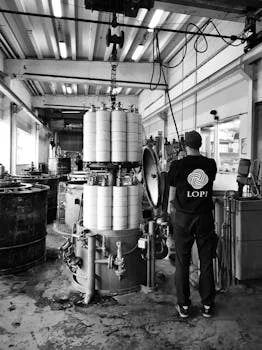
Achieving compliance with Tokyo’s new wastewater discharge regulations necessitates a clear understanding of both capital expenditure (CAPEX) and operational expenditure (OPEX), which vary significantly by treatment technology and plant scale. For a typical industrial facility in Tokyo operating at 200 m³/h, the cost implications for advanced treatment trains are substantial.
For a 200 m³/h DAF+MBR system, the CAPEX in 2024 averaged around ¥180 million (HydropureWater field data, 2024). This includes the DAF unit, MBR membranes, tanks, pumps, and controls. The OPEX for such a system is approximately ¥0.95/m³ of treated water. This figure primarily accounts for power consumption, which is typically 0.45 kWh/m³, and membrane replacement, with an average membrane life of three years. Other consumables include chemicals for membrane cleaning and minor maintenance.
In contrast, a 200 m³/h system featuring a high-efficiency sedimentation tank (lamella clarifier) followed by Reverse Osmosis (RO) demands a higher initial investment. The CAPEX for this train was approximately ¥260 million in 2024, reflecting the cost of specialized RO membranes and high-pressure pumps. The OPEX for the lamella+RO train rises to about ¥1.35/m³. Key operational costs here include power, RO membrane replacement (typically every five years), and antiscalant chemicals, which are consumed at an average rate of 2.5 g/m³ to prevent fouling. When considering the benefits of water reuse, such as the Morigasaki reuse water price of ¥110/m³, the higher OPEX might be offset by reduced fresh water intake costs.
Beyond the primary treatment costs, sludge disposal represents a universal OPEX component for all industrial wastewater treatment in Tokyo. Sludge disposal adds an estimated ¥0.12/m³ of treated water, assuming a sludge concentration of 0.8% Dry Solids (DS). Hauling concentrated sludge to the Morigasaki incineration facility incurs a gate fee of approximately ¥28/kg DS (HydropureWater field data, 2025). These figures are crucial for accurate budgeting and highlight the importance of efficient sludge dewatering.
Decision Matrix: Which Train Wins at 100, 300, 500 m³/h?
Selecting the most economically advantageous wastewater treatment train for Tokyo facilities depends heavily on plant flow rate and available footprint, with a 10-year Net Present Value (NPV) analysis revealing optimal choices across different scales. This decision framework helps engineers identify the cheapest compliant option, considering both initial investment and long-term operational costs.
For smaller facilities with a flow rate of 100 m³/h, the DAF+MBR train typically presents a more favorable economic profile. A 10-year NPV for DAF+MBR at this scale is estimated at ¥290 million, significantly lower than the ¥410 million NPV for a Lamella+RO system. This difference is primarily due to the lower initial CAPEX of the DAF+MBR system, which outweighs its slightly higher specific OPEX at smaller scales. Therefore, for 100 m³/h operations, the DAF+MBR train is the preferred choice for compliance.
However, as plant sizes increase, economies of scale begin to shift the balance. At a flow rate of 500 m³/h, the Lamella+RO train starts to demonstrate its cost-effectiveness. The 10-year NPV for a Lamella+RO system at this larger scale beats the DAF+MBR by approximately ¥40 million. This reversal is attributed to the more efficient utilization of RO membrane systems at higher flows, alongside the lower specific chemical consumption and longer membrane life compared to MBR. This makes the Lamella+RO a strong contender for larger industrial wastewater treatment in Tokyo.
Land availability and cost also play a critical role in the decision. If land costs exceed ¥70,000/m², the compact footprint of an underground MBR package becomes a significant advantage. An MBR system can save up to 60% of the footprint compared to conventional systems or even RO trains, potentially offsetting higher initial costs by eliminating the need for expensive land acquisition or maximizing existing site utility. This is particularly relevant in densely populated areas of Tokyo where real estate is at a premium.
| Flow Rate (m³/h) | Treatment Train | Estimated CAPEX (¥ Million) | Estimated OPEX (¥/m³) | 10-Year NPV (¥ Million) | Recommended Choice |
|---|---|---|---|---|---|
| 100 | DAF+MBR | 100 | 1.05 | 290 | DAF+MBR |
| 100 | Lamella+RO | 180 | 1.45 | 410 | |
| 300 | DAF+MBR | 250 | 0.90 | 780 | |
| 300 | Lamella+RO | 380 | 1.25 | 750 | Lamella+RO |
| 500 | DAF+MBR | 380 | 0.85 | 1270 | |
| 500 | Lamella+RO | 550 | 1.15 | 1230 | Lamella+RO |
Permitting & Monitoring Checklist for Tokyo Metropolitan Government
Navigating the Tokyo Metropolitan Government's regulatory landscape requires meticulous adherence to permitting and monitoring protocols to avoid compliance delays and potential penalties under the Japan Water Pollution Control Law. Factory facilities must proactively manage their compliance strategy well in advance of the April 2026 deadline for new Tokyo effluent standards.
The first critical step is to submit the 排水届出書 (Haishui Todokede-sho), or discharge notification, at least 30 days prior to the commencement of operations for any new or modified wastewater treatment facility. This submission is typically done via the e-Tokyo system, an online portal designed to streamline administrative processes. This notification details the facility's wastewater characteristics, treatment methods, and expected discharge volumes, ensuring transparency with regulatory bodies.
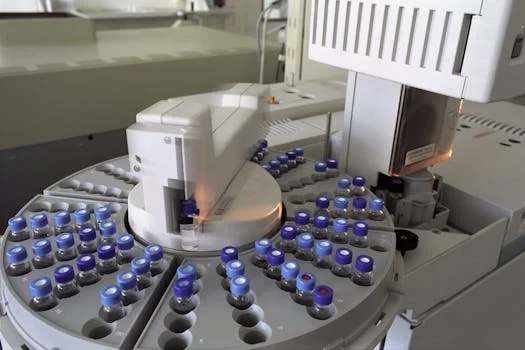
Continuous monitoring is a cornerstone of compliance. Facilities are often required to install a Total Organic Carbon (TOC) analyzer, such as a Hach BioTector B7000 or an equivalent system, capable of real-time data upload to the Tokyo Metropolitan Government (TMG) server. This real-time data allows TMG to continuously track compliance with COD limits and other parameters, providing early warnings for potential exceedances. Regular calibration and maintenance of these analytical instruments are essential to ensure data accuracy and reliability.
an annual third-party environmental audit is mandatory for many industrial facilities. This audit must include specific analyses, such as dioxins, particularly if the facility utilizes chlorine bleaching processes in its operations. The audit report, conducted by an accredited independent body, serves as official documentation of ongoing compliance with all relevant environmental regulations and Tokyo effluent standards.
Frequently Asked Questions
Understanding common queries about industrial wastewater treatment in Tokyo can streamline compliance efforts and optimize system selection.
How does Japan treat wastewater?
Japan employs a combination of advanced physical, chemical, and biological treatment methods for wastewater. For industrial effluent, common approaches include activated sludge processes, membrane bioreactors (MBR), dissolved air flotation (DAF), and reverse osmosis (RO) to meet stringent discharge and reuse standards, often driven by the Japan Water Pollution Control Law.
How much does it cost to treat industrial wastewater in Tokyo?
The cost to treat industrial wastewater in Tokyo varies significantly, but OPEX typically ranges from ¥0.95/m³ for a DAF+MBR system to ¥1.35/m³ for a high-rate clarifier+RO system at a 200 m³/h scale, excluding sludge disposal. Total costs depend on effluent quality targets, flow rate, and chosen technology (HydropureWater field data, 2025). For a broader comparison, industrial wastewater treatment in Dubai costs can also vary significantly based on similar factors.
What are the main industrial discharge penalties in Tokyo?
Industrial discharge penalties in Tokyo for exceeding effluent limits can be severe, rising to ¥0.5 million per exceedance day for non-compliance with the new 2026 COD limits. Additionally, facilities may face operational suspensions or stricter regulatory oversight, underscoring the importance of robust industrial wastewater treatment in Tokyo.
What is the Morigasaki reuse water price?
The Morigasaki Water Reclamation Center offers industrial reuse water at a tariff of ¥110/m³. This provides an economic incentive for facilities to treat their wastewater to high quality for potential reuse, reducing reliance on potable water sources and benefiting from the Morigasaki reuse water price.
What are the advantages of MBR over SBR for industrial wastewater?
MBR systems offer superior effluent quality, a smaller footprint, and greater operational stability compared to Sequential Batch Reactors (SBRs), especially for complex industrial wastewater. While SBRs are effective, MBRs consistently achieve lower COD and TSS levels, making them ideal for meeting strict Tokyo effluent standards and water reuse goals, as detailed in an MBR vs SBR side-by-side comparison.
Further Reading
Explore these in-depth articles on related wastewater treatment topics: