Why Advanced Packaging Facilities Need Zero Liquid Discharge (ZLD) Systems
Advanced packaging wastewater contains complex organic loads with COD ranges between 500 and 5,000 mg/L and TSS concentrations reaching 2,000 mg/L, necessitating high-efficiency treatment to prevent environmental degradation. The semiconductor and flexible packaging sectors are moving toward more intricate chemical processes, shifting the effluent profile to include higher concentrations of heavy metals like Chromium (Cr), Nickel (Ni), and Copper (Cu), alongside volatile pH swings from 3 to 11 (per EPA 2024 industry benchmarks). Standard biological treatment often fails to address the high salinity and recalcitrant organics found in these streams, leading to regulatory non-compliance and significant operational risk.
Regulatory pressures are the primary driver for the adoption of advanced packaging wastewater zero liquid discharge systems. In China, facilities must adhere to GB 31573-2015, which mandates COD levels below 50 mg/L and Ammonia Nitrogen (NH3-N) under 5 mg/L. Similarly, the EU Industrial Emissions Directive 2010/75/EU and the U.S. EPA Effluent Guidelines for Packaging (40 CFR Part 430) have tightened discharge limits, making traditional "treat-and-release" models obsolete. Failure to comply can result in catastrophic financial penalties, with EPA 2023 enforcement data showing fines reaching up to $50,000 per day for persistent violations.
Beyond compliance, water scarcity is forcing a shift in engineering strategy. Packaging facilities located in water-stressed regions, such as Northern China or parts of India, face strict operational restrictions and rising freshwater costs. Implementing a ZLD system allows these facilities to recover up to 90% of their process water, insulating them from local water shortages and utility price hikes. This transition from waste management to resource recovery is essential for maintaining production uptime in an increasingly regulated global market.
Engineering Specs for Packaging Wastewater ZLD Systems: Influent, Process Parameters & Effluent Quality
The engineering of ZLD systems for packaging wastewater requires careful consideration of influent characteristics and process parameters.ZLD systems for the packaging industry are engineered to handle influent pH fluctuations from 3 to 11 and heavy metal loads such as Chromium (<5 mg/L) and Nickel (<2 mg/L) through a multi-stage physical-chemical and thermal process. The engineering blueprint requires a precise balance between pre-treatment efficiency and membrane durability. For instance, a dissolved air flotation (DAF) system for pre-treatment in ZLD systems is typically utilized to achieve 90-95% removal of Fats, Oils, and Grease (FOG) before the wastewater reaches sensitive membrane stages.
The core of the system relies on high-pressure membrane concentration. Using HydropureWater industrial RO systems for membrane concentration in ZLD, facilities can achieve recovery rates of 75-85%. The resulting permeate maintains a Total Dissolved Solids (TDS) level of <50 mg/L, suitable for recycling into cooling towers or non-critical process stages. The concentrate, which reaches TDS levels of 50,000-80,000 mg/L, is then moved to thermal evaporation units. These units, typically Mechanical Vapor Compression (MVC) or Multi-Effect Evaporation (MEE), reduce the brine volume by over 90% with an energy footprint of 0.02-0.05 kWh per kilogram of water evaporated (per industry benchmarks).
| Parameter | Influent Range (Packaging) | Pre-treatment Target | Final Effluent (ZLD Quality) |
|---|---|---|---|
| COD (mg/L) | 500 - 5,000 | < 150 | < 50 (Recyclable) |
| TSS (mg/L) | 200 - 2,000 | < 10 | < 5 |
| TDS (mg/L) | 2,000 - 15,000 | N/A | < 10 (Distillate) |
| Heavy Metals (mg/L) | < 5 (Cr, Ni, Cu) | < 0.5 | < 0.1 |
| pH Range | 3.0 - 11.0 | 6.5 - 8.5 | 6.0 - 9.0 |
The final stage involves crystallization or drying, where the remaining brine is converted into solid waste with a moisture content of less than 10%. This allows for zero liquid discharge while providing a path for potential salt recovery or safe landfill disposal. For more complex streams, engineers may reference the microelectronics ZLD engineering blueprint with hybrid system costs to adapt high-purity standards to packaging requirements.
Hybrid ZLD System Design: Membrane vs. Thermal vs. Combined Approaches for Packaging Wastewater
Hybrid ZLD designs combining membrane concentration with thermal evaporation reduce total energy consumption by 20-35% compared to standalone thermal systems. In advanced packaging, the choice of system architecture is dictated by the influent TDS and the specific organic load. While membrane-only systems offer the lowest CAPEX, they are technically limited to treating wastewater with TDS concentrations below 30,000 mg/L before osmotic pressure makes further recovery unfeasible.
Thermal-only systems are robust and can handle high-TDS streams (>50,000 mg/L) but require significant capital investment and have high energy demands. The hybrid approach utilizes integrated MBR systems for biological pre-treatment in ZLD to remove organic contaminants, followed by HydropureWater industrial RO systems for membrane concentration in ZLD to reduce the volume of water that must be evaporated. This "volume reduction" strategy ensures that the thermal evaporator—the most expensive component to operate—is sized as small as possible.
| System Type | CAPEX (100 m³/h) | OPEX ($/m³) | Energy Recovery | Footprint |
|---|---|---|---|---|
| Membrane-Only | $1.2M - $3.0M | $0.8 - $1.5 | Low | 50-100 m² |
| Thermal-Only | $2.5M - $5.0M | $0.5 - $1.2 | High (MVC) | 150-250 m² |
| Hybrid (Combined) | $1.8M - $4.0M | $0.6 - $1.3 | Optimized | 100-200 m² |
To further optimize the hybrid design, engineers integrate heat exchangers that recover 30-50% of the latent heat from the evaporation stage to pre-heat the incoming brine. This design philosophy is similar to the third-generation semiconductor ZLD process design with 99.9% contaminant removal, where energy efficiency is as critical as effluent purity. By balancing the load between membrane and thermal stages, packaging facilities can achieve a smaller physical footprint while maintaining the flexibility to handle variable influent quality (HydropureWater field data, 2025).
Cost Breakdown & ROI Calculator for Packaging Wastewater ZLD Systems
The financial aspects of implementing ZLD systems for packaging wastewater are crucial for decision-making.CAPEX for a 100 m³/h packaging ZLD system typically ranges from $1.8M to $4M, with thermal evaporation units accounting for approximately 40-50% of the total equipment cost. Procurement specialists must look beyond the initial purchase price to evaluate the total cost of ownership. Pre-treatment infrastructure, including DAF and pH adjustment tanks, usually requires an investment of $200,000 to $500,000, while the automated control systems—essential for managing the complex interaction between membrane and thermal stages—can cost between $200,000 and $500,000.
Operational expenses (OPEX) are dominated by energy consumption, which typically ranges from $0.3 to $0.8 per cubic meter of treated water. Chemical costs for membrane cleaning and pH stabilization add another $0.1 to $0.3/m³. However, these costs are offset by significant ROI drivers. Recovered water value, depending on local industrial water rates, can save a facility between $0.5 and $2.0 per cubic meter. The recovery of industrial-grade salts can generate revenue of $50 to $200 per ton, depending on the purity and local market demand.
| Cost Category | Estimated Cost Range | Percentage of Total |
|---|---|---|
| Pre-treatment Systems | $200,000 - $500,000 | 10-15% |
| Membrane Concentration | $500,000 - $1,500,000 | 25-35% |
| Thermal Evaporation | $800,000 - $2,500,000 | 40-50% |
| Crystallization & Drying | $300,000 - $800,000 | 10-20% |
| Automation & Controls | $200,000 - $500,000 | 5-10% |
The payback period for a well-engineered ZLD system in the packaging sector is generally between 3 and 7 years. Facilities can accelerate this ROI by leveraging government incentives, such as China’s Green Manufacturing Fund, which offers grants covering up to 30% of CAPEX for zero-discharge projects. For comparative financial data in other high-demand sectors, procurement officers often consult the food processing wastewater ZLD engineering specs and cost data.
Case Study: 100 m³/h Hybrid ZLD System for a Flexible Packaging Facility in Shandong, China
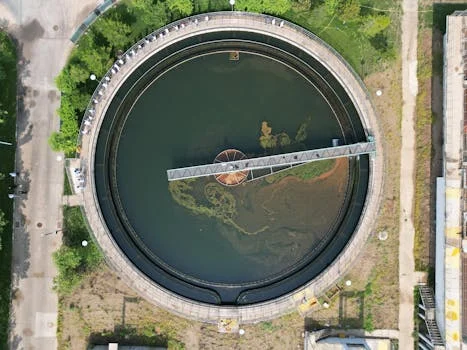
A flexible packaging facility in Shandong achieved 98% water recovery and a 30% reduction in energy costs following the implementation of a hybrid ZLD system in 2024. The facility faced severe production constraints due to local groundwater discharge limits and an influent profile characterized by COD levels of 3,000 mg/L and TSS of 1,500 mg/L. The engineering challenge required a system that could handle rapid pH swings (4-10) while producing high-quality recycle water for sensitive printing processes.
The implemented solution utilized a multi-stage approach. Initial pre-treatment featured a dissolved air flotation (DAF) system for pre-treatment in ZLD systems followed by an MBR for organic reduction. The main concentration stage employed HydropureWater industrial RO systems for membrane concentration in ZLD, achieving 80% recovery. The remaining brine was processed through an MVC thermal evaporator, which concentrated the waste to 95% solids before final crystallization.
Performance