Why Microelectronics Fabs Are Racing to Implement Water Reuse Systems in 2025
Microelectronics wastewater water reuse systems achieve 95-99% recovery rates by combining biological treatment (for TMAH/organics), chemical precipitation (for heavy metals), and advanced membrane filtration (RO/NF). A 2025 hybrid system design for a 10,000 m³/day fab reduces freshwater intake by 92% while meeting ultrapure water standards (resistivity >18 MΩ·cm, TOC <2 ppb). Key contaminants—tetramethylammonium hydroxide (TMAH, 50-500 mg/L), arsenic (0.1-5 mg/L), and copper (1-20 mg/L)—require tailored pretreatment to protect downstream membranes and ensure ZLD compliance.
A standard 300mm semiconductor fabrication plant consumes between 15 and 20 million liters of water per day according to SEMI S23-0719 standards, making water the second largest utility expense after electricity. As of 2024, World Resources Institute data indicates that 60% of global semiconductor manufacturing capacity is located in regions facing medium-to-high water stress. This geographic misalignment between production hubs and water availability has transformed water reuse from a corporate social responsibility (CSR) goal into a fundamental requirement for operational continuity.
Regulatory frameworks are tightening globally, leaving engineers with little choice but to implement high-recovery systems. In China, the GB8978-2025 standard mandates stringent discharge limits for specialized pollutants, including TMAH at less than 1 mg/L and arsenic at less than 0.05 mg/L. Simultaneously, the EU Industrial Emissions Directive 2026 update introduces a 95% water reuse mandate for all new semiconductor facilities. The economic incentive is clear: 2025 benchmark data shows the cost of recycled water ranges from $0.80 to $1.50/m³, significantly lower than the $2.50 to $4.00/m³ average for municipal freshwater and industrial discharge fees.
Microelectronics Wastewater Contaminant Profile: What’s in Your Effluent?
The complex wastewater streams generated by semiconductor manufacturing present significant challenges for water reuse systems.Semiconductor manufacturing generates highly complex wastewater streams characterized by extreme pH swings and a mix of recalcitrant organic and toxic inorganic compounds. Tetramethylammonium hydroxide (TMAH), used extensively as a developer and etchant, presents the most significant biological challenge due to its high alkalinity and toxicity, with an LD50 of approximately 1.5 g/kg in rats. In a typical fab, TMAH concentrations in raw effluent range from 50 to 500 mg/L, often accompanied by ammonium (10–100 mg/L) and Isopropyl Alcohol (IPA) at 20–200 mg/L from cleaning processes.
Inorganic pollutants are equally problematic, particularly in GaAs (Gallium Arsenide) and advanced logic fabs. Arsenic concentrations can reach 5 mg/L during etching, while Chemical Mechanical Planarization (CMP) processes contribute high levels of chromium (0.5–10 mg/L) and copper (1–20 mg/L). Physical parameters fluctuate wildly depending on the process cycle; pH values range from 2 to 12, and Total Suspended Solids (TSS) often peak at 300 mg/L with turbidity levels reaching 150 NTU (per SEMI S2-1119 standards). To design an effective reuse system, engineers must segregate these streams at the source to prevent cross-contamination and optimize treatment kinetics.
| Contaminant Category | Key Pollutants | Typical Concentration (mg/L) | Source Process | Target for Reuse (mg/L) |
|---|---|---|---|---|
| Organic Nitrogen | TMAH, Ammonium | 50 - 500 | Photoresist Stripping / Etching | < 0.1 |
| Heavy Metals | Arsenic, Copper, Nickel | 0.1 - 20 | GaAs Etching / Plating / Barrier Layers | < 0.05 |
| Solvents | IPA, Acetone | 20 - 200 | Wafer Cleaning | < 2 (as TOC) |
| Abrasives | Silica, Alumina (TSS) | 50 - 300 | CMP (Chemical Mechanical Planarization) | < 1 |
| Anions | Fluoride, Phosphate | 10 - 150 | Wet Etching / Cleaning | < 1 |
Effective management of these profiles requires understanding the specific CMP wastewater treatment engineering specs, which often involve high-shear crossflow filtration to handle the abrasive silica particles before the water enters the general reuse loop.
Hybrid System Design: How to Combine Biological, Chemical, and Membrane Technologies for 99%+ Recovery
Achieving 99% water recovery in a microelectronics environment requires a multi-stage hybrid architecture that addresses contaminants in decreasing order of molecular weight and toxicity. The process begins with robust pretreatment using rotary mechanical bar screens (GX Series) to remove large debris and TSS >100 mg/L, achieving up to 90% primary solids removal. This protects the downstream biological and membrane units from physical abrasion and clogging (HydropureWater field data, 2025).
The core of the organic removal stage utilizes Internal Circulation (IC) bioreactors or specialized MBR systems for TMAH degradation and high-recovery water reuse. These systems operate with a 24-hour Hydraulic Retention Time (HRT) to achieve 95% removal of TMAH at influent concentrations up to 500 mg/L. Following biological oxidation, an precise chemical dosing for heavy metal precipitation is employed. By adjusting the pH to a range of 7.5–9.0 and dosing Polyaluminum Chloride (PAC) at 50–150 mg/L, arsenic and copper levels are reduced to <0.05 mg/L and <0.1 mg/L, respectively.
The desalination and purification phase relies on dual-stage RO systems for ultrapure water compliance. Utilizing PVDF membranes with a 0.001 μm pore size, the first pass achieves 75% recovery, while the second pass pushes the system toward 90% total recovery. For the final polishing stage, mixed-bed ion exchange resins increase resistivity to >18 MΩ·cm, and UV oxidation units reduce Total Organic Carbon (TOC) to <2 ppb. Residual waste is handled by a sludge dewatering for metal hydroxide and biosolids, which produces a cake with 95% dry solids, minimizing hazardous waste disposal volumes.
| Treatment Stage | Equipment / Technology | Engineering Specification | Removal / Recovery Target |
|---|---|---|---|
| Pretreatment | GX Rotary Screens | 1-5 mm mesh size | 90% TSS Removal |
| Biological | IC Bioreactor / MBR | 24-hour HRT; MLSS 8,000 mg/L | >95% TMAH Removal |
| Chemical | Dosing + Coagulation | PAC: 100 mg/L; pH: 8.5 | Arsenic <0.05 mg/L |
| Membrane | Dual-Stage RO | Flux: 15-20 LMH; PVDF 0.001μm | 90% Recovery (Cumulative) |
| Polishing | IX + UV Oxidation | Mixed-bed Resin; 185nm UV | Resistivity >18 MΩ·cm |
Zero-Liquid-Discharge vs. Partial Reuse: Cost Breakdown and ROI Calculator for 2025
Procurement teams must evaluate the costs and benefits of Zero-Liquid-Discharge (ZLD) systems versus partial reuse systems.Procurement teams must weigh the higher capital expenditure (CAPEX) of Zero-Liquid-Discharge (ZLD) systems against the long-term operational savings and regulatory security they provide. For a 10,000 m³/day facility, a ZLD system typically requires an investment of $3.5M to $5.0M, whereas a partial reuse system targeting 90% recovery costs between $1.8M and $2.5M. The primary cost driver for ZLD is the thermal evaporation and crystallization stage required to eliminate the final brine stream.
Operating expenditure (OPEX) for ZLD ranges from $0.90 to $1.30/m³, with energy consumption accounting for approximately 60% of these costs. In contrast, partial reuse systems operate at $0.40 to $0.60/m³. However, the ROI for ZLD is bolstered by the complete avoidance of discharge fees (averaging $0.5M/year for large fabs) and government incentives, such as the 30% tax credits currently available in China and the EU for ZLD implementation. Engineers should also account for "hidden" costs like membrane fouling, which can cause 10-20% downtime if pretreatment is undersized, and brine disposal costs which can add $0.10–$0.30/m³ in non-ZLD scenarios.
| Economic Metric (10k m³/day) | Partial Reuse (90%) | Zero-Liquid-Discharge (99%+) |
|---|---|---|
| Initial CAPEX | $1.8M - $2.5M | $3.5M - $5.0M |
| Average OPEX (per m³) | $0.50 | $1.10 |
| Annual Water Savings | $1.2M | $1.4M |
| Discharge Fee Avoidance | $0.3M | $0.5M |
| Payback Period | 1.5 - 2.5 Years | 3 - 5 Years |
For a deeper dive into the financial modeling of these systems, consult our guide on IC wastewater water reuse process designs, which includes modular ROI calculators for different fab capacities.
Case Study: 99.8% Recovery at a 300mm Fab in Taiwan (2025 Engineering Specs)
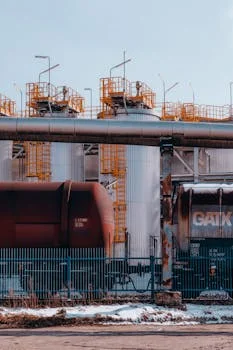
A leading 300mm logic fab in Hsinchu, Taiwan, implemented a full-scale water reuse system to combat local drought conditions and meet new "Green Fab" certification requirements. The facility produces 8,000 m³/day of wastewater with a challenging profile: 300 mg/L TMAH, 2 mg/L arsenic, and 12 mg/L copper. The existing treatment plant was a traditional aerobic system that could not meet reuse standards for ultrapure water (UPW) makeup.
The upgraded system utilized an IC biore