Why Prague Hospitals Need Upgraded Wastewater Treatment in 2025
Prague’s hospital wastewater treatment must meet strict EU Urban Waste Water Directive 91/271/EEC standards, requiring 95%+ BOD removal and 99.9% pathogen inactivation. The city’s new 1.2M PE WWTP (WTE Wassertechnik) sets a benchmark with 97% COD reduction and automated chemical dosing, but hospitals need tailored solutions. Key specs: influent BOD 200–500 mg/L, TSS 150–300 mg/L, and fecal coliform <1,000 CFU/100mL. Equipment like MBR systems or chlorine dioxide generators can achieve these targets at 30–50% lower operational costs than traditional activated sludge.
The urgency for decentralized hospital treatment in Prague is driven by the specific nature of medical effluent. While the municipal Central Wastewater Treatment Plant (CWWTP) on Císařský Island handles massive volumes, it is not optimized for the high concentrations of antibiotic-resistant bacteria (ARB) and pharmaceutical residues found in hospital discharge. According to WHO 2023 data, hospital effluent can contain 10–100 times higher concentrations of ARB than standard municipal sewage. This creates a critical gap in public health safety that municipal systems cannot bridge alone.
Regulatory pressure is mounting. In 2023, the Czech Environmental Inspectorate (ČIŽP) issued a €50,000 fine to a major Prague healthcare facility for exceeding fecal coliform limits, signaling a shift toward stricter enforcement. Prague’s unique urban geography requires many facilities to adopt underground WWTP designs. These systems must mimic the CWWTP’s "New Water Line" model, which utilizes compact, underground footprints protected by retaining walls and advanced ventilation to prevent odor and flood-related contamination in the Vltava river basin.
Modernizing these systems is no longer a choice but a technical necessity. Older activated sludge plants in Prague hospitals often struggle with "bulking" caused by high disinfectant concentrations in the influent, leading to poor settling and compliance failure. Transitioning to a MBR system for hospital wastewater with 98% BOD removal allows facilities to bypass these biological instabilities while meeting the stringent discharge limits required for 2025.
EU and Czech Hospital Wastewater Compliance: 2025 Standards Checklist
The EU and Czech Republic have established strict regulations for hospital wastewater treatment.Compliance for Prague hospitals is a dual-layered framework involving the EU Urban Waste Water Directive 91/271/EEC and the more specific Czech Decree 401/2015. The Czech Decree is particularly rigorous regarding chemical oxygen demand (COD) and specific pharmaceutical markers that are often overlooked in other jurisdictions. Failure to meet these standards can result in fines up to €100,000 or forced operational shutdowns by the Czech Environmental Inspectorate.
The 2025 compliance landscape focuses heavily on "priority substances." For Prague hospitals, this means monitoring not just bulk organic loads, but also specific medications like carbamazepine and heavy metals used in imaging departments. Prague-specific requirements also mandate that any new or upgraded system located in the flood zone (Q100) must include flood protection measures, such as hermetically sealed tanks and high-capacity dewatering pumps, mirroring the 2018 WTE design standards for the city.
| Parameter | EU 91/271/EEC Limit | Czech Decree 401/2015 Limit | Prague Target (2025) |
|---|---|---|---|
| BOD5 (Biological Oxygen Demand) | < 25 mg/L (95% removal) | < 15 mg/L | < 10 mg/L |
| TSS (Total Suspended Solids) | < 35 mg/L (90% removal) | < 20 mg/L | < 15 mg/L |
| Fecal Coliforms | < 1,000 CFU/100mL | < 500 CFU/100mL | < 100 CFU/100mL |
| Carbamazepine (Pharmaceutical) | N/A | < 1.0 µg/L | < 0.5 µg/L |
| Mercury (Hg) | N/A | < 0.01 mg/L | < 0.005 mg/L |
To ensure these limits are consistently met, sampling protocols must follow the 24-hour composite method for BOD and TSS to account for the peak flow periods typical of hospital operations (usually between 08:00 and 14:00). Pathogen testing, however, requires "grab samples" taken directly from the disinfection contact tank. This rigorous monitoring ensures that the Warsaw’s hospital wastewater compliance standards, which are often compared to Prague’s, are matched or exceeded in the Czech capital.
Hospital Wastewater Treatment Process Flow: Engineering Specs for Prague Facilities
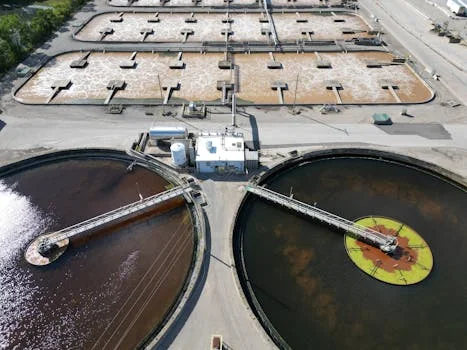
Engineering a hospital wastewater system in Prague requires a multi-stage process flow designed to handle high-strength influent while maintaining a compact footprint. The process begins with mechanical pretreatment. Utilizing rotary bar screens (GX Series) allows for the removal of 95% of solids greater than 1 mm (HydropureWater field data, 2025). This is critical in a hospital setting where non-biodegradable items like bandages or plastic caps frequently enter the waste stream and can damage downstream pumps.
Primary treatment follows, typically employing high-efficiency sedimentation or lamella clarifiers. These units achieve 60–70% TSS removal at a surface loading rate of 20–40 m/h, which is significantly more efficient than the 1–2 m/h rates seen in conventional gravity settlers. This stage reduces the organic load before it reaches the biological reactor, extending the life of the membranes or media.
Secondary treatment is the core of the system. In Prague’s space-constrained environment, Membrane Bioreactors (MBR) are the preferred choice. MBR systems deliver 98% BOD removal and 99.99% pathogen reduction by combining biological digestion with microfiltration (per EPA 2023 MBR benchmarks). This eliminates the need for a secondary clarifier, reducing the system footprint by up to 60%. For facilities requiring advanced disinfection, an on-site ClO₂ generator for hospital effluent disinfection is integrated into the tertiary stage, providing 99.9% inactivation of viruses and bacteria with a dosing rate of only 0.5–1.0 mg/L.
| Stage | Equipment Type | Removal Efficiency (TSS/BOD) | Technical Parameter |
|---|---|---|---|
| Pretreatment | Rotary Bar Screen (GX) | 95% (Solids >1mm) | Gap: 1–3 mm |
| Primary | Lamella Clarifier | 65% TSS / 30% BOD | Surface Load: 30 m/h |
| Secondary | MBR Module (DF Series) | 99% TSS / 98% BOD | Flux: 15–25 LMH |
| Tertiary | ClO₂ Generator | 99.9% Pathogens | Dose: 0.8 mg/L |
| Sludge | Plate-and-Frame Press | 80% Volume Reduction | Cake Solids: 35%+ |
Final sludge handling is managed via plate-and-frame filter presses, which reduce the moisture content of the waste sludge to below 65%, making it compliant for disposal or incineration according to Czech waste management laws. This entire process flow should be governed by an automated control system similar to the WTE model, which uses real-time sensors to adjust chemical dosing and blower speeds, ensuring 15–20% energy savings compared to manual operation.
Equipment Comparison: MBR vs. Chemical Disinfection vs. DAF for Prague Hospitals
When selecting a wastewater treatment technology for Prague hospitals, several factors must be considered.Choosing the right technology depends on the facility's specific goals: compliance, footprint, or budget. For most Prague hospitals, the decision framework revolves around MBR, Dissolved Air Flotation (DAF), or standalone Chemical Disinfection. While MBR offers the highest water quality, DAF is often considered for pre-treating high-fat, oil, and grease (FOG) effluent from hospital kitchens before it enters the main treatment line.
MBR systems represent the "gold standard" for global hospital effluent treatment engineering specs. They provide a physical barrier to pathogens, which is essential for meeting the 2025 Czech standards. However, the CAPEX is higher, ranging from $1.2M to $2.5M for a 200 m³/day system. In contrast, a chemical disinfection system using chlorine dioxide has a much lower CAPEX ($200K–$500K) but requires ongoing chemical purchases and precise residual monitoring to ensure no harmful byproducts are released into the Vltava.
DAF systems are highly effective at removing suspended solids and fats (up to 90% TSS removal) but offer limited pathogen reduction. In a Prague hospital context, DAF is rarely a standalone solution but serves as an excellent primary stage to protect an MBR system from fouling. Energy consumption is another key differentiator; modern MBRs use high-efficiency blowers consuming 0.3–0.5 kWh/m³, whereas DAF systems are slightly more energy-intensive per unit of TSS removed due to the air saturation requirements.
| Technology | CAPEX (Relative) | OPEX ($/m³) | Footprint | Best For... |
|---|---|---|---|---|
| MBR (Membrane Bioreactor) | High | $0.40 – $0.65 | Very Compact | Total compliance and water reuse |
| Chemical (ClO₂) | Low | $0.15 – $0.30 | Small | Pathogen control in existing plants |
| DAF (Air Flotation) | Medium | $0.25 – $0.45 | Medium | High FOG/TSS pretreatment |
For Prague’s urban hospitals, the footprint is often the deciding factor. An MBR system requires 60% less space than a conventional activated sludge plant because it eliminates the need for large secondary clarifiers. This allows for a compact hospital wastewater treatment system with ozone disinfection or MBR to be installed in existing basement levels or small outdoor plots that would otherwise be unusable.
Cost Breakdown: Hospital Wastewater Treatment in Prague (2025 Data)
Budgeting for a hospital wastewater system in Prague requires accounting for both the equipment and the unique local installation factors. CAPEX for a standard 100–500 m³/day system typically ranges from $500,000 to $3,000,000. However, in Prague, many systems must be installed underground