Integrated circuit (IC) wastewater water reclaim systems achieve 95%+ recovery rates and near-zero liquid discharge (ZLD) by combining two-pass reverse osmosis (RO), macro porous polymer sorption (MPPS), and continuous deionization (CEDI). For example, semiconductor fabs using MPPS technology recover >99% of isopropyl alcohol (IPA) from waste streams while reducing sludge disposal costs by 30–50%. Key contaminants—fluoride (50–500 mg/L), copper (10–100 mg/L), and TOC (200–1,000 mg/L)—require pre-treatment (MF/UF), selective ion exchange, and advanced oxidation to meet ultrapure water (UPW) reuse standards. This blueprint provides 2025 engineering specs, process flows, and cost-optimized equipment for IC fabs.
Why IC Fabs Need Water Reclaim: Contaminant Profiles, Regulatory Drivers & Cost Pressures
Integrated circuit manufacturing is among the most water-intensive industrial processes, with a single large-scale 300mm fab consuming up to 15,000 m³ of ultrapure water (UPW) daily. This massive demand, coupled with increasingly complex effluent profiles, makes water reclaim a financial and operational necessity. IC wastewater typically contains five distinct contaminant categories: organic solvents (IPA, TMAH), heavy metals (copper, nickel), acids (HF, H₂SO₄), silicon sludge from grinding/dicing, and high concentrations of dissolved salts. Failure to manage these streams results in rapid membrane fouling and non-compliance with discharge permits.
Regulatory pressure is a primary driver for reclaim adoption. In China, GB 31573-2015 mandates fluoride levels below 10 mg/L, while the US EPA’s 40 CFR Part 469 sets strict categorical pretreatment standards for semiconductor subcategories. In water-stressed regions like Taiwan or Arizona, local mandates often require fabs to achieve 85–90% water reuse to maintain production licenses. Violations can result in fines ranging from $10,000 to $50,000 per day (EPA 2024 data), but the greater risk is production curtailment due to water scarcity.
The economic justification for high-salinity wastewater treatment for semiconductor fabs is clear when comparing municipal supply costs ($2–$5/m³) against reclaimed water production costs ($0.50–$1.50/m³). A fab processing 3,000 m³/day can realize annual savings of $1.1M to $3.8M by implementing a 90% reclaim system. This ROI is further bolstered by recovering valuable materials like copper sulfate and concentrated IPA, which can be sold or reused in secondary processes.
| Contaminant Category | Key Species | Influent Range (mg/L) | Treatment Target |
|---|---|---|---|
| Organic Solvents | IPA, TMAH, Acetone | 200 – 1,000 (TOC) | < 5 mg/L (for RO feed) |
| Metals & Acids | Copper, Fluoride, HF | 50 – 500 (F), 10 – 100 (Cu) | < 1 mg/L (F), < 0.1 mg/L (Cu) |
| Solids | Silicon Sludge, Silica | 100 – 1,000 (TSS) | SDI < 3 |
| Salts | NaCl, Na₂SO₄ | 500 – 5,000 (TDS) | 95% – 99% Removal |
IC Wastewater Reclaim Process Flow: Step-by-Step Engineering Blueprint
Designing an effective semiconductor wastewater treatment process flow requires segregating waste streams at the source to prevent cross-contamination. A high-efficiency reclaim system typically follows a 7-to-8-stage architecture designed to protect sensitive RO membranes while maximizing recovery. The process begins with aggressive pretreatment to handle the abrasive nature of silicon sludge and high particulate loads.
The core of the system relies on high-recovery RO systems for semiconductor wastewater reclaim. Pretreatment stages use fine screening for silicon sludge and cutting debris in IC wastewater to remove particles >1mm, followed by equalization and pH adjustment. For organics, Macro Porous Polymer Sorption (MPPS) is increasingly favored over traditional biological treatment because it can handle the shock loads of IPA common in fab operations. MPPS achieves >99% IPA removal by migrating solvents into an extraction liquid within polymer resin columns, which are then regenerated for solvent recovery.
For fabs pursuing zero-liquid-discharge (ZLD) systems for IC fabs, the brine from the secondary RO is sent to a Mechanical Vapor Recompression (MVR) evaporator. This stage reduces the final waste volume to a solid cake, achieving 99%+ total water recovery. The engineering specs below outline the critical performance benchmarks required at each stage of the reclaim blueprint.
| Process Stage | Technology Employed | Critical Engineering Spec | Output Quality Target |
|---|---|---|---|
| 1. Pretreatment | Rotary Bar Screens / EQ Tank | Mesh Size: 0.5 – 1.0 mm | TSS < 50 mg/L |
| 2. Solids Removal | UF / MF Membranes | Pore Size: 0.03 – 0.1 μm | SDI < 3; Turbidity < 0.1 NTU |
| 3. Metals Removal | Chemical Precipitation / IX | Dosing Accuracy: ±1% | Fluoride < 10 mg/L; Cu < 0.5 mg/L |
| 4. Organics Recovery | MPPS Columns | Resin Life: 3 – 5 years | IPA Removal > 99% |
| 5. Primary Desalination | Two-Pass RO | Flux: 12 – 15 GFD | TDS Removal > 98% |
| 6. Brine Recovery | High-Pressure RO (HPRO) | Pressure: 60 – 80 bar | System Recovery > 95% |
| 7. Polishing | CEDI + UV Oxidation | Resistivity: > 18 MΩ·cm | UPW Standards |
Technology Comparison: RO vs. MPPS vs. Ion Exchange for IC Wastewater Reclaim
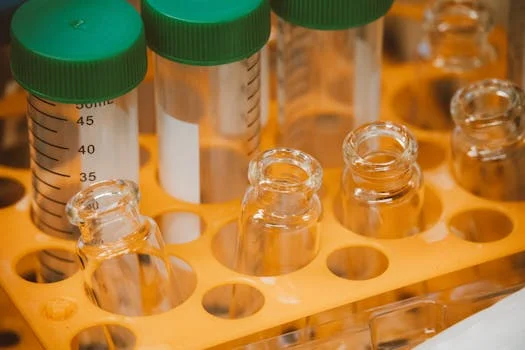
Selecting the right technology for ultrapure water recovery for IC fabs depends on the specific contaminant load of the influent stream. While RO is the workhorse for salt removal, it is highly susceptible to fouling from organic solvents and scaling from fluoride or silica. Therefore, a hybrid approach is mandatory. Ion Exchange (IX) remains the gold standard for selective metal recovery, particularly for copper and nickel, where concentrations are too low for precipitation but too high for RO membranes to handle economically.
When addressing IPA recovery from semiconductor wastewater, engineers must choose between distillation and MPPS. Distillation is energy-intensive and requires high CAPEX for explosion-proof infrastructure. In contrast, MPPS operates at ambient temperatures and pressures, achieving higher removal efficiencies (99% vs 85%) with 40% lower OPEX. For fluoride management, fluoride removal technologies for semiconductor wastewater usually involve a combination of precise chemical dosing for fluoride and metals removal in IC wastewater and specialized UF membranes to capture the resulting calcium fluoride precipitate.
| Technology | Target Contaminant | Removal Efficiency | Recovery Rate | OPEX Est. ($/m³) |
|---|---|---|---|---|
| Reverse Osmosis (RO) | Dissolved Salts (TDS) | 95% – 99% | 75% – 90% | $0.40 – $0.80 |
| MPPS | Solvents (IPA, TMAH) | > 99% | N/A (Removal) | $0.15 – $0.25 |
| Ion Exchange (IX) | Trace Metals (Cu, Ni) | > 98% | N/A (Removal) | $0.30 – $0.60 |
| UF (PVDF) | Colloidal Silica / TSS | > 99% | 95% – 98% | $0.10 – $0.20 |
To ensure long-term stability, many fabs utilize PVDF UF membranes for organics removal in semiconductor wastewater as a robust barrier before the RO stage. This prevents biofouling and protects the high-pressure RO membranes from irreversible surface damage caused by residual silicon particles.
Cost Breakdown & ROI: Water Reclaim vs. Zero-Liquid-Discharge for IC Fabs
Procurement teams must balance the initial cost of water reclaim in semiconductor industry systems against the long-term risk of water scarcity and rising discharge fees. A standard 90% recovery system for a medium-sized fab (1,000 m³/day) typically requires a CAPEX of $2M to $3.5M. In contrast, a full ZLD system, which includes thermal evaporation and crystallization, can double that investment to $5M–$8M. However, ZLD eliminates the risk of discharge permit violations and significantly reduces environmental impact.
The ROI calculation for a reclaim system is driven by three factors: municipal water savings, reduced sludge disposal costs, and potential revenue from recovered materials. For a fab in a region where municipal water costs $3/m³, a system producing 900 m³/day of reclaimed water saves approximately $985,000 annually in water purchases alone. When factoring in a 50% reduction in hazardous sludge disposal costs through metal recovery, the payback period often drops to under 3.5 years.
| Financial Metric | Water Reclaim (90%) | Zero-Liquid-Discharge (99%+) |
|---|---|---|
| CAPEX (1,000 m³/day) | $2.0M – $3.5M | $5.0M – $8.0M |
| OPEX ($/m³) | $0.50 – $1.50 | $2.50 – $5.50 |
| Annual Savings (Est.) | $600K – $1.2M | $1.0M – $1.8M |
| Avg. Payback Period | 3 – 4 Years | 6 – 8 Years |
| Primary Value Driver | Water cost reduction | Regulatory compliance / No discharge |
Decision Framework: Fabs should opt for standard reclaim if municipal water is >$2/m³ and discharge limits are moderate. ZLD is recommended only when discharge is strictly prohibited, water scarcity is extreme (e.g., Arizona, Singapore), or when the facility is expanding production beyond its existing discharge permit capacity.
Case Study: 95% Water Recovery at a 300mm IC Fab in Taiwan
A prominent 300mm wafer fabrication facility located in the Hsinchu Science Park faced a dual challenge: a 20% reduction in allocated municipal water supply due to regional drought and a new fluoride discharge limit of <10 mg/L. The fab generated 2,000 m³/day of complex wastewater with high IPA (400 mg/L) and fluoride (350 mg/L) concentrations. HydropureWater field data (2024) indicates that traditional precipitation alone was insufficient to meet the reuse standards required for cooling tower make-up and scrubber water.
The implemented solution utilized a multi-stage approach. First, fine screening for silicon sludge removed abrasive particles. This was followed by a two-stage chemical precipitation process using calcium hydroxide and coagulants to reduce fluoride to <15 mg/L. The stream then passed through an MPPS system which recovered 99.5% of the IPA, generating a concentrated solvent stream that was sold to a local chemical recycler. The final stage employed high-recovery RO systems to achieve a total water recovery rate of 95%.
Measurable Results:
- Water Recovery: 95% (1,900 m³/day reused in scrubbers and cooling towers).
- Effluent Quality: Fluoride < 1 mg/L, TOC < 2 mg/L.
- Solvent Recovery: 99.5% IPA recovery, generating $180,000/year in secondary revenue.
- Annual Savings: $1.2M total (combined water purchase savings and sludge reduction).
- Operational Insight: Switching to PVDF UF membranes reduced cleaning frequency by 40% compared to previous PES membranes, significantly lowering OPEX.
Frequently Asked Questions
Q: What is the minimum influent quality required for RO in IC wastewater reclaim?
A: To prevent irreversible membrane fouling, the influent to the RO stage should have an SDI (Silt Density Index) < 3, TSS < 50 mg/L, and oil/grease < 1 mg/L. Achieving these RO membrane specs for IC wastewater typically requires robust pretreatment involving UF or MF membranes to handle silicon sludge and residual dicing debris.
Q: Can MPPS recover other solvents besides IPA?
A: Yes. MPPS technology is highly effective for removing and recovering TMAH, acetone, and NMP with >95% efficiency. However, the MPPS technology for solvent recovery requires specific resin selection based on the solvent's polarity; for example, polypropylene-based resins are optimized for IPA, while specialized polystyrene resins are used for TMAH.
Q: How does ZLD compare to water reclaim for small fabs (<500 m³/day)?
A: For smaller facilities, water reclaim is almost always the more cost-effective choice. The high CAPEX of MVR evaporators ($2M+) makes ZLD difficult to justify unless discharge is completely prohibited. Smaller fabs should focus on 85–90% recovery using RO and IX, which offers a much faster payback of 3–5 years.
Q: What are the primary maintenance requirements for a 95% recovery system?
A: Maintenance is tiered: RO membranes require Clean-in-Place (CIP) every 1–3 months; MPPS resins typically last 3–5 years before requiring replacement; and UF membranes require daily backwashing with a full replacement cycle every 5 years. Automated monitoring of differential pressure across membrane stages is critical to prevent catastrophic fouling.
Q: Are there any revenue streams from IC wastewater reclaim?
A: Yes. Recovered IPA can be sold at $1–$3/L depending on purity, and copper recovered via ion exchange can be sold as copper sulfate. These streams can offset 20–30% of the system's annual OPEX, effectively turning a treatment cost center into a resource recovery center.