Why Gallium Nitride Wastewater Costs More Than Standard Industrial Effluent
Gallium nitride (GaN) wastewater presents a unique set of challenges that significantly elevate treatment costs compared to standard industrial effluent. The primary drivers are the presence of high concentrations of specific contaminants: gallium, ammonia-nitrogen, and fluoride. Typical GaN wastewater streams can contain 50–300 mg/L of gallium, 100–500 mg/L of ammonia-nitrogen, and 20–150 mg/L of fluoride, based on 2024 semiconductor fab benchmarks and HydropureWater case studies. This is substantially higher than municipal wastewater, which generally requires 3–5 times less chemical dosing for precipitation and fewer, if any, dedicated treatment stages for these specific elements.
The stringent regulatory landscape further amplifies these costs. For instance, China’s GB 31573-2015 mandates gallium levels below 5 mg/L, the EU’s Industrial Emissions Directive sets fluoride limits at <10 mg/L, and U.S. EPA semiconductor effluent guidelines often require ammonia-nitrogen below 10 mg/L. Meeting these strict discharge standards necessitates specialized treatment processes. Gallium recovery systems, crucial for both compliance and resource reclamation, can add $0.15–$0.30/m³ to operational expenses (OPEX). Similarly, effective fluoride precipitation increases chemical costs by 20–40% compared to treating effluent without significant fluoride loads.
| Contaminant | Typical GaN Wastewater Concentration (mg/L) | Regulatory Limit Example (mg/L) | Treatment Challenge | Cost Impact (OPEX per m³) |
|---|---|---|---|---|
| Gallium | 50–300 | < 5 (e.g., GB 31573-2015) | Recovery and precipitation | $0.15–$0.30 (for recovery) |
| Ammonia-Nitrogen | 100–500 | < 10 (e.g., EPA guidelines) | Stripping or biological nitrification/denitrification | Included in general treatment OPEX, but higher dosing/energy for stripping |
| Fluoride | 20–150 | < 10 (e.g., EU IED) | Chemical precipitation | 20–40% increase in chemical costs |
Gallium Nitride Wastewater Treatment Process Flow: Engineering Specs for 2025
Treating GaN wastewater effectively requires a multi-stage process designed to target specific contaminants while ensuring high effluent quality for discharge or reuse. A typical 5-stage process begins with pH adjustment to optimize subsequent precipitation reactions, usually targeting a range of 6.5–7.5. This is followed by gallium precipitation, where chemicals like lime or caustic soda are used to remove 90–95% of dissolved gallium.
The next critical step is ammonia stripping, often performed at a high pH (around 11) to volatilize ammonia-nitrogen, achieving up to 95% removal. Fluoride is then precipitated, typically using calcium chloride, to reach 99% removal. The final polishing stage often employs a Membrane Bioreactor (MBR) or Dissolved Air Flotation (DAF) system to remove residual Total Suspended Solids (TSS) to below 10 mg/L. For MBR systems, a hydraulic retention time (HRT) of 8–12 hours is common, with chemical dosing rates for gallium precipitation potentially reaching 1.2–1.5 kg of Ca(OH)₂ per kg of gallium. HydropureWater’s DF Series MBR modules, featuring a 0.1 μm pore size and membrane areas from 80–225 m², offer capacities of 32–135 m³/day, with typical PVDF membrane flux rates of 15–25 L/m²/h. This comprehensive treatment train can achieve COD removal of 92–97% and offers water reuse potential of 70–90% when coupled with reverse osmosis post-treatment.
| Stage | Primary Objective | Typical Technology/Chemicals | Removal Efficiency | Key Parameters / Equipment |
|---|---|---|---|---|
| 1. pH Adjustment | Optimize precipitation | Lime, Caustic Soda | N/A | Target pH: 6.5–7.5 |
| 2. Gallium Precipitation | Remove dissolved gallium | Lime (Ca(OH)₂), Caustic Soda (NaOH) | 90–95% | Dosing: 1.2–1.5 kg Ca(OH)₂/kg Ga; HRT: 2–4 hours |
| 3. Ammonia Stripping | Remove ammonia-nitrogen | Air stripping (at high pH) | 95% | Target pH: ~11; Air-to-water ratio |
| 4. Fluoride Precipitation | Remove dissolved fluoride | Calcium Chloride (CaCl₂) | 99% | Dosing: Stoichiometric + excess; HRT: 1–2 hours |
| 5. Polishing | Remove TSS, final clarification | MBR (e.g., HydropureWater DF Series MBR modules) or DAF | TSS < 10 mg/L | MBR HRT: 8–12 hours; PVDF flux: 15–25 L/m²/h |
CAPEX Breakdown: How Much Does a GaN Wastewater Treatment System Cost in 2025?
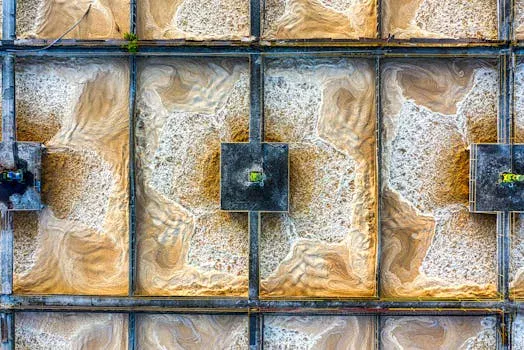
The capital expenditure (CAPEX) for a GaN wastewater treatment system in 2025 is a significant investment, with costs varying based on system size and the chosen technology. For a system with a capacity of 100 m³/h, CAPEX typically ranges from $1.2 million to $2.5 million. Smaller systems (50 m³/h) might cost between $800,000 and $1.5 million, while larger systems (200 m³/h) can range from $2 million to $3.5 million. These figures encompass equipment procurement, installation, and integration.
A substantial portion of the CAPEX is allocated to the core treatment technology, with MBR or DAF systems accounting for approximately 30% of the total cost. Chemical dosing and automation/PLC systems typically represent 20% and 15%, respectively. Civil works, piping, and essential ancillaries make up the remainder. Comparing MBR and DAF, MBR systems generally incur a 20–30% higher initial CAPEX but offer a critical advantage in footprint reduction, often being 40% smaller, which is highly beneficial for semiconductor fabs with limited space, especially during retrofits. Beyond direct equipment costs, soft costs such as permitting ($50K–$150K) and engineering design ($100K–$300K) are also factored in, alongside a contingency of 10–15%. For example, HydropureWater’s DAF systems, with capacities ranging from 4 to 300 m³/h, typically have equipment costs between $60,000 and $450,000.
| System Size (m³/h) | Estimated CAPEX Range ($) | Major Cost Components (%) | MBR vs. DAF CAPEX Difference | Example HydropureWater Equipment |
|---|---|---|---|---|
| 50 | 800,000 – 1,500,000 | MBR/DAF: 30%, Chemical Dosing: 20%, Automation: 15%, Civil/Piping: 25%, Commissioning: 10% | MBR ~20-30% higher | N/A |
| 100 | 1,200,000 – 2,500,000 | MBR/DAF: 30%, Chemical Dosing: 20%, Automation: 15%, Civil/Piping: 25%, Commissioning: 10% | MBR ~20-30% higher | N/A |
| 200 | 2,000,000 – 3,500,000 | MBR/DAF: 30%, Chemical Dosing: 20%, Automation: 15%, Civil/Piping: 25%, Commissioning: 10% | MBR ~20-30% higher | DAF (4-300 m³/h, $60K-$450K) |
OPEX Deep Dive: Where Your Gallium Nitride Wastewater Treatment Budget Goes
Operational expenditure (OPEX) for GaN wastewater treatment in 2025 typically ranges from $0.45 to $0.85 per cubic meter for MBR systems and $0.35 to $0.65 per cubic meter for DAF systems, excluding costs associated with dedicated gallium recovery. Chemicals are a significant OPEX component, accounting for approximately 40% of the total, driven by the need for precipitation agents like lime and caustic soda. Energy consumption, particularly for MBR aeration (0.8–1.2 kWh/m³), represents about 25% of OPEX. Sludge disposal costs are also substantial, ranging from $0.10 to $0.25 per kilogram. Labor and maintenance contribute around 10%, with membrane replacement in MBR systems occurring every 5–7 years and adding to long-term costs.
The inclusion of gallium recovery processes adds another layer to OPEX, with precipitation steps costing an additional $0.15–$0.30/m³. However, this is partially offset by revenue from recovered gallium, which the market prices at $300–$500/kg in 2025, potentially yielding $0.05–$0.10/m³ in revenue. When comparing MBR and DAF, MBR systems typically have 15–20% higher energy costs but can achieve 30% lower chemical usage due to the effectiveness of biological treatment in reducing organic loads. HydropureWater’s automatic chemical dosing systems, controlled via PLC, can further reduce chemical waste by 10–15%.
| OPEX Category | Estimated Percentage of Total OPEX | Typical Cost Range ($/m³) | Key Cost Drivers | HydropureWater Solution |
|---|---|---|---|---|
| Chemicals | 40% | $0.18 – $0.34 | Lime, caustic soda, coagulants, flocculants | Automatic Chemical Dosing System (10-15% waste reduction) |
| Energy | 25% | $0.11 – $0.21 | MBR aeration, pumps, blowers | N/A |
| Sludge Disposal | 20% | $0.04 – $0.08 | Dewatering and landfill/incineration fees | N/A |
| Labor & Maintenance | 10% | $0.04 – $0.08 | Operator salaries, spare parts, repairs | N/A |
| Membrane Replacement (MBR) | 5% (amortized) | $0.02 – $0.04 | Replacement of MBR membranes (5-7 year lifecycle) | N/A |
| Gallium Recovery (additional) | N/A | $0.15 – $0.30 | Precipitation chemicals, labor | N/A |
Treatment Technology Comparison: MBR vs. DAF vs. ZLD for GaN Wastewater

Selecting the optimal treatment technology for GaN wastewater involves balancing performance, cost, and desired outcomes like water reuse. Membrane Bioreactor (MBR) technology combines biological treatment with membrane filtration, offering high effluent quality and a compact footprint. Dissolved Air Flotation (DAF) is a physical-chemical process known for its rapid deployment and effectiveness in removing suspended solids and some dissolved contaminants. Zero-Liquid-Discharge (ZLD) systems represent the most comprehensive approach, aiming to eliminate all liquid discharge through advanced thermal and membrane processes.
In terms of contaminant removal, all three technologies can achieve high gallium removal (90–95%). However, MBR excels in ammonia removal (99%), while DAF is highly effective for fluoride precipitation (99%). Water reuse potential is highest with ZLD systems (95%+), followed by MBR (70–90%) and DAF (60–80%). CAPEX per cubic meter per day is generally highest for ZLD ($2,500–$4,000), followed by MBR ($1,200–$1,800), and then DAF ($800–$1,200). OPEX per cubic meter also follows a similar trend: ZLD ($1.20–$2.00), MBR ($0.45–$0.85), and DAF ($0.35–$0.65). MBR systems are ideal for high organic loads and space constraints, DAF offers a cost-effective and quick solution, while ZLD is the choice for water-scarce regions or when extremely stringent discharge limits must be met. HydropureWater’s integrated MBR system offers capacities from 10 to 2,000 m³/day and can achieve a 60% smaller footprint compared to conventional systems.
| Technology | Gallium Removal (%) | Ammonia Removal (%) | Fluoride Removal (%) | Water Reuse Potential (%) | Estimated CAPEX ($/m³/day) | Estimated OPEX ($/m³) | Primary Use Case |
|---|---|---|---|---|---|---|---|
| MBR | 90–95 | 99 | 95 | 70–90 | 1,200–1,800 | 0.45–0.85 | High organic load, space-constrained fabs |
| DAF | 90–95 | 85 | 99 | 60–80 | 800–1,200 | 0.35–0.65 | Rapid deployment, cost-sensitive applications |
| ZLD | 99+ | 99+ | 99+ | 95+ | 2,500–4,000 | 1.20–2.00 | Water scarcity, zero discharge mandates |
ROI Calculator: When Does Gallium Nitride Wastewater Treatment Pay Off?
Evaluating the return on investment (ROI) for GaN wastewater treatment systems is crucial for justifying capital expenditure. The payback period can be significantly shortened through effective water reuse and valuable gallium recovery. A simplified ROI calculation involves three steps: 1) Determine annual OPEX by multiplying the cost per cubic meter by the daily volume and 365 days. 2) Calculate annual savings, which include reduced costs for purchasing fresh water (typically $0.50–$2.00/m³), revenue from recovered gallium (market price $300–$500/kg), and avoided disposal fees ($0.10–$0.50/m³). 3) Compute the payback period by dividing the initial CAPEX by the net annual savings (annual savings minus annual OPEX).
For example, a 100 m³/h system with a $1.5 million CAPEX and $0.60/m³ OPEX, achieving 80% water reuse ($0.50/m³ savings) and 90% gallium recovery ($0.10/m³ revenue), would have a payback period of approximately 3.2 years. Systems focused on water reuse typically pay back their investment 1–2 years faster than those solely for discharge. HydropureWater’s experience, as shown in a real-world GaN wastewater treatment case study involving a 150 m³/h MBR system in Taiwan, demonstrated a payback period of just 2.8 years.
| Metric | Formula/Range | Example Calculation (100 m³/h system) | Impact on ROI |
|---|---|---|---|
| CAPEX | $1.2M – $3.5M (for 100 m³/h) | $1,500,000 | Higher CAPEX = Longer Payback |
| OPEX ($/m³) | $0.35 – $0.85 | $0.60 | Higher OPEX = Longer Payback |
| Water Reuse Savings ($/m³) | $0.50 – $2.00 (based on water cost) | $0.50 (for 80% reuse) | Significant savings = Shorter Payback |
| Gallium Recovery Revenue ($/m³) | $0.05 – $0.10 (based on market price) | $0.10 (for 90% recovery) | Additional revenue = Shorter Payback |
| Discharge Fees Avoided ($/m³) | $0.10 – $0.50 | N/A (assuming reuse) | Reduced fees = Shorter Payback |
| Payback Period (Years) | CAPEX / (Annual Savings - Annual OPEX) | 3.2 Years (for example) | Target < 5 years for typical investment |
Frequently Asked Questions
What are the primary contaminants in GaN wastewater?
Gallium nitride wastewater is characterized by high concentrations of gallium ions, ammonia-nitrogen, and fluoride. These elements stem from the chemical processes used in GaN semiconductor manufacturing.
How does GaN wastewater differ from standard industrial wastewater?
GaN wastewater contains significantly higher levels of specific problematic contaminants like gallium and fluoride, requiring more specialized and intensive treatment processes than typical industrial effluents.
What is the typical cost of treating GaN wastewater?
In 2025, operational expenses (OPEX) for GaN wastewater treatment range from $0.45–$0.85 per cubic meter, while capital expenditures (CAPEX) for a 100 m³/h system can be $1.2–$2.5 million, depending on the chosen technology like MBR or DAF.
What are the regulatory limits for gallium, ammonia, and fluoride in wastewater?
Regulatory limits vary by region. For example, China's GB 31573-2015 sets gallium below 5 mg/L, the EU's Industrial Emissions Directive limits fluoride to <10 mg/L, and U.S. EPA guidelines often restrict ammonia-nitrogen to <10 mg/L.
What is Zero Liquid Discharge (ZLD) and is it suitable for GaN wastewater?
Zero Liquid Discharge (ZLD) systems aim to eliminate all liquid wastewater discharge through advanced treatment, including evaporation and crystallization. ZLD is highly suitable for GaN wastewater, especially in water-scarce regions or where discharge regulations are extremely strict, offering the highest potential for water reuse.
What is the recommended treatment process for ammonia-nitrogen in GaN fabs?
Ammonia-nitrogen in GaN fabs is effectively treated using high-pH air stripping, which can achieve up to 95% removal. Biological nitrification and denitrification processes, as implemented in MBR systems, can also achieve 99% removal. See our detailed guide to ammonia removal in GaN wastewater.
How can I calculate the ROI for a wastewater treatment system?
ROI is calculated by dividing the CAPEX by the net annual savings (annual savings from water reuse, gallium recovery, and avoided disposal fees minus annual OPEX). For detailed guidance and an example, refer to our ROI calculator section.
What is the typical membrane flux for PVDF membranes in GaN wastewater treatment?
For PVDF membranes used in MBR systems for GaN wastewater, a typical flux rate ranges from 15–25 L/m²/h, ensuring efficient solid-liquid separation while maintaining operational stability.