Indonesia’s Municipal Sewage Treatment Gap: 2025 Data by Region
Indonesia’s municipal sewage treatment infrastructure serves less than 10% of urban wastewater, with Sumatra’s Palembang plant (20 megalitres/day) as a rare centralized example. For 2025 projects, MBR systems deliver near-reuse-quality effluent (<1 μm filtration) in 60% less space than conventional activated sludge, while A/O package plants offer rapid deployment for decentralized needs. Key challenges include tropical climate impacts (e.g., higher BOD loads) and compliance with national effluent standards (BOD < 30 mg/L, TSS < 50 mg/L). This guide provides engineering specs, cost benchmarks, and a decision framework for selecting systems tailored to Indonesia’s regulatory and operational constraints.
The Ministry of Public Works (2023) reports that only 9.8% of Indonesia’s urban wastewater receives centralized treatment. This gap is most pronounced in Sumatra, where only Palembang (20 ML/day) and Medan (12 ML/day) operate significant centralized facilities. Approximately 90% of urban residents across the island still rely on individual septic tanks, which are frequently prone to clogging and groundwater contamination. In Java, while Jakarta’s Setiabudi plant (45 ML/day) serves 1.2 million residents, this accounts for less than 15% of the city’s population, according to World Bank 2024 data.
Secondary cities like Makassar and Balikpapan currently lack centralized treatment networks. In these regions, decentralized, modular systems are the only viable path forward due to the prohibitive cost and time required for massive sewer network expansion. A critical engineering factor in Indonesia is the tropical climate; influent Biological Oxygen Demand (BOD) loads are typically 30–50% higher than in temperate regions, often ranging between 300–600 mg/L compared to 200–400 mg/L in Europe or the US. This necessitates robust biological stages and higher aeration capacities.
| Region | Centralized Coverage (%) | Primary Treatment Method | Avg. Influent BOD (mg/L) | Infrastructure Status |
|---|---|---|---|---|
| Java (Jakarta/Surabaya) | <15% | Activated Sludge / MBR | 350–550 | Centralized upgrades in progress |
| Sumatra (Palembang/Medan) | <5% | Biotrickling / Septic | 320–500 | High reliance on decentralized tanks |
| Kalimantan (Balikpapan) | <2% | Decentralized / Pits | 300–450 | Greenfield project opportunities |
| Sulawesi (Makassar) | <2% | Decentralized | 300–480 | Limited to community-scale plants |
Engineering Specifications for Municipal Sewage Treatment in Indonesia
System design must prioritize compliance with the national effluent standards defined in Peraturan Menteri Lingkungan Hidup No. 68/2016. These standards mandate BOD < 30 mg/L, TSS < 50 mg/L, COD < 100 mg/L, and total coliform < 1,000 MPN/100mL. Engineering proposals must account for typical Indonesian municipal influent characteristics, which often feature high organic concentrations: BOD 250–500 mg/L, TSS 200–400 mg/L, and ammonia levels of 30–60 mg/L.
For 2025 municipal projects, three primary process flows are recommended based on footprint and effluent requirements:
- MBR (Membrane Bioreactor) System: Utilizing MBR systems for municipal sewage treatment in Indonesia allows for a compact footprint. The flow includes fine screening, an anoxic tank (DO < 0.5 mg/L), an aerobic tank (DO 2–3 mg/L), and membrane filtration using 0.1 μm PVDF membranes. Disinfection is achieved via chlorine dioxide generators for municipal effluent disinfection or UV.
- A/O Package Plant: This decentralized solution uses A/O package plants for decentralized municipal sewage treatment. It involves an anoxic tank with a 2-hour Hydraulic Retention Time (HRT), followed by an aerobic tank (HRT 4h, DO 2 mg/L), and a secondary sedimentation tank with a Surface Loading Rate (SLR) of 20 m³/m²/day.
- DAF + Activated Sludge: For high-load pre-treatment, DAF systems for municipal wastewater pre-treatment in Indonesia are integrated before the aeration tank. The DAF operates at 4–6 bar with a 10–15% recycle ratio to remove fats, oils, and grease (FOG) which are prevalent in Indonesian urban runoff.
| Parameter | MBR System | A/O Package Plant | DAF + Activated Sludge |
|---|---|---|---|
| Footprint (m²/m³/day) | 0.3 | 0.5 | 0.7 |
| Energy Consumption (kWh/m³) | 0.8–1.2 | 0.4–0.6 | 0.5–0.7 |
| Effluent BOD (mg/L) | <5 | <20 | <25 |
| Effluent TSS (mg/L) | <1 | <15 | <20 |
| HRT (Total Hours) | 6–10 | 12–18 | 14–20 |
Technology Comparison: MBR vs. A/O vs. DAF for Indonesian Municipalities
Selecting the appropriate technology requires balancing land availability, capital expenditure (CAPEX), and the technical skill of local operators. In land-constrained urban centers like Jakarta or Surabaya, MBR is often the only viable choice despite its higher CAPEX ($1,200–1,800/m³/day), as it provides near-reuse quality effluent suitable for non-potable urban applications. Conversely, A/O systems are mid-range in cost ($600–900/m³/day) and are best suited for decentralized towns in Sumatra where land is more available but technical staff may be limited.
Climate resilience is a major differentiator. MBR systems handle high organic load spikes better than A/O due to the physical barrier of the membrane and the ability to maintain higher Mixed Liquor Suspended Solids (MLSS) concentrations. However, detailed engineering guide to DAF systems for municipal pre-treatment reveals that DAF is essential when influent contains high FOG levels, which can otherwise cause bulking in biological reactors. Regarding operator skill, MBR requires specialized membrane maintenance training, whereas A/O is the simplest system for local municipal staff to manage (HydropureWater field data, 2025).
| Feature | MBR | A/O Package | DAF + AS |
|---|---|---|---|
| CAPEX (USD/m³/day) | $1,200–1,800 | $600–900 | $400–700 |
| OPEX (USD/m³) | $0.25–0.45 | $0.15–0.25 | $0.20–0.35 |
| Land Requirement | Very Low | Moderate | High |
| Skill Level Required | High | Low to Moderate | Moderate |
| Reuse Potential | Excellent | Limited | Moderate |
| Tropical Resilience | High | Moderate | High (Pre-treatment) |
Cost Breakdown: Municipal Sewage Treatment Plants in Indonesia (2025)
Budgeting for a 500 m³/day plant requires a granular understanding of local economic factors. Civil works in Indonesia typically account for 30% of the total budget, but this can rise significantly in Sumatra due to soil instability and the need for reinforced piling. Cost benchmarks for municipal wastewater treatment in tropical regions suggest that equipment costs vary widely by technology: MBR systems for a 500 m³/day plant average $600,000, while A/O systems cost approximately $300,000.
Operational expenses (OPEX) are driven by energy and chemical consumption. Energy costs in Indonesia range from $0.15–0.30 per m³ treated, with MBR being the most energy-intensive due to membrane scouring requirements. Maintenance must include a sinking fund for membrane replacement every 5–7 years, which can cost approximately $50,000 per module. Return on investment (ROI) is primarily driven by water reuse—selling treated effluent for industrial or irrigation use at $0.20/m³—and the avoidance of Jakarta’s 2024 increased non-compliance penalties, which can reach IDR 5 billion ($320,000).
| Cost Category | Percentage of CAPEX | Est. Cost (500 m³/day) | Notes |
|---|---|---|---|
| Civil Works | 30% | $250,000 | Higher in Sumatra soil |
| Equipment (MBR) | 50–60% | $500,000–$600,000 | Includes membranes/pumps |
| Installation & Training | 12% | $100,000 | Critical for MBR success |
| Contingency | 5% | $50,000 | Covers funding delays |
How India’s municipal sewage treatment challenges compare to Indonesia’s shows that while CAPEX is similar, Indonesia’s higher labor costs in remote regions like Sumatra can increase annual OPEX by 15% compared to Java.
Regulatory Compliance and Permitting for Indonesian Municipal Plants
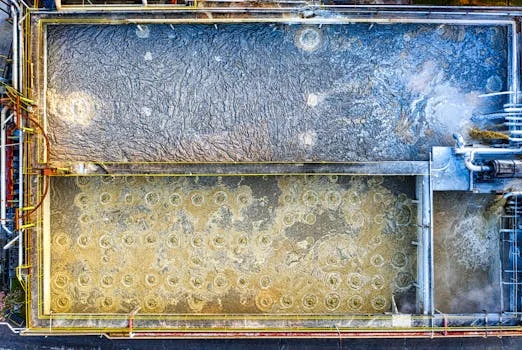
The permitting process in Indonesia is rigorous and can take between 6 to 12 months. Any plant with a capacity exceeding 1,000 m³/day requires a full Environmental Impact Assessment (AMDAL). Smaller plants must still secure approval from the Ministry of Environment and Forestry (KLHK) and a local operational permit from the Dinas Lingkungan Hidup (DLH). Sumatra’s permitting process is often more decentralized, requiring multiple approvals at the regency level, whereas Java’s process is increasingly centralized through the OSS (Online Single Submission) system.
Compliance monitoring requires quarterly testing for BOD, COD, TSS, and coliform. Operators should design for a 20% safety buffer; for instance, targeting a BOD of 24 mg/L ensures consistent compliance with the 30 mg/L legal limit despite influent fluctuations. Failure to comply can result in plant shutdown or massive fines. water reuse for irrigation is strictly regulated under the same coliform standards (< 1,000 MPN/100mL), giving MBR systems a distinct regulatory advantage due to their inherent disinfection capabilities.
Decision Framework: Choosing the Right System for Your Indonesian Municipality
To navigate the procurement process, engineers should follow this six-step decision framework to match technology to local constraints:
- Step 1: Assess Influent Characteristics: Analyze BOD, TSS, and FOG levels. If FOG is >50 mg/L, include a DAF unit for pre-treatment.
- Step 2: Evaluate Land Availability: If available land is <0.5 hectares for a 1,000 m³/day plant, MBR is mandatory. If >1 hectare is available, A/O or DAF+AS are more cost-effective.
- Step 3: Determine Operator Skill Level: For remote Sumatra towns with limited technical staff, prioritize A/O package plants for their operational simplicity.
- Step 4: Budget Constraints: Evaluate CAPEX vs. OPEX. If the municipality can sell treated water for reuse, MBR’s higher CAPEX is justified by revenue.
- Step 5: Climate Resilience: In regions with heavy monsoon seasons and high organic spikes, MBR provides the most stable effluent quality.
- Step 6: Regulatory Requirements: For discharge into sensitive river basins (BBWS authority), MBR or tertiary-filtered A/O systems are required to meet stringent local standards.
Decision Logic: Land <0.5 ha? → MBR. Operator skill low? → A/O. Budget <$800/m³/day? → DAF + AS.
Frequently Asked Questions
What are the biggest challenges for municipal sewage treatment in Indonesia?
The primary challenges include a significant shortage of technically skilled operators, inconsistent funding for ongoing maintenance (Sumatra saw a 40% budget shortfall in some districts in 2023), and land acquisition delays, particularly in Java where permitting backlogs can exceed three years.
How do I ensure my plant meets Indonesia’s 2025 effluent standards?
Design the biological stage with a 20% buffer. For example, design for a BOD effluent of 24 mg/L to ensure you never exceed the 30 mg/L limit. Utilizing MBR technology is the most reliable way to ensure compliance with both national standards and reuse requirements.
What is the typical payback period for these plants?
MBR systems typically see a payback of 8–12 years when water reuse revenue is included. A/O systems have a shorter payback of 5–7 years, primarily through the avoidance of environmental fines and lower operational costs. DAF + AS systems generally fall in the 6–9 year range.
Can decentralized systems work for large Indonesian cities?
Yes. Modular A/O package plants are highly effective for "pocket" developments or secondary urban centers where a centralized sewer network is not yet feasible. These systems allow for rapid deployment and can be linked via remote monitoring software to a central command center.
What maintenance is required for MBR systems in tropical climates?
In Indonesia’s high-temperature environment, biofouling is accelerated. Monthly membrane cleaning with sodium hypochlorite (NaOCl) and citric acid is essential. Annual integrity tests and module replacements every 5–7 years (using DF Series membranes) are standard for maintaining flux rates.