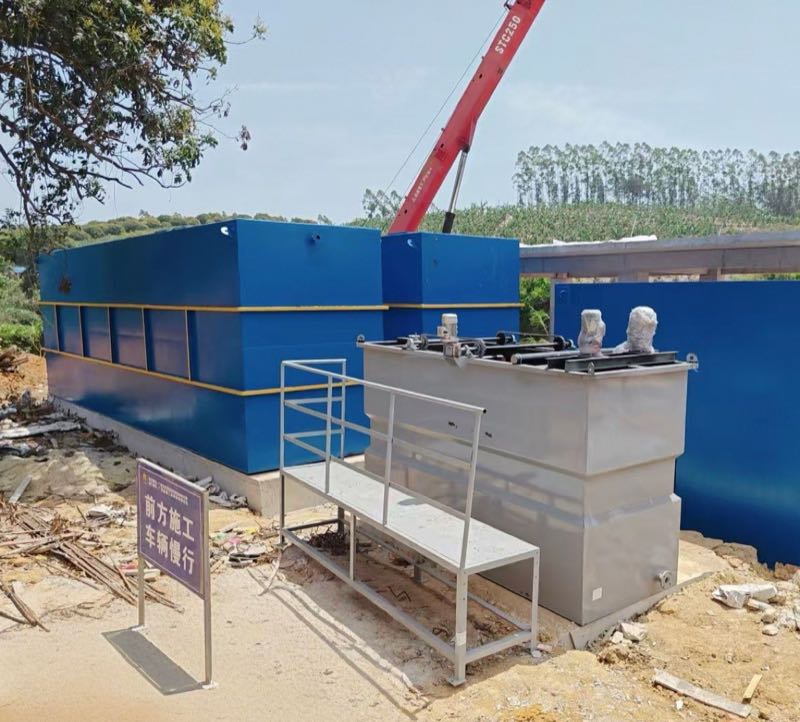
Wastewater treatment plant construction costs Ontario Canada are not one national price. A 1,000 m³/day plant runs $8M–$12M in Ontario, $7M–$10M in Alberta, and $6M–$9M in Atlantic Canada. Federal rules set a shared effluent floor, while provincial permits set the tertiary scope.
Wastewater Treatment Plant Construction Costs Ontario Canada: What Sets the Budget
A 1,000 m³/day municipal plant in Ontario is usually budgeted at $8M–$12M capital cost, with operating cost at $0.30–$0.50/m³. Federal effluent rules cap average CBOD and suspended solids at 25 mg/L where the Wastewater Systems Effluent Regulations apply. Technology choice, not province alone, moves that capital band by about 30–40%.
Provincial permits are the first cost split in 2025. Alberta's Tier 2 standards call for BOD below 25 mg/L and TSS below 25 mg/L. Quebec's MDDELCC phosphorus limits can force tertiary treatment to reach <0.3 mg/L in sensitive watersheds. Those gaps can inflate capital expenditures by 20-40% against regions with looser discharge limits.
British Columbia's Municipal Wastewater Regulation often sets ammonia below 1 mg/L in sensitive areas, and meeting that limit needs nitrification rather than carbon removal alone. On Ontario jobs we price, winter enclosure and concrete, not the aeration tanks alone, push bids toward the top of the band.
Influent strength is the next multiplier. Pulp and paper wastewater often arrives at BOD 500–1,500 mg/L and TSS 300–800 mg/L, while municipal sewage is more often 200–300 mg/L BOD and 200–350 mg/L TSS. That industrial load needs two to three times the biological capacity of a domestic plant.
Plant age and growth change the same budget. In Ontario, approximately 40% of municipal plants are over 30 years old, so replacement is already in the queue. BC's 2023 Asset Management Plan reported that 28% of its wastewater treatment plants require immediate upgrades. Alberta's population growth of around 2.5% year-over-year supports per capita investment of $5,000–$8,000, against $3,000–$5,000 per capita in Atlantic Canada.
| Factor | Impact on Cost | Example |
|---|---|---|
| Provincial Regulations | 20-40% CAPEX increase for advanced treatment | Quebec's phosphorus limits vs. Alberta's BOD/TSS standards |
| Industrial Influent Strength | 2-3x higher capacity needs vs. municipal | Pulp & Paper (BOD 500-1500 mg/L) vs. Municipal (BOD 200-300 mg/L) |
| Aging Infrastructure | Significant upgrade/replacement CAPEX | 40% of Ontario plants >30 years old; BC's 28% requiring immediate upgrades |
| Demographic Growth | Increased plant sizing and per capita CAPEX | Alberta ($5k-8k/capita) vs. Nova Scotia ($3k-5k/capita) |
According to the Wastewater Systems Effluent Regulations (SOR/2012-139, section 6), average CBOD must not exceed 25 mg/L and average suspended solids must not exceed 25 mg/L. Un-ionized ammonia must stay below 1.25 mg/L, expressed as nitrogen, at 15°C ± 1°C. If chlorine is used, average total residual chlorine must not exceed 0.02 mg/L. A grab sample at the dechlorination step must not exceed 0.10 mg/L.
The same regulations apply when a system collects an average of at least 100 m³/day and deposits effluent where fish live. They do not apply in the Northwest Territories, in Nunavut, or north of the 54th parallel in Quebec or Newfoundland and Labrador. A mill under the Pulp and Paper Effluent Regulations is outside this federal text.
According to Environment and Climate Change Canada, these standards are designed to be achievable through secondary wastewater treatment. Quebec's equivalency agreement took effect in October 2018, and Yukon's took effect in November 2014. Covered systems in those jurisdictions follow the equivalency regime, not the federal text alone. Owners also file an identification report within 45 days after their system comes into operation, and combined sewer overflow reports are due once per year by February 15.
Earlier Ontario files still name MOECC on the permit path. The Ontario construction budget answers to that provincial approval process on top of the federal effluent floor, so both layers belong in the schedule before tender.
Provincial Wastewater Treatment CAPEX Benchmark Canada 2025
The provincial wastewater treatment CAPEX benchmark for Canada in 2025 prices a 1,000 m³/day plant from the Ontario band of $8M–$12M down to $6M–$9M in Atlantic Canada. Alberta for the same flow is $7M–$10M, Quebec is $9M–$13M, and British Columbia is $8.5M–$11M. High construction cost and older plants keep Ontario at the top of that group.
What is the 2025 provincial CAPEX benchmark?
The 2025 benchmark for a 1,000 m³/day plant is $8M–$12M in Ontario, $7M–$10M in Alberta, $9M–$13M in Quebec, $8.5M–$11M in British Columbia, and $6M–$9M in Atlantic Canada. Use the band for the province that will issue the permit, not a national average. On a 1,000 m³/day municipal job, we usually see Ontario in the upper half of $8M–$12M once tertiary steps are real.
Operating cost per cubic metre splits on power and labor. Ontario is typically $0.30–$0.50/m³, Alberta is often $0.25–$0.40/m³ where electricity is cheaper, and Quebec commonly falls at $0.35–$0.55/m³. British Columbia and Atlantic Canada sit in the table beside those three. Do not mix an Alberta power price into an Ontario labor estimate.
Compact MBR systems for urban wastewater treatment add a 30–40% premium to CAPEX versus conventional activated sludge, with a 60% reduction in footprint as the offset. Meeting Quebec's phosphorus limit of <0.3 mg/L can add $1M–$2M, often through chemical dosing and advanced filtration. The premium is justified only when land or the phosphorus cap is binding.
Calgary's $750M Pine Creek WWTP expansion, slated for completion in 2025, includes UV disinfection and nutrient removal. Those steps were estimated to raise CAPEX by approximately 25% over a baseline without them. The City of Calgary plant page records authorized-only access from December 2023 and a perimeter fence planned for fall 2024. That page does not restate the $750M budget, so the expansion figure stays the planning case used here.
| Province | CAPEX Range (1,000 m³/day) | OPEX Range/m³ | Key Cost Drivers |
|---|---|---|---|
| Ontario | $8M – $12M | $0.30 – $0.50 | MOECC regulations, aging infrastructure, high energy costs |
| Alberta | $7M – $10M | $0.25 – $0.40 | Population growth, lower energy costs |
| Quebec | $9M – $13M | $0.35 – $0.55 | MDDELCC phosphorus limits, labor costs |
| British Columbia | $8.5M – $11M | $0.30 – $0.45 | Stringent environmental regulations, geographical challenges |
| Atlantic Canada | $6M – $9M | $0.25 – $0.40 | Lower population density, less stringent regulations |
For compact MBR systems for urban wastewater treatment, expect CAPEX to be 30-40% higher than conventional methods, but with significant space savings.
CAPEX vs. OPEX: How Treatment Technology Impacts Your Budget
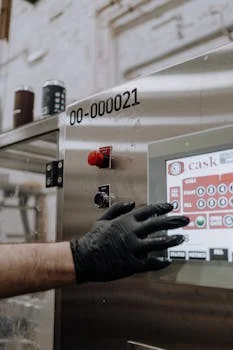
Treatment technology sets the split between capital cost and operating cost for a fixed 1,000 m³/day flow. Conventional activated sludge is the low-capital option, typically $3M–$5M, with OPEX of $0.25–$0.40/m³ because tank volume and aeration energy are both large. Most plants we size on open sites still start here when land is cheap and the permit stops at secondary treatment.
Membrane bioreactor plants for the same 1,000 m³/day flow are framed at $4M–$7M CAPEX and $0.40–$0.60/m³ OPEX. Footprint can fall by up to 60%, and pathogen removal is cited at 99%. That effluent quality is what buys the higher capital cost on a tight urban lot. Specifications for compact MBR systems for urban wastewater treatment should be read against flux and air-scour power before the footprint claim is accepted.
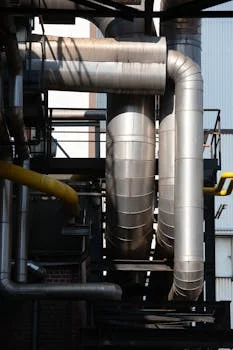
Dissolved air flotation is pretreatment, not a full biological plant. CAPEX falls between $500K–$2M and OPEX between $0.15–$0.30/m³, with removal of over 95% of FOG and TSS before biology. A food plant usually places DAF systems for industrial pretreatment ahead of the aeration tank. The DAF skid does not replace the biological line in the table below.
Energy is the line that moves OPEX every year. MBR systems typically consume 0.8–1.2 kWh/m³, compared with 0.4–0.6 kWh/m³ for conventional activated sludge, according to EPA 2024 data. Those two ranges are the energy basis in this cost model. They are not a Canadian effluent limit, and the permit numbers above remain the Canadian constraint.
Sludge volume is the other quiet operating cost. Plate and frame filter presses can reduce sludge volume by up to 80%, offering 30–40% savings on disposal costs compared with centrifuges which achieve around 60% volume reduction. Plants that haul cake should price a plate and frame filter press with the haul contract. Most plants we size for landfill haul run the press toward the drier end of its range.
Over a 20-year lifecycle, higher MBR capital can be offset by land acquisition costs up to 20–30% lower, and by 15–20% lower chemical usage when the biology stays stable. The land credit is real only where land has a market price. On a rural site the credit is often near zero, and activated sludge wins the screen.
| Technology | CAPEX Range (1,000 m³/day) | OPEX Range/m³ | Key Advantages | Key Disadvantages |
|---|---|---|---|---|
| Conventional Activated Sludge | $3M – $5M | $0.25 – $0.40 | Lowest CAPEX, proven reliability | Large footprint, lower effluent quality |
| MBR (Membrane Bioreactor) | $4M – $7M | $0.40 – $0.60 | Small footprint, high effluent quality, 99% pathogen removal | Higher CAPEX, higher energy consumption, membrane maintenance |
| DAF (Industrial Pretreatment) | $0.5M – $2M | $0.15 – $0.30 | Effective FOG/TSS removal, modular | Primarily for pretreatment, not full biological treatment |
Industrial Wastewater Treatment Cost by Sector Canada
Industrial wastewater treatment cost by sector in Canada follows influent strength, not the municipal band above. A 500 m³/day industrial plant is a different object from a 1,000 m³/day sewage works. Food, pulp, mining, and textile loads do not share one capital range.
How does industrial treatment cost vary by sector?
At 500 m³/day, food processing CAPEX is $2M–$5M and OPEX is $0.50–$0.80/m³, pulp and paper is $3M–$8M and $0.40–$0.70/m³, mining is $4M–$10M and $0.60–$1.00/m³, and textile is $1.5M–$4M and $0.45–$0.75/m³. Food plants we review almost always need flotation before biology. The sector table is the budget start, and the permit still has to be layered on top.
Food processing, including dairy, meat, and breweries, commonly sees BOD from 1,000–3,000 mg/L and FOG from 500–1,500 mg/L. Pulp and paper deals with TSS of 300–800 mg/L, COD of 1,500–4,000 mg/L, and color removal. Textile wastewater carries dyes, high salinity, and COD between 800–2,000 mg/L. Mining must treat heavy metals, cyanide, and wide pH swings, which is why its operating band is the highest.
A 2024 WEFTEC case at Maple Lodge Farms in Ontario showed a 25% reduction in OPEX after a move from a basic DAF unit to a dissolved air flotation system with optimized chemical dosing. The saving came from dose control, not from deleting flotation. Copy the dosing trial before you copy the 25%.
| Industry Sector | Typical Influent Characteristics | CAPEX Range (500 m³/day) | OPEX Range/m³ | Key Treatment Challenges |
|---|---|---|---|---|
| Food Processing | BOD: 1000-3000 mg/L, FOG: 500-1500 mg/L | $2M – $5M | $0.50 – $0.80 | High organic load, FOG removal |
| Pulp & Paper | TSS: 300-800 mg/L, COD: 1500-4000 mg/L | $3M – $8M | $0.40 – $0.70 | TSS, COD, color removal |
| Mining | Metals, cyanide, pH variability | $4M – $10M | $0.60 – $1.00 | Heavy metal precipitation, cyanide destruction, pH neutralization |
| Textile | Dyes, high salinity, COD: 800-2000 mg/L | $1.5M – $4M | $0.45 – $0.75 | Dye removal, salinity management |
How to Calculate ROI for Your Wastewater Treatment Plant
Return on a wastewater plant is a payback screen, not a single percentage. Screening wastewater treatment plant construction costs Ontario Canada starts from the $8M–$12M band for a 1,000 m³/day Ontario plant. Raise that capital figure by a 30% increase for an MBR system, or apply a 15% decrease for optimized package plants. The adjustment is a screen, and it is not a tender price.
Annual operating cost needs four unit prices. Energy is typically $0.10–$0.15/kWh, labor is $50–$80/hour, chemicals are $0.05–$0.15/m³, and sludge disposal is $100–$200/ton. Estimators we work with forget the sludge line until the haul quote arrives. Put the tonnage in the model before you trust any payback year.
Compliance cash belongs in the benefit, not in a footnote. Regulatory fines in the Alberta case used here run from $25,000–$100,000 per violation, and permit fees are framed at $5,000–$20,000/year. Avoiding one violation does not pay for a plant. It does belong in the numerator of the screen.
Water reuse can be worth $0.50–$1.00/m³ against purchased water, and anaerobic digestion can offset 30–50% of a plant's energy demand. Count only the reuse volume you can actually send to a user. A digester credit that ignores winter gas yield will overstate the payback.
The screening formula used here is Payback Period (Years) = (Annual Savings + Compliance Benefits) / (CAPEX + Annual OPEX). A $5M MBR system in Alberta at $0.50/m³ for a 1,000 m³/day plant has annual OPEX of approximately $182,500/year. With $200,000/year in avoided compliance penalties, and with other savings included, the worked example achieves a payback period of approximately 7 years. This formula is a screen, not a discounted cash-flow model.
A side-by-side of package vs. conventional plants is the right check on the 15% package adjustment. Ontario permit line items are set out in Wastewater Treatment Plant Cost in Ontario 2026: Full Engineering Brea. Use both before you freeze capital cost. Do not add a second contingency for the same approval scope.
- Estimate CAPEX: Use provincial benchmarks and adjust for technology premiums/discounts.
- Calculate Annual OPEX: Include energy, labor, chemicals, and sludge disposal.
- Quantify Compliance Savings: Factor in avoided fines and reduced permit fees.
- Include Operational Efficiencies: Account for water reuse and energy recovery benefits.
- Calculate Payback Period: Apply the ROI formula to determine the investment's return timeline.
What belongs on the construction cost checklist?
A construction estimate for a plant in Canada should carry seven items before anyone calls it a budget. Missing sludge or the lab scope is the usual reason the first number fails at tender.
- Design average flow and peak flow in m³/day, using the 1,000 m³/day or 500 m³/day case you are actually building.
- List effluent limits for CBOD, suspended solids, un-ionized ammonia, total residual chlorine, and any provincial phosphorus cap.
- Name the process, whether conventional activated sludge, MBR, or DAF pretreatment, and take the CAPEX band from the tables.
- Carry sludge cake mass and price disposal at the $100–$200/ton haul rate used in the operating model.
- Enter the power price in $/kWh and the process load of 0.4–0.6 kWh/m³ or 0.8–1.2 kWh/m³.
- Include land, winter construction, and building enclosure, which move Ontario bids inside the $8M–$12M band.
- Add monitoring equipment and the 45-day identification report where the federal regulations apply.
Search files that still use the spelling wastewater treatment plant construciton costs ontario canada point at this same Ontario construction scope. Treat that string as the same query, not as a second plant. The figures above are the ones to price.
Who This Cost Breakdown Is For
Municipal engineers, EPC estimators, and industrial environmental managers in Canada are the readers this cost breakdown is written for. The bands cover 2025 capital and operating cost, with Ontario construction as the detailed case. The page is a benchmark, not a contractor's bid.
Look elsewhere if you need a stamped price for one civic address, or if the plant is not in Canada. Site rock, haul distance, and the issued permit move the number in ways a provincial band cannot see. Those three items belong in a site estimate.
Next step is a flow and load sheet, not another generic range. Send design flow, influent BOD, and the effluent limits with a request a quote so the budget follows the permit. One set of numbers is enough for a first equipment check.
Frequently Asked Questions
What is the average cost per m³ for a wastewater treatment plant in Canada?
Municipal plants in 2025 are usually run at $0.30–$0.60/m³ operating cost. Industrial facilities, because of higher influent strength and specialized treatment, more often land at $0.50–$1.00/m³. Ontario's band inside the municipal range is $0.30–$0.50/m³, and Alberta is often $0.25–$0.40/m³ where power is cheaper. Use the provincial table for sewage and the sector table when the flow is not domestic.
How do Canadian wastewater regulations affect plant costs?
Canadian rules raise capital cost when the permit leaves secondary treatment. Quebec's phosphorus cap of <0.3 mg/L can add $1M–$2M for tertiary treatment. Alberta's Tier 2 standards, at BOD below 25 mg/L and TSS below 25 mg/L, can require nutrient removal beyond plain carbon treatment. Where the federal regulations apply, average CBOD and suspended solids must not exceed 25 mg/L, and un-ionized ammonia must stay below 1.25 mg/L at 15°C ± 1°C.
What is the cheapest wastewater treatment technology?
Conventional activated sludge has the lowest capital cost in this set, at $3M–$5M for a 1,000 m³/day plant. Operating cost is $0.25–$0.40/m³, and the site footprint is the largest of the three options. MBR capital for the same flow is $4M–$7M, with higher energy. Choose activated sludge when land is available and the permit stops at secondary treatment.
How much does a small package wastewater treatment plant cost in Canada?
Small package wastewater treatment plants treating 50–200 m³/day are framed at $1.2M to $3M in Canada. They suit a small community or a single industrial outfall, not a 1,000 m³/day municipal works. The package discount used in the ROI screen is a 15% decrease against a conventional build at larger scale. Confirm whether the box includes sludge storage, odor control, and winter enclosure before you accept the low end.
What are the hidden costs of wastewater treatment plants?
Hidden cost sits in sludge, membranes, and permits, not in the tank concrete. Sludge disposal at $100–$200/ton can exceed chemical cost on a high-solids industrial flow. MBR membrane replacement at $50–$100/m² belongs in the 20-year model, not in year-one OPEX only. Permit renewal fees of $5,000–$20,000/year should be carried for the life of the approval.