Chip Fab Wastewater Treatment Price: 2025 Cost Breakdown, Engineering Specs & ROI Calculator
In 2025, semiconductor chip fab wastewater treatment systems require a CAPEX investment of $1.2M–$5.8M, with operational expenditures (OPEX) ranging from $0.36 to $0.85 per cubic meter, influenced by wafer size and chosen treatment technology. For instance, a 6-inch wafer plant achieves an optimum water-recycling rate of 77% at a water cost of $0.36/m³, a figure that climbs to 86% for 12-inch plants (Top 1 scraped content). While Advanced Oxidation Processes (AOP) can increase initial CAPEX by 15–25%, they typically reduce long-term chemical costs by 30–40%. This comprehensive guide provides a detailed cost breakdown, compares various treatment technologies, offers an ROI calculator, and outlines a decision framework to help procurement managers and engineers justify investments and meet semiconductor industry water reuse benchmarks.Why Chip Fab Wastewater Treatment Costs Are Rising in 2025
Semiconductor fabs face escalating wastewater treatment costs in 2025 due to increasing water scarcity, stringent regulatory mandates, and the sheer volume of water consumed. A typical 6-inch wafer plant utilizes 2–10 million gallons of water per day, while 12-inch plants can consume 15–30 million gallons daily (per Top 2 scraped content), making efficient water management critical. This demand places immense pressure on local water resources, with projections indicating that 40% of semiconductor fabs will operate in water-stressed regions by 2027 (McKinsey 2024, industry widely recognized data). This global water scarcity directly drives up the cost of fresh water, making wastewater recycling an economic imperative. Beyond resource availability, environmental regulations are becoming increasingly stringent, further contributing to rising costs. Key regulatory frameworks include the EU Industrial Emissions Directive 2010/75/EU, China’s ‘Water Ten Plan,’ and the U.S. EPA Effluent Guidelines for Semiconductors (40 CFR Part 469), which mandate specific discharge limits for various pollutants such as heavy metals, fluorides, and organic compounds. Non-compliance carries severe financial penalties, with fines reaching up to $50,000 per day from agencies like the U.S. EPA, in addition to potential production halts and reputational damage. Investing in robust semiconductor wastewater treatment CAPEX and advanced water recycling solutions is no longer just an environmental consideration but a critical factor in ensuring operational continuity and financial stability for chip fabs.Chip Fab Wastewater Treatment Technologies: Engineering Specs and Cost Implications
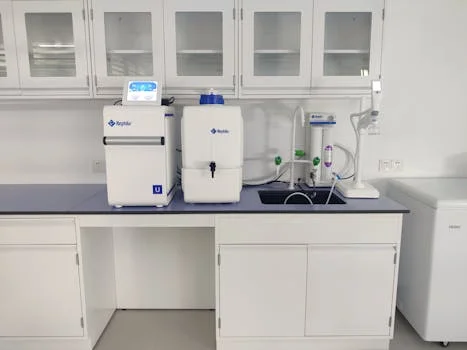
- Chemical Treatment: This foundational method involves neutralization for pH control, precipitation for heavy metal removal, and coagulation/flocculation for suspended solids. Chemical treatment is typically the first stage for gross contaminant reduction. CAPEX ranges from $500K–$1.5M, with OPEX between $0.25–$0.50/m³ (Top 4 scraped content), primarily driven by chemical consumption and sludge disposal.
- Biological Treatment: While effective for biodegradable organic matter, biological treatment has limited application in semiconductor wastewater due to high salinity, heavy metal toxicity, and the presence of non-biodegradable compounds. When applicable, CAPEX is estimated at $800K–$2M, and OPEX at $0.40–$0.70/m³.
- Membrane Filtration (RO/NF): Reverse Osmosis (RO) and Nanofiltration (NF) systems are crucial for achieving high purity water suitable for reuse. These systems can achieve up to 95% water recovery for non-chelated streams by effectively removing dissolved salts, heavy metals, and some organic compounds. Industrial RO systems for semiconductor wastewater recycling are a cornerstone for high-quality water reuse. CAPEX for membrane filtration systems typically falls between $1.2M–$3M, with OPEX from $0.50–$0.85/m³ (Top 5 scraped content), largely due to energy consumption for high-pressure pumps and membrane replacement.
- Advanced Oxidation Processes (AOP): AOP, such as UV-oxidation, is specifically employed for the degradation of persistent organic compounds, including chelating agents that can interfere with other treatment stages and metal recovery. AOP can significantly enhance the treatability of complex waste streams. On-site ClO₂ generators for semiconductor wastewater disinfection can also be integrated for specific oxidation needs. CAPEX for AOP systems ranges from $1.5M–$4M, with OPEX between $0.60–$1.10/m³ (Top 3 scraped content), primarily for energy (UV lamps) and oxidant chemicals.
- Zero-Liquid-Discharge (ZLD): ZLD systems represent the highest level of water recovery, aiming for 99% or more, by minimizing wastewater discharge to nearly zero. This often involves a combination of membrane technologies, evaporators, and crystallizers. While offering maximum water conservation and compliance, ZLD systems incur the highest costs, with CAPEX between $3M–$8M and OPEX from $1.20–$2.50/m³.
The table below provides a comparative overview of these technologies:
| Technology | CAPEX Range | OPEX Range (per m³) | Typical Recovery Rate | Key Application | Limitations |
|---|---|---|---|---|---|
| Chemical Treatment | $500K–$1.5M | $0.25–$0.50 | N/A (Pre-treatment) | pH control, heavy metal precipitation, suspended solids removal | Generates sludge, high chemical consumption |
| Biological Treatment | $800K–$2M | $0.40–$0.70 | N/A (Pre-treatment) | Biodegradable organic removal | Sensitive to toxic compounds, high salinity, low biodegradability |
| Membrane Filtration (RO/NF) | $1.2M–$3M | $0.50–$0.85 | Up to 95% | Dissolved solids, salts, heavy metals, high-purity water for reuse | Fouling, scaling, pre-treatment required, concentrates brine |
| Advanced Oxidation Processes (AOP) | $1.5M–$4M | $0.60–$1.10 | N/A (Pre-treatment/Polishing) | Degradation of chelates, persistent organic compounds | High energy demand, may require post-treatment |
| Zero-Liquid-Discharge (ZLD) | $3M–$8M | $1.20–$2.50 | >99% | Maximum water recovery, eliminate liquid discharge | Highest CAPEX/OPEX, complex operation, energy intensive |
CAPEX Breakdown: How Much Does a Chip Fab Wastewater Treatment System Cost?
The capital expenditure (CAPEX) for a chip fab wastewater treatment system is typically dominated by equipment costs, which account for 60–70% of the total investment. For a system with an overall CAPEX ranging from $1.2M to $5.8M, the equipment alone can represent $720K to $4M. This category includes major components such as DAF systems for suspended solids removal in semiconductor wastewater, reverse osmosis units, advanced oxidation reactors, pumps, tanks, and control systems. The specific mix and scale of these technologies directly influence the equipment cost. Civil works constitute another significant portion of CAPEX, typically ranging from 15–20%. This includes site preparation, foundation construction for heavy equipment, building enclosures, and the extensive network of piping and electrical infrastructure required to connect all treatment stages. Installation and commissioning account for 10–15% of the total CAPEX, covering labor for system assembly, electrical hook-ups, software integration, initial testing, and calibration to ensure optimal performance. For example, a 6-inch wafer plant targeting 77% water recovery might incur a CAPEX of $1.2M–$2.5M, while a larger 12-inch plant aiming for 86% recovery could see CAPEX ranging from $3M–$5.8M. Modular wastewater treatment systems can reduce CAPEX by 20–30% compared to custom-built conventional plants, though they may offer less flexibility for future scalability. For a detailed comparison, refer to the cost comparison of modular vs. custom wastewater treatment systems.A typical CAPEX breakdown for a chip fab wastewater treatment system is detailed below:
| CAPEX Component | Percentage of Total CAPEX | Example Cost Range (for $1.2M–$5.8M total CAPEX) |
|---|---|---|
| Equipment Costs | 60–70% | $720K–$4.06M |
| Civil Works (Site Prep, Foundations, Piping) | 15–20% | $180K–$1.16M |
| Installation & Commissioning (Labor, Testing, Calibration) | 10–15% | $120K–$870K |
| Engineering & Design | 5–10% | $60K–$580K |
OPEX Analysis: Operating Costs for Chip Fab Wastewater Treatment Systems
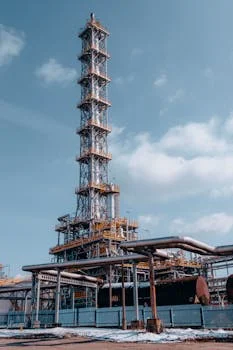
The table below provides a detailed breakdown of typical OPEX components:
| OPEX Component | Percentage of Total OPEX | Example Cost Range (per m³ of treated water) |
|---|---|---|
| Energy Costs (Pumps, UV, Aeration) | 30–40% | $0.15–$0.35 |
| Chemical Costs (Coagulants, Oxidants, pH adjusters) | 25–35% | $0.10–$0.25 |
| Membrane Replacement (RO/NF) | 10–15% | $0.05–$0.15 |
| Labor & Maintenance | 15–20% | $0.07–$0.17 |
| Waste Disposal (Sludge, Brine) | 5–10% | $0.02–$0.08 |
Water Recycling Rates and Cost Savings: What’s the Optimal Recovery for Your Fab?
Achieving optimal water recycling rates in chip fabs directly correlates with significant cost savings, though the ideal percentage varies by wafer size and prevailing water costs. For a 6-inch wafer plant, the optimum water-recycling rate is 77%, rising to 80% for 8-inch plants, and reaching 86% for 12-inch wafer plants (Top 1 scraped content). These figures represent the most cost-effective balance between the investment in wastewater treatment and the savings from reduced fresh water consumption and discharge fees. The sensitivity of the optimal recovery rate to water cost is substantial. As the unit cost of water increases, the economic incentive for higher recycling rates grows. For instance, the optimal recovery rate for a 6-inch plant increases from 74% to 84% as the water cost rises from $0.20/m³ to $0.80/m³ (Top 1 scraped content). This demonstrates that in regions with high water stress or expensive municipal water, investing in more advanced treatment to achieve higher recovery becomes financially compelling. Consider a 12-inch plant operating at an 86% recovery rate with a fresh water cost of $0.50/m³. If the plant consumes 20 million gallons (approximately 75,700 m³) of water per day, an 86% recovery rate translates to saving approximately 65,000 m³ of fresh water daily. This results in annual cost savings of around $1.2M, excluding avoided discharge fees and the value of production continuity. However, pursuing recovery rates beyond 85% often encounters diminishing returns. CAPEX and OPEX can rise exponentially due to increased complexity, advanced membrane fouling control, and higher chemical demand for treating highly concentrated brine streams, making ZLD systems economically justifiable only under specific conditions of extreme water scarcity or zero-discharge mandates.| Wafer Size | Optimal Water Recycling Rate | Associated Water Cost (Example) | Typical Daily Water Consumption (MGD) | Annual Water Savings (Example at $0.50/m³) |
|---|---|---|---|---|
| 6-inch | 77% | $0.36/m³ | 2–10 | $0.4M–$2M |
| 8-inch | 80% | $0.45/m³ | 5–15 | $1.0M–$3M |
| 12-inch | 86% | $0.50/m³ | 15–30 | $3M–$6M |
ROI Calculator: How to Justify Your Chip Fab Wastewater Treatment Investment
ROI = (Annual Savings - Annual OPEX) / CAPEX * 100%
ROI = ($250,000 / $1,800,000) * 100% = 13.89%
Frequently Asked Questions
Procurement managers and environmental engineers often have specific questions regarding the practical and financial aspects of chip fab wastewater treatment systems, which we address here.What is the typical lifespan of a chip fab wastewater treatment system?
Chip fab wastewater treatment systems typically last 15-20 years for major civil works and infrastructure components. Mechanical equipment, such as pumps and blowers, usually requires replacement every 5-10 years, while critical consumables like RO membranes generally have a lifespan of 3-5 years, depending on maintenance practices and operational conditions.
How do regulatory changes impact the ROI of these systems?
Stricter regulatory changes, such as new discharge limits for specific pollutants or increased fines for non-compliance, directly enhance the ROI of chip fab wastewater treatment systems. These changes raise the cost of inaction, making water reuse and advanced treatment more economically attractive by increasing avoided fines and ensuring production continuity, thereby improving the overall financial justification.
Can existing fab facilities integrate advanced treatment technologies?
Yes, many advanced treatment technologies, including Advanced Oxidation Processes (AOP) and membrane filtration systems, can be integrated into existing fab facilities. This often involves modular additions or strategic upgrades to current infrastructure. While space constraints and the condition of existing pipework can influence CAPEX, retrofitting is a common approach to enhance treatment capabilities and meet evolving environmental standards.
What are the main challenges in achieving high water recovery rates in chip fabs?
Key challenges in achieving high water recovery rates in chip fabs include managing the diverse and complex composition of wastewater streams, which contain high concentrations of dissolved solids, heavy metals, and persistent organic compounds. Additionally, the stringent ultra-pure water quality requirements for reuse necessitate robust multi-stage treatment processes that can be energy-intensive and prone to membrane fouling.