Top 5 Sewage Treatment Equipment Suppliers in Giza 2025: Engineering Specs, Compliance & Cost Comparison
Giza’s sewage treatment equipment market is fragmented, with suppliers offering solutions ranging from compact DAF systems (4–300 m³/h) to large-scale MBR plants (10–2,000 m³/day). Key players like Pure Tech Water Treatment Technology and City Water For Water Treatment meet Egypt’s Law No. 48/1982 discharge limits (BOD < 30 mg/L, TSS < 50 mg/L), but engineering specs vary widely. This guide compares the top 5 suppliers by removal efficiency, footprint, and cost—with a decision framework to match your project’s capacity and compliance needs. Whether you are seeking a sewage treatment equipment supplier in Giza for a municipal expansion or an industrial upgrade, data-driven selection is the only way to ensure long-term ROI and regulatory safety.
Why Giza’s Sewage Treatment Market Demands Supplier Comparison
Giza’s population density, currently serving over 4.3 million inhabitants through the Abu Rawash Wastewater Treatment Plant, has created a 1.2 million m³/day capacity gap that necessitates decentralized, high-efficiency treatment systems.
Egypt’s Law No. 48/1982 mandates strict discharge limits for treated effluent, specifically requiring Biological Oxygen Demand (BOD) to remain below 30 mg/L and Total Suspended Solids (TSS) below 50 mg/L. However, enforcement intensity varies significantly across Giza’s districts. In industrial hubs like Embaba or the outskirts of the Giza Governorate, Decree 9/2009 imposes additional penalties for untreated industrial effluent, particularly for the textile and food processing sectors. These industries often produce wastewater with high Fats, Oils, and Grease (FOG) and Chemical Oxygen Demand (COD) levels, requiring specialized high-efficiency DAF systems for Giza’s industrial wastewater to avoid heavy fines and operational shutdowns.
Procurement in the Giza market is frequently undermined by three common mistakes. First is the "undersizing trap," where systems are designed for average flow rather than peak hydraulic loads, leading to bypass events during shift changes in factories. Second is the neglect of Operating Expenditure (OPEX), specifically the cost of imported membranes and chemical reagents. Third is the failure to verify local service networks; a system with high technical specs is a liability if the supplier cannot provide on-site technical support in Dokki or Giza within 24 hours. For instance, a textile plant in Giza recently faced a EGP 400,000 fine when their undersized biological system failed to process a surge in dye-heavy wastewater, a scenario avoidable through proper supplier vetting.
Top 5 Sewage Treatment Equipment Suppliers in Giza: Engineering Specs Compared
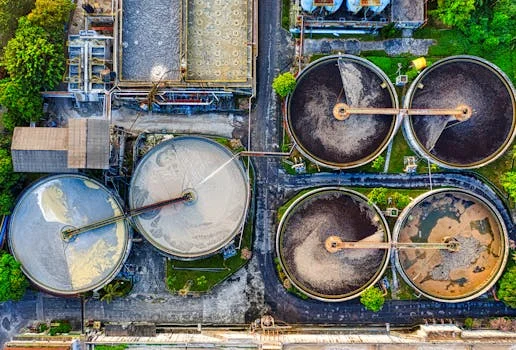
Engineering specifications for sewage treatment in Giza vary by up to 40% in footprint and 25% in energy consumption across top-tier suppliers, making a direct technical comparison essential for RFP development. The following table provides a breakdown of the leading suppliers currently operating within the Giza Governorate, focusing on the metrics most critical to municipal and industrial engineers.
| Supplier Name | Core Technologies | Capacity Range | Removal Efficiency (BOD/TSS) | Compliance Standards |
|---|---|---|---|---|
| Pure Tech Water Treatment Technology (Dokki) | MBR, DAF, SBR | 10 – 1,000 m³/day | 95% / 98% | Law 48/1982, ISO 9001 |
| City Water For Water Treatment | RO, UF, MBR | 5 – 500 m³/h | 94% / 97% | WHO, Egyptian Code 501 |
| Giza Company for Water & Wastewater | Extended Aeration | 500 – 10,000 m³/day | 85% / 90% | HCWW Standards |
| ICAT (Infrastructure & Construction) | EPC, Large-scale WWTP | 1,000+ m³/day | 90% / 92% | National Regulatory Board |
| Metito Egypt | MBR, MBBR, RO | Custom Industrial | 96% / 99% | EPA, Law 48/1982 |
Pure Tech Water Treatment Technology, based in Dokki, is highly regarded for its mobile treatment units, which are increasingly used in Giza’s developing rural fringes where permanent infrastructure is lacking. In contrast, City Water For Water Treatment focuses heavily on the integration of Reverse Osmosis (RO) systems, which are vital for facilities looking to achieve zero liquid discharge (ZLD) or high-grade water reuse. Engineers should note that how RO systems can complement sewage treatment for water reuse is a critical consideration for Giza’s water-stressed industrial zones.
When evaluating these suppliers, request pilot test reports based on Giza’s specific water characteristics. For example, influent in Giza often carries higher silt loads due to proximity to the Nile and agricultural runoff. Suppliers like Metito offer high-end compact MBR systems for Giza’s urban sewage treatment that utilize reinforced membranes to handle these abrasive conditions, whereas standard local models might suffer from accelerated membrane fouling.
Giza’s Regulatory Landscape: What Your Sewage Treatment System Must Achieve
Law No. 48/1982 establishes the primary legal framework for wastewater discharge in Egypt.Law No. 48/1982 mandates BOD levels below 30 mg/L for drainage into non-potable water bodies. For industrial operators in Giza, compliance is further complicated by Decree 9/2009, which targets specific pollutants such as heavy metals and phenols. The Holding Company for Water and Wastewater (HCWW) and the Giza Water Authority conduct quarterly sampling, with non-compliance fines reaching up to EGP 500,000 for repeated violations in sensitive districts like Agouza or Dokki.
| Industry Type | Key Pollutant | Raw Influent (Typical) | Required Effluent (Law 48) |
|---|---|---|---|
| Food Processing | FOG (Fats/Oils) | 200 – 800 mg/L | < 10 mg/L |
| Textile/Dyeing | COD | 1,500 – 3,000 mg/L | < 150 mg/L |
| Municipal Sewage | Fecal Coliform | 10^6 MPN/100mL | < 1,000 MPN/100mL |
| Hospitals | Pathogens/Med-Waste | High Variability | Strict Sterilization |
To meet these standards, equipment must be selected based on its specific removal capabilities. Membrane Bioreactor (MBR) systems are frequently chosen for high-density Giza developments because they consistently achieve BOD levels below 10 mg/L, exceeding local legal requirements by over 60% and providing a safety buffer against influent spikes. For medical facilities in the region, understanding the specific standards for hospital wastewater in Giza is paramount, as these sites require advanced disinfection stages, often involving on-site ClO₂ generators for Giza’s municipal and hospital wastewater to eliminate resistant pathogens.
Cost Breakdown: CAPEX vs. OPEX for Giza Sewage Treatment Projects
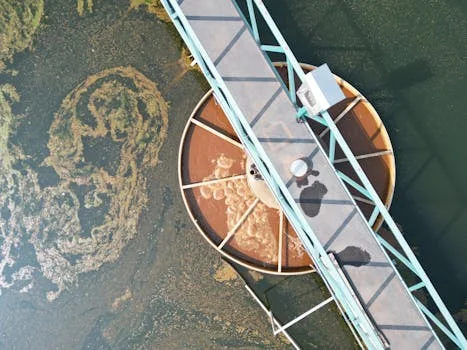
Operation and maintenance costs (OPEX) for membrane-based systems in Giza typically account for 15% to 20% of the total lifecycle cost over a 10-year period, yet many procurement decisions are made based solely on the initial Capital Expenditure (CAPEX). In the Giza market, CAPEX is heavily influenced by the origin of the components; for instance, European or Japanese membranes carry high import duties, whereas locally assembled biological systems offer lower entry costs but higher energy requirements.
| System Type | Avg. CAPEX (EGP/m³) | Avg. OPEX (EGP/m³/yr) | Lifespan (Years) |
|---|---|---|---|
| Dissolved Air Flotation (DAF) | 25,000 – 45,000 | 4,500 – 6,000 | 12 – 15 |
| Membrane Bioreactor (MBR) | 45,000 – 75,000 | 8,000 – 12,000 | 10 – 12 (Membranes) |
| Extended Aeration (EA) | 18,000 – 30,000 | 3,000 – 5,000 | 20+ (Civil works) |
A typical industrial project in Giza, such as a 50 m³/h DAF system, may require a CAPEX of approximately EGP 1.5 million. However, the energy consumption for aeration and the cost of polymer coagulants can drive OPEX to EGP 200,000 per year. To mitigate these costs, many Giza-based engineers are now integrating solar-powered aeration systems, taking advantage of Egypt’s high solar irradiance to reduce electricity tariffs, which have seen significant increases in the industrial sector recently. For a deeper dive into the financial trade-offs between biological and membrane technologies, consult our analysis on the MBR vs. extended aeration cost difference in 2025.
One critical Giza-specific cost driver is sludge disposal. Because Giza’s municipal landfills have strict intake limits for industrial sludge, systems that minimize sludge production—such as advanced MBRs—can save a facility over EGP 50,000 annually in transport and disposal fees. Negotiating local sludge disposal contracts with the Giza Governorate should be done in tandem with equipment procurement to ensure total cost transparency.
How to Choose the Right Supplier for Your Giza Project: A 5-Step Decision Framework
Selecting a supplier requires careful consideration.Selecting a supplier without analyzing peak flow variability leads to a 30% higher risk of system bypass during Giza’s seasonal industrial surges. To ensure your procurement choice is technically sound and financially viable, follow this structured five-step framework:
- Define Influent Characteristics: Conduct a comprehensive lab analysis of your raw wastewater. If your facility is near industrial zones like 6th of October City, test specifically for heavy metals and high-salinity industrial dyes that can inhibit biological treatment.
- Match Capacity to Peak Demand: Do not buy a system based on "average daily flow." Use peak hourly flow data to size your equalization tanks and primary treatment units. Overflows in Giza’s urban districts are subject to immediate environmental citations.
- Validate with Pilot Data: Request a 30-day trial or data from a similar installation in Egypt. For MBR systems, focus on the "trans-membrane pressure" (TMP) and fouling rates observed with local G