Why Aarhus’s Wastewater Treatment Costs Are a Global Benchmark
Aarhus’s wastewater treatment plants set global benchmarks for cost efficiency and energy self-sufficiency. The Marselisborg WWTP, serving 220,000 person equivalents (PE), produces 151% of its energy needs (4.7 GWh/year vs. 3.8 GWh/year consumption) and saves EUR 701,000 annually through process optimization. For 2025 projects, expect DKK 30,000–50,000 per PE for municipal plants (CAPEX) and DKK 2–5/m³ for OPEX, depending on energy-efficiency upgrades. This guide breaks down costs, engineering specs, and ROI for Aarhus-scale projects.
The efficiency of the Danish water sector is historically significant, as it accounts for only 1.4% of the country’s total electricity consumption, compared to a global average of 4%. This discrepancy is largely driven by Aarhus Vand’s commitment to energy neutrality and resource recovery. The upcoming Tangkrogen plant, with a total budget of DKK 6.65 billion and a 2036 deadline, represents the next generation of large-scale infrastructure, with pre-build costs already reaching €62 million as of 2026. These investments are necessitated by the strict EU Urban Waste Water Directive 91/271/EEC and local mandates for climate resilience in cold-weather Scandinavian environments.
Financial savings in Aarhus are not merely a byproduct of scale but a result of specific technological integrations. For instance, the Egaa WWTP achieved annual savings of EUR 701,000 by implementing advanced SCADA control systems, anammox sludge liquor treatment, and fine-bubble aeration optimization. These technologies allow plants to transition from energy consumers to "resource factories," producing surplus electricity and heat that can be sold back to the district heating grid. For engineers and procurement teams, understanding these benchmarks is critical for justifying the higher initial CAPEX required for energy-efficient designs.
Wastewater Treatment Plant Cost Breakdown: CAPEX vs. OPEX for Aarhus-Scale Projects
CAPEX for municipal wastewater treatment plants in Aarhus typically ranges from DKK 30,000 to DKK 50,000 per PE for 2025-scheduled projects, encompassing civil engineering, mechanical equipment, and high-level automation. While conventional activated sludge (CAS) systems sit at the lower end of this range, energy-efficient configurations—incorporating anaerobic digestion and advanced nutrient removal—command a 15-25% premium on initial investment. However, the OPEX profile for these advanced plants is significantly lower, averaging DKK 2–5/m³ compared to DKK 5–10/m³ for older, energy-intensive designs.
Industrial facility managers must account for influent strength when calculating costs. For high-strength wastewater in sectors like food processing or pharmaceuticals, OPEX often rises to DKK 8–15/m³ due to higher chemical dosing and aeration demands. Utilizing compact MBR systems for energy-efficient wastewater treatment can mitigate these costs by reducing the footprint and improving effluent quality, which in turn lowers discharge fees. Hidden costs in the Aarhus region include land acquisition (currently DKK 1,000–3,000/m²) and complex permitting processes that can cost between DKK 500,000 and DKK 2 million depending on the environmental impact assessment (EIA) requirements.
| Plant Capacity (PE) | CAPEX (Conventional) | CAPEX (Energy-Efficient) | OPEX (DKK/m³) | Primary Cost Driver |
|---|---|---|---|---|
| 5,000 PE | DKK 150M – 200M | DKK 180M – 250M | DKK 6.0 – 9.0 | Automation & Labor |
| 50,000 PE | DKK 1.5B – 1.8B | DKK 1.8B – 2.2B | DKK 4.0 – 6.0 | Aeration Energy |
| 220,000 PE | DKK 6.0B – 7.5B | DKK 7.5B – 9.0B | DKK 2.0 – 4.5 | Sludge Management |
Climate resilience upgrades are a non-negotiable cost factor in Aarhus. Designs must account for flood-proofing and cold-weather aeration efficiency, which can add 5-10% to the mechanical equipment budget. For industrial users, understanding COD/BOD ratios for Aarhus’s influent variability is essential for selecting the correct biological treatment stage, preventing costly over-engineering or compliance failures.
Energy ROI Calculator: How Aarhus’s WWTPs Achieve 151% Self-Sufficiency
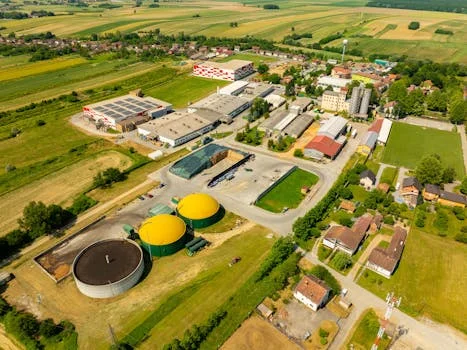
Marselisborg WWTP’s 151% energy self-sufficiency is achieved through a combination of electricity generation and heat recovery, producing 4.7 GWh/year of electricity against a consumption of 3.8 GWh/year. The financial return on these technologies is driven by the displacement of grid-purchased energy and the sale of surplus heat to the Aarhus district heating network. Advanced SCADA systems typically reduce total energy consumption by 25% by optimizing aeration in real-time, while turbo compressors provide a further 10–15% efficiency gain over traditional lobe blowers.
The implementation of anammox sludge liquor treatment is a critical factor for large-scale ROI, as it requires 30% less aeration energy and significantly reduces the need for external carbon sources. For a plant serving 50,000 PE, an investment of DKK 10 million in energy-efficient upgrades can yield DKK 1.5 million in annual savings, resulting in a 6.7-year payback period. This calculation assumes current Danish energy prices and the use of precise chemical dosing for compliance with Aarhus’s COD/BOD limits, which prevents the waste of expensive reagents.
| Technology Upgrade | Est. Investment (DKK) | Energy Savings (kWh/year) | Annual Savings (DKK) | Payback Period |
|---|---|---|---|---|
| Advanced SCADA Control | 2,500,000 | 450,000 | 675,000 | 3.7 Years |
| Turbo Compressors | 4,000,000 | 300,000 | 450,000 | 8.9 Years |
| Anammox Process | 8,000,000 | 600,000 | 900,000 | 8.8 Years |
| Heat Recovery System | 5,500,000 | 1,200,000 (thermal) | 720,000 | 7.6 Years |
Heat recovery data from 2020 shows that Marselisborg produced 4.8 GWh/year of heat while consuming only 2.6 GWh/year. This surplus heat is captured via high-efficiency heat exchangers integrated into the sludge digestion and effluent streams. For municipal engineers, the ROI is not just financial; it also fulfills the Aarhus Vand 2030 climate plan requirements for energy neutrality, making these technologies a prerequisite for project approval.
Engineering Specifications for Aarhus-Scale Wastewater Treatment Plants
Design parameters for Aarhus-scale plants are dictated by high influent variability and the need for 12–24 hour retention times in biological treatment stages. The Marselisborg WWTP treats a volume of approximately 10.9 million m³/year, requiring robust mechanical designs that can handle peak hydraulic loads during heavy rainfall events. Footprint requirements vary significantly by technology: while conventional plants require 0.5–1.5 m²/PE, MBR-based systems can reduce this to 0.3–0.8 m²/PE, making them ideal for urban expansions where land is at a premium.
Chemical dosing rates must be precisely managed to meet strict phosphorus and nitrogen limits. Typical rates for Aarhus municipal influent include coagulants at 10–50 mg/L and flocculants at 0.5–5 mg/L. Sludge management is equally intensive, with plants producing 0.1–0.3 kg of dry solids per PE per day. Utilizing a sludge dewatering to 20–30% solids for cost-effective disposal is standard practice to minimize transport and incineration costs. integrating an MBR membrane bioreactor wastewater treatment system ensures that the biological stage maintains high biomass concentrations, even in the cold-weather conditions typical of the Nordic climate.
| Parameter | Conventional Activated Sludge | Membrane Bioreactor (MBR) | Industrial Pre-treatment |
|---|---|---|---|
| Footprint (m²/PE) | 0.8 – 1.5 | 0.3 – 0.6 | 0.2 – 0.5 |
| Retention Time (h) | 18 – 24 | 8 – 12 | 4 – 8 |
| Sludge Concentration | 3,000 – 5,000 mg/L | 8,000 – 12,000 mg/L | Variable |
| Effluent Quality (BOD) | <15 mg/L | <5 mg/L | <25 mg/L |
Cold-weather engineering in Aarhus necessitates insulated tanks and heated aeration systems to maintain microbial activity during winter months. Antifreeze measures for outdoor piping and sensor housings are standard engineering requirements. For rapid deployment or temporary capacity increases, containerized WWTPs for rapid deployment in Aarhus provide a modular solution that adheres to these technical specifications while minimizing site preparation costs.
Compliance Checklist: Meeting Aarhus’s Wastewater Treatment Standards
The EU Urban Waste Water Directive 91/271/EEC mandates secondary treatment for all agglomerations over 2,000 PE, but Aarhus’s proximity to sensitive areas like Aarhus Bay requires more stringent tertiary treatment. Denmark’s national standards for 2025 set the bar high: COD must be under 75 mg/L, BOD under 15 mg/L, total nitrogen under 8 mg/L, and total phosphorus under 1 mg/L. Failure to meet these limits results in heavy daily fines and potential operating license suspension.
Local Aarhus requirements are increasingly focused on environmental impact beyond just water quality. New plants must align with Aarhus Vand’s 2030 climate plan, which mandates energy neutrality and strict noise limits (below 55 dB at the property line). Odor control is another critical compliance factor, with H₂S levels required to stay below 0.1 ppm. The permitting process typically spans 6 to 18 months and requires comprehensive hydraulic modeling and public consultation phases.
10-Step Compliance Roadmap for Aarhus WWTPs:
- Pre-application meeting with Aarhus Municipality (Teknik og Miljø).
- Site-specific Environmental Impact Assessment (EIA).
- Hydraulic modeling for peak flow and storm events.
- Pilot testing for industrial wastewater or novel technologies.
- Submission of the Section 28 discharge permit application.
- Public consultation period (typically 4-8 weeks).
- Procurement of energy-neutral certified mechanical equipment.
- Final engineering design review and safety audit.
- Construction phase with environmental monitoring.
- Final inspection and performance verification by third-party auditors.
Decision Framework: Energy-Efficient vs. Conventional Wastewater Treatment Plants
Choosing between energy-efficient and conventional designs in Aarhus depends on the project’s intended lifespan and the availability of upfront capital. Conventional plants offer a lower CAPEX and simpler operational requirements, making them suitable for short-term industrial projects or facilities with extremely tight initial budgets. However, for municipal infrastructure or permanent industrial sites, the energy-efficient model is almost always the superior choice due to the significantly lower OPEX and the revenue potential from energy recovery.
The Egaa WWTP serves as a case study for the hybrid approach, where existing conventional infrastructure was upgraded with process optimization tools to achieve EUR 701,000 in annual savings. This phased approach allows facilities to manage cash flow while moving toward sustainability goals. When evaluating options, engineers should use a 20-year Total Cost of Ownership (TCO) analysis rather than comparing initial quotes. Energy-neutral plants typically reach a "break-even" point with conventional designs within 7 to 10 years of operation.
| Feature | Conventional Design | Energy-Efficient Design | Hybrid/Phased Upgrade |
|---|---|---|---|
| Initial CAPEX | Low (Base) | High (+20-30%) | Moderate |
| Energy Profile | Net Consumer | Net Producer (150%+) | Neutral (100%) |
| Compliance Risk | Moderate (Sensitive to Energy Prices) | Low (Self-Sufficient) | Low |
| Project Lifespan | <15 Years | 25+ Years | 15-20 Years |
To guide the selection process, decision-makers should ask: Is energy neutrality a requirement of the local climate plan? What is the expected cost of electricity over the next decade? If the answer involves long-term operational stability, the investment in advanced aeration, SCADA, and resource recovery is mandatory. For those facing immediate capacity constraints, containerized WWTPs for rapid deployment in Aarhus can bridge the gap while a permanent energy-neutral facility is designed and permitted.
Frequently Asked Questions
What is the average cost per m³ for wastewater treatment in Aarhus?
For municipal plants, the OPEX typically ranges from DKK 2–5/m³ for energy-efficient plants and DKK 5–10/m³ for conventional systems. Industrial costs vary from DKK 8–15/m³ depending on the COD/BOD load.
How does Aarhus’s Marselisborg WWTP achieve 151% energy self-sufficiency?
The plant utilizes a combination of advanced SCADA controls, high-efficiency turbo compressors, the anammox process for sludge liquor, and an extensive heat recovery system that feeds the district heating network.
What are the key compliance requirements for new WWTPs in Aarhus?
New plants must comply with the EU Urban Waste Water Directive 91/271/EEC, Danish national limits for Nitrogen (<8 mg/L) and Phosphorus (<1 mg/L), and Aarhus Vand’s 2030 energy neutrality mandate.
What is the payback period for energy-efficient upgrades in Aarhus?
Most technologies, such as SCADA optimization and turbo compressors, have a payback period of 4 to 9 years, depending on energy prices and plant scale.
Can industrial facilities in Aarhus use municipal WWTPs?
Yes, but high-strength wastewater (high COD/BOD) often requires pre-treatment or attracts significant surcharges. Many facilities opt for dedicated on-site plants to control long-term OPEX.