Best Plate Frame Filter Press for Industrial Use: 2025 Engineering Specs, Costs & Decision Framework
The best plate frame filter press for industrial use in 2025 delivers up to 55% dry solids cake and reduces sludge volume by 95%, cutting disposal costs by thousands annually. Key specs include filtration areas from 1 m² to 500 m², hydraulic pressures up to 16 bar, and micron ratings as low as 1-2 microns with precoat. This guide compares top models, provides cost breakdowns, and offers a decision framework to match your plant’s flow rate, solids load, and budget.
How Plate Frame Filter Presses Solve Industrial Sludge Challenges
Industrial sludge disposal costs in 2025 often exceed $200 per ton, making efficient volume reduction a primary driver for wastewater treatment ROI. For a factory manager overseeing a high-volume production line, the accumulation of "wet" sludge—often consisting of 98% water—represents a massive logistical and financial burden. When liquid waste is hauled away, the facility is essentially paying to transport water. Tightening environmental regulations and regulatory compliance for industrial wastewater treatment mean that simple gravity settling is no longer sufficient to meet discharge permits or landfill requirements.
A plate frame filter press addresses these challenges by applying mechanical pressure to squeeze water out of the slurry. This process reduces sludge volume by as much as 95% (HydropureWater field data, 2025), transforming a liquid waste stream into a stackable, "dry" cake that is significantly cheaper to transport and dispose of. By reaching up to 55% dry solids by weight, industrial facilities can save thousands of dollars in monthly hauling fees while ensuring the remaining effluent meets EPA, EU, or local municipal standards for discharge or reuse.
These systems are essential across diverse sectors. In food processing, they recover valuable oils or remove organic solids; in pharmaceutical manufacturing, they ensure high-purity separation; and in chemical plants, they handle corrosive slurries that would destroy less robust equipment. For municipal wastewater treatment, the plate frame design remains the gold standard for achieving the highest possible cake dryness compared to belt presses or centrifuges.
Plate Frame Filter Press Mechanics: How It Works and Key Components
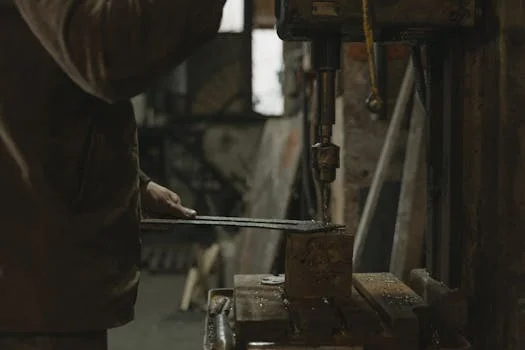
A plate frame filter press utilizes a batch filtration process where a feed pump forces slurry into chambers lined with filter media to achieve solid-liquid separation under high pressure. The filtration cycle follows a structured sequence:
- Feed: The slurry is pumped into the press, filling the void spaces between the plates.
- Pressure/Filtration: As the chambers fill, pressure builds (typically 6-16 bar), forcing the liquid (filtrate) through the filter cloth while solids are trapped.
- Cake Formation: Solids accumulate on the cloth, forming a dense "cake" that eventually acts as its own filter medium.
- Discharge: The hydraulic ram retracts, the plates are separated, and the solid cakes fall into a collection hopper.
The core of the system lies in its components. Filter plates are typically manufactured from high-density polypropylene for chemical resistance, though stainless steel is used for high-temperature or sanitary applications. Filter cloths are selected based on the specific filter press micron rating required, ranging from 5 to 25 microns for standard applications. To achieve extreme clarity, a filter aid precoat like diatomaceous earth can be used to reach 1-2 micron filtration (per industry benchmarks). The hydraulic ram provides the closing force necessary to prevent leaking during the high-pressure feed stage.
While often used interchangeably, there is a technical distinction between plate-and-frame and recessed chamber designs. In a true plate-and-frame setup, a hollow frame sits between two flat plates, providing a larger area for cake accumulation. This is ideal for high-solids slurries where cake thickness is a priority. Recessed chamber presses, conversely, use plates with built-in indentations, offering higher pressure ratings and easier cake discharge for most industrial wastewater tasks.
| Component | Standard Specification | Industrial Benefit |
|---|---|---|
| Plate Material | Reinforced Polypropylene (PP) | Corrosion resistance and lightweight handling |
| Closing Pressure | 250 - 400 Bar (Hydraulic) | Prevents leaking and ensures safety during feed |
| Filter Cloth | Monofilament/Multifilament Polyester | Optimized particle retention and easy cake release |
| Feed Pressure | 6 - 16 Bar | Higher pressure yields drier cakes (35-55% solids) |
To optimize the filtration process, many operators integrate automated chemical dosing for sludge conditioning. Adding coagulants or flocculants before the press increases the speed of cake formation and improves filtrate clarity, especially in complex industrial waste streams.
2025 Engineering Specifications: What to Look for in a Plate Frame Filter Press
Selecting the best plate frame filter press for industrial use requires a deep dive into engineering parameters that dictate throughput and efficiency. The most critical metric is the filtration area, which must be sized to the plant's flow rate. For example, a small batch operation might require 1-10 m², whereas a large-scale chemical plant could necessitate upwards of 500 m² to handle continuous sludge production (HydropureWater product catalog). A general rule of thumb is that 10 m² of filtration area can handle approximately 5 m³/h of typical industrial sludge, depending on solids concentration.
Plate materials significantly impact the equipment's lifespan. While polypropylene is the standard for its balance of cost and chemical inertness, cast iron plates are still utilized in high-temperature mining applications, and 304/316 stainless steel is mandatory for pharmaceutical-grade separation. Hydraulic pressure ranges are equally vital; while 6-7 bar is standard, high-pressure 16-bar systems are increasingly favored in 2025 for their ability to produce "auto-thermal" cakes (dry enough to burn without auxiliary fuel) in municipal incineration plants.
Automation level is the final technical hurdle. Manual systems require an operator to physically move each plate to drop the cake, which is feasible for small batches. Semi-automatic systems use a plate shifter to assist the operator, while fully automatic PLC-controlled units manage the entire cycle—including cloth washing and cake air-blowing—without human intervention. These automatic units are often integrated into the broader plant SCADA system for remote monitoring and data logging.
| Technical Parameter | Range / Option | Selection Criteria |
|---|---|---|
| Filtration Area | 1 m² to 500 m² | Based on daily sludge volume (m³/day) |
| Chamber Volume | 15 L to 10,000 L | Determines batch cycle frequency |
| Cake Thickness | 25 mm to 50 mm | Thicker cakes for high-solids, thinner for difficult slurries |
| Operating Temp | -10°C to 100°C | Material dependent (PP vs. Stainless Steel) |
| Automation | Manual, Semi, Full PLC | Labor cost vs. Capital Expenditure balance |
When evaluating these specs, engineers should also check global sludge dewatering equipment benchmarks to ensure the chosen model meets international safety and performance standards, particularly regarding pressure vessel certifications.
Plate Frame Filter Press Comparison: Manual vs. Hydraulic vs. Automatic PLC

The choice between automation levels is often a choice between upfront CAPEX and ongoing OPEX. Manual filter presses are the most affordable, with prices ranging from $5,000 to $20,000. However, they are labor-intensive, requiring 2 to 4 man-hours per cycle for plate shifting and cleaning. They are best suited for laboratory use, pilot plants, or small batch processes where the press only runs once or twice a week.
Hydraulic filter presses represent the mid-range "sweet spot" for many industrial facilities, costing between $20,000 and $50,000. These units use a hydraulic power pack to maintain closing pressure, ensuring a tight seal even as the feed pump fluctuates. Cycle times are reduced to 1-2 hours because the opening and closing of the plate stack are motorized, though an operator is still needed to ensure the cake drops cleanly from the cloths.
Automatic PLC-controlled presses are the premium option, ranging from $50,000 to over $150,000. These systems are designed for 24/7 operation. They feature automatic plate shifters, vibrating cake release mechanisms, and high-pressure cloth wash systems. By reducing labor requirements to near zero, these machines often provide a superior long-term ROI. For instance, assuming a labor cost of $30/hour, an automatic press can save $40,000 annually in labor alone compared to a manual unit running three cycles per day.
| Feature | Manual Press | Hydraulic Press | Automatic PLC Press |
|---|---|---|---|
| Upfront Cost | $5,000 - $20,000 | $20,000 - $50,000 | $50,000 - $150,000+ |
| Labor Required | High (Manual Plate Shifting) | Medium (Supervised Discharge) | Low (Remote Monitoring) |
| Cycle Time | 3 - 5 Hours | 1 - 2 Hours | < 1 Hour (optimized) |
| Best For | Small Batches / R&D | Standard Industrial Use | High-Throughput / 24/7 Ops |
For procurement managers, HydropureWater’s plate and frame filter presses offer a variety of these automation tiers, allowing plants to scale their equipment to their specific operational budget and labor availability.
Cost Breakdown and ROI: How to Justify a Plate Frame Filter Press Investment
Justifying the purchase of a plate frame filter press requires a multi-year ROI analysis that accounts for a 90-95% reduction in sludge hauling fees and the avoidance of environmental non-compliance penalties. The filter press cost analysis starts with the initial purchase price but must include installation ($2,000 - $10,000) and staff training ($1,000 - $5,000). Operating costs are relatively low: energy consumption for the feed pump and hydraulic unit usually averages $0.50 to $2.00 per hour of operation.
The primary recurring expense is filter cloth replacement. Depending on the abrasiveness of the sludge, cloths may need replacement every 6 to 12 months, costing between $500 and $2,000 per set. Maintenance for seals and hydraulic fluid adds another $1,000 to $5,000 annually. However, these costs are dwarfed by the potential savings. Consider a plant producing 10 tons of wet sludge per week. At $200/ton for disposal, the annual cost is $104,000. By using a filter press to reduce that volume by 90%, the disposal cost drops to $10,400, yielding annual savings