Nevada's Industrial Wastewater Regulatory Landscape: NDEP Permits, Pretreatment Programs, and Compliance Timelines
Industrial wastewater treatment in Nevada falls under the Nevada Department of Environmental Protection (NDEP) plus local pretreatment authorities that set site-specific sewer limits. Wastewater operator certificates renew every two years. NWEA contact hours for renewal run Grade I at 5 hours through Grade IV/V at 20 hours over that term; earlier materials sometimes cite 24 hours of continuing education each year. Local programs then add numeric caps. The North Las Vegas Industrial Wastewater Pretreatment Program is often briefed with TSS at 30 mg/L, BOD at 250 mg/L, and pH at 6.0 to 9.0. For Class I SIUs, the City of North Las Vegas Local Limits Final Draft (2016) sets copper at 2.35 mg/L and zinc at 6.3 mg/L; earlier plant briefings used copper below 1.3 mg/L and zinc below 2.6 mg/L. Henderson's Kurt R. Segler Water Reclamation Facility adds a FOG limit below 100 mg/L for food processors.
For new industrial dischargers, the NDEP permit application takes 90 to 120 days, and any facility anticipating flows above 25,000 GPD must hold a pre-application meeting with NDEP. Civil court penalties can reach $25,000 per violation per day under NRS 445A.700, plus surcharges or a discharge prohibition. A pre-application meeting usually runs two to four hours and the agency expects a draft process flow diagram and influent characterization in hand.
| Regulatory Component | Requirement/Timeline | Applicable Industries | Consequences of Non-Compliance |
|---|---|---|---|
| NDEP Operator Certification | 24 hours continuing education annually | All industrial facilities | Revocation of operator license, facility fines |
| North Las Vegas Pretreatment Program Limits | TSS: 30 mg/L, BOD: 250 mg/L, pH: 6.0–9.0, Copper: < 1.3 mg/L, Zinc: < 2.6 mg/L | Industrial facilities discharging to North Las Vegas sewer system | Surcharges, discharge prohibition, fines |
| Henderson FOG Limits | FOG: < 100 mg/L | Food processing facilities in Henderson | Surcharges, mandatory upgrades, fines |
| New Industrial Discharge Permit Application | 90-120 days processing time; pre-application meeting for > 25,000 GPD | New industrial dischargers | Delayed operations, potential fines |
| General Non-Compliance | N/A | All industrial facilities | Fines up to $25,000 per day, operational shutdown, legal action |
Industrial Wastewater Treatment Technologies for Nevada's Arid Climate: A Comparison Matrix
Nevada's arid climate shapes technology selection because high evaporation losses and limited make-up supply push designers toward compact, low-water-loss systems. Dissolved Air Flotation (DAF) is the workhorse for suspended solids and free oil removal; HydropureWater's DAF systems achieve 92 to 97% TSS removal, which is what most food and metalworking plants need to stay under the 30 mg/L pretreatment ceiling. Membrane Bioreactor (MBR) systems fit semiconductor and pharmaceutical duty where reuse water quality matters: integrated MBR units reach 99% pathogen removal, BOD reduction above 98%, and TSS below 1 mg/L.
For mining and electroplating streams, PLC-controlled chemical dosing systems handle pH trim and targeted precipitation of copper and zinc to the pretreatment caps. Reclaimed water systems tie everything together by sending MBR or DAF polished effluent to cooling towers or process rinses, and most plants we size for Reno or Henderson recover 20 to 30% of their operating budget that way. The Tahoe-Reno Industrial Center reclaimed water pipeline project is a good local reference for what scale looks like. Aeration basin design also needs to account for evaporation: a covered or quiescent zone can save several thousand gallons per day at 30 degC ambient.
| Technology | Primary Applications in Nevada | Typical Removal Efficiency | Nevada Climate Considerations | HydropureWater Equipment Example |
|---|---|---|---|---|
| Dissolved Air Flotation (DAF) | Food processing, metalworking, general manufacturing (TSS, FOG) | TSS: 92-97%, FOG: High | Effective for oil and solids removal, reduces sludge volume; minimal water loss | DAF systems |
| Membrane Bioreactor (MBR) | Semiconductor, pharmaceutical, high-purity applications (pathogens, BOD, TSS) | Pathogens: 99%, BOD: >98%, TSS: <1 mg/L | Produces high-quality effluent for reuse, compact footprint; requires careful membrane maintenance | Integrated MBR systems |
| Chemical Dosing Systems | Mining, electroplating, heavy industry (pH adjustment, heavy metals precipitation) | Metals removal dependent on specific chemistry; pH adjustment to target range | Essential for contaminant precipitation; requires precise dosing to avoid overdosing and chemical waste | PLC-controlled chemical dosing |
| Reclaimed Water Systems | Cooling towers, process water, irrigation (all industries seeking water conservation) | Variable, depends on upstream treatment | Crucial for water conservation in arid Nevada, reduces reliance on potable water sources, significant O&M cost savings | N/A (System integration) |
Cost Benchmarks for Industrial Wastewater Treatment in Nevada: 2025 Equipment, Permitting, and Operational Expenses
Budgeting for industrial wastewater treatment in Nevada means stacking three cost lines: equipment capital, NDEP permitting, and recurring operations. A DAF unit sized for 50 to 300 m3/h typically lands at $85,000 to $320,000 including chemical feed and controls. An integrated MBR system rated 10 to 200 m3/day runs $120,000 to $500,000 because membranes, blowers, and clean-in-place skids drive the price. A PLC-controlled chemical dosing system sized for 1 to 10 m3/h is the lightest line item at $15,000 to $60,000.
Permitting fees and engineering reports for a new industrial discharge permit in Nevada run $5,000 to $20,000. Operating cost is the line that surprises most newcomers: budget $0.85 to $4.20 per 1,000 gallons treated, with the high end driven by chemical-intensive metal precipitation and membrane cleaning cycles. NDEP-certified operator labor in Nevada averages $65,000 to $95,000 per year per shift. Systems that prioritize reuse, such as MBR polishers feeding a cooling tower, carry higher capex but recover water acquisition and sewer discharge fees fast in a state where potable surcharges keep climbing.
| Cost Category | Typical Range (2025, Nevada) | Notes |
|---|---|---|
| DAF System Equipment (50–300 m³/h) | $85,000 – $320,000 | Includes unit, pumps, chemical feed, controls |
| MBR System Equipment (10–200 m³/day) | $120,000 – $500,000 | Includes bioreactor, membranes, pumps, controls |
| Chemical Dosing System Equipment (1–10 m³/h) | $15,000 – $60,000 | Includes pumps, tanks, controllers |
| Permitting Costs (New Industrial Discharger) | $5,000 – $20,000 | Engineering reports, NDEP application fees |
| Operational Costs | $0.85 – $4.20 per 1,000 gallons | Varies significantly by technology, flow rate, and chemical usage |
| Certified Operator Labor Costs | $65,000 – $95,000 annually | Average salary in Nevada |
Equipment Selection Checklist: Matching Treatment Technologies to Nevada's Industrial Wastewater Challenges
Picking the right technology for industrial wastewater treatment in Nevada is a structured exercise, not a catalog browse. Start by listing every contaminant in the stream (TSS, BOD, FOG, copper, zinc, whatever else shows up in the composite sample) and lining each one up against the NDEP 2025 guidelines plus the local pretreatment program that covers the receiving sewer. Then capture average and peak flow, and flag whether the discharge is continuous or batch. Continuous streams favor steady-state MBR or DAF sizing, while batch operations usually need equalization ahead of any biological stage.
From there, score the project on reuse potential, footprint, and total cost of ownership. A plant that can reuse 40% of its effluent in cooling tower makeup usually justifies an MBR within three to five years in Nevada. Underground or skid-mounted packages such as the Underground Package Sewage Treatment Plant (WSZ Series) help when the site has limited surface footprint. Compare capex plus 10-year opex for each shortlisted option, and weight manufacturer track record and membrane maintenance burden equally with the sticker price. Common pitfalls we still see: under-dosing coagulant on mining wastewater (which leaves soluble metals above the limit) and undersizing equalization for a facility that grows 20% in year two.
Step-by-Step Equipment Selection Framework:
- Identify Contaminants and Discharge Limits: Document all wastewater constituents (TSS, BOD, FOG, heavy metals, etc.) and cross-reference with NDEP and local discharge standards.
- Determine Flow Rate and Variability: Quantify average and peak flow rates, noting whether discharge is continuous or intermittent.
- Assess Water Reuse Potential: Evaluate opportunities for recycling treated water for cooling, process, or irrigation purposes.
- Evaluate Space Constraints: Consider available footprint, site topography, and potential for underground vs. above-ground installations.
- Compare Capital and Operational Costs: Analyze total cost of ownership for viable technology options, factoring in equipment, installation, energy, chemicals, and labor.
- Review Equipment Reliability and Maintenance: Research manufacturer track records and assess the complexity of routine maintenance.
- Consult with Experts: Engage with experienced wastewater treatment equipment manufacturers to validate technology selection.
Case Study: How a Reno Food Processing Facility Cut Wastewater Costs by 28% with a DAF System
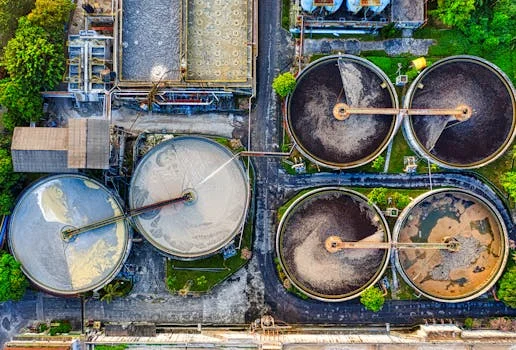
A Reno food processing plant was bleeding margin to surcharges because its raw wastewater carried about 1,200 mg/L FOG and 800 mg/L TSS, both well above the local pretreatment limits. The site installed a HydropureWater DAF-100 unit with an automatic skimmer and tightened upstream screening. After commissioning, the system held 95% FOG removal and 92% TSS removal through normal production swings.
Treatment cost dropped from $3.20 to $2.30 per 1,000 gallons, a 28% reduction. The plant cleared its permit backlog within two reporting cycles and avoided the discharge prohibition that two peers in the same industrial corridor received. Two lessons stick out from the post-install review: pre-treatment screening ahead of the DAF matters more than the DAF model itself, and pH trim to the flocculation target band was the single biggest lever on residuals. The operators completed their NWEA renewal contact hours during the same period so the new system stayed in compliance from day one.
This is the kind of project where a targeted equipment inquiry with influent data and peak flow attached gets a usable answer in 48 hours.
Frequently Asked Questions
What are the primary NDEP requirements for industrial wastewater operators in Nevada?
NDEP wastewater operator certificates renew every two years. NWEA contact hours for renewal run Grade I at 5 hours through Grade IV/V at 20 hours over that term; earlier materials sometimes cite 24 hours each year. Operators must also follow the inspection, sampling, and reporting duties spelled out in the facility's discharge permit. Loss of certification can trigger permit violations because NDEP needs a certified operator on staff at all times.
What are typical discharge limits for industrial wastewater in North Las Vegas?
Plant briefings often list TSS at 30 mg/L, BOD at 250 mg/L, and pH between 6.0 and 9.0. For Class I SIUs, the City of North Las Vegas Local Limits Final Draft (2016) sets copper at 2.35 mg/L and zinc at 6.3 mg/L; earlier briefings used copper below 1.3 mg/L and zinc below 2.6 mg/L. Local surcharges apply when any single parameter drifts above the cap for more than one reporting period.
How long does it typically take to obtain an industrial wastewater discharge permit in Nevada?
New industrial discharge permits in Nevada typically take 90 to 120 days to process through NDEP. Facilities expecting flows above 25,000 GPD must also attend a mandatory pre-application meeting before the formal review clock starts. Permit modifications for added treatment equipment usually run 60 to 90 days once the engineering report is accepted.
Can reclaimed water systems significantly reduce costs in Nevada's arid climate?
Yes. Reclaimed water systems that polish DAF or MBR effluent for cooling tower makeup or process water typically cut operating costs by 20 to 30% in arid regions such as Reno and Henderson. The savings come from lower potable water purchases and reduced sewer discharge fees. Projects on the scale of the Tahoe-Reno Industrial Center pipeline show what is possible when several plants share a reuse loop.
Further Reading
Explore these in-depth articles on related wastewater treatment topics: