Wastewater Treatment Plant Cost in Minas Gerais Brazil: 2025 Engineering Breakdown with Local Data, Compliance & ROI Calculator
In 2025, wastewater treatment plant costs in Minas Gerais range from R$6.5M (US$1.2M) for a 1,000 m³/day UASB plant to R$3.5B (US$630M) for a 20-year PPP expansion covering 500,000 residents. Capital costs average R$4,500–7,500 per m³/day (US$800–1,350) for municipal plants, with UASB systems 30–40% cheaper than MBR but requiring larger footprints. Operational costs (energy, chemicals, labor) add R$0.80–1.50 per m³ (US$0.14–0.27) annually. Copasa’s 2025–2029 investment plan prioritizes UASB for cost efficiency, targeting 100% sewage coverage by 2029.
For a municipal engineer in Belo Horizonte or Uberlândia, the challenge of selecting between an Upflow Anaerobic Sludge Blanket (UASB) reactor and a Membrane Bioreactor (MBR) is not merely a matter of effluent quality, but a complex calculation of land value, energy tariffs, and long-term compliance with State Law 23,291/2019. While a 5,000 m³/day UASB plant may offer the lowest initial capital expenditure, the hilly topography of Minas Gerais often necessitates additional pumping stages that can erode those savings, making compact, high-efficiency systems like compact MBR systems for Minas Gerais’ urban projects increasingly competitive for decentralized or industrial applications.
Why Minas Gerais Wastewater Costs Are Unique: Engineering, Funding, and Compliance Drivers
Minas Gerais’ topography, characterized by the Serra do Espinhaço and rugged plateau regions, increases wastewater pumping costs by 20–30% compared to flat coastal states like Rio de Janeiro or São Paulo, according to Copasa 2024 infrastructure reports. This geographical constraint forces engineers to choose between centralized plants with high collection costs or decentralized units with higher unit operational costs. For industrial planners, the cost of industrial wastewater treatment standards in Jaipur or other global hubs serves as a baseline, but local Minas Gerais power rates and chemical availability create a unique cost profile.
Funding models in the state have shifted toward Public-Private Partnerships (PPPs), with US$630M allocated for 2024–2029 expansions to meet the New Sanitation Framework (Marco Legal do Saneamento). While private operators reduce immediate municipal capital requirements, they typically increase annual operational expenses by 15–25% to account for profit margins and risk mitigation. This is particularly relevant as State Law 23,291/2019 mandates 90% sewage collection and 80% treatment by 2033, creating a "compliance squeeze" that penalizes municipalities failing to secure investment rapidly.
Technology selection is also heavily influenced by Copasa’s 2025–2029 investment plan, which allocates R$16.9 billion toward infrastructure. While UASB remains the state's "workhorse" due to its low energy demand in tropical climates, MBR is gaining significant traction in Belo Horizonte’s industrial zones for water reuse. The ability to reclaim water for industrial cooling or process water significantly offsets the higher capex of MBR systems, especially in regions facing water scarcity and rising abstraction fees.
Wastewater Treatment Plant Cost Framework: Capex, Opex, and Lifecycle Costs in Minas Gerais
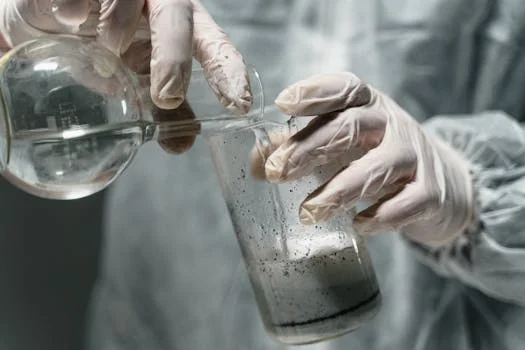
Capital expenditures (Capex) for wastewater treatment in Minas Gerais are driven by technology-specific equipment costs and local civil engineering labor rates, which have seen a 5% annual inflation adjustment entering 2025. A standard municipal plant must account for the primary treatment, biological reactors, and sludge handling facilities. For those evaluating international benchmarks, wastewater treatment plant costs in Jalisco, Mexico provide a useful comparison, though Minas Gerais faces higher local energy costs (R$0.65/kWh for industrial users).
| Cost Component | UASB (10,000 m³/day) | MBR (10,000 m³/day) | Activated Sludge (10,000 m³/day) |
|---|---|---|---|
| Estimated Capex (2025) | R$ 45M – 55M | R$ 75M – 95M | R$ 55M – 70M |
| Cost per m³/day Capacity | R$ 4,500 – 5,500 | R$ 7,500 – 9,500 | R$ 5,500 – 7,000 |
| Annual Opex per m³ | R$ 0.85 – 1.10 | R$ 1.30 – 1.60 | R$ 1.15 – 1.40 |
| Energy Demand (kWh/m³) | 0.05 – 0.15 | 0.60 – 1.00 | 0.30 – 0.50 |
Operational expenses (Opex) in Minas Gerais are dominated by energy (40–50%) and labor (20–25%). In municipal plants, the lower energy consumption of UASB reactors—utilizing anaerobic digestion—provides a significant advantage over aerobic processes. However, "hidden costs" often overlooked in initial budgets include land acquisition, which ranges from R$50/m² in rural areas to over R$150/m² in urban perimeters, and sludge disposal. Landfill disposal of sludge in the Belo Horizonte metropolitan area costs between R$200 and R$400 per ton, whereas incineration or advanced thermal drying can exceed R$800/ton.
Lifecycle cost analysis over a 20-year horizon reveals that while MBR has a higher NPV (Net Present Value) due to initial investment and membrane replacement cycles (every 7–10 years), its ability to produce high-quality effluent suitable for reuse can generate revenue streams that UASB cannot. For a 5,000 m³/day plant, the NPV difference often narrows when accounting for the avoidance of water abstraction fees and the potential sale of reclaimed water to industrial clients.
Technology-Specific Costs and Engineering Parameters for Minas Gerais Plants
Engineering parameters must be aligned with both the influent characteristics typical of Minas Gerais—often high in organic load due to domestic sewage and food processing runoff—and the strict discharge limits of CONAMA 430/2011. UASB systems are the most common, particularly in the Triângulo Mineiro region. For example, the 10,000 m³/day UASB plant in Uberlândia (completed in 2023) demonstrated a Capex of R$52M. While effective for COD removal (70–85%), these plants often require post-treatment (e.g., polishing ponds or activated sludge) to meet total suspended solids (TSS) limits.
MBR systems, such as the HydropureWater DF Series, utilize PVDF membranes to achieve superior removal efficiencies. These systems are ideal for the constrained footprints found in mountainous cities like Ouro Preto or densely packed industrial sectors in Contagem. MBR footprints are typically 50% smaller than traditional activated sludge plants. For industrial pretreatment, specifically in the dairy or meat packing sectors prevalent in the state, DAF systems for industrial pretreatment in Minas Gerais are often integrated before the biological stage to handle high fats, oils, and grease (FOG).
| Parameter | UASB | MBR (HydropureWater DF) | Activated Sludge |
|---|---|---|---|
| Footprint (m²/m³/day) | 0.25 – 0.35 | 0.10 – 0.15 | 0.35 – 0.55 |
| COD Removal Efficiency | 70% – 85% | 95% – 98% | 85% – 92% |
| TSS Removal Efficiency | 65% – 80% | >99% | 85% – 95% |
| Sludge Production | Low (Stabilized) | Moderate | High |
| Effluent Quality (BOD) | <60 mg/L | <5 mg/L | <20 mg/L |
In food processing applications, where high organic loads are standard, the use of DAF systems for food processing wastewater in Minas Gerais is critical to protect downstream biological reactors from fouling. Case studies from the Belo Horizonte metropolitan region show that plants utilizing UASB followed by DAF or MBR consistently outperform single-stage systems in meeting the stringent 2025 compliance benchmarks for phosphorus and nitrogen removal.
Funding Models Compared: PPP vs. Direct Investment vs. Municipal Bonds in Minas Gerais
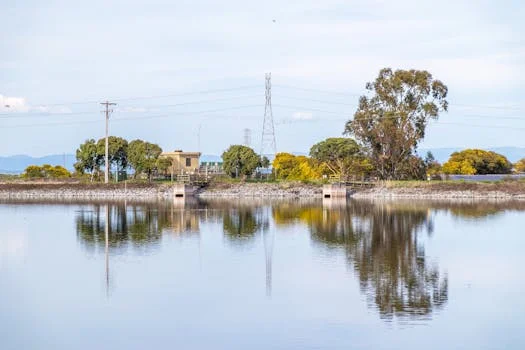
The selection of a funding model is as critical as the technology itself, as it dictates the long-term cost of capital and operational risk. PPP contracts currently dominate the Minas Gerais landscape, with the state government leveraging US$630M in private investment to expand sanitation services. These contracts typically span 25 to 30 years, where the private partner assumes the Capex and Opex in exchange for a guaranteed tariff or availability payment. This model is preferred for large-scale municipal expansions where local debt limits prevent direct borrowing.
| Feature | Public-Private Partnership (PPP) | Direct Municipal Investment | Federal PAC Funding |
|---|---|---|---|
| Upfront Capex | 0% (Private Funded) | 100% (Public Funded) | 20% – 50% (Local Match) |
| Average Opex | Higher (Profit Margin included) | Lower (Cost-based) | Standard |
| Risk Allocation | Private (Performance-based) | Public (Full Risk) | Public (Full Risk) |
| Typical Timeline | Fast-track (18–24 months) | Slow (36–60 months) | Variable (Grant Dependent) |
Direct investment remains a viable path for wealthier municipalities or Copasa-led projects. In 2026, approximately US$120 million has been allocated for direct sanitation upgrades. While this avoids the 15–20% "private operator premium" on Opex, it requires the municipality to navigate the complex federal Growth Acceleration Program (PAC) application process. Municipal bonds are an emerging but rare alternative; Belo Horizonte’s R$200M issuance in 2022 at 8.5% interest demonstrated that large cities can tap local capital markets for sanitation, though this remains out of reach for smaller towns (populations <50,000).
ROI Calculator: How to Justify Your Minas Gerais Wastewater Treatment Plant Investment
Justifying a multi-million Real investment requires a shift from viewing wastewater as a "cost center" to an "asset recovery" model. In Minas Gerais, revenue streams include sewage tariffs (currently R$3.50–5.00/m³), federal subsidies for compliance (averaging R$1.20/m³), and the emerging market for water reuse. Industrial facilities that implement hospital wastewater systems compliant with Minas Gerais standards or industrial reuse loops can save R$2.00–3.50/m³ by avoiding the purchase of treated water from the grid.
The ROI formula for a Minas Gerais WWTP is calculated as: ROI = [(Annual Tariff Revenue + Cost Savings from Reuse + Avoided Fines) / (Total Capex + Annual Opex)] × 100. For a 5,000 m³/day UASB plant with a Capex of R$26M and Opex of R$2.2M/year, the avoidance of CONAMA 430/2011 fines (which can reach R$50,000/day for major violations) and the collection of tariffs result in a typical ROI of 12–15% and a payback period of 8–12 years.
Sensitivity analysis is crucial. A 10% increase in energy costs—a common occurrence in the Brazilian market—can reduce ROI by 1.5% for aerobic systems (Activated Sludge/MBR) while only affecting UASB plants by 0.2%. Conversely, a rise in water abstraction fees (currently R$0.50–1.00/m³) significantly improves the ROI for MBR systems that facilitate high-quality water reuse. For industrial planners, the payback period for MBR often drops to 5–7 years when the value of production continuity (drought resilience) is factored into the financial model.
Minas Gerais Compliance Checklist: Permits, Standards, and Approvals for 2025
Navigating the regulatory environment in Minas Gerais requires strict adherence to both federal and state-specific mandates. The primary benchmark remains CONAMA 430/2011, which sets discharge limits for COD (<180 mg/L), BOD (<60 mg/L), and TSS (<40 mg/L). However, the State Environmental Agency (SEMAD-MG) often imposes stricter local requirements for plants discharging into sensitive watersheds like the Rio das Velhas or Rio Doce.
- Environmental Licensing (3-Phase Process):
- Preliminary License (LP): Approval of location and environmental feasibility (Timeline: 6–9 months).
- Installation License (LI): Approval of engineering designs and start of construction (Timeline: 4–8 months).
- Operation License (LO): Final permit to begin treatment, requiring proof of performance (Timeline: 3–6 months).
- State Law 23,291/2019: Mandates that all municipalities report progress toward the 2033 universalization targets. Failure to meet interim 2025 targets can result in the suspension of federal funding transfers.
- Industrial Pretreatment: For food processing and textile industries, SEMAD-MG requires pretreatment of effluents with FOG >50 mg/L. Implementation of DAF or grease traps is mandatory before discharging into municipal sewers.
- Sludge Management: All plants must have a Sludge Management Plan (PGRS) approved by the municipality, detailing disposal at licensed Class IIA landfills or agricultural reuse protocols.
Compliance delays are the leading cause of "budget creep" in Minas Gerais projects. According to SEMAD-MG 2024 data, the average licensing timeline is 14 months, but projects using pre-engineered or modular systems often see a 20% faster approval rate due to standardized documentation and proven performance metrics.
Frequently Asked Questions
What is the average cost per m³ for wastewater treatment in Minas Gerais? The average capital cost ranges from R$4,500 to R$7,500 per m³/day of capacity, depending on the technology. Operational costs typically range from R$0.80 to R$1.50 per m³ of treated wastewater.
Why is UASB technology so popular in Minas Gerais? UASB is favored because it is highly effective in tropical climates, has low energy requirements (0.05–0.15 kWh/m³), and lower capital costs compared to aerobic systems. It aligns well with Copasa’s focus on cost-efficient municipal expansion.
How does the hilly terrain of Minas Gerais affect WWTP costs? The topography increases the need for lift stations and pumping energy, often adding 20–30% to the total lifecycle cost. This makes decentralized plants or high-efficiency, small-footprint technologies like MBR more attractive in certain valleys.
What are the penalties for non-compliance with CONAMA 430/2011? Fines in Minas Gerais can range from R$5,000 to R$50,000 per day for ongoing violations. Additionally, municipalities may lose access to state and federal funding for other infrastructure projects.
Can industrial plants in Minas Gerais sell their treated wastewater? Yes, under the New Sanitation Framework, the sale of reclaimed water for industrial use is encouraged. This can generate revenue of R$2.00–3.50/m³, significantly improving the ROI of high-tech treatment systems.