Wastewater Treatment Plant Cost in Surabaya 2025: Engineering Breakdown with Local Data, Compliance & ROI Calculator
In Surabaya, wastewater treatment plant costs vary from IDR 1.2 billion for a 50 m³/day compact system to IDR 50 billion+ for a 5,000 m³/day industrial plant (2025 data). CAPEX includes equipment (60-70%), civil works (20-30%), and permitting (5-10%), while OPEX ranges from IDR 2,500–5,000/m³ treated due to Surabaya’s high energy costs (IDR 1,500/kWh) and labor rates (IDR 4.5M/month for operators). Compliance with East Java Pergub No. 72/2013 adds 15-20% to costs but avoids fines up to IDR 10 billion or operational shutdowns.
Why Surabaya’s WWTP Costs Are Rising in 2025
Recent data from the Dinas Lingkungan Hidup (2024) indicates that 60% of Surabaya’s industrial effluent discharged into the Brantas River exceeds Total Suspended Solids (TSS) limits, triggering a surge in enforcement of Pergub No. 72/2013. This regulatory pressure is the primary driver for industrial facility managers to upgrade aging infrastructure, as the cost of non-compliance now far outweighs the investment in advanced treatment technologies.
Land acquisition and utilization represent a major budgetary hurdle. In the Rungkut industrial zone, land prices have reached approximately IDR 1.2M/m², whereas in the expanding industrial corridors of Gresik, rates hover around IDR 800K/m². For plants requiring large footprints, such as traditional activated sludge systems, these land costs can inflate civil works budgets by 20-30%. Consequently, many facilities are pivoting toward compact underground WWTP systems for Surabaya’s land-constrained industrial zones to maximize available floor space for production. The shift to compact systems also helps mitigate the impact of high land prices.
Energy consumption remains the largest component of operational expenditure. Surabaya’s industrial electricity rates, currently at IDR 1,500/kWh, mean that aeration systems—the heart of biological treatment—account for 40-50% of total OPEX. The labor market for skilled environmental engineers in East Java has tightened. A competent WWTP operator in Surabaya now commands a salary between IDR 4.5M and IDR 6M per month. For facilities operating 24/7 with capacities exceeding 500 m³/day, a minimum of 4 to 6 staff members is required to maintain compliance and system health, adding a fixed monthly cost that must be factored into the 2025 budget. Finally, permitting delays for AMDAL (Environmental Impact Assessment) approval now average 6 to 9 months, according to 2024 Surabaya Environmental Agency data, often adding 10-15% to total project timelines due to inflationary pressures on raw materials during the waiting period.
Wastewater Treatment Plant Cost Breakdown by Capacity: Surabaya 2025 Data
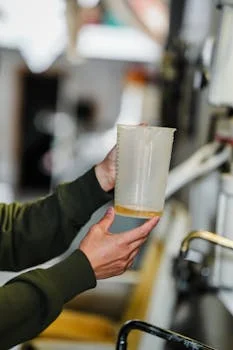
Capital expenditure (CAPEX) for a wastewater treatment plant in Surabaya is divided into four primary categories: equipment procurement (60-70%), civil engineering and construction (20-30%), electrical and instrumentation (5-10%), and permitting and legal fees (5-10%). For 2025, the cost per m³ of treated capacity follows an inverse economy of scale, where smaller plants incur higher relative costs due to fixed engineering and permitting overheads.
In coastal areas like Gresik or the northern Surabaya port districts, material selection significantly impacts the budget. The high salinity in the air necessitates the use of corrosion-resistant materials (SS316 or specialized coatings), which adds a 5-10% premium to equipment costs. Additionally, hidden costs such as soil stability testing (Sondir/Bor) range from IDR 50M to IDR 100M, while comprehensive environmental impact assessments can cost between IDR 200M and IDR 500M depending on the facility's risk category. To mitigate these risks, many procurement teams utilize sludge dewatering solutions to reduce OPEX for Surabaya’s WWTPs, as reducing sludge volume directly lowers disposal fees which are rising in East Java.
| Plant Capacity (m³/day) | Estimated CAPEX (IDR Billion) | OPEX per m³ (IDR) | Primary Cost Driver |
|---|---|---|---|
| 50 (Compact/Package) | 1.2 – 1.8 | 4,500 – 5,500 | Labor & Chemical Dosing |
| 500 (Medium Industrial) | 6.0 – 9.0 | 3,500 – 4,500 | Energy (Aeration) |
| 1,000 (Large Industrial) | 12.0 – 18.0 | 3,000 – 4,000 | Energy & Sludge Disposal |
| 5,000 (Centralized/Municipal) | 40.0 – 60.0 | 2,500 – 3,500 | Maintenance & Labor |
Operational expenditure (OPEX) is driven by energy (45%), chemicals (25%), labor (20%), and routine maintenance (10%). For industrial facilities in Surabaya, the use of MBR systems for high-efficiency treatment and water reuse in Surabaya’s industrial clusters is becoming the benchmark. While MBR has a higher CAPEX (IDR 20M–25M/m³ capacity), it offers a smaller footprint and produces high-quality permeate that can be reused in cooling towers or boiler feed, significantly offsetting the high cost of municipal water (PDAM) or deep-well extraction taxes.
Centralized vs. Decentralized WWTPs: Cost Comparison for Surabaya Industrial Zones
Choosing between a centralized system (shared among multiple factories) and a decentralized system (on-site) is a critical strategic decision for Surabaya’s industrial estates. Centralized plants, such as those found in the Rungkut Industrial Estate, benefit from significant economies of scale. Data from 2023 indicates that factories connected to the Rungkut shared WWTP (3,000 m³/day capacity) reduced their individual wastewater management costs by approximately 40% compared to those operating independent, on-site systems. However, centralized systems require massive initial CAPEX (IDR 15B–50B) and long-term service contracts often spanning 10 to 15 years. A key consideration is the trade-off between the lower OPEX of centralized systems and the higher upfront costs.
Decentralized or "on-site" plants offer faster deployment, typically taking 3 to 6 months from design to commissioning, compared to the 12 to 18 months required for centralized infrastructure. This speed is vital for new facilities in Gresik or Sidoarjo that must meet immediate production deadlines. Decentralized systems also allow for modular scalability; a factory can install a 100 m³/day unit today and add a second module next year as production increases. This phased investment approach preserves cash flow while ensuring continuous compliance with local standards.
| Factor | Centralized (Shared) | Decentralized (On-site) |
|---|---|---|
| CAPEX Investment | High (IDR 15B - 50B+) | Lower (IDR 1.2B - 15B) |
| OPEX per m³ | IDR 2,000 - 3,500 | IDR 3,500 - 5,500 |
| Land Requirement | Large (1,000m²+) | Minimal (Package/Modular) |
| Permitting Complexity | High (Estate-level AMDAL) | Moderate (Facility-level) |
| Water Reuse Potential | Low (Distance to source) | High (Directly back to process) |
For food processing or textile plants in Surabaya with high organic loads, decentralized systems often incorporate how DAF systems remove FOG from food processing wastewater to meet Surabaya’s compliance standards before the water enters a biological stage. This "pretreatment-at-source" model prevents the shared centralized system from being overwhelmed by specific industrial pollutants, which can lead to surcharges or service disconnection.
Surabaya’s WWTP Compliance Costs: Pergub No. 72/2013 and Beyond
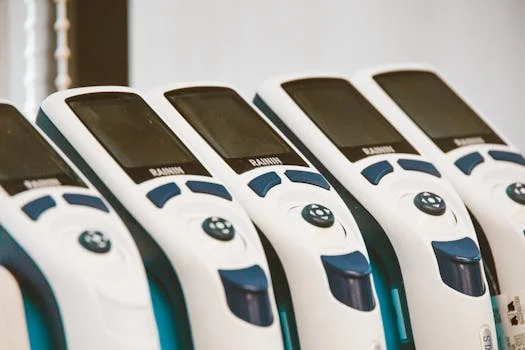
Monitoring these parameters adds a fixed layer of compliance cost. The Surabaya Environmental Court has increased the frequency of unannounced inspections, leading many factories to invest in continuous online monitoring systems (SPARING). These sensor arrays cost between IDR 500M and IDR 1B per unit and must be calibrated quarterly. Additionally, mandatory quarterly lab tests from accredited third-party laboratories in East Java cost between IDR 5M and IDR 10M per test. Non-compliance is no longer a viable "business cost"—2024 data shows that fines can reach IDR 10 billion, and the Surabaya Environmental Agency has the authority to revoke operational permits, leading to total facility shutdowns.
To meet these strict limits, many plants are integrating DAF systems to meet Surabaya’s TSS and FOG limits for food processing and textile plants. While adding a DAF or a chlorine dioxide generator for disinfection increases CAPEX by 15-25%, the long-term benefit is the ability to reuse treated water. In Surabaya, where industrial water tariffs are high, a WWTP that facilitates water recycling can reduce total factory OPEX by 10-15% by decreasing reliance on expensive municipal water supplies.
ROI Calculator: How to Justify Your WWTP Investment in Surabaya
Justifying a wastewater treatment plant investment in Surabaya requires a shift from viewing it as a "sunk cost" to a "risk mitigation and resource recovery" asset. The Return on Investment (ROI) is calculated by comparing the total cost of ownership against the avoided costs of fines, the savings from water reuse, and the reduction in raw water procurement costs. Using 2025 Surabaya benchmarks, a typical 500 m³/day industrial plant can achieve a payback period in under 5 years.
Step 1: Estimate CAPEX. For a 500 m³/day plant, the CAPEX is approximately IDR 8 billion (including civil works and permitting). Add a 10% contingency for soil conditions or material price fluctuations.
Step 2: Calculate Annual OPEX. Energy: IDR 1,500/kWh × 0.5 kWh/m³ × 500 m³/day × 365 days = IDR 136.8M. Labor: 4 operators × IDR 4.5M/month = IDR 216M. Chemicals: IDR 1,500/m³ × 500 m³/day × 365 days = IDR 273.7M. Total OPEX: ~IDR 626.5M/year.
Step 3: Quantify Avoided Costs and Savings. Avoided fines (estimated risk-weighted): IDR 500M/year. Water Reuse: 30% reuse (150 m³/day) × IDR 8,000/m³ (PDAM/tax rate) × 365 days = IDR 438M/year. Total Savings: IDR 938M/year.
| Financial Metric | Value (500 m³/day Plant) |
|---|---|
| Total Initial CAPEX | IDR 8,800,000,000 |