Industrial facilities in Marrakech must treat process effluent to Morocco NM 03.7.001-1 limits such as COD <125 mg/L and TSS <50 mg/L before sewer or environmental discharge. Municipal plants, including the NGE works at about 150,000 m³/day, mainly serve domestic sewage. Marrakech industrial wastewater loads from textiles, food processing, and chemicals still need on-site DAF, MBR, chemical dosing, and sludge handling sized to local FOG, color, and water-reuse targets.
Why Marrakech Plants Face Compliance Pressure and Water-Reuse Payback
NM 03.7.001-1 sets Marrakech discharge limits such as COD <125 mg/L and TSS <50 mg/L for industrial effluent. Textile, food, and chemical sites typically use DAF for FOG and TSS, MBR for reuse, and solar sludge drying. Capex ranges from about $200,000 for a 50 m³/h DAF train to $800,000–$2.5M for larger MBR plants, with payback often 3–5 years.
Marrakech’s industrial zones, including Sidi Ghanem and Ait Ourir, host over 300 textile, food processing, and chemical plants. Those plants generate an estimated 40,000 to 60,000 m³/day of industrial effluent as of 2024 Ministry of Industry data. Historically, municipal infrastructure focused on sewage. Until 2008, significant volumes of untreated industrial waste entered the Tensift River and caused severe ecological damage. Enforcement of NM 03.7.001-1 has moved from voluntary participation to active inspection.
The Moroccan Ministry of Environment has increased checks in the Marrakech-Safi region. 2023 data show fines reaching 50,000 MAD per year for facilities that exceed discharge limits. In extreme cases, regional authorities can halt production until a compliant treatment train is installed. Most plants we size for Marrakech textile dye houses run at the lower end of the FOG range yet still fail color and Cr⁶⁺ without a dedicated polishing stage. Water scarcity adds a second driver: advanced filtration can cut freshwater demand by 30–50% through internal recycling. High solar irradiance supports solar sludge drying that reduces waste volume by up to 80%, turning disposal cost into a potential fuel stream for cement kilns.
| Parameter | Standard (NM 03.7.001-1) | Typical Raw Textile Effluent | Typical Raw Food Effluent |
|---|---|---|---|
| Chemical Oxygen Demand (COD) | <125 mg/L | 800–2,500 mg/L | 1,500–4,000 mg/L |
| Total Suspended Solids (TSS) | <50 mg/L | 200–600 mg/L | 500–1,200 mg/L |
| Fats, Oils, and Grease (FOG) | <10 mg/L | <50 mg/L | 200–800 mg/L |
| pH Range | 6.5 – 8.5 | 9.0 – 11.5 | 4.5 – 6.5 |
Marrakech industrial wastewater standards versus EU and WHO benchmarks
Morocco’s NM 03.7.001-1 standard regulates 12 distinct physicochemical parameters for industrial effluent. The code aligns closely with EU Directive 91/271/EEC while keeping stricter local limits for selected heavy metals and color. For textiles, a major employer in Marrakech-Safi, the 2024 Ministry of Environment circular set color at ADMI <200 and hexavalent chromium at Cr⁶⁺ <0.1 mg/L. Those limits often exceed general WHO water-quality guidance and force chemical precipitation or advanced oxidation after primary clarification.
Food processors in dairy and olive oil clusters around Ait Ourir follow NM 03.7.001-2 for FOG when the sewer path differs. That standard allows FOG <25 mg/L into a dedicated industrial sewer, yet still mandates FOG <10 mg/L for direct environmental discharge. Any plant processing more than 100 m³/day needs a formal Environmental Impact Assessment (EIA). According to 2023 Marrakech-Safi Regional Council data, permit approval typically takes 6 to 12 months and involves the Ministry of Environment, ONEE, and municipal councils.
| Parameter | Morocco (NM 03.7.001-1) | EU (91/271/EEC) | WHO Guidelines |
|---|---|---|---|
| BOD₅ (mg/L) | 40 | 25 | 30 |
| COD (mg/L) | 125 | 125 | 150 |
| Total Nitrogen (mg/L) | 30 | 15 | N/A |
| Total Phosphorus (mg/L) | 10 | 2 | N/A |
Selecting DAF, MBR, or Chemical Dosing for Marrakech Effluent
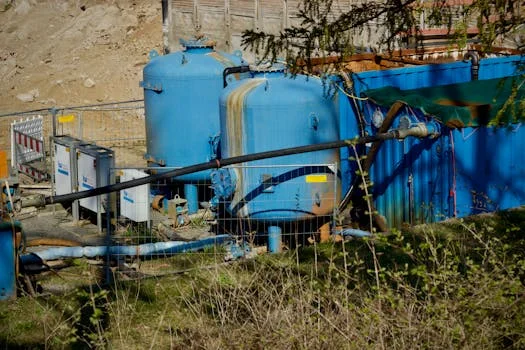
Dissolved air flotation versus membrane bioreactors is decided mainly by FOG concentration and the turbidity target for discharge or reuse. Food plants in Marrakech almost always start with DAF as primary treatment. The DAF systems for industrial wastewater in Marrakech use micro-bubbles to remove 92–97% of suspended solids and fats under typical food and textile loads. A DAF-100 unit treats 100 m³/h at about 3.5 kW, which keeps energy low when the goal is sewer discharge after FOG and TSS cut-down.
Reuse for textile dyeing or chemical cooling favors membrane bioreactors over secondary clarifiers alone. Integrated MBR systems for reuse-grade effluent in Marrakech apply ultrafiltration membranes (<1 μm) and produce effluent that is effectively free of bacteria and suspended solids. The DF-150 MBR package uses PVDF membranes with 150 m² of surface area and operates near 0.4 kWh/m³. That is a 10–20× energy cut versus older cross-flow membrane designs. Textile plants can recycle up to 50% of process water under those conditions and offset local water price increases.
Compact sites with moderate peak flow often evaluate an Underground Package Sewage Treatment Plant (WSZ Series) after DAF pretreatment when odor control matters near industrial neighbors. Regardless of the biological path, PLC-controlled chemical dosing for industrial WWTPs in Marrakech is required to hold pH at 6.5–8.5 under NM 03.7.001-1. Sensors trim coagulant and flocculant dose to real-time flow, which limits chemical waste. One Marrakech textile plant cut COD from 1,200 mg/L to 80 mg/L with DAF plus automated dosing and reported about 15% lower chemical cost versus manual batching.
| Feature | DAF | MBR (DF Series) | Chemical Dosing |
|---|---|---|---|
| Primary Use | FOG/TSS Removal | BOD/COD/Reuse | pH/Coagulation |
| TSS Removal % | 90–97% | >99% | Variable |
| Capex (Relative) | Moderate | High | Low |
| Opex (Relative) | Low | Moderate | Moderate (Chemicals) |
Sludge Handling: Filter Presses, Solar Drying, and Cement-Kiln Fuel Use
Industrial sludge production in Marrakech-Safi typically ranges from 0.5% to 2% of total treated wastewater volume. A plant treating 1,000 m³/day therefore generates about 5 to 20 m³ of wet sludge each day. High-efficiency sludge dewatering for Marrakech’s industrial plants with plate and frame filter presses is the usual first step. Presses reach 30–40% dry solids, versus 15–20% from many centrifuges or belt presses, and that cut reduces trucking volume off-site.
Marrakech’s climate, with over 300 sunny days per year, favors greenhouse-style solar drying beds after mechanical dewatering. Solar drying can shrink sludge volume by a further 70–80% without thermal-dryer energy. Greentimes notes that dried sludge at 20–30% moisture carries a high calorific value and can serve as alternative fuel. Cement plants such as Ciments du Maroc in the broader region increasingly accept dried industrial sludge for co-firing. That pathway can move sludge management from a net expense toward break-even when acceptance criteria and transport distance allow.
| Method | Final Solids Content | Capex (Est.) | Opex (Est.) |
|---|---|---|---|
| Filter Press | 30–45% | $40,000 – $150,000 | $2 – $5 per ton |
| Solar Drying | 70–85% | $50,000 – $200,000 | <$1 per ton |
| Centrifuge | 15–25% | $80,000 – $250,000 | $10 – $20 per ton |
2025 Capex, Opex, and Payback Ranges for Marrakech Industrial WWTPs
Capital expenditure for a 200 m³/h industrial MBR facility in Marrakech averages $800,000 to $1.2 million, depending on pretreatment depth and automation. Smaller sites often install a 50 m³/h DAF-based system for about $200,000 to $350,000, covering core equipment, basic civil works, and commissioning. Operating cost is dominated by energy at 0.3–0.8 kWh/m³ for industrial trains, chemicals at $0.10–$0.50/m³, and one to two trained operators per shift.
Return on investment improves when reuse subsidies and utility tariffs are counted together. Morocco’s 2024 Ministry of Environment programs offer subsidies of 20–30% for projects that integrate water reuse. Avoiding a 50,000 MAD annual non-compliance fine and cutting freshwater purchases by about 40% commonly yields a 3 to 5 year payback. Engineers comparing membrane options should review MBR system specifications and selection criteria against measured peak production, not nameplate average flow alone.
| System Capacity | Estimated Capex (USD) | Annual Opex (USD) | Estimated Payback |
|---|---|---|---|
| 50 m³/h (DAF) | $200k – $300k | $25k – $40k | 3.5 Years |
| 200 m³/h (MBR) | $800k – $1.1M | $90k – $130k | 4.2 Years |
| 500 m³/h (MBR+DAF) | $1.8M – $2.5M | $220k – $350k | 4.8 Years |
Permitting and Installation Sequence for Plants above 100 m³/day
Industrial wastewater treatment plants above 100 m³/day in Marrakech require a mandatory EIA with a typical 6 to 12 month approval window. That step controls the critical path and should start during preliminary design, not after equipment is ordered. The usual sequence is:
- Environmental Impact Assessment (EIA): Hire a certified local consultant to draft the EIA. The file must cover effluent characteristics, the proposed treatment train, and impacts on local water bodies. Cost: 50,000–200,000 MAD.
- Ministry of Environment Approval: Submit the EIA and technical plant design to the Regional Environment Department for NM 03.7.001-1 review. Timeline: 3–6 months.
- ONEE/RADEEMA Sewer Permit: A municipal sewer connection needs a utility permit and a fee tied to peak flow, typically 20,000–100,000 MAD.
- Installation and Civil Works: Turnkey installation usually takes 4–8 months. Confirm 380V/50Hz power and enough footprint for sludge storage. For civil and dewatering comparisons, see sludge dewatering equipment specifications and costs.
- Commissioning and Compliance Testing: A third-party laboratory must certify that effluent meets the prescribed limits before a permanent operating license is issued.
Equipment Selection Checklist for Marrakech Buyers
Plant engineers and EPC teams shortlisting hardware for Marrakech should lock these seven checks before issuing a purchase order:
- Measured peak and average flow in m³/h, not brochure averages.
- COD, TSS, FOG, pH, color (ADMI), and Cr⁶⁺ where textiles are present.
- Discharge path: industrial sewer versus direct environment, which changes FOG limits under NM 03.7.001-2.
- Reuse target: cooling, irrigation Category A, or process recycle percentage.
- Sludge path: filter-press cake only, or cake plus solar drying for cement co-firing.
- Power availability at 380V/50Hz and footprint for tanks plus sludge storage.
- EIA and ONEE/RADEEMA timeline of 6–12 months built into the project schedule.
Food processors comparing sector norms outside Morocco can also review food processing wastewater treatment standards and equipment for parallel FOG and biological loading patterns.
Who This Guide Is For and Next Step
Facility managers, process engineers, and EPC contractors sizing pretreatment or full reuse trains for Marrakech-Safi industrial zones are the primary readers. Domestic-only villa or hotel sites with no industrial FOG or dye load are better served by a compact Underground Package Sewage Treatment Plant (WSZ Series) than by a full DAF-MBR industrial train. If you already have influent lab data and a target reuse fraction, request a sized DAF/MBR layout and budget band through our industrial wastewater quote form before the EIA consultant freezes the process flow diagram.
Frequently Asked Questions
What are the penalties for non-compliance in Marrakech?
Facilities can face fines up to 50,000 MAD per year under current enforcement practice. Repeated violations or severe environmental damage can trigger temporary or permanent production shutdowns by the Ministry of Environment. The financial risk sits alongside operational risk: once a plant is ordered to stop discharge, production cannot restart until a compliant train is proven by third-party testing. Budgeting for NM 03.7.001-1 compliance is therefore cheaper than absorbing repeated fines plus downtime.
Can treated industrial wastewater be reused for cooling or irrigation?
Yes. With MBR technology, effluent can meet Category A reclaimed-water criteria suitable for industrial cooling and irrigation of green spaces or certain crops when microbial limits set by the Moroccan government are met. Typical textile plants that recycle process water reach up to 50% internal reuse after ultrafiltration. Confirm the exact Category A microbial and nutrient limits with the permitting authority before designing irrigation piping, because cooling and crop irrigation do not always share the same acceptance sheet.
How much does a 100 m³/h industrial WWTP cost in Marrakech?
A standard 100 m³/h system using DAF pretreatment plus biological treatment typically costs $450,000 to $650,000. Final price depends on automation level and on whether dyes or heavy metals require precipitation or oxidation stages. Energy usually falls in the 0.3–0.8 kWh/m³ band for industrial trains, while chemicals add about $0.10–$0.50/m³. Ask suppliers to separate equipment, civil, and commissioning line items so EIA cost (50,000–200,000 MAD) is not hidden inside the EPC lump sum.
Are there subsidies for industrial wastewater reuse projects in Morocco?
Yes. Moroccan government incentives commonly cover 20% to 30% of investment cost for water conservation and reuse projects, often through Moussanada or similar green investment funds. Combined with avoided fines up to 50,000 MAD/year and freshwater savings of 30–50%, many Marrakech industrial WWTP projects show a 3–5 year payback. Subsidy eligibility usually requires documented reuse volume and an approved EIA, so start the funding file in parallel with Ministry of Environment review.
Which treatment train fits textile versus food plants?
Textile effluent often needs alkaline pH correction, DAF or clarification for TSS, then color and Cr⁶⁺ polishing to ADMI <200 and Cr⁶⁺ <0.1 mg/L. Food plants with FOG at 200–800 mg/L usually prioritize DAF to reach FOG <10 mg/L for direct discharge, or <25 mg/L into a dedicated industrial sewer under NM 03.7.001-2. When reuse is mandatory, both sectors add MBR after solids and FOG removal. Match membrane area and chemical dosing to peak COD, not average COD alone.