Why PEI’s Industrial Wastewater Treatment Demands Custom Engineering
Prince Edward Island relies 100% on groundwater aquifers for its domestic and industrial water supply, making the management of industrial effluent a direct priority for public health and environmental safety. According to the PEI Department of Environment 2024 report, any contamination of the high groundwater table poses an immediate threat to the province’s drinking water sources. This vulnerability necessitates engineering solutions that go beyond standard Canadian municipal requirements, focusing on high-redundancy filtration and strict nutrient removal.
Industrial facilities in PEI face significant seasonal load fluctuations, particularly in the food processing and tourism sectors. Data from the Charlottetown Wastewater Treatment Plant (WWTP) indicates that wastewater volumes can spike by 30–40% during the summer months. For industrial pretreatment systems, this variability requires modular designs that can scale oxygen transfer and chemical dosing in real-time. Without custom engineering, systems designed for average flows often fail during peak harvest or tourism seasons, leading to regulatory breaches.
The regulatory environment in PEI is further complicated by the fact that only 50% of businesses are connected to centralized municipal systems. This leaves the remaining industrial facilities responsible for on-site compliance with the Watercourse and Wetland Protection Regulations. Facilities must manage their own treatment cycles, sludge dewatering, and discharge monitoring without the buffer of a municipal plant.
The financial risks of inadequate engineering were highlighted in 2023 when a PEI-based seafood processor was fined $120,000 for exceeding Total Suspended Solids (TSS) limits. The investigation revealed that the facility’s primary clarifier was undersized for the surge loads experienced during the peak lobster season. The resulting overflow bypassed the secondary treatment stage, discharging high-organic-load effluent into a local waterway. The facility subsequently implemented rotary mechanical bar screens for seafood processing to remove solids at the source, preventing future system overloads.
PEI’s 2025 Industrial Wastewater Discharge Standards: A Compliance Checklist
The PEI Watercourse and Wetland Protection Regulations mandate strict effluent quality standards for any industrial facility discharging directly into the environment. As of the 2025 update, the province has harmonized many of its limits with federal Canadian Environmental Protection Act (CEPA) guidelines while maintaining specific protections for its sensitive estuaries. Compliance is monitored through mandatory sampling, with results reported quarterly to the PEI Department of Environment.
For most industrial sectors, including food processing and general manufacturing, the baseline discharge limits are summarized in the table below. However, specific sectors like aquaculture may face more stringent ammonia and phosphorus limits to prevent eutrophication in shallow coastal waters.
| Parameter | General Industrial Limit | Food Processing Limit | Aquaculture Limit |
|---|---|---|---|
| Total Suspended Solids (TSS) | < 15 mg/L | < 20 mg/L | < 10 mg/L |
| Biological Oxygen Demand (BOD) | < 25 mg/L | < 30 mg/L | < 15 mg/L |
| pH Range | 6.5 – 8.5 | 6.0 – 9.0 | 7.0 – 8.0 |
| Total Phosphorus | < 1.0 mg/L | < 2.0 mg/L | < 0.5 mg/L |
| Total Ammonia (as N) | < 5.0 mg/L | < 10.0 mg/L | < 1.0 mg/L |
| E. coli | < 200 CFU/100 mL | < 200 CFU/100 mL | N/A |
Penalties for non-compliance are severe under the PEI Environmental Protection Act (2024). First-time administrative penalties can reach $50,000, while repeat violations or evidence of environmental negligence can lead to fines up to $1,000,000. the province may mandate third-party audits and the installation of continuous monitoring equipment at the facility's expense. To maintain compliance, engineers must ensure that PLC-controlled chemical dosing for PEI’s variable industrial loads is calibrated to handle the specific influent characteristics of their sector.
Industrial Wastewater Treatment Stages for PEI Facilities: Engineering Specs and Equipment Matching
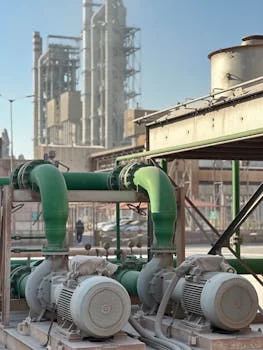
Engineering an effective treatment train in Prince Edward Island requires a five-stage approach tailored to high organic loads and high groundwater constraints. Each stage must be sized based on the peak hourly flow rate rather than the average daily flow to account for the seasonal surges typical of the region.
Stage 1: Screening and Pretreatment
For seafood and vegetable processing, the removal of large solids is critical to protect downstream pumps and membranes. Rotary mechanical bar screens with mesh sizes of 0.5 mm to 2.0 mm are the industry standard. These units prevent shells, scales, and vegetable skins from entering the primary treatment phase, reducing the overall BOD load by up to 20% before biological treatment begins.
Stage 2: Primary Treatment
Primary treatment focuses on the removal of Fats, Oils, and Grease (FOG) and heavy suspended solids. In PEI’s food industry, PEI-optimized DAF systems for food processing and aquaculture are preferred over conventional clarifiers. DAF systems utilize micro-bubbles to float light solids to the surface, achieving TSS removal rates of 95–98% with a much smaller footprint than sedimentation tanks.
Stage 3: Secondary (Biological) Treatment
Biological treatment is necessary to reduce dissolved organics (BOD). For facilities with limited land area or those requiring high-quality effluent for discharge into sensitive watersheds, compact MBR systems for PEI’s small-lot industrial sites offer a significant advantage. MBR technology combines activated sludge treatment with membrane filtration, eliminating the need for a secondary clarifier and producing effluent with TSS levels often below 2 mg/L.
| Feature | Dissolved Air Flotation (DAF) | Membrane Bioreactor (MBR) |
|---|---|---|
| Primary Target | FOG, TSS, Insoluble BOD | Dissolved BOD, Ammonia, Bacteria |
| Footprint | Moderate | Small (60% smaller than CAS) |
| Effluent Quality | Good (Pretreatment grade) | Excellent (Reuse grade) |
| PEI Application | Potato/Seafood Processing | Aquaculture, Pharma, Remote Sites |
Stage 4: Tertiary Treatment and Polishing
Tertiary stages often involve multi-media filtration or Reverse Osmosis (RO) if the facility intends to reuse process water. In PEI, RO systems are increasingly used in boiler feed or cooling tower applications to reduce the demand on local groundwater wells. These systems typically achieve recovery rates of 75–90%.
Stage 5: Disinfection and Sludge Management
Disinfection is mandatory for any effluent containing pathogens, such as wastewater from meat processing or hospitals. Ozone is often favored in aquaculture due to the lack of chemical residuals, while chlorine dioxide generators are standard for high-volume food plants. Finally, the resulting sludge must be dewatered to reduce disposal costs. Engineers should evaluate sludge dewatering solutions for PEI’s industrial wastewater to ensure the final cake meets provincial landfill requirements for moisture content.
Modular vs. Centralized Systems: Which is Right for Your PEI Industrial Facility?
Choosing between connecting to a municipal sewer and installing an on-site modular system is a primary capital decision for PEI facility managers. While centralized systems offer lower operational complexity, they are often unavailable in the rural areas where food processing and aquaculture facilities are located. municipal plants like the Charlottetown WWTP have strict influent limits; if your industrial wastewater exceeds these limits, you will be required to install pretreatment equipment regardless of your connection status.
Modular systems, such as containerized MBR or DAF units, provide scalability. These systems can be deployed in phases, allowing a facility to expand its treatment capacity as production grows. Solar-powered modular units are particularly effective for remote aquaculture sites in PEI, where extending the electrical grid can be cost-prohibitive.
| Factor | Centralized Connection | On-Site Modular System |
|---|---|---|
| Initial Cost | $50–$150/m³ (Connection fees) | $80–$250/m³ (Equipment CAPEX) |
| Monthly OPEX | High (Volumetric fees) | Low to Moderate (Energy/Chemicals) |
| Regulatory Burden | Low (Municipality monitors) | High (Facility monitors) |
| Water Reuse | Not possible | Highly feasible |
To determine the best path, facility managers should use a three-point decision framework: 1. Proximity: Is your facility within 5 km of a municipal line? Connection costs often exceed modular CAPEX beyond this distance. 2. Load Variability: Does your facility have high seasonal peaks? Modular systems with parallel trains handle spikes more efficiently than a single municipal connection with strict surcharge penalties. 3. Sustainability Goals: Do you need to reduce groundwater consumption? On-site systems allow for water recycling, which is not possible when discharging to a municipal sewer. For context, see how Nova Scotia’s industrial wastewater regulations compare to PEI’s regarding water reuse and discharge standards.
PEI Wastewater Treatment Equipment Suppliers: 2025 Comparison Matrix
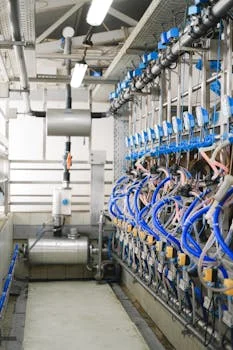
The selection of an equipment supplier in Prince Edward Island must account for the province’s geographic isolation, which can impact lead times and technical support. While national and international firms provide high-end technology, local distributors and specialized modular providers often offer faster response times for emergency repairs and chemical replenishment.
| Supplier | Primary Technologies | Technical Strengths | Lead Time |
|---|---|---|---|
| Island Water Technologies | Modular SBR, Solar-powered | Remote sites, low energy use | 12–16 weeks |
| Innovative Wastewater | Norweco® Systems | Small-lot, high groundwater | 8–12 weeks |
| HydropureWater | DAF, MBR, Chemical Dosing | High-efficiency FOG/TSS removal | 10–14 weeks |
| Atlantic Water Systems | Filtration, Softening, UV | Local service, fast delivery | 4–8 weeks |
| Veolia / SUEZ | Large-scale Bio-reactors | Complex industrial projects | 20–30 weeks |
When evaluating these suppliers, procurement teams should prioritize vendors who offer integrated PLC systems for remote monitoring. Given the rural nature of many PEI facilities, the ability for a supplier to troubleshoot a system via a cloud-based interface can prevent costly downtime and travel expenses for technicians.
Cost Breakdown for Industrial Wastewater Treatment in PEI: 2025 Budgeting Guide
Budgeting for industrial wastewater treatment in PEI requires an analysis of both Capital Expenditure (CAPEX) and long-term Operational Expenditure (OPEX). For a facility processing 100 m³ per day, the total investment typically ranges from $150,000 to $450,000, depending on the required effluent quality. These costs are influenced by PEI’s specific logistical challenges, including shipping and the need for insulated enclosures to protect equipment during Atlantic winters.
ROI Calculator Template:
A facility currently paying $4.00/m³ in municipal surcharges and water procurement costs can often justify an on-site system.
Example: A $200,000 system treating 50 m³/day with $1.00/m³ OPEX saves $3.00/m³ compared to municipal discharge.
Annual Savings = 50 m³/day * 365 days * $3.00 = $54,750.
Simple Payback Period = $200,000 / $54,750 = 3.65 years.
Frequently Asked Questions
What are the three types of industrial wastewater treatment?
Industrial treatment is categorized into physical (screening, DAF, sedimentation), chemical (coagulation, flocculation, disinfection), and biological (MBR, SBR, activated sludge). Most PEI facilities use a hybrid approach, such as physical screening followed by an MBR, to meet strict provincial TSS and BOD limits.
How much do wastewater treatment operators make in PEI?
According to the PEI Department of Environment 2024 salary survey, certified operators earn between $25 and $40 per hour. Specialist operators in sectors like pharmaceuticals or large-scale aquaculture often command higher rates due to the complexity of the systems they manage.
How many wastewater treatment plants are there in PEI?
There are over 50 centralized municipal systems in PEI, but only a handful, such as those in Charlottetown and Summerside, are equipped to handle significant industrial pretreatment loads. Consequently, the majority of industrial facilities operate independent, on-site treatment systems.
What are the penalties for non-compliance with PEI’s wastewater regulations?
Under the PEI Environmental Protection Act, fines can reach $1,000,000 for repeat or severe violations. Beyond financial penalties, the province can issue stop-work orders, effectively shutting down production until compliance is proven through third-party audits.
Can I reuse treated industrial wastewater in PEI?
Yes, the PEI Department of Environment encourages water reuse for non-potable applications such as irrigation, dust control, or cooling tower make-up. However, this requires tertiary treatment (typically RO or UV) and a specific reuse permit to ensure no cross-contamination with the island’s drinking water aquifers.