In 2025, wastewater treatment plant costs in Western Cape range from R1.6 million for a 1,600L/day compact package plant (e.g., Clarus Fusion ZF450) to R5.2 billion for the Potsdam MBR facility—the largest in South Africa. Costs scale with capacity (R10,000–R50,000 per m³/day), technology (MBR vs. conventional), and compliance requirements (DWS General Limit Standards). Municipal projects dominate budgets (Cape Town allocated R16.5B over 3 years), while small systems serve remote properties or industrial sites. Use this guide to compare engineering specs, compliance costs, and ROI for your project.
Why Western Cape’s Wastewater Treatment Costs Are Rising: 3 Key Drivers
Cape Town’s population is expanding at an annual rate of 3.8%, a figure that far outpaces the 1.2% growth seen in rural Western Cape districts, directly contributing to a 42% overload rate across existing wastewater infrastructure.
Green Drop compliance failures represent the second major driver of escalating costs. In the 2023 Green Drop report, only 28% of Western Cape plants met the required standards, significantly lower than the 61% recorded in Gauteng. To rectify these failures, the Western Cape government has prioritized massive retrofits, particularly in disinfection and nutrient removal. In 2024 alone, an estimated R1.2 billion was spent on upgrading plants with UV disinfection and advanced aeration systems to meet microbial standards. These retrofits are not merely one-time costs; they add an estimated 10% to 12% to annual operating and maintenance (O&M) budgets due to higher energy consumption and specialized technician requirements.
Aging infrastructure remains the most persistent financial burden on the province’s water budget. Approximately 68% of the Western Cape’s 149 wastewater treatment plants are over 20 years old, reaching the end of their mechanical and civil life cycles. The Western Cape Government’s 2025 Infrastructure Plan estimates that R3.5 billion in upgrades will be required by 2030 just to maintain current service levels. For a facility manager, this translates to a higher cost per m³/day for refurbished plants, as integrating modern automation into legacy civil structures often incurs a "complexity premium" of 12% to 18% over national average construction costs due to the Western Cape’s specialized labor and material logistics.
Wastewater Treatment Plant Costs in Western Cape: 2025 Benchmarks by Capacity
The cost of a wastewater treatment plant in Western Cape depends on hydraulic capacity and treatment requirements.Small-scale systems, typically defined as those handling 1 to 50 m³/day, are dominated by package plants. A compact package plant for small-scale projects, such as the Clarus Fusion ZF450, starts at approximately R1.6 million for a 1.6 m³/day capacity. These systems are popular for remote guest houses in the Garden Route or small industrial units where municipal sewer connection is unavailable. As capacity increases toward 50 m³/day, costs scale to roughly R8 million, reflecting the inclusion of more robust primary screening and sludge management components.
Medium-scale facilities (50 to 500 m³/day) serve larger housing developments, hospitals, and industrial parks. These systems often utilize modular Membrane Bioreactor (MBR) or advanced aerobic technologies. For example, a 71 m³/day modular plant is currently benchmarked at approximately R12 million, while a 130 m³/day system can reach R25 million. At this scale, the cost per m³/day begins to drop due to economies of scale in civil works and procurement. However, Western Cape's stringent coastal discharge permits often require the addition of tertiary filtration or UV units, which can add R1.5 million to R3 million to the base price.
Large-scale municipal plants (500 to 10,000+ m³/day) represent the highest tier of investment. The Potsdam Wastewater Treatment Works upgrade, at R5.2 billion for a 200,000 m³/day capacity, highlights the scale of these investments. While the unit cost per m³/day for these giant facilities is lower (R2,000 to R10,000), the absolute capital requirement is immense. These projects are often funded through long-term municipal bonds and require sophisticated sludge dewatering solutions for wastewater plants to manage the thousands of tons of solids produced annually.
| Plant Scale | Capacity (m³/day) | Estimated CAPEX (ZAR) | Cost per m³/day (ZAR) | Typical Technology |
|---|---|---|---|---|
| Small / Onsite | 1 – 50 | R1.6M – R8M | R10,000 – R50,000 | Package Plants / Fixed Film |
| Medium / Industrial | 50 – 500 | R8M – R60M | R5,000 – R20,000 | Modular MBR / SBR |
| Large / Municipal | 500 – 10,000+ | R60M – R5.2B | R2,000 – R10,000 | Conventional Activated Sludge / MBR |
Engineering Specifications: How Technology Choice Impacts Cost and Performance
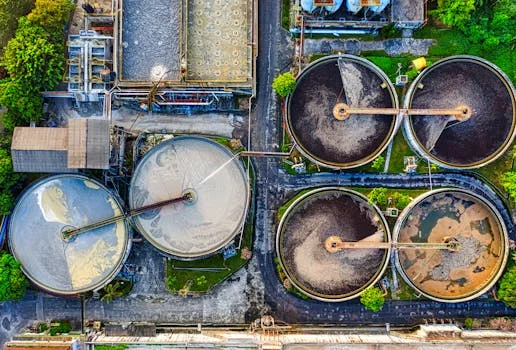
Membrane Bioreactor (MBR) technology has become the gold standard for Western Cape projects requiring high-quality effluent for reuse or sensitive environmental discharge. An MBR system for high-efficiency effluent quality typically costs between R25,000 and R50,000 per m³/day. The engineering trade-off is clear: while the CAPEX is 30% higher than conventional systems, the footprint is 60% smaller, and the effluent quality—specifically Total Suspended Solids (TSS) at <1 mg/L—is significantly superior. This makes MBR the preferred choice for the Potsdam upgrade, where land is limited and the receiving environment requires the highest protection levels.
Package plants, such as the WSZ Series, offer a mid-range cost profile of R10,000 to R30,000 per m³/day. These systems are engineered for ease of installation, often arriving as pre-wired, pre-plumbed units that can be buried or placed on a concrete slab. They typically utilize a Moving Bed Biofilm Reactor (MBBR) or fixed-film process, achieving 92% COD removal. For a developer working on a Wilderness cottage project, the "plug-and-play" nature of these plants reduces onsite engineering labor costs, which are currently 15% higher in the Western Cape than in other provinces. For more technical details, engineers should consult the detailed engineering specifications for package plants.
Conventional Activated Sludge (CAS) remains the most cost-effective solution for large-scale municipal applications where land is abundant. With a CAPEX of R5,000 to R20,000 per m³/day, CAS systems like the Zandvliet plant (R1.8B for 100,000 m³/day) rely on large settling tanks and aeration basins. While O&M costs for CAS are lower (R2–R4/m³) compared to MBR (R6–R10/m³), the effluent quality is lower, often requiring additional tertiary treatment steps to meet DWS General Limit Standards for phosphorus and nitrogen removal.
| Parameter | MBR System | Package Plant (WSZ) | Conventional (CAS) |
|---|---|---|---|
| TSS Removal | >99% (<1 mg/L) | >90% (<20 mg/L) | >85% (<25 mg/L) |
| COD Removal | >95% | >92% | 85% – 90% |
| Energy (kWh/m³) | 0.8 – 1.5 | 0.5 – 0.9 | 0.3 – 0.6 |
| Footprint | Very Small | Small / Modular | Large |
Compliance Costs: Meeting DWS General Limit Standards in Western Cape
The Department of Water and Sanitation (DWS) General Limit Standards dictate treated effluent discharge quality in Western Cape.To comply, a plant must consistently produce water with a pH between 5.5 and 9.5, TSS below 25 mg/L, and COD below 75 mg/L. Achieving these limits in 2025 requires a dedicated budget for secondary and tertiary treatment components. For small plants, compliance-related equipment like chlorine contact tanks or an on-site ClO₂ generator for compliance-grade disinfection can account for 10% to 15% of the total project budget.
Western Cape-specific requirements, particularly for coastal discharge, often exceed national standards. Coastal discharge permits frequently mandate UV disinfection to ensure E. coli levels remain below 1,000 CFU/100mL to protect local tourism and marine ecosystems. A UV system for a medium-sized plant can cost between R500,000 and R2 million. Mandatory quarterly microbial and chemical testing by accredited labs adds an annual O&M burden of R15,000 to R50,000, depending on the number of sampling points required by the permit.
The financial risk of non-compliance is substantial. Under the DWS 2024 penalty schedule, fines for effluent violations range from R50,000 to R500,000 per occurrence. Beyond direct fines, the reputational damage of a failed Green Drop audit can stall property developments and trigger environmental litigation. Budgeting for high-quality monitoring sensors and automated dosing systems is no longer optional; it is a necessary insurance policy against the rising cost of environmental non-compliance in the province.
ROI Calculator: How to Justify Your Wastewater Treatment Plant Investment
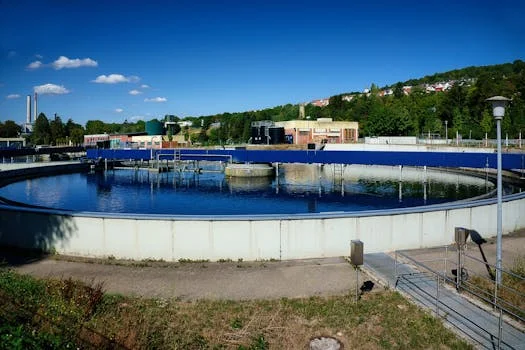
The first step in the ROI calculation is estimating the total CAPEX based on capacity (e.g., R20,000/m³ for a 100 m³/day system = R2 million). Next, operating costs must be calculated using Western Cape electricity rates (approximately R1.80/kWh) and chemical costs like Polyaluminium Chloride (PAC) at R500/ton. For a 100 m³/day plant, O&M typically ranges from R5 to R8 per m³ treated.
The "Return" in ROI comes from three primary sources: water reuse savings, avoided municipal surcharges, and fine mitigation. With municipal water tariffs in Cape Town ranging from R15 to R30 per m³, an onsite treatment system that allows for irrigation or industrial process reuse can save a facility R1,500 to R3,000 per day. When combined with the avoidance of potential R100,000 fines, the payback period for small to medium systems often falls between 3 and 7 years. For a deeper dive into these economics, see our cost comparison of secondary vs. tertiary treatment.
| System Size | Annual O&M Cost | Annual Savings (Reuse) | Estimated Payback |
|---|---|---|---|
| 50 m³/day | R120,000 | R365,000 | 4 – 6 Years |
| 500 m³/day | R950,000 | R3,650,000 | 3 – 5 Years |
| 5,000 m³/day | R8,500,000 |