
Belt filter press specifications for sludge dewatering cover feed capacity 0.65–12 m³/h, cake dryness 18–35% DS, belt width 0.5–3.5 m, and solids loading 100–600 kg/h/m. Match those numbers to sludge type, throughput, and disposal path before freezing a model size.
Belt Filter Press Specifications for Sludge Dewatering: Critical Parameters and Benchmarks
Other common setpoints include belt tension of 4–8 kN/m, hydraulic pressure of 6–12 bar, and filtrate TSS often held below 200 mg/L under plant NPDES limits. Energy use is usually 0.2–0.5 kWh/m³ of sludge treated, depending on belt width, solids loading, and automation. Critical purchase parameters are solids loading rate, cake dryness at stated feed solids, belt width, hydraulic pressure, and specific energy. Typical solids loading is 100–600 kg/h per meter of belt width at about 1–6% TSS feed. Municipal cake often reaches 18–25% DS; many industrial cakes reach 25–35% DS with correct polymer conditioning.
Standard industrial presses handle feed from 0.65 m³/h to over 12 m³/h as belt width and influent solids change. When continuous throughput exceeds one press, parallel units or a batch Plate and Frame Filter Press for Sludge Dewatering may suit ultra-high dryness targets. Filtrate clarity tracks polymer dose and belt mesh; filtrate TSS above about 200 mg/L usually signals poor flocculation or the wrong mesh, not a missing federal filtrate rule.
| Parameter | Small Models (0.5–1.0m) | Standard Models (1.5–2.0m) | Industrial Models (2.5–3.5m) |
|---|---|---|---|
| Feed Capacity (m³/h) | 0.65 – 2.5 | 3.0 – 7.5 | 8.0 – 12.0+ |
| Solids Loading (kg/h/m) | 100 – 250 | 250 – 450 | 450 – 600 |
| Motor Power (kW) | 1.5 – 3.0 | 4.0 – 7.5 | 11.0 – 15.0 |
| Hydraulic Pressure (bar) | 6 – 8 | 8 – 12 | 12 – 16 (High-Pressure) |
| Energy Use (kWh/m³) | 0.3 – 0.5 | 0.2 – 0.4 | 0.15 – 0.3 |
Belt length and hydraulic pressure are secondary drivers. Standard presses run at 6–12 bar; high-pressure frames near 16 bar can pull another 2–4% moisture from difficult sludges when the frame and bearings are rated for that load. Variable-speed drives on the main drive and wash-water pumps often cut energy overhead by 10–15% during fluctuating sludge loads.
Read the data sheet against your feed, not against the widest model. A quoted 0.65 m³/h on thin sludge is a different machine from 0.65 m³/h near 6% TSS. Ask for cake dryness at your polymer dose, and confirm wash water at 50–100 L/min per meter of belt width at 5–7 bar before you accept the motor kilowatts. Most municipal units we size run at the lower end of the 100–600 kg/h per meter band.
How does belt press dewatering work?
Belt press dewatering removes free and interstitial water in three mechanical stages: gravity drainage, wedge compression, and high-pressure shearing between porous belts. Gravity drainage typically removes 50% to 70% of free water before the sludge enters the compression zones. The press then converts pumpable liquid sludge into a stackable cake that can be conveyed, stored, or hauled.
Chemically conditioned sludge is first spread on a moving porous belt in the gravity zone. Hydrostatic head drives water through the mesh. Independent gravity zones with a more open weave can cut polymer use by 10–15% versus a tight integrated weave under the same feed solids. In the wedge zone, two belts converge and raise pressure gradually so the sludge sandwich holds without lateral squeeze-out or early belt blinding. Engineers comparing two zones in a belt filter press should treat gravity and pressure as separate duty points, not one average speed.
Final dewatering occurs in the high-pressure shearing zone. Belts wrap rollers of decreasing diameter, so pressure and shear rise as radius falls. Belt tension of 4–8 kN/m is the main dryness driver; higher tension improves solids capture but shortens polyester or polypropylene belt life. Optimal belt speed is usually 1–5 m/min: slower speed raises retention time and dryness but lowers throughput. Industry data suggests a 3-belt layout, with gravity separated from pressure, can improve energy efficiency by 15–20% versus integrated 2-belt designs by allowing different belt speeds per stage.
Material choice sets durability. Polyester belts suit most municipal duties for tensile strength. Corrosive industrial sludges often need polypropylene for chemical resistance. Stainless steel collection trays versus integrated concrete tubs change civil cost and install time. Modular stainless trays avoid complex concrete work and shorten upgrade outages.
Operators we support move belt speed toward the slow end of 1–5 m/min when the haul contract is written on cake dryness and the day's flow sits under the nameplate. They raise speed only while gravity drainage still removes 50% to 70% of free water before the wedge.
Comparing belt filter press models: 2-belt vs. 3-belt systems
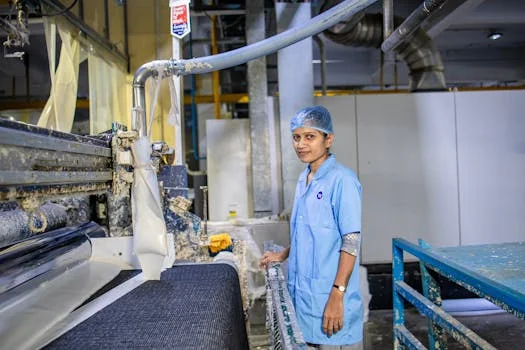
A 2-belt system trades a simpler frame and lower capital cost for less independent control of drainage speed. Capital for these units typically ranges from $50,000 to $150,000. They fit smaller municipal WWTPs or food plants where cake dryness of 20–25% DS is enough. For broader equipment ranges, see our sludge dewatering machine specifications guide.
A 3-belt system uses an independent gravity belt and drive. Gravity can run slower than the pressure section, so more water leaves before compression. High-volume industrial sites report 3–5% higher cake dryness and up to 15% less polymer versus 2-belt units on the same sludge. Capital is higher ($150,000 to $300,000), yet lower cake mass often shortens payback when dry solids exceed about 10 tons per day.
| Feature | 2-Belt System | 3-Belt System | High-Pressure Model |
|---|---|---|---|
| Primary Application | Small/Medium WWTP | High-Volume Industrial | Difficult/Oily Sludge |
| Gravity Zone | Integrated | Independent/Extended | Integrated w/ Pre-thickener |
| Relative Capital Cost | 1.0x | 1.8x – 2.2x | 2.0x – 2.5x |
| Polymer Efficiency | Standard | High (10-15% saving) | Variable |
| Footprint | Compact | Large | Medium |
Automation also separates models. Manual units need frequent tracking and tension checks. Semi-automatic packages add PLC polymer dosing. Fully automatic presses add self-cleaning cycles, SCADA links, and ultrasonic tracking. Full automation typically adds $30,000 to $80,000 but can cut onsite labor by 40–60% on 24/7 duty.
Teams buying below about 10 tons per day of dry solids usually stay with the 2-belt frame unless polymer invoices are the real complaint. The 3-belt premium, at 1.8x – 2.2x relative capital, pays back only when that polymer saving and the extra 3–5% cake dryness both show up on the same sludge.
Sludge type and conditioning: matching the press to your wastewater
Municipal sludge usually enters at 1–4% TSS and needs an automated polymer dosing system for belt presses to build strong flocs. Cationic polyacrylamide remains the common choice at about 3–8 kg polymer per ton of dry solids. Under-dosing blinds the belt with fines; over-dosing causes slippage and sticky cake release.
Industrial sludges vary more. Pulp and paper fiber often drains well; oily petrochemical sludge may need surfactants or pH correction. For feed below 1% TSS, a DAF system for sludge pre-thickening upstream to 4–6% solids can cut required belt width by 30–50%. Field data show sludge above 30°C can drain about 12% faster than cold feed at the same solids because viscosity falls.
Keep pH near 6.0–8.0 for most commercial polymers. Below pH 5.0 or above 9.0, bridging often fails and flocs collapse in the wedge zone. Neutralize first, or switch to a high-charge polymer grade, before you blame belt mesh or roller geometry.
Compliance and environmental standards for belt filter presses

Regulatory focus sits on biosolids disposition and filtrate return quality, not on a single federal cake-dryness number for Class B. Earlier guidance often treated 18–25% DS municipal cake as adequate for Class B handling and haulage. Class B pathogen criteria remain separate under Part 503 and are not replaced by belt-press cake dryness alone. The drying-based vector attraction options sit in 40 CFR 503.33(b): under 503.33(b)(7), the percent solids of sewage sludge that does not contain unstabilized solids generated in a primary wastewater treatment process shall be equal to or greater than 75 percent; under 503.33(b)(8), sludge that does contain those unstabilized primary solids shall be equal to or greater than 90 percent. Both are heat-dried solids levels, far above any cake a belt press discharges.
Most plants we size still leave the belt press at 18–25% DS and meet vector attraction reduction through digestion and the other 503.33(b) options, not by drying. In the EU, Directive 91/271/EEC still frames urban wastewater residuals management, with many plants targeting about 20–30% dryness for municipal cake handling. According to the European Commission, the revised Urban Wastewater Treatment Directive entered into force on 1 January 2025, and until 2028 all 27 Member States still report under the old directive before the reporting system moves to the revised one in 2028. The same program calls for energy-neutral treatment plants by 2045 and for collecting and treating wastewater in all urban areas of more than 1,000 inhabitants — plant-level targets that frame energy specs, not cake dryness.
That energy target is why IE3 or IE4 drives and an ISO 50001 program still belong on the spec sheet even though they do not change cake %DS. Belt-press energy at 0.2–0.5 kWh/m³ is a small slice of plant power, yet it is the slice the dewatering spec can actually control.
Filtrate quality is set by each NPDES permit. Many permits keep returned filtrate TSS below 200 mg/L; food or pharma permits may go as low as 50 mg/L and then need polishing. According to OSHA 29 CFR 1910.95 Table G-16, the permissible noise exposure remains 90 dBA for an 8-hour shift, with a hearing-conservation action level at 85 dBA TWA. Modern belt presses often run at 75–85 dBA, yet indoor rooms may still need enclosures for local ordinances. Where sound does exceed Table G-16, 29 CFR 1910.95(b)(1) requires feasible administrative or engineering controls before personal protection carries the exposure.
Energy programs increasingly reference ISO 50001 and IE3 or IE4 drive motors. Safety packages commonly follow ANSI Z245.1-2020 for e-stops, tracking sensors, and nip guarding. CE-marked exports must also meet Machinery Directive 2006/42/EC for operator protection.
How much does a 2 ton filter press cost?
A 2 ton dry-solids-per-day belt filter press usually falls in the small-to-standard capital band, often near a 1.0–1.5 m 2-belt frame rather than a large 3-belt industrial unit. Capital for a 1.5 m 2-belt system typically sits near $100,000, while a high-performance 3-belt frame of similar width can reach about $200,000. For plant-wide context, pair these figures with a wastewater treatment cost analysis and the sibling Belt Filter Press Cost Price: 2026 B2B Pricing, ROI & Specs Guide. Buyers comparing the cost of belt filter press for a 0.5 mgp wwtp with 2% solids should size on solids loading (kg/h/m), not nameplate hydraulic flow alone.
Operating cost usually runs $0.50–$2.00 per m³ of sludge treated. Polymer is 40–60% of OpEx; energy is often under $0.20 per m³. Belts last about 2,000–6,000 operating hours; a 2.0 m belt change typically costs $8,000–$15,000 including labor, and filter press maintenance stays on its own checklist so plate-press steps do not get copied onto belt tracking. Disposal tipping above $100 per ton is why a drier 3-belt cake can win on TCO even at higher CapEx.
| Cost Category | Annual Benchmark (USD) | Cost per m³ Treated |
|---|---|---|
| Polymer Chemicals | $15,000 – $45,000 | $0.20 – $1.00 |
| Energy Consumption | $2,500 – $6,000 | $0.05 – $0.20 |
| Labor & Operation | $8,000 – $18,000 | $0.10 – $0.30 |
| Maintenance/Belts | $5,000 – $12,000 | $0.05 – $0.20 |
| Total OpEx | $30,500 – $81,000 | $0.40 – $1.70 |
Payback commonly falls in 2–5 years, and can approach 18 months where haul fees dominate. A 1% gain in cake dryness often saves tens of thousands of dollars per year on high-volume sites when polymer dose stays stable. On jobs we price, the 2–5 year payback shrinks toward 18 months only when tipping sits above $100 per ton.
Use belt filter press specifications for sludge dewatering as the duty sheet, not as a single catalog cell. Some procurement files still carry the misspelled search string belt filrer press selection gaude; treat that string as this same duty sheet — feed solids, haul-contract cake target, and belt width.
Selection checklist: (1) measure feed %TSS and peak m³/h; (2) set target cake %DS from the disposal contract; (3) confirm filtrate TSS in the NPDES permit; (4) choose 2-belt vs 3-belt from polymer and dryness goals; (5) verify belt material for pH and solvents; (6) include wash-water at 50–100 L/min per meter belt width at 5–7 bar; (7) budget belt life at your tension setpoint. HydropureWater can size a press from your sludge sample and duty sheet if you need a firm hydraulic and solids-loading check.
Who this is for: plant engineers and EPC teams selecting continuous dewatering for municipal or industrial sludge at moderate dryness. Who should look elsewhere: projects that need >35% DS cake in one step, or ultrapure/semiconductor water standards unrelated to sludge presses. Next step: lock feed solids, target DS, and permit filtrate limits, then compare one 2-belt and one 3-belt offer on the same kg/h/m basis, or send the duty sheet through the sludge dewatering specification review.
Frequently Asked Questions
What is the typical lifespan of a filter belt?
A high-quality polyester belt in municipal service typically lasts 3,000–6,000 operating hours. Abrasive industrial duties such as mining or sand washing may cut life to about 2,000 hours. Wash-water pressure at 6 bar or higher and correct tracking alignment do more for belt life than occasional tension increases. Inspect splice wear and edge fray at each planned outage so you replace belts before a tear stops the line.
How much cake dryness can I expect versus a centrifuge?
Belt filter presses typically achieve 18–30% dryness on well-conditioned sludge, while centrifuges often reach 25–35% under similar feed. Belt presses usually use 0.2–0.5 kWh/m³ versus about 1.0–2.0 kWh/m³ for centrifuges, with simpler routine maintenance. Choose a centrifuge when cake contracts demand the higher dryness band; keep the belt press when energy, polymer, and spare-parts cost dominate life-cycle cost.
Can a belt filter press handle oily sludge?
Yes, oily sludge can be dewatered on a belt press when conditioning and wash systems are designed for oil. Oil tends to blind mesh pores, so plants combine coagulants with high-charge polymers and continuous high-pressure belt washing. Pilot a dose curve on your actual residual before freezing belt weave and wash-nozzle spacing. Petrochemical and food plants routinely run this path when cake dryness targets stay in the mid-20% DS range.
What wash-water flow does a belt press need?
A belt filter press typically needs 50–100 liters of wash water per minute per meter of belt width. Deliver that water at 5–7 bar so jets clear polymer and fines from the mesh. Insufficient pressure leaves blinded panels that raise filtrate TSS and cut effective solids loading. Meter wash water separately from process water so operators can see nozzle wear before cake quality drifts.
Does Part 503 set a federal cake-dryness number for belt press cake?
No, Part 503 does not set a cake-dryness requirement that a belt press must meet. The drying-based vector attraction reduction options in 40 CFR 503.33(b)(7) and (b)(8) require equal to or greater than 75 percent or 90 percent solids, which are heat-dried levels, not belt-press cake. Class B pathogen criteria sit separately under Part 503, and filtrate return quality is set by each NPDES permit.