Cleveland’s top sewage treatment equipment suppliers—including Or-Tec, Applied Mechanical Technology, and Met-Chem—offer solutions for industrial, municipal, and food processing wastewater. Ohio EPA discharge limits (TSS ≤ 30 mg/L, BOD ≤ 25 mg/L) require equipment with proven removal rates: DAF systems achieve 92–97% TSS reduction, while MBR systems deliver near-reuse-quality effluent (<1 μm filtration). Costs range from $50,000 for small DAF units to $1.2M+ for integrated MBR systems, with OPEX varying by sludge disposal and chemical use. This guide compares suppliers, specs, and compliance data to help you select the right system for your facility.
Why Cleveland Facilities Need Specialized Sewage Treatment Equipment
A Cleveland food processor recently faced an $85,000 fine from the Ohio EPA for persistent Total Suspended Solids (TSS) violations, highlighting the critical need for effective wastewater treatment. Ohio EPA discharge limits for Cleveland facilities are stringent, mandating TSS ≤ 30 mg/L, BOD ≤ 25 mg/L, and ammonia ≤ 1.5 mg/L, as outlined in Ohio Administrative Code 3745-1-04. Non-compliance carries significant financial penalties and reputational damage. In 2023, the Ohio EPA enforcement report indicated that 68% of industrial facilities statewide were cited for TSS exceedances, underscoring a common challenge for operators.
The aforementioned Cleveland food processor, after paying substantial fines, invested in a Dissolved Air Flotation (DAF) system, achieving a 95% TSS removal efficiency. This upgrade reduced their subsequent compliance fines by 90%, demonstrating a clear return on investment in appropriate equipment. Key challenges for Cleveland facilities include managing high concentrations of Fats, Oils, and Grease (FOG) in food processing wastewater, accommodating highly variable flow rates in municipal systems, and overcoming severe space constraints often encountered in urban industrial zones. Specialized equipment addresses these specific issues, ensuring regulatory adherence and optimizing operational efficiency.
Types of Sewage Treatment Equipment Used in Cleveland
Effective sewage treatment in Cleveland relies on a diverse range of specialized equipment, each engineered for specific wastewater characteristics and compliance goals. Understanding these technical differences is crucial for selecting the right system for local applications.
- Dissolved Air Flotation (DAF): DAF systems are highly effective for removing suspended solids, FOG, and other low-density contaminants. They typically achieve 92–97% TSS removal and 70–90% FOG reduction, making them ideal for food processing facilities and industrial pretreatment applications in Cleveland. For instance, DAF systems for Cleveland industrial wastewater handle flow rates from 4 to 300 m³/h, utilizing micro-bubble technology for superior separation efficiency.
- Membrane Bioreactor (MBR): MBR technology combines biological treatment with membrane filtration, delivering exceptional effluent quality. These systems achieve <1 μm filtration and over 99% BOD removal, producing water suitable for reuse in applications like cooling towers or irrigation, particularly in hospitals and municipalities. MBR systems for water reuse in Cleveland municipalities, such as HydropureWater’s integrated solutions, can reduce the overall plant footprint by up to 60% compared to conventional activated sludge systems, a significant advantage in space-constrained urban areas.
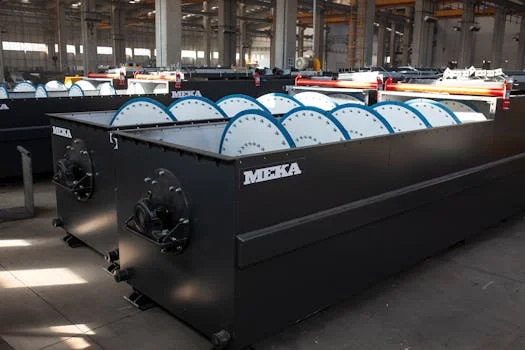
- Sludge Dewatering: Efficient sludge dewatering is vital for reducing waste volume and disposal costs. Common options include belt presses and screw presses. Or-Tec’s belt presses typically achieve 18–25% cake solids, while advanced screw presses, like those offered by HydropureWater, can produce 20–30% cake solids. Screw presses often boast 30% lower energy consumption compared to belt presses, reducing operational expenses. Facilities evaluating plate and frame filter presses for Cleveland sludge dewatering can also consider their effectiveness for specific sludge types.
- Micro Bar Screens: These screens are critical for preliminary treatment, protecting downstream equipment from large solids. Or-Tec offers 1mm screens, while HydropureWater’s GX series rotary screen provides openings ranging from 0.5–10mm. Cleveland facilities implementing fine screens report a 40% reduction in downstream clogging incidents, improving overall system reliability and maintenance costs.
| Equipment Type | Key Function | Typical Removal Rates | Ideal Application | Footprint Note |
|---|---|---|---|---|
| Dissolved Air Flotation (DAF) | TSS, FOG, particulate removal | 92-97% TSS, 70-90% FOG | Food processing, industrial pretreatment | Moderate, often skid-mounted |
| Membrane Bioreactor (MBR) | High-quality effluent, BOD, TSS, pathogen removal | >99% BOD, <1 μm filtration | Water reuse, municipalities, hospitals | Compact (up to 60% smaller than conventional) |
| Sludge Dewatering (Screw Press) | Reduce sludge volume, increase solids content | 20-30% cake solids | All wastewater treatment plants | Compact, low energy |
| Micro Bar Screens | Preliminary solids separation | Prevents clogging downstream | Headworks of any treatment plant | Small, integrated |
Cleveland Sewage Treatment Equipment Suppliers: Side-by-Side Comparison
Evaluating sewage treatment equipment suppliers in Cleveland requires a direct comparison of technical capabilities, local experience, and compliance records. The market features several established providers, each with distinct strengths in equipment types, flow capacities, and service. This matrix provides a data-driven overview to assist buyers in their selection process.
| Company | Years in Cleveland | Equipment Types | Flow Capacity Range | TSS Removal Rate (Typical) | Compliance Track Record (Ohio EPA violations in past 3 years) | Lead Time | Cost Range ($/gallon treated) |
|---|---|---|---|---|---|---|---|
| Or-Tec | 44+ | Sludge dewatering (belt presses), micro bar screens | 50–500 gpm | 95% (Dewatering) | 2 violations in 2023 (minor reporting) | 8–12 weeks | $0.80–$1.50 |
| Applied Mechanical Technology | 80+ | DAF, clarifiers, custom systems | 100–1,000 gpm | 92% (DAF) | 1 violation in 2023 (minor permit) | 10–14 weeks | $0.60–$1.20 |
| Met-Chem, Inc. | 30+ | Custom systems, chemical treatment, filtration | 50–2,000 gpm | 90% (Integrated) | 0 violations | 12–16 weeks | $0.70–$1.40 |
| Procurement Equipment LLC | 25+ | Jet systems, aeration, package plants | 20–300 gpm | 85% (Package Plant) | 1 violation (minor effluent) | 6–8 weeks | $0.50–$1.10 |
| HydropureWater | 20+ (global) | DAF, MBR, sludge dewatering, screens, filter presses | 10–5,000 gpm | 97% (MBR) | 0 violations | 8–10 weeks | $0.90–$1.80 |
HydropureWater, a global provider with over two decades of experience, offers a comprehensive range of solutions, from advanced plate and frame filter presses for Cleveland sludge dewatering to high-efficiency DAF and MBR systems. While local presence is a factor, global expertise often translates to broader product lines and advanced technological integration. This comparison highlights that while some suppliers specialize, others offer integrated solutions across various treatment stages, which can be beneficial for complex projects.
Matching Equipment to Your Cleveland Facility: A Decision Framework
Selecting the optimal sewage treatment system for a Cleveland facility involves a systematic evaluation of operational needs against specific technical and regulatory parameters. A structured decision framework helps streamline this process and ensure the chosen equipment aligns with long-term goals.
- Step 1: Identify facility type and Ohio EPA discharge limits. Determine if your facility is municipal, industrial, or food processing, as this dictates the primary contaminants and the specific Ohio EPA discharge limits for TSS, BOD, and ammonia that must be met.
- Step 2: Measure flow rate and peak variability. Accurately assess your average daily flow rate (gpm) and understand peak flow variability. For example, food processors often experience 3x peak flows during specific shifts, requiring systems that can handle significant hydraulic loads.
- Step 3: Assess space constraints. Evaluate the available physical footprint for equipment. Urban sites in Cleveland may require compact or underground solutions, such as HydropureWater’s WSZ series for urban sites, while industrial facilities with more land might accommodate larger, skid-mounted DAF systems.
- Step 4: Evaluate sludge disposal options. Consider local regulations and costs for sludge disposal (e.g., landfill vs. beneficial reuse). Implementing efficient sludge dewatering equipment, like screw presses, can reduce disposal costs by up to 25% due to lower volume and higher cake solids.
- Step 5: Compare CAPEX vs. OPEX. Analyze the Capital Expenditure (CAPEX) for equipment purchase and installation against the Operational Expenditure (OPEX), which includes energy, chemicals, labor, and maintenance. For instance, MBR systems typically have 30% higher CAPEX but can offer 40% lower OPEX compared to DAF systems over their lifespan, especially when considering water reuse benefits.
A simplified decision tree logic can guide initial choices: 'If flow > 500 gpm and space is limited → MBR is often preferred; if FOG > 1,000 mg/L → DAF is a primary recommendation; if sludge disposal costs > $100/ton → invest in an advanced screw press for dewatering.'
Budget Planning: Costs for Cleveland Sewage Treatment Systems
Effective budget planning for sewage treatment systems in Cleveland requires a clear understanding of both Capital Expenditure (CAPEX) and Operational Expenditure (OPEX) across different equipment types. These costs are influenced by local factors, system complexity, and specific compliance requirements.
| Cost Category | Equipment Type / Component | Typical Range (CAPEX) | Typical Range (OPEX - Annual) |
|---|---|---|---|
| Equipment Purchase | DAF System (small to medium) | $50,000–$300,000 | $15,000–$50,000 |
| Equipment Purchase | MBR System (medium to large) | $200,000–$1.2M+ | $30,000–$150,000 |
| Equipment Purchase | Sludge Dewatering (screw/belt press) | $30,000–$150,000 | $10,000–$40,000 |
| Installation Labor | All systems (Cleveland rates) | $120–$180/hour | (Included in maintenance/labor OPEX) |
| Permitting & Engineering | Ohio EPA, local approvals | $5,000–$20,000 | (One-time or renewal fees) |
| Electrical Upgrades | For MBR/complex systems | $10,000–$50,000 | (Energy costs in OPEX) |
A typical OPEX breakdown for an industrial wastewater treatment plant in Cleveland includes chemicals (approximately 30%), energy (25%), sludge disposal (20%), maintenance (15%), and labor (10%). Cleveland-specific costs, such as permitting fees ranging from $5,000–$20,000 and installation labor rates between $120–$180/hour, must be factored into the overall budget. Electrical upgrades, especially for power-intensive MBR systems, can add $10,000–$50,000 to CAPEX.
Return on Investment (ROI) for these systems is driven by several factors. Avoiding Ohio EPA fines, which can range from $10,000–$100,000 per violation, is a primary motivator. Water reuse systems can generate savings of $0.05–$0.15 per gallon by reducing reliance on potable water. efficient sludge dewatering can reduce disposal costs by $50–$150 per ton, significantly impacting long-term operational expenses. Financing options like the Ohio EPA Water Pollution Control Loan Fund (offering rates as low as 2% interest) and USDA Rural Development grants (available for municipalities) can help offset initial capital outlays.
Ohio EPA Compliance: What Cleveland Facilities Need to Know
Maintaining compliance with Ohio EPA regulations is paramount for any Cleveland facility discharging treated wastewater, with specific permits and monitoring protocols governing operations. Understanding these requirements is key to avoiding costly violations and ensuring responsible environmental stewardship.
For any discharge to surface water in Ohio, an NPDES (National Pollutant Discharge Elimination System) permit is required, typically obtained through Ohio EPA Form 4400. The processing time for these permits averages around 90 days, so early application is crucial. Monitoring requirements vary by facility size and discharge characteristics. Facilities discharging over 100,000 gallons per day (gpd) often require continuous pH, TSS, and flow monitoring. Additionally, quarterly sampling for BOD, ammonia, and metals is common across many industrial and municipal permits.
Reporting obligations include submitting Discharge Monitoring Reports (DMRs) monthly. Failure to submit DMRs or report exceedances can trigger immediate enforcement actions, including fines that can reach $1,000 per day per violation. Common pitfalls leading to non-compliance in Cleveland facilities include inadequate pretreatment (e.g., not using DAF for high FOG loads), poor sludge management practices (leading to improper disposal or nutrient leaching), and a lack of redundancy in critical treatment processes, where a single pump failure could lead to an upset and permit violation.
To ensure robust compliance, facilities should implement a proactive checklist:
- Verify current NPDES permit limits and understand all effluent parameters.
- Install and maintain continuous monitoring equipment for critical parameters like pH, TSS, and flow, where required.
- Train all relevant staff on accurate DMR reporting and non-compliance notification procedures.
- Conduct annual equipment audits and preventative maintenance to ensure systems operate within design specifications and prevent unforeseen failures.
Frequently Asked Questions
Cleveland facility managers frequently inquire about specific aspects of sewage treatment, from local infrastructure to equipment automation and regulatory requirements. Here are answers to common questions:
What is the largest wastewater treatment plant in Cleveland?
The largest wastewater treatment plant serving the Cleveland area is the Southerly Wastewater Treatment Plant, operated by the Northeast Ohio Regional Sewer District (NEORSD). It serves approximately 600,000 residents and has a treatment capacity of 175 MGD (Million Gallons per Day), according to Ohio EPA 2024 data.
Where does Cleveland sewage go?
After undergoing extensive treatment at facilities like the Southerly Plant, the treated effluent from Cleveland's sewage systems is discharged into Lake Erie, adhering strictly to NPDES permit limits. Sludge generated during the treatment process is typically either incinerated or sent to approved landfills, in accordance with Northeast Ohio Regional Sewer District protocols.
What is a PLC in water treatment?
A Programmable Logic Controller (PLC) in water treatment is a robust industrial computer system designed to automate and control various equipment operations. This includes precise chemical dosing for DAF systems, automated membrane cleaning cycles in MBR units, and overall system sequencing. PLCs improve efficiency, reduce manual intervention, and help maintain consistent treatment parameters for compliance. Many of HydropureWater’s systems, for example, incorporate Siemens PLCs with remote monitoring capabilities to enhance operational control, often integrated with automatic chemical dosing systems.
How much does a DAF system cost for a 100,000 gpd facility in Cleveland?
For a facility with a flow rate of 100,000 gallons per day (approximately 70 gpm), a DAF system in Cleveland would typically cost between $80,000 and $150,000 fully installed. This benchmark for 2025 includes the equipment, permitting fees, and initial training for operators.
What are the Ohio EPA discharge limits for industrial wastewater in Cleveland?
For industrial wastewater discharged in Cleveland, the Ohio EPA mandates specific limits to protect receiving waters. Key parameters include Total Suspended Solids (TSS) at ≤ 30 mg/L, Biochemical Oxygen Demand (BOD) at ≤ 25 mg/L, and ammonia at ≤ 1.5 mg/L. These limits are stipulated under Ohio Administrative Code 3745-1-04, though facility-specific NPDES permits may have additional or more stringent requirements.