Why Sludge Dewatering is Critical for Portugal’s Wastewater Treatment Plants in 2025
Portugal’s sludge dewatering equipment market in 2025 is shaped by strict EU directives (e.g., Urban Waste Water Treatment Directive 91/271/EEC) and Portugal’s Decreto-Lei n.º 119/2019, which mandates <25% dry solids for landfill disposal. Screw presses dominate municipal applications (60–80% market share) due to low energy use (0.3–0.5 kWh/m³) and automated operation, while filter presses excel in industrial settings (e.g., pulp & paper) with 30–40% dry solids output. Costs range from €50,000 for a 5 m³/h screw press to €200,000+ for a 20 m³/h filter press, with ROI driven by reduced sludge volume (up to 80% reduction) and lower disposal fees (€50–€150/ton in Portugal).
Sludge disposal costs in Portugal have escalated to a range of €50 to €150 per ton in 2024, according to data from the Portuguese Environment Agency (APA), making waste volume reduction a primary financial objective for facility operators. The regulatory pressure stems largely from Decreto-Lei n.º 119/2019, which strictly prohibits the landfilling of sludge with a dry solids (DS) content of less than 25%. This domestic legislation aligns with the EU Urban Waste Water Treatment Directive 91/271/EEC, which has seen increased enforcement; Portuguese municipalities currently face potential fines of up to €1 million for sustained non-compliance with sludge treatment standards (per 2023 EU Commission reports).
The economic impact of upgrading dewatering infrastructure is best illustrated by recent industrial transitions. For instance, a textile factory in Porto reported a 70% reduction in annual sludge disposal costs after replacing an aging belt press with a modern screw press in early 2024 (EcoTech Solutions Portugal data). By achieving a 22% DS output compared to the previous 14%, the facility significantly reduced the weight and volume of waste transported off-site. Beyond direct cost savings, efficient dewatering supports Portugal’s Circular Economy Action Plan by preparing sludge for beneficial reuse, such as agricultural land application or energy recovery, which often requires a minimum of 30% DS for optimal logistics and processing.
Sludge Dewatering Equipment Types: How They Work and When to Use Each
Screw presses utilize a progressive compression mechanism where a rotating screw within a cylindrical wedge-wire screen slowly conveys sludge through increasing pressure zones to achieve dry solids outputs of 18–25%. This technology is particularly favored in Portuguese municipal plants and food processing facilities due to its exceptionally low energy consumption (0.3–0.5 kWh/m³) and its ability to operate continuously with minimal operator intervention. It is the ideal choice for biological sludge or low-fiber industrial waste where automation and low noise levels are prioritized.
In contrast, the belt press operates through gravity drainage followed by mechanical shearing between two tensioned belts passing over a series of rollers. With throughput capacities ranging from 10 to 100 m³/h, belt presses are frequently deployed in high-fiber industrial sectors like pulp and paper or large-scale textile manufacturing. While they offer high hydraulic capacity, they typically consume more energy (0.5–0.8 kWh/m³) and require significant wash-water volumes to prevent belt blinding. For the most demanding industrial applications, a plate and frame filter press for high-solids sludge uses high-pressure hydraulic compression to reach 30–40% DS, which is essential for minimizing costs in the petrochemical and mining sectors.
| Equipment Type | Mechanism | Typical Throughput | Dry Solids (DS) Output | Energy Use (kWh/m³) |
|---|---|---|---|---|
| Screw Press | Rotating screw compression | 5–50 m³/h | 18–25% | 0.3–0.5 |
| Belt Press | Gravity drainage & rollers | 10–100 m³/h | 15–22% | 0.5–0.8 |
| Filter Press | Plate-and-frame pressure | 1–50 m³/h | 30–40% | 0.8–1.2 |
| Vacuum Dryer | Thermal evaporation | 1–10 m³/h | 85–95% | 1.5–2.5 |
A common misconception among procurement managers in Portugal is that belt presses represent the lowest lifecycle cost due to lower initial capital expenditure. However, when factoring in the high polymer consumption and the 2,000–3,000 liters of wash-water required per hour of operation, the total cost of ownership (TCO) for a belt press often exceeds that of a screw press within 36 months. Similarly, while filter presses are perceived as high-maintenance, modern automated plate shifters and cloth washing systems have reduced annual maintenance labor to approximately 100–150 hours, comparable to other mechanical dewatering technologies (HydropureWater field data, 2025).
Technical Specifications: What to Look for in Sludge Dewatering Equipment
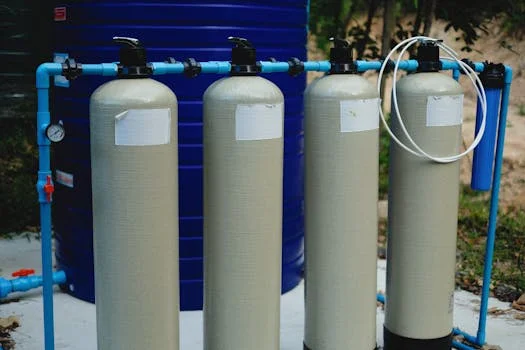
Throughput capacity must be sized with a 20% safety buffer above the average daily flow to accommodate peak hydraulic loads caused by seasonal precipitation or industrial production surges. When evaluating sludge dewatering equipment in Portugal, engineers must distinguish between hydraulic capacity (m³/h) and solids loading rate (kg DS/h). A system rated for 20 m³/h of 1% concentration sludge will struggle if the influent concentration rises to 3%, potentially leading to torque overloads or poor cake quality.
Energy efficiency is a critical parameter given Portugal’s industrial electricity rates, which fluctuated between €0.15 and €0.20/kWh in 2024. Selecting a screw press with a 0.35 kWh/m³ rating over a centrifuge or belt press can save a medium-sized facility (>10,000 PE) upwards of €8,000 annually in power costs alone. the integration of an automated polymer dosing for sludge conditioning is essential for maintaining consistent dry solids output. These systems use real-time sensors to adjust flocculant flow based on sludge thickness, preventing the over-consumption of expensive chemicals which can cost between €5 and €20 per ton of treated sludge.
| Technical Parameter | Municipal Benchmark | Industrial Benchmark | Engineering Consideration |
|---|---|---|---|
| Dry Solids (DS) | 18% – 25% | 25% – 40% | Impacts disposal fee (€/ton) |
| Energy Consumption | 0.3 – 0.6 kWh/m³ | 0.7 – 1.2 kWh/m³ | Calculate based on 24/7 ops |
| Footprint | 10 – 20 m² | 30 – 50 m² | Includes maintenance access |
| Automation | Full PLC/SCADA | HMI + Remote Monitoring | Reduces manual labor shifts |
| Material | SS304 | SS316 / Duplex | Required for corrosive waste |
Material compatibility is often overlooked during the procurement phase. For municipal applications, Grade 304 stainless steel is generally sufficient; however, for industrial sectors such as petrochemicals or food processing with high salinity, Grade 316 or specialized coatings are required to prevent pitting corrosion. Control systems should be compatible with existing plant SCADA (Supervisory Control and Data Acquisition) architectures, a standard requirement for Portuguese water utilities like Águas de Portugal (AdP) to ensure centralized monitoring of cake moisture and energy metrics.
Cost Benchmarks: Sludge Dewatering Equipment in Portugal (2025 Data)
Capital expenditure (CAPEX) for sludge dewatering systems in the Portuguese market is influenced by automation levels and material grades, with a standard 10 m³/h screw press typically costing between €70,000 and €110,000. Larger installations, such as a 50 m³/h automated filter press for a pulp and paper mill, can exceed €300,000. Installation costs in Portugal generally add 20–30% to the equipment price, covering civil engineering (concrete pads), electrical integration, and stainless steel piping. For a typical project in Lisbon or Porto, installation for a mid-sized system averages approximately €30,000 to €45,000.
Operating expenditure (OPEX) is dominated by three factors: electricity, polymers, and disposal fees. In a typical Portuguese municipal WWTP processing 20 m³/h, the transition from 15% DS to 25% DS results in a 40% reduction in total sludge weight. At a disposal cost of €100/ton, this efficiency gain can save the municipality over €40,000 per year. When combined with energy-efficient screw press technology, many facilities achieve a full return on investment (ROI) within 2.5 to 4 years. the Fundo Ambiental (Environmental Fund) in Portugal often provides grants covering up to 50% of CAPEX for projects that demonstrate significant energy savings or contribute to circular economy goals (per 2024 guidelines).
| Cost Component | Estimated Range (Portugal) | Notes / Variables |
|---|---|---|
| Equipment (Screw Press) | €50,000 – €150,000 | Capacity 5–30 m³/h |
| Equipment (Filter Press) | €100,000 – €300,000 | High-solids industrial grade |
| Installation & Commissioning | 20% – 30% of CAPEX | Includes civil & electrical works |
| Annual Maintenance | €5,000 – €15,000 | Wear parts, oil, and labor |
| Polymer Chemicals | €5 – €20 per ton DS | Depends on sludge flocculation |
Portugal’s Sludge Disposal Regulations: What You Must Know in 2025
Decreto-Lei n.º 119/2019 serves as the primary regulatory framework for sludge management in Portugal, setting rigorous standards for disposal and recovery. A critical threshold for engineers to note is the 25% dry solids requirement for landfilling; sludge failing this benchmark is classified as liquid waste and is generally rejected by municipal landfills. Additionally, for sludge intended for agricultural reuse—a common practice in the Alentejo and Ribatejo regions—Decreto-Lei n.º 276/2009 dictates strict limits on heavy metals (e.g., Cadmium < 20 mg/kg, Lead < 750 mg/kg) and pathogens, often requiring advanced dewatering followed by lime stabilization or composting.
Compliance with the EU Urban Waste Water Treatment Directive 91/271/EEC remains a priority, especially as Portugal works toward the 2027 deadline for upgraded treatment in all agglomerations exceeding 10,000 population equivalent (PE). Non-compliance not only risks heavy fines but also restricts access to EU Cohesion Funds. For industrial operators, particularly in the chemical and pharmaceutical sectors, sludge is often governed by Decreto-Lei n.º 178/2006 (the Waste Framework Directive), which may classify specific residues as hazardous. This classification necessitates specialized dewatering equipment capable of achieving high DS to minimize the volume of waste sent for expensive incineration or hazardous waste landfilling. Understanding how Portugal’s sludge regulations compare to other EU countries can help multinational firms standardize their environmental compliance strategies across the Iberian Peninsula.
Supplier Decision Framework: How to Choose a Sludge Dewatering Equipment Partner in Portugal
Technical support response times of under 24 hours are the primary selection criterion for 85% of Portuguese facility managers when evaluating sludge dewatering equipment suppliers. Given the critical nature of dewatering in the overall treatment train, a mechanical failure can lead to tank overflows and regulatory violations within hours. Procurement teams should prioritize suppliers who maintain a local inventory of critical wear parts—such as screw press seals, filter cloths, and conveyor bearings—within Portugal or neighboring Spain to avoid long lead times from central European or Asian warehouses.
A robust supplier evaluation should also include a review of the partner's expertise in specific local sectors. A supplier successful in municipal sewage may not have the necessary experience to handle the high-fat, high-oil sludge found in North Portugal’s food processing hubs. Requesting a 10-year Total Cost of Ownership (TCO) analysis is a prudent step; this should compare energy, chemical, and disposal costs between different technologies. Reviewing detailed screw press specifications and selection criteria allows engineers to verify if a supplier's proposal meets the rigorous 2025 standards for moisture content and energy efficiency.
| Selection Criterion | Weighting | Ideal Supplier Attribute |
|---|---|---|
| Local Service Support | 35% | 24h on-site response in Portugal |
| Regulatory Expertise | 20% | Documentation for APA/DL 119/2019 |
| Operational Efficiency | 20% | Guaranteed <0.5 kWh/m³ energy use |
| Customization | 15% | Tailored polymer dosing & materials |
| Reference Sites | 10% | Active installations in Porto/Lisbon |
Frequently Asked Questions
What is the best sludge dewatering equipment for a small municipal WWTP in Portugal?
For plants with a flow of 5–20 m³/h, the screw press is the most efficient choice. It offers low energy consumption (0.3–0.5 kWh/m³), requires minimal operator oversight, and easily achieves the >25% dry solids required by Decreto-Lei n.º 119/2019. Capital costs typically range from €50,000 to €90,000.
How much does it cost to install a sludge dewatering system in Portugal?
Total project costs usually include the equipment price plus 20–30% for installation. For a 10 m³/h system, expect a total investment of €85,000–€130,000. For a large 50 m³/h industrial system, the total cost can range from €250,000 to €400,000 depending on the complexity of civil works.
What are Portugal’s regulations for sludge disposal in 2025?
The key regulation is Decreto-Lei n.º 119/2019, which mandates a minimum of 25% dry solids for landfill disposal. For agricultural use, Decreto-Lei n.º 276/2009 applies, requiring pathogen reduction and strict heavy metal limits. All facilities must report annual production and disposal data to the APA.
Can sludge dewatering equipment handle industrial sludge with high oil content?
Yes, but it requires pre-treatment. Sludge with high fats, oils, and grease (FOG) should first pass through a Dissolved Air Flotation (DAF) unit. For the dewatering stage, a screw press with a specialized spray-bar cleaning system and SS316 construction is recommended to prevent clogging and corrosion.
What is the typical ROI for sludge dewatering equipment in Portugal?
Most facilities see an ROI within 2 to 5 years. This is driven by a 60–80% reduction in sludge volume, which significantly cuts disposal fees (averaging €100/ton), and the lower energy requirements of modern screw press technology compared to older centrifuges or belt presses.