
Why Paint Booth Curtain Water Is a Different DAF Problem
Paint overspray wastewater is not a generic TSS stream, and treating it like one is the most common reason a packaged DAF underperforms in a wet paint booth. Curtain water typically carries total solids of 500–3,000 mg/L, overspray paint loadings of 100–800 mg/L, and a floating sludge blanket that occupies 3–8% of the basin volume. On top of that, the stream is contaminated with solvents, coalescing aids, and — in 2K polyurethane booths — free isocyanates that will react with water and amine hardeners. The result on the floor is a predictable set of complaints: foaming at the overflow weir, milky carryover into the pump, skimmer blade fouling every shift, and seal failures from solvent-laden float.
The binder chemistry changes how the floc behaves. Waterborne acrylic and PU dispersions produce a light, fluffy floc that resists compaction; solventborne alkyds and melamines deliver a heavier, tackier floc that carries unevaporated solvent into the saturation tank; 2K epoxies and isocyanate-cured systems can cross-link inside the DAF contact zone if residence time runs long. CRC Press work on floc size and density in DAF versus sedimentation confirms that floc size and floc density — not raw TSS — are the controlling parameters for air-flotation capture efficiency. Translated to paint: the floc must be both larger than roughly 50 µm and low enough in effective density for 30–60 µm microbubbles to lift it. That dual requirement is why a generic "DAF for oily water" sizing sheet fails on overspray duty, and why solventborne streams often need pH conditioning before microbubble contact.
The Four Variables That Actually Drive DAF Sizing
Sizing a DAF for paint booth curtain water reduces to four variables, with a fifth that becomes binding when the floc is hard to wet. Get these right and the rest of the datasheet — horsepower, footprint, saturator volume — is a consequence, not a design input.
- Q — design flow, m³/h. Measure at the curtain overflow weir, not from the recirculation pump nameplate. Add a 20% peaking factor for spray-gun purge events and for end-of-shift wash-down surges.
- HLR — hydraulic loading rate, m³/m²·h. For paint overspray the working range is 5–10 m/h. Below 5 m/h the unit is overbuilt and the float blanket gets too thick; above 10 m/h the blanket destabilizes and you get re-entrainment at the effluent launder.
- R — recycle ratio, %. Pressurize 10–25% of clarified effluent at 4–6 bar through a packed saturator. Bubble contact time in the contact zone is 30–90 s. Below 10% recycle, the bubble flux is too low to lift a sticky paint floc; above 25% you are paying pumping cost without a removal-rate return.
- A/S — air-to-solid ratio, kg air per kg TSS. Per CRC Press, 0.02–0.06 kg/kg is the practical band. Paint streams with sticky, fibrous, or partially cross-linked floc sit at 0.04–0.06.
- tc — floc–bubble contact residence time, min. Typically 2–5 min in the contact zone. This becomes the binding constraint for 2K epoxy and isocyanate booths, where long contact can gel the floc before it reaches the separation zone.
| Variable | Symbol | Unit | Paint overspray range | Driver of… |
|---|---|---|---|---|
| Design flow | Q | m³/h | Curtain overflow × 1.20 peaking | Tank diameter, pump sizing |
| Hydraulic loading rate | HLR | m/h | 5–10 (target 7–8) | Required surface area = Q / HLR |
| Recycle ratio | R | % | 10–25 | Saturator flow, microbubble flux |
| Air-to-solid ratio | A/S | kg/kg TSS | 0.02–0.06 (paint: 0.04–0.06) | Air mass flow, saturator pressure |
| Contact residence time | tc | min | 2–5 (<3 for 2K epoxy) | Contact-zone volume |
The first three variables give you geometry; A/S and tc give you chemistry and hydraulics. If you only specify geometry to a vendor, you will get a unit that looks right on a plan view and fails in operation.
Worked Example: Sizing a DAF for a 30 m³/h Curtain Loop
Assume a single wet-booth curtain with a measured overflow of 25 m³/h, which becomes a design Q of 30 m³/h after the 20% purge factor. Influent TSS from routine sampling is 1,200 mg/L, and the operator wants a steady float blanket without carryover.
- Surface area. HLR target 7.5 m/h → A = Q / HLR = 30 / 7.5 = 4.0 m² of effective flotation surface.
- Recycle stream. R = 20% → 6 m³/h of clarified effluent is pressurized to 4–6 bar through a packed saturator, generating 30–60 µm microbubbles on depressurization.
- Air mass flow. A/S = 0.05 kg air per kg TSS → air required = 0.05 × (30 m³/h × 1.2 kg/m³ × 1,000 mg/L) ≈ 1.8 kg/h. A packaged saturator at ~30% dissolved-air efficiency delivers this comfortably from the 6 m³/h recycle stream at 5 bar.
- Float production. Paint overspray typically yields 3–6% volumetric float → 0.9–1.8 m³/h of float to be removed continuously.
- Skimmer check. The skimmer blade must clear the upper end of that range in continuous (not batch) mode; anything below ~1.5 m³/h continuous rating is undersized for this duty.
Sanity check: if pilot or jar data shows float volume above 6%, the right response is not a bigger DAF but a higher R (push to 25%) or a pre-coagulation stage ahead of the contact zone to tighten the floc and reduce entrained water.
Matching Coagulant Chemistry to Your Paint Type
Chemical program is the single biggest reason paint-booth DAFs underperform, and the program is driven by binder chemistry — not by the brand of resin the paint supplier sells you. Jar-test your actual overspray, not a synthetic TSS substitute, because coalescing aids, defoamers, and pigment dispersants change floc behavior dramatically.
| Paint system | Coagulant | Coagulant dose | Flocculant | Flocculant dose | pH window | DAF implication |
|---|---|---|---|---|---|---|
| Waterborne acrylic / PU | PAC (polyaluminium chloride) | 50–150 mg/L | Anionic PAM | 1–3 mg/L | 6.5–7.5 | Light, fluffy floc — favor higher R and lower HLR |
| Solventborne alkyd / melamine | Alum or PAC | 50–120 mg/L | Cationic PAM | 2–5 mg/L | 6.0–6.8 | Solvent strips air from bubbles — covered saturator recommended |
| 2K epoxy / isocyanate | PAC | 80–150 mg/L | Cationic PAM | 2–4 mg/L | 7.0–7.5 | Floc-tank residence < 3 min before DAF contact |
| High-build primer / filler | PAC + bentonite aid | 100–200 mg/L | Anionic PAM | 2–4 mg/L | 6.5–7.2 | Dense floc — A/S at 0.04–0.06, expect higher float % |
Vendor dosing curves assume a standard TSS and a single binder. Your booth has a rotating palette of colors and binder systems, so the dose setpoint will drift by shift. Tie the program to an automatic chemical dosing skid with pH and streaming-current feedback so the PLC — not the operator — chases the setpoint. Manual dosing on a paint-booth DAF is the single most common root cause of float carryover in field service calls (HydropureWater field data, 2025–2026).
DAF Model Selection for Paint Booth Duty
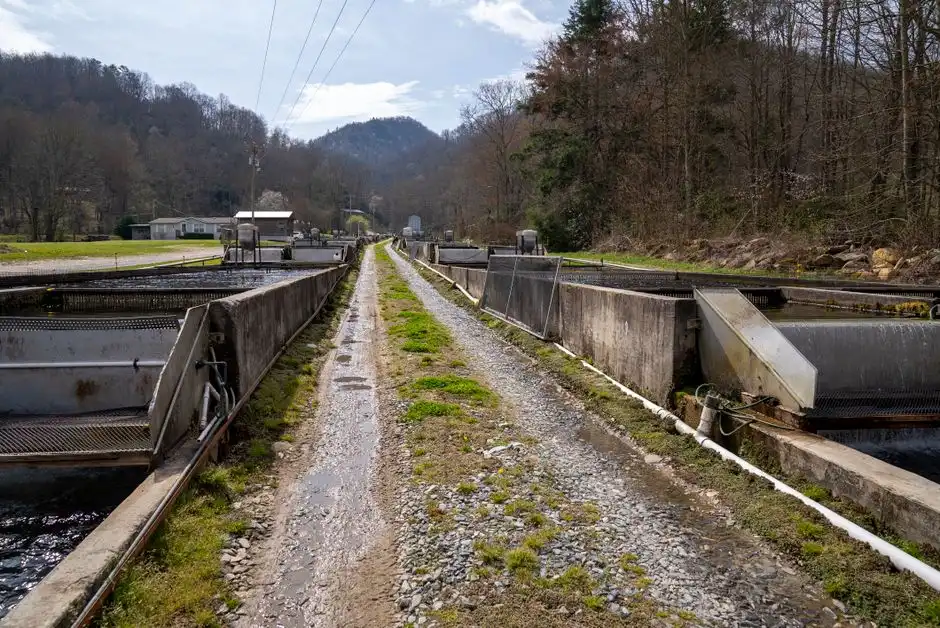
Once Q, HLR, and float production are pinned, model selection is a matter of matching the catalog rating to your duty with headroom. The dissolved air flotation system covers 4–300 m³/h across 13 standard models, all packaged with a packed saturator, contact zone, separation zone, and surface skimmer on a single skid.
| Design Q (m³/h) | HLR target (m/h) | Required surface area (m²) | DAF model fit | Float handling (m³/h continuous) |
|---|---|---|---|---|
| 4–10 | 7–8 | 0.5–1.4 | Small-frame DAF | 0.15–0.6 |
| 10–30 | 7–8 | 1.3–4.3 | Mid-range DAF | 0.4–1.8 |
| 30–80 | 7–8 | 3.8–11.4 | Mid-to-large DAF | 1.2–4.8 |
| 80–300 | 7–8 | 10–42 | Large-frame DAF (multi-unit) | 3–18 |
For the 30 m³/h worked example above, the mid-range DAF is the right fit and leaves roughly 20–30% headroom for a future second booth on the same loop. When you request a quote, ask the vendor for four things: (1) bubble-size distribution data, not just a "microbubble" claim; (2) skimmer torque rating and float-rate curve; (3) saturator dissolved-air efficiency at 4 and 6 bar; (4) control-panel interlocks for pH probe, flow switch, and skimmer overload. For context on how the same DAF platform is configured on a different high-color industrial stream, see this DAF configuration for indigo denim wash water guide.
Downstream: Reuse the Curtain Loop or Send to Discharge
The DAF sizing decision is downstream-bound. Decide your end-of-pipe target before you finalize geometry, because reuse tightens the spec.
- Closed-loop curtain reuse. Target TSS < 30 mg/L, FOG < 10 mg/L, and no visible paint. DAF alone rarely hits this; plan on DAF followed by multi-media or bag filtration. Curtain-loop reuse also demands biological control — without it, the basin sours within days.
- Discharge to municipal sewer. Compliance is set by your local rule. In China, paint-manufacturing effluent falls under GB 39728-2025, with COD, SS, and petroleum-class limits; in the U.S., metal-finishing lines that share the curtain may also trigger EPA 40 CFR 433. DAF alone is often sufficient for TSS, but COD usually needs a biological polish (SBR, MBR) before sewer discharge.
- Sludge handling. Paint float from the DAF is hazardous waste in many jurisdictions because of solvent and heavy-metal content. Route it to a plate-and-frame filter press for dewatering to 35–45% DS before licensed disposal — not to a drying bed, and never direct to landfill as a liquid.
For plants that need to bridge DAF and a zero-liquid-discharge polishing train, the design pattern is similar to what is described in this DAF system cost and compliance guide (2025-10): size the DAF on Q and HLR first, then size the downstream polish on the DAF effluent quality you can actually guarantee, not the theoretical maximum.
Frequently Asked Questions
What hydraulic loading rate should I use for a paint booth DAF?
For paint overspray, target an HLR of 7–8 m/h within the 5–10 m/h working range. Below 5 m/h the unit is overbuilt and the float blanket compacts; above 10 m/h the blanket destabilizes and you will see re-entrainment at the effluent launder. The required flotation surface area is simply Q divided by HLR.
How much recycle does a paint booth DAF actually need?
Pressurize 10–25% of clarified effluent at 4–6 bar; 20% is the most common setpoint for overspray duty. Below 10% the microbubble flux is too low to lift sticky paint floc, and above 25% you are paying pump and compressor cost without a removal-rate return. The recycle stream enters the contact zone with 30–60 µm bubbles after pressure release.
Which coagulant works for waterborne paint overspray?
Use polyaluminium chloride (PAC) at 50–150 mg/L with anionic polyacrylamide at 1–3 mg/L, held at pH 6.5–7.5. Waterborne floc is light and fluffy, so favor the upper end of the recycle range (20–25%) and the lower end of the HLR range. Dose setpoints should be tracked by an automatic dosing skid, not adjusted by eye on each shift.
Can a packaged DAF handle solventborne paint overspray?
Yes, but with conditions. Solventborne alkyd and melamine streams need pH 6.0–6.8 with alum or PAC plus 2–5 mg/L cationic PAM. Solvent carryover can strip dissolved air from the bubbles, so a covered saturator and a slightly higher recycle ratio (closer to 25%) are recommended. Always jar-test the actual overspray — vendor curves assume a generic TSS and miss coalescing aids and pigment dispersants.