FGD scrubber specifications define how wet, dry, and spray-dry systems remove SO₂ from flue gas. Wet systems typically reach 90–99% SO₂ removal on boilers from 50 MW to 1300 MW when slurry pH stays near 5.7–6.8, liquid-to-gas ratio is 5–15 L/m³, and gas velocity is held at 3.0–4.5 m/s. Reagent stoichiometry near 1.02–1.05 tons limestone per ton SO₂ removed, plus pressure drop of 1.0–3.0 kPa, sets the operating window for EPA NSPS and EU IED permit design.
What Is an FGD Scrubber?
An FGD scrubber is flue-gas desulfurization equipment that contacts SO₂-laden combustion gas with an alkaline reagent so sulfur oxides form a controlled solid or slurry byproduct. Wet limestone units make gypsum; dry and spray-dry units make dry calcium salts collected downstream. Sizing follows boiler MW, fuel sulfur, water supply, and the permit limit in lb/MMBtu, lb/MWh, or mg/Nm³.
Misaligned flue-gas chemistry and absorber settings are a common root cause of SO₂ excursions. When liquid-to-gas ratio falls below a wet-scrubber design basis near 10 L/m³, or slurry pH drifts to about 5.2, absorption kinetics slow and stack SO₂ can rise well above the permit band during peak load. The same plants often see nozzle plugging and higher fan differential when pH later overshoots above 6.8 and calcium sulfate scales mist eliminators.
pH outside the 5.7–6.8 band either cuts capture efficiency or drives scaling that forces outages for manual cleaning. Procurement and process teams therefore treat reagent feed rate, grind size, and gas velocity as controlled design inputs, not afterthoughts. The sections below compare scrubber types, then give FGD scrubber specifications tables used for 2026 system selection and troubleshooting.
FGD Scrubber Types: Mechanisms, Efficiency, and Use-Case Matching
Wet flue gas desulfurization systems can exceed 99% SO₂ removal on boilers from 50 MW to 1300 MW when limestone slurry contact and oxidation are controlled. SO₂ dissolves into the alkaline slurry and forms calcium sulfite or gypsum. High-sulfur coal utilities still rely on wet absorbers for that reason, and wet units account for roughly 85% of global FGD installations on a capacity basis.
Dry scrubbers and spray dry absorbers suit smaller boilers or water-limited sites. Dry injection feeds hydrated lime into the duct; SO₂ forms a solid collected in a fabric filter, typically below 80% removal, with lower water use and lower capital cost. Spray dry absorbers atomize slurry so water evaporates while SO₂ reacts, usually at 80–90% removal. SDA exit gas must stay about 10–15°C above adiabatic saturation to limit baghouse condensation and corrosion.
| System Type | Primary Mechanism | SO₂ Efficiency | Boiler Size Range | Best Use-Case |
|---|---|---|---|---|
| Wet Scrubber | Liquid Absorption/Reaction | 90–99%+ | 50–1300 MW | High-sulfur coal; large utilities |
| Dry Scrubber | Dry Reagent Injection | <80% | <300 MW | Low-sulfur coal; water-scarce areas |
| Spray Dry (SDA) | Slurry Atomization | 80–90% | 100–300 MW | Mid-range sulfur; industrial boilers |
A packaged Flue Gas Desulfurization (FGD) Scrubber System is usually selected after matching those ranges to coal sulfur, water balance, and byproduct disposal routes.
FGD Scrubber Specifications: Engineering Design Parameters
Wet limestone absorbers are commonly specified at a liquid-to-gas ratio of 5–15 L/m³ so stoichiometric contact holds and SO₂ breakthrough stays rare. Engineers balance gas velocity of 3.0–4.5 m/s against residence time to finish neutralization without excess mist carryover. The table below consolidates the same parameter bands used for bid comparison across wet, dry, and spray-dry trains.
| Parameter | Wet Scrubber (Limestone) | Dry Scrubber (Lime) | Spray Dry Absorber | Source/Standard |
|---|---|---|---|---|
| SO₂ Removal Efficiency | 90–99% | 70–80% | 80–90% | EPA / B&W |
| Operating pH Range | 5.7–6.8 | N/A (Dry) | N/A (Slurry) | Barben Analytical |
| Reagent Consumption | 1.02–1.05 (tons/ton SO₂) | 1.10–1.20 (tons/ton SO₂) | 1.05–1.15 (tons/ton SO₂) | HydropureWater Data |
| Liquid-to-Gas (L/G) | 5–15 L/m³ | N/A | 0.5–1.5 L/m³ | EPA Engineering |
| Gas Velocity | 3.0–4.5 m/s | 1.5–2.5 m/s | 2.0–3.5 m/s | B&W Specifications |
| Pressure Drop | 1.0–3.0 kPa | 0.5–1.5 kPa | 1.5–2.5 kPa | EPA Fact Sheet |
| Inlet Gas Temp | 150–370°C | 120–200°C | 130–180°C | FETC Guidelines |
| Byproduct | Gypsum (CaSO₄·2H₂O) | Calcium Sulfite/Ash | Calcium Sulfite/Ash | EPA Subtitle D |
Critical thresholds still need continuous monitoring. If wet-scrubber slurry pH falls below 5.0, SO₂ removal collapses quickly. Operation above pH 7.0 raises carbonate scaling risk that can blind mist eliminators and push pressure drop beyond fan spare capacity.
What Are Typical Wet Scrubber Specifications?
Typical wet scrubber specifications for limestone FGD center on L/G of 5–15 L/m³, gas velocity of 3.0–4.5 m/s, absorber pressure drop of 1.0–3.0 kPa, and slurry pH held between 5.7 and 6.8. Limestone grind is often specified so about 90% passes a 44 μm (325 mesh) screen, supporting stoichiometry near 1.02–1.05 tons reagent per ton SO₂ removed. Those setpoints are the practical control points operators use to protect both removal efficiency and mechanical availability.
Reagent Selection: Cost, Efficiency, and Byproduct Considerations
Limestone remains the lowest-cost reagent for high-capacity FGD, with consumption typically 1.02–1.05 tons per ton of SO₂ removed. Bulk limestone often prices near $15–$25 per ton but needs milling and slurry handling. Where onsite milling capital is limited, hydrated lime at about $80–$120 per ton offers higher reactivity with simpler feed hardware and higher OPEX. Advanced PLC-controlled chemical dosing for FGD reagent optimization matters most when magnesium-enhanced lime is used, because overfeed is expensive.
| Reagent | Avg. Cost (USD/ton) | Efficiency | Byproduct Value |
|---|---|---|---|
| Limestone (CaCO₃) | $15–$25 | 90–99% | High (Wallboard Gypsum) |
| Hydrated Lime (Ca(OH)₂) | $80–$120 | 95–99% | Low (Landfill only) |
| Mg-Enhanced Lime | $100–$150 | 98–99% | Low (Reduces scaling) |
| Sodium Carbonate | $200–$300 | 95–98% | None (Soluble waste) |
Reagent choice also sets byproduct fate. Wet limestone trains can make gypsum above 95% purity for wallboard or agriculture and offset part of OPEX. Dry and spray-dry solids are usually calcium sulfite mixed with ash and go to an EPA Subtitle D landfill. Plants that keep gypsum or scrubber solids on site often add sludge dewatering solutions for FGD gypsum byproduct management on the back end.
Compliance Benchmarks: EPA NSPS, EU IED, and World Bank Standards
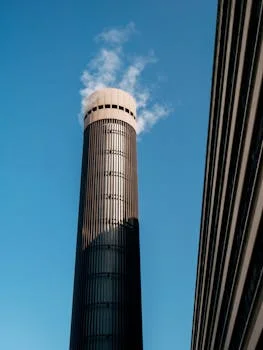
Many project summaries still cite about 200 mg/Nm³ SO₂ for new large combustion plants under EU IED and World Bank EHS framing. According to Commission Implementing Decision (EU) 2021/2326, yearly BAT-AELs for new pulverised-coal plants ≥300 MWth are 10–75 mg/Nm³ SO₂ at 6 vol-% O₂. Earlier guidance used 200 mg/Nm³ as a broad new-plant benchmark; that level now mainly matches smaller-plant upper bands. In the United States, 40 CFR 60.43 still lists 1.2 lb/MMBtu SO₂ for solid fossil fuel under Subpart D.Compliance also requires wastewater treatment strategies for FGD scrubber blowdown that meet local chloride and metals limits.
| Regulation | SO₂ Limit (New Plants) | Removal Requirement | Key Focus |
|---|---|---|---|
| EPA NSPS (USA) | 1.2 lb/MMBtu | 90–95% | Sulfur-in vs. Sulfur-out |
| EU IED 2010/75/EU | 200 mg/Nm³ | BAT (Best Available Tech) | Continuous Monitoring |
| World Bank EHS | 200 mg/Nm³ | 90%+ for >500 MW | Global Project Funding |
| China GB 13223 | 35–100 mg/Nm³ | Ultra-low Emissions | Urban Air Quality |
FGD Scrubber Cost Analysis: CAPEX, OPEX, and ROI Benchmarks
Wet FGD capital cost commonly falls between $100 and $300 per kilowatt, depending on fuel sulfur and spare-train requirements. A 500 MW utility unit therefore lands near $50M–$150M installed. Dry scrubbers often enter at $50–$150/kW but carry higher long-term lime OPEX. Wet-system operating cost is typically about $0.50–$2.00 per MWh for reagents, pump and fan power, and maintenance.
Payback is usually framed as avoided penalties plus gypsum sales where a wallboard market exists. A wet limestone train can recover capital in about 3–7 years when gypsum sales are stable. Chloride buildup in recirculating slurry can still erase those gains by forcing duplex stainless upgrades such as 2205. Weak chemical selection for FGD scrubber water treatment and scaling prevention also raises blowdown and can add roughly $0.10–$0.30/MWh in wastewater cost.
Common FGD Scrubber Problems and Troubleshooting Guide
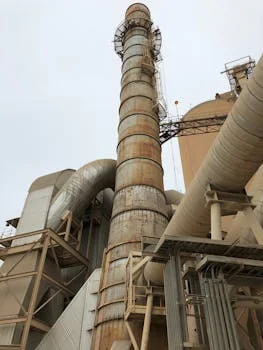
Calcium sulfate scaling appears most often when absorber slurry pH exceeds 6.8, raising pressure drop and plugging nozzles. Holding pH between 5.7 and 6.8 remains the primary preventive control. If scale is found, operators should check pH probe calibration and confirm limestone grind meets about 90% passing 44 μm (325 mesh). Organic fouling in sumps can be treated with targeted oxidant programs, including support from a chlorine dioxide generator for FGD sump oxidative treatment where the chemistry fits.
| Issue | Probable Cause | Diagnostic Step | Correction |
|---|---|---|---|
| Low SO₂ Removal | pH <5.7 or low L/G ratio | Check pH probe calibration | Increase reagent feed rate |
| Internal Scaling | pH >6.8; high oxidation | Inspect mist eliminators | Lower pH; adjust air flow |
| Corrosion | Chloride levels >500 ppm | Analyze slurry filtrate | Increase blowdown rate |
| Reagent Waste | Coarse limestone particles | Sieve analysis of slurry | Adjust ball mill settings |
| Foaming | Organic contaminants | Visual inspection of sump | Add antifoam; check gas velocity |
Mist-eliminator fouling often tracks fine particulate carryover. Placing high-efficiency baghouse dust collectors for FGD particulate control upstream reduces solids load into the absorber, lengthens cleaning intervals, and lowers fan erosion risk.
FGD Scrubber Selection Framework: 5-Step Decision Matrix
FGD scrubber specifications for technology choice should weigh boiler capacity, fuel sulfur, water supply, and local gypsum demand before CAPEX is locked. The matrix below gives engineering teams a short decision path using the same ranges listed in the parameter tables.
| Step | Variable | Decision Logic |
|---|---|---|
| 1 | Boiler Size | >300 MW → Wet; <100 MW → Dry; 100-300 MW → SDA |
| 2 | Fuel Sulfur | >2% Sulfur → Wet; <1% Sulfur → Dry or SDA |
| 3 | Compliance | 99% Removal → Wet; 80-90% → SDA |
| 4 | Byproduct | Market for Gypsum? → Wet; No market? → Dry/SDA |
| 5 | Water Availability | High → Wet; Scarce → Dry Scrubber |
Selection checklist for bid packages starts with the permit basis in lb/MMBtu, lb/MWh, or mg/Nm³, then the design coal sulfur and peak SO₂ mass rate. Next lock L/G, pH band, grind size, and fan capacity for the full pressure-drop range. Finally decide gypsum sale versus landfill, budget blowdown treatment for chlorides and metals, and require spare slurry pumps plus mist-eliminator access.
Example: a 500 MW plant on 3% sulfur coal with a nearby wallboard buyer should favor wet limestone FGD at about 95–99% removal, roughly $125M CAPEX class, and gypsum sales to offset OPEX. A 150 MW industrial boiler on low-sulfur oil in a water-stressed region is usually a better fit for dry lime injection.
Who this is for: utility and industrial owners specifying new or retrofit SO₂ controls, plus EPC process leads comparing wet, dry, and SDA bids. Who should look elsewhere: teams seeking only particulate scrubbers or VOC oxidizers without a sulfur-removal duty. Next step: send fuel analysis, boiler MW, and permit limit to HydropureWater for a sized wet or dry FGD layout.
Frequently Asked Questions
What is the difference between a wet scrubber and FGD?
FGD is the process of removing sulfur dioxide from flue gas; a wet scrubber is one equipment class used to do that job. Wet FGD contacts gas with alkaline liquid and usually makes gypsum or sulfite slurry. Other scrubbers target particulates, HCl/HF, or VOCs and are not FGD systems unless SO₂ removal is the design duty.
How do you calculate CFM for a scrubber?
Required volumetric flow is set from boiler heat input and flue-gas density at the scrubber inlet condition. One screening formula is CFM = (Heat Input in MMBtu/hr × 10,000) / (60 × Gas Density in lb/ft³). For a 500 MW boiler near 5,000 MMBtu/hr, that screening estimate is about 833,000 CFM at the stated standard condition; final design uses the project gas train heat and mass balance.
How much does an FGD system cost?
Installed CAPEX commonly spans $50–$300 per kW across dry and wet options. Wet limestone plants usually sit at $100–$300/kW because of slurry handling and byproduct processing. Dry systems often install cheaper at $50–$150/kW but can show OPEX near $0.30–$1.50 per MWh when lime price is high.
How do you calculate scrubber SO₂ capacity?
SO₂ mass duty equals gas flow times inlet concentration times required fractional removal. Capacity (kg/h) = (Gas Flow Rate in m³/s × Inlet SO₂ in mg/m³ × Removal Efficiency) / 1,000. A train at 1,000 m³/s, 2,000 mg/m³ inlet SO₂, and 95% removal must capture about 1,900 kg SO₂ per hour.
What wet scrubber specifications matter most for 2026 permits?
The controlling wet-scrubber setpoints remain L/G of 5–15 L/m³, pH 5.7–6.8, gas velocity 3.0–4.5 m/s, and limestone use near 1.02–1.05 tons per ton SO₂. For large new EU coal units, design to yearly BAT-AELs of 10–75 mg/Nm³ SO₂ under Decision 2021/2326. US utility projects after May 2011 should check Subpart Da output or 97% reduction options versus the older 1.2 lb/MMBtu Subpart D limit.
Related Equipment
- HydropureWater FGD scrubber systems with lime/limestone wet scrubbing — view specifications, capacity range, and technical data
Need a customized solution? Request a free quote with your specific flow rate and pollutant parameters.