South Dakota’s Municipal Sewage Treatment Landscape: A 2025 Inventory
South Dakota operates over 50 municipal sewage treatment plants, with capacities ranging from 0.1M to 20M gallons per day. Key facilities include Sioux Falls’ water reclamation plant (treating 15M+ gallons/day) and Pierre’s 1.5M-gallon/day plant. Many of these facilities, particularly older ones like Yankton’s (installed 1964), are facing increasing pressure to upgrade due to evolving EPA regulations and population growth. Approximately 60% of South Dakota's wastewater treatment plants were installed before 1990, necessitating modernization to meet current and future environmental standards. This section provides a detailed inventory of these critical assets, offering a benchmark for municipal engineers and city planners across the state.
| Plant Name | Capacity (MGD) | Installation Year | Primary Treatment Process | Secondary/Tertiary Treatment | Notes |
|---|---|---|---|---|---|
| Sioux Falls Water Reclamation | 15+ | Varies (Significant upgrades 2020) | Primary Clarification | Activated Sludge, Tertiary Filtration, UV Disinfection | Largest facility; handles significant industrial pre-treatment |
| Pierre Wastewater Treatment | 1.5 | 1980s (Estimated) | Primary Treatment | Activated Sludge (Upgraded to MBR for nutrient removal) | Focus on nutrient removal compliance |
| Yankton Wastewater Treatment | 1.5 | 1964 (Primary), 1982 (Secondary) | Primary Treatment | Conventional Activated Sludge | Aging infrastructure requiring significant upgrades |
| Rapid City Wastewater Treatment | 10+ (Expansion ongoing) | 1970s (Estimated) | Primary Treatment | Activated Sludge | Experiencing population growth-driven capacity needs |
| Vermillion Wastewater Treatment | 2.0 | 1985 | Primary Treatment | Activated Sludge | Meeting secondary treatment standards |
| Brookings Wastewater Treatment | 3.5 | 1990s (Estimated) | Primary Treatment | Activated Sludge | Serving a growing university community |
| Aberdeen Wastewater Treatment | 5.0 | 1980s (Estimated) | Primary Treatment | Activated Sludge | Meeting current effluent standards |
| Mitchell Wastewater Treatment | 3.0 | 1990s (Estimated) | Primary Treatment | Activated Sludge | Focus on operational efficiency |
| Watertown Wastewater Treatment | 2.5 | 1980s (Estimated) | Primary Treatment | Activated Sludge | Addressing potential future nutrient limits |
| Huron Wastewater Treatment | 2.0 | 1970s (Estimated) | Primary Treatment | Activated Sludge | Considering upgrades for enhanced performance |
The prevailing treatment process across South Dakota is conventional activated sludge, accounting for approximately 70% of facilities. Sequencing Batch Reactors (SBRs) are utilized in about 20% of plants, offering flexibility in operation. Membrane Bioreactors (MBRs) and Dissolved Air Flotation (DAF) systems represent a smaller but growing segment (10%), often implemented in newer installations or during major upgrades due to their advanced treatment capabilities. Population growth is a significant driver for capacity expansions, with cities like Sioux Falls (+22% since 2010) and Rapid City (+18%) demonstrating this trend. Conversely, many rural plants face challenges of underutilization and aging infrastructure, requiring careful planning for efficient and compliant operation.
EPA Compliance for South Dakota Plants: NPDES Permits, Nutrient Limits, and Cold-Weather Challenges
Achieving and maintaining compliance with the U.S. Environmental Protection Agency's (EPA) National Pollutant Discharge Elimination System (NPDES) permits is a paramount concern for all South Dakota municipal sewage treatment plants. These permits mandate adherence to secondary treatment standards, typically requiring effluent concentrations of Biochemical Oxygen Demand (BOD) and Total Suspended Solids (TSS) below 30 mg/L. However, the regulatory landscape is evolving, with increasing emphasis on nutrient removal, particularly for nitrogen (TN) and phosphorus (TP), to protect sensitive watersheds. For areas draining into ecologically vital water bodies like the Big Sioux River, limits for TN can be as low as 10 mg/L and for TP as low as 1 mg/L.
South Dakota's unique climate presents significant operational hurdles. Freezing temperatures during winter months can drastically reduce the efficiency of biological treatment processes. For instance, nitrification rates, crucial for removing ammonia, can drop by as much as 50% when water temperatures fall from 20°C to 10°C. To combat this, municipalities may need to invest in insulated tanks, heat exchangers, or advanced process controls. Seasonal flow variations also pose challenges. Agricultural runoff, particularly in the spring, can increase influent TSS by 30–50%, according to USGS data, potentially overwhelming treatment systems. Implementing equalization basins or employing technologies like DAF systems can effectively manage these peak loads.
Crucially, many South Dakota plants face upcoming compliance deadlines for nutrient limits. Approximately 12 key watersheds across the state have been identified by the EPA and the South Dakota Department of Environment and Natural Resources (DENR) as requiring enhanced nutrient removal, with compliance deadlines generally falling between 2025 and 2027. Municipal engineers must proactively assess their plant's capabilities against these new standards and plan for necessary upgrades well in advance of these critical dates. Understanding these regulatory nuances and climate-specific challenges is essential for developing a robust compliance strategy.
| Parameter | Standard Secondary Treatment (NPDES) | Typical Nutrient Limits (Sensitive Watersheds) | Cold-Weather Impact (Est.) | Seasonal Flow Variation Impact (Est.) |
|---|---|---|---|---|
| BOD (Biochemical Oxygen Demand) | < 30 mg/L (30-day avg.) | N/A (Primary focus on N & P) | Slight reduction in degradation rate | Influent concentration may increase with solids |
| TSS (Total Suspended Solids) | < 30 mg/L (30-day avg.) | N/A (Primary focus on N & P) | Slight reduction in settling/clarification efficiency | 30-50% increase in influent TSS from agricultural runoff |
| TN (Total Nitrogen) | N/A (Often set by state/local) | < 10 mg/L (e.g., Big Sioux River) | Nitrification rates decrease by 50% at 10°C vs. 20°C | Influent concentration may increase due to organic load |
| TP (Total Phosphorus) | N/A (Often set by state/local) | < 1 mg/L (e.g., Big Sioux River) | Chemical precipitation efficiency can be temperature-dependent | Influent concentration may increase with organic load |
| Ammonia Nitrogen (NH₃-N) | < 1-2 mg/L (depending on permit) | N/A (Covered by TN) | Nitrification rates significantly reduced below 15°C | Influent concentration can vary with organic load |
For further details on EPA compliance and specific permit requirements in South Dakota, consult the UV Disinfection Wastewater Specifications: 2025 Engineering Guide with EPA Standards & Equipment Selection.
Upgrade Costs for South Dakota Plants: 2025 Benchmarks and Funding Sources
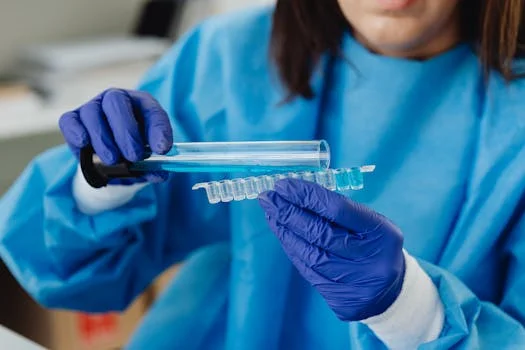
Estimating the costs associated with upgrading municipal sewage treatment plants in South Dakota requires a detailed understanding of the scope of work. Based on current market conditions and engineering projections for 2025, common upgrades fall into several key categories. Adding secondary treatment capabilities to plants that currently only perform primary treatment can range from $2 million to $8 million, depending on plant size and existing infrastructure. For context, an upgrade equivalent to Yankton’s 1982 secondary treatment addition would likely cost in the range of $5 million today. Implementing advanced nutrient removal (TN and TP) systems, such as those required for sensitive watersheds, typically adds $1.5 million to $6 million. This cost can be influenced by the chosen technology, with DAF systems for phosphorus removal often falling within this range for smaller to medium-sized plants.
Energy efficiency retrofits, including aeration upgrades and the installation of Variable Frequency Drives (VFDs) on pumps and blowers, can be a significant investment, ranging from $500,000 to $2 million, but offering substantial long-term operational savings. Adapting plants for improved cold-weather performance, through measures like insulated tanks or auxiliary heating systems, can add $300,000 to $1.5 million. These costs are highly variable and depend on the specific design modifications required.
| Upgrade Scope | Estimated Cost Range (2025 USD) | Key Considerations |
|---|---|---|
| Addition of Secondary Treatment | $2,000,000 - $8,000,000 | Plant capacity, existing infrastructure, required BOD/TSS removal efficiency |
| Nutrient Removal (TN/TP) | $1,500,000 - $6,000,000 | Target nutrient limits, chosen technology (biological vs. chemical), influent nutrient levels |
| Energy Efficiency Retrofits | $500,000 - $2,000,000 | Aeration system upgrades, VFD installation, process optimization |
| Cold-Weather Performance Enhancements | $300,000 - $1,500,000 | Tank insulation, heat exchangers, process modification for low temperatures |
| Influent Equalization / Peak Flow Management | $500,000 - $3,000,000 | Equalization basin construction, DAF system installation |
Securing funding for these essential upgrades is a critical step. Municipalities can explore several avenues, including the EPA’s Clean Water State Revolving Fund (CWSRF), which offers low-interest loans for wastewater infrastructure projects. USDA Rural Development grants and loans are also available for smaller, rural communities. The South Dakota Department of Environment and Natural Resources (DENR) also provides various funding programs and technical assistance. It is crucial for city planners and engineers to research application deadlines and eligibility requirements for these programs early in the planning process. The return on investment (ROI) for these upgrades is driven by multiple factors, including significant energy savings (MBR systems can reduce aeration costs by up to 30%), the avoidance of substantial fines for non-compliance (Sioux Falls successfully avoided an estimated $250,000 in penalties through its 2020 upgrades), and the ability to accommodate future population growth, as demonstrated by Rapid City’s $12 million project that added 5 million gallons/day of capacity.
Equipment Selection for South Dakota Plants: MBR vs. DAF vs. Conventional Activated Sludge
Selecting the appropriate wastewater treatment technology is crucial for South Dakota’s municipalities, particularly when addressing cold-weather performance and stringent nutrient removal requirements. Each technology offers distinct advantages and disadvantages that must be weighed against specific plant needs and environmental conditions. Conventional activated sludge (CAS) systems, while widely adopted for their cost-effectiveness in meeting basic BOD and TSS standards, often struggle with enhanced nutrient removal and can be less resilient to extreme cold. Membrane Bioreactor (MBR) systems, on the other hand, offer superior effluent quality, consistently achieving very low nutrient levels (TN < 3 mg/L, TP < 0.5 mg/L) and producing a high-quality effluent suitable for reuse. Their compact footprint is also advantageous for sites with limited space. MBR membranes can tolerate a wide operating temperature range of 5–30°C, making them a robust option for South Dakota's climate, though they do have higher energy consumption (0.8–1.2 kWh/m³) and capital costs compared to CAS.
Dissolved Air Flotation (DAF) systems are particularly effective for removing suspended solids and phosphorus, often used as a tertiary treatment step or for industrial pre-treatment. They can achieve TP levels below 0.5 mg/L and are adept at handling high-TSS influent. DAF systems are generally more energy-efficient than MBRs (0.3–0.5 kWh/m³), and their footprint is about 30% smaller than CAS. However, DAF flotation tanks require careful insulation to maintain optimal operating temperatures in cold weather. Conventional activated sludge systems typically have a footprint that is 30-50% larger than MBR systems and can require more extensive land area. Their energy usage is moderate (0.4–0.6 kWh/m³), and capital costs are generally the lowest, but achieving advanced nutrient removal may require significant modifications or additional treatment stages.
| Feature | MBR (Membrane Bioreactor) | DAF (Dissolved Air Flotation) | Conventional Activated Sludge (CAS) |
|---|---|---|---|
| Cold-Weather Performance | Excellent (Membranes tolerate 5-30°C) | Good with insulation; flotation efficiency can be affected by ice formation | Reduced biological activity (nitrification/denitrification); settling rates decrease |
| Nutrient Removal (TN/TP) | Excellent (TN < 3 mg/L, TP < 0.5 mg/L) | Excellent for TP (< 0.5 mg/L); limited direct TN removal | Requires significant modifications (e.g., anoxic/anaerobic zones) for effective TN/TP removal |
| Energy Use (kWh/m³) | 0.8 - 1.2 | 0.3 - 0.5 | 0.4 - 0.6 |
| Footprint | Smallest (approx. 60% of CAS) | Medium (approx. 30% smaller than CAS) | Largest |
| Capital Cost (CAPEX) | High ($3M - $10M+) | Medium ($1M - $4M+) | Low ($1M - $5M+) |
| Operating Cost (OPEX) | Medium ($0.50 - $1.00/m³) | Low ($0.20 - $0.40/m³) | Low ($0.15 - $0.30/m³) |
| Typical Application in SD | Nutrient removal, advanced effluent quality, space-constrained sites | Industrial pre-treatment, high TSS influent, phosphorus removal | Standard BOD/TSS compliance, cost-sensitive projects |
For facilities like Sioux Falls that handle significant industrial pre-treatment, DAF systems have proven effective in reducing TSS by up to 95%. Pierre's upgrade to an MBR system successfully achieved stringent nutrient limits (TN < 3 mg/L, TP < 0.5 mg/L). For municipalities like Yankton, where the primary focus remains on BOD/TSS compliance and cost-effectiveness, expanding or optimizing their conventional activated sludge system may be the most prudent approach. HydropureWater offers advanced MBR systems for nutrient removal in cold climates and DAF systems for high-TSS influent and industrial pre-treatment, designed to meet the specific demands of South Dakota's municipal wastewater challenges.
2025 Decision Framework: How to Choose the Right Upgrade Path for Your Plant
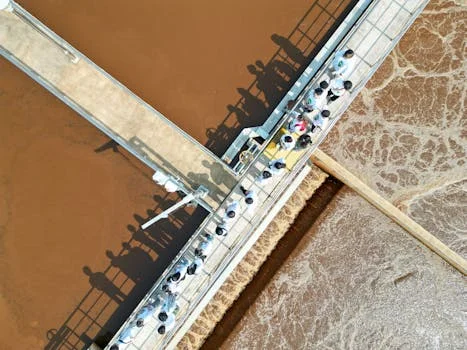
Navigating the complexities of municipal sewage treatment plant upgrades requires a structured approach. This decision framework outlines key steps for South Dakota municipalities to evaluate their needs and select the most appropriate upgrade strategy for 2025 projects.
- Assess Current Compliance Gaps: Begin by thoroughly reviewing your plant's current performance against EPA NPDES permit requirements and any emerging state or local regulations, particularly for nutrient limits. Utilize the EPA's ECHO database (Enforcement and Compliance History Online) to identify any historical or ongoing compliance issues. Determine if the gaps are related to BOD/TSS, nutrient removal, disinfection, or other parameters.
- Evaluate Influent Characteristics: Analyze your influent wastewater composition. High concentrations of Suspended Solids (TSS > 500 mg/L) may strongly indicate the need for a DAF system for effective removal. If Total Nitrogen (TN) consistently exceeds permit limits or is projected to, an MBR system or significant biological nutrient removal upgrades within a CAS system will be necessary.
- Factor in Climate Constraints: South Dakota's harsh winters demand careful consideration of temperature impacts on treatment processes. If your plant experiences significant temperature drops, technologies with proven cold-weather performance, such as MBRs with appropriate operating ranges or CAS systems with insulated tanks and enhanced biological processes, should be prioritized.
- Compare Capital and Operating Expenses (CAPEX/OPEX): Evaluate the long-term economic viability of different technologies. MBR systems, while having higher CAPEX, may offer lower overall OPEX due to reduced sludge production and potentially lower chemical usage. DAF systems offer a balance of CAPEX and OPEX for specific applications like phosphorus removal or high-TSS influent. CAS systems typically have the lowest CAPEX but may require more extensive land and higher operational complexity for advanced treatment. Consider containerized vs. permanent plant options for rural upgrades, which can influence initial investment and deployment speed.
- Secure Funding: Identify and apply for available funding sources. The CWSRF program is a primary resource for wastewater infrastructure. USDA Rural Development grants are crucial for smaller communities. South Dakota DENR also offers state-specific financial assistance programs. Early engagement with funding agencies is key to project success.
When engaging with equipment suppliers, ask critical questions to ensure the chosen technology aligns with your plant's specific needs:
- What are the guaranteed performance metrics for your equipment in cold-weather conditions (e.g., <10°C)?
- Can you provide detailed energy consumption data and projections for our specific flow rates and influent characteristics?
- What is the expected lifespan of critical components, such as membranes or diffusers, and what are the replacement costs?
- How does your proposed system address South Dakota's specific nutrient removal targets (TN < 10 mg/L, TP < 1 mg/L)?
- What are the sludge production rates and disposal costs associated with your technology?
- Can you provide references from similar municipal plants in cold climates?
- What level of automation and remote monitoring is integrated into your system?
- What are the training requirements for our operational staff?
- What are the maintenance schedules and associated costs?
- What is the typical lead time for equipment fabrication and installation?
Frequently Asked Questions
Q1: What are the primary drivers for municipal sewage treatment plant upgrades in South Dakota?
The main drivers are increasingly stringent EPA NPDES permit requirements, particularly for nutrient removal (nitrogen and phosphorus) in sensitive watersheds, and the need to address aging infrastructure. Population growth in urban centers also necessitates capacity expansions. Cold-weather performance is a critical factor due to South Dakota's climate, impacting biological treatment efficiency.
Q2: How do cold temperatures affect biological wastewater treatment?
Cold temperatures significantly slow down microbial activity, reducing the efficiency of biological processes like nitrification and denitrification. For example, nitrification rates can drop by 50% when water temperatures fall from 20°C to 10°C. This can lead to higher effluent ammonia and nitrogen levels, potentially causing non-compliance. Technologies like MBRs are more resilient, but all systems require careful operational adjustments and potentially design modifications for winter operation.
Q3: What are the typical compliance deadlines for nutrient limits in South Dakota?
The EPA and South Dakota DENR have identified specific watersheds requiring enhanced nutrient removal. Compliance deadlines for these upgraded standards are generally set between 2025 and 2027. Municipalities should consult their specific NPDES permits and DENR guidance for exact dates applicable to their discharge location.
Q4: How can municipalities fund sewage treatment plant upgrades?
Several funding avenues exist, including the EPA’s Clean Water State Revolving Fund (CWSRF) for low-interest loans, USDA Rural Development grants and loans for rural communities, and state-specific programs offered by the South Dakota DENR. Active engagement with these agencies early in the planning process is crucial.
Q5: When is a DAF system more suitable than an MBR for a municipal plant?
DAF systems are highly effective for removing suspended solids and phosphorus, making them ideal for plants with high influent TSS or specific phosphorus discharge limits. They are also excellent for industrial pre-treatment applications. MBR systems are generally preferred when extremely high effluent quality is required, space is limited, and advanced nitrogen removal is a primary objective. For further information on equipment selection, refer to the article on UV disinfection and EPA standards.
Related Equipment
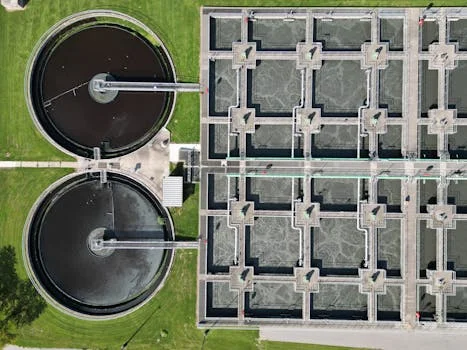
The following HydropureWater products are engineered for the wastewater challenges discussed above:
- ClO₂ generators for EPA-compliant disinfection — view specifications, capacity range, and technical data
Need a customized solution? Request a free quote with your specific flow rate and pollutant parameters.