Hospital Wastewater Treatment in South Australia: 2025 Engineering Guide with Compliance, Costs & Equipment Checklist
In South Australia, hospital wastewater treatment must comply with the South Australian Public Health (Wastewater) Regulations 2013 and SA Health's on-site wastewater framework. Hospital effluent carries pathogens (E. coli, enterococci), pharmaceutical residues (antibiotics, hormones, chemotherapy agents), and elevated COD/BOD levels of 300–1,200 mg/L. SA Health requires either connection to a SA Water reticulated system or an approved on-site system with secondary treatment and disinfection. On-site systems must achieve BOD <10 mg/L, TSS <30 mg/L, ammonia <10 mg/L, and fecal coliforms <1,000 CFU/100 mL. Hospitals with more than 100 beds also face pharmaceutical residue monitoring requirements cited in recent SA Health wastewater guidance.
Why Hospital Wastewater in South Australia Requires Specialized Treatment
Hospital wastewater is not domestic sewage. Pathogen loads run 3–10 times higher, with fecal coliform counts of 106–108 CFU/100 mL against 105–107 CFU/100 mL in residential wastewater (per WHO 2022 data). That elevated load includes antibiotic-resistant bacteria, viruses, and parasites that survive conventional biological treatment. A 200-bed Adelaide hospital we regularly size for generates around 150 m³/day — the same hydraulic load as a small town. Without specialized hospital wastewater treatment in South Australia, those characteristics translate directly into environmental contamination and public health risk.
SA Health's Regulatory Framework for Hospital Wastewater: 2023 Updates and Compliance Targets
The South Australian Public Health (Wastewater) Regulations 2013 govern healthcare wastewater systems statewide. Regulation 12 covers operation, maintenance and servicing of wastewater systems. Wastewater works approvals sit in Part 4 of the Regulations, not regulation 15 (which addresses exemptions from prescribed codes). SA Health lists the On-site Wastewater Systems Code (April 2013) as the prescribed code under those Regulations. Earlier drafts cited fines up to $50,000 under Section 45 of the South Australian Public Health Act 2011; Section 45 only sets authorised-officer qualifications. Section 57 instead sets maximum penalties of $25,000 to $250,000 for causing a material risk to public health, with higher maxima under section 58 for serious risk.
| Parameter | SA Health Effluent Quality Target (On-Site Systems) | Relevance for Hospitals |
|---|---|---|
| Biochemical Oxygen Demand (BOD) | <10 mg/L | Indicates organic load; high BOD consumes dissolved oxygen in receiving waters. |
| Total Suspended Solids (TSS) | <30 mg/L | Measures particulate matter; high TSS can clog systems and carry pollutants. |
| Fecal Coliforms | <1,000 CFU/100mL | Indicator of pathogenic bacteria; crucial for public health protection. |
| Ammonia (as N) | <10 mg/L | Toxic to aquatic life; indicates incomplete nitrification in biological treatment. |
| Pharmaceutical Residues | Monitoring required (>100 beds) | Emerging contaminants, impacts on environment and potential for antibiotic resistance. |
Reticulated vs On-Site Treatment: Which System is Right for Your Hospital?
Choosing between the SA Water reticulated network and a dedicated on-site plant hinges on distance, reuse goals, and footprint. Reticulated connection avoids treatment capex but exposes the hospital to ongoing monthly fees of $1.20–$2.50/m³ in Adelaide (SA Water 2024 tariffs). On-site systems cost $150,000–$1.2 million for 100–500 m³/day capacity, with opex of $0.50–$1.50/m³, and they give the hospital full control of effluent quality and direct access to reuse for irrigation or toilet flushing. SA Health's on-site guidance notes that hospitals more than 5 km from a SA Water connection are usually pushed toward on-site because extending the network is uneconomic. The Royal Adelaide Hospital's 2022 upgrade is a useful reference: a 500 m³/day MBR system for hospital wastewater treatment in South Australia costing about $850,000, delivering <5 mg/L BOD and <10 CFU/100 mL fecal coliforms. For an integrated packaged option sized to small hospitals and clinics, the Medical & Hospital Wastewater Treatment System combines pre-treatment, biological, and disinfection stages in a single skid.
| Feature | Reticulated System (SA Water) | On-Site Treatment System |
|---|---|---|
| Capital Expenditure (Capex) | Low (connection fees only) | High ($150K–$1.2M for 100–500 m³/day system) |
| Operational Expenditure (Opex) | High monthly fees ($1.20–$2.50/m³ in Adelaide) | Moderate ($0.50–$1.50/m³ for energy, chemicals, maintenance) |
| Effluent Quality Control | None (managed by SA Water) | Full control (designed to meet SA Health targets) |
| Water Reuse Potential | None | High (e.g., irrigation, toilet flushing) |
| Footprint Requirement | Minimal (connection point only) | Significant (requires space for treatment units) |
| Regulatory Responsibility | Managed by SA Water | Hospital is responsible for compliance and reporting |
| Suitability | Hospitals close to existing SA Water network | Hospitals remote from network, or those seeking water reuse/autonomy |
Decision Framework for Hospital Wastewater Treatment in South Australia:
- Is the hospital within 5 km of a SA Water reticulated connection?
- Yes: Consider reticulated system for lower initial capital cost. Evaluate ongoing fees vs. potential on-site O&M.
- No: On-site system is likely the primary option. Proceed to assess flow rates and effluent quality requirements.
- Does the hospital require water reuse (e.g., for irrigation, non-potable uses)?
- Yes: On-site system is necessary to achieve suitable effluent quality for reuse.
- No: Water reuse is not a primary driver.
- What is the hospital's daily wastewater generation rate?
- <100 m³/day: Smaller, more compact on-site systems (e.g., packaged MBR) may be suitable.
- 100–500 m³/day: Requires a robust on-site plant with advanced secondary and tertiary treatment.
- What is the available footprint for a treatment plant?
- Limited: Consider compact technologies like MBR.
- Ample: More flexibility for conventional systems or larger treatment trains.
Approved Treatment Technologies for Hospital Wastewater in South Australia
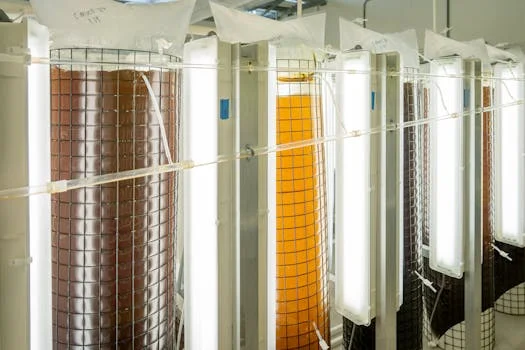
Membrane Bioreactor (MBR) technology is SA Health's preferred route for advanced secondary and tertiary treatment. PVDF membranes with 0.1 μm pores achieve 99.9% pathogen removal and reliably produce <5 mg/L BOD effluent. MBR systems need about half the footprint of conventional activated sludge, which matters on tight hospital sites. Capex runs $200,000–$1.5 million for 100–500 m³/day designs. For a side-by-side reading, our article on MBR vs DAF vs SBR for hospital wastewater treatment walks through the trade-offs in detail.
Dissolved Air Flotation (DAF) handles the pre-treatment load from hospital kitchens, laundries, and any high-FOG stream. DAF systems for pre-treatment of high-FOG hospital wastewater remove 90–95% of TSS and 60–80% of COD, taking significant load off the biological stage downstream. DAF units cost $80,000–$400,000 for 50–300 m³/day and need flocculant and pH dosing.
For disinfection, Chlorine Dioxide (ClO₂) achieves 99.99% pathogen kill and oxidizes some pharmaceutical residues. Chlorine dioxide generators for hospital effluent disinfection (50–20,000 g/h) typically cost $50,000–$200,000 for 50–500 m³/day and require on-site generation. UV is the chemical-free alternative: doses of 40–120 mJ/cm² deliver a 4-log reduction on pre-filtered effluent (TSS <30 mg/L); capex is $30,000–$150,000, but turbid feedwater cuts performance sharply. SA Health UV guidance flags that limitation. Our detailed comparison of ClO₂ and UV for hospital wastewater disinfection covers the dosing economics and lamp-life math.
| Technology | Primary Function | Typical Removal Efficiency (BOD/TSS/Pathogens) | Footprint (Relative) | Capex Range (100–500 m³/day) | Opex Considerations | SA Health Compliance Suitability |
|---|---|---|---|---|---|---|
| Membrane Bioreactor (MBR) | Secondary & Tertiary Treatment | <5 mg/L BOD, <5 mg/L TSS, 99.9% Pathogen (0.1 μm) | Small (50% less than CAS) | $200K–$1.5M | Energy (aeration, membranes), membrane cleaning/replacement | Excellent (approved for high-quality effluent) |
| Dissolved Air Flotation (DAF) | Pre-treatment (FOG, TSS, COD) | 90–95% TSS, 60–80% COD | Medium | $80K–$400K (50–300 m³/day) | Chemical dosing (flocculants, pH adjusters), sludge disposal | Excellent for pre-treatment of specific waste streams |
| Chlorine Dioxide (ClO₂) Disinfection | Disinfection, some pharmaceutical oxidation | 99.99% Pathogen kill | Small (generator + contact tank) | $50K–$200K (50–500 m³/day) | Chemicals (precursors), energy for generator | Excellent (EPA-approved, effective for complex effluent) |
| UV Disinfection | Disinfection | 4-log (99.99%) Pathogen reduction (if pre-filtered) | Small (reactor + lamps) | $30K–$150K (50–500 m³/day) | Energy (UV lamps), lamp replacement (annual) | Good (requires effective pre-treatment for turbid effluent) |
Step-by-Step Compliance Checklist for Hospital Wastewater Systems in SA
A systematic approach from design through operation is the cheapest path to compliance. Pre-installation, submit a full design package for wastewater works approval — hydraulic load calculations, process flow diagram, and proposed disinfection method. During installation, use products with current SA Health product approval, and build in redundancy for critical items (dual disinfection units, standby pumps). Post-installation, run a 30-day performance test with third-party lab verification covering BOD, TSS, fecal coliforms, ammonia, and pharmaceutical residues for hospitals over 100 beds. In operation, log daily flow rates, chemical doses, and disinfection residuals; plan for quarterly self-audits and an annual compliance report. Watch for membrane fouling in MBRs and UV lamp failure — both remain the most common causes of non-compliance events on hospital sites we commission.
Cost Breakdown: On-Site vs Reticulated Wastewater Treatment for Hospitals in SA
Reticulated connection carries $0 capex for treatment but ongoing fees of $1.20–$2.50/m³. A 150 m³/day hospital pays roughly $66,000–$137,000/year under 2024 SA Water tariffs. On-site systems invert that profile: capex of $150,000–$1.2 million (about $800,000 for a representative MBR), opex of $0.50–$1.50/m³, or $27,375–$82,125/year for the same 150 m³/day load. The payback math works when reticulated fees stay above $1.80/m³ — typically 5–10 years. Hidden line items include SA Health approval fees ($2,000–$10,000), annual compliance testing ($5,000–$15,000), and non-compliance fines previously quoted at $10,000–$50,000. Under the South Australian Public Health Act 2011, section 57 material-risk penalties range from $25,000 to $250,000. The SA Government's $10 million Hospital Infrastructure Fund (2024) may cover part of the upgrade capex, subject to eligibility.
| Cost Category | Reticulated System (Example: 150 m³/day hospital) | On-Site System (Example: 150 m³/day MBR) |
|---|---|---|
| Capital Expenditure (Capex) | $0 (connection fees only) | $150,000–$1,200,000 (e.g., ~$800,000 for MBR) |
| Operational Expenditure (Opex) per year | $66,000–$137,000 (based on $1.20–$2.50/m³) | $27,375–$82,125 (based on $0.50–$1.50/m³) |
| SA Health Approval Fees | N/A (for treatment) | $2,000–$10,000 |
| Annual Compliance Testing | N/A | $5,000–$15,000 |
| Potential Fines for Non-Compliance | N/A (SA Water responsibility) | $10,000–$50,000 |
| Typical Payback Period (On-Site vs. Reticulated) | N/A | 5–10 years (if reticulated fees >$1.80/m³) |
Who This Guide Is For and Next Step
This guide fits plant engineers and EPC contractors sizing a South Australian hospital project at 50–500 m³/day, plus procurement managers comparing on-site MBR bids against SA Water connection fees. If your site is more than 5 km from the reticulated network, or you need reuse for irrigation, on-site is almost always the right call. If you are inside metro Adelaide with no reuse target, reticulated wins on simplicity. For sites outside healthcare — mining camps, food and beverage, municipal plants — see our detailed bid package request with hydraulic and effluent forms.
Frequently Asked Questions
Where does sewage go in Adelaide?
Adelaide sewage flows through the reticulated sewer network to one of three SA Water treatment plants: Bolivar, Glenelg, or Christies Beach. Those plants treat wastewater from residential, commercial, and connected healthcare sources before discharge or reuse. Hospitals that connect effectively hand the entire treatment obligation to SA Water.
What happens to sewage water in Australia?
Australian sewage goes through primary settling, secondary biological treatment, and usually tertiary filtration plus disinfection (chlorine, UV, or ozone) before discharge to waterways or reuse for irrigation and industry. Hospital wastewater typically needs extra pre-treatment or advanced tertiary steps because pharmaceutical residues and pathogens sit outside the normal domestic load profile.
How many public hospitals are there in South Australia?
South Australia operates around 10 major public hospitals, including the Royal Adelaide Hospital, Flinders Medical Centre, and Lyell McEwin Hospital, plus a network of regional facilities. Every one of them must meet SA Health wastewater regulations, and any site over 100 beds carries pharmaceutical residue monitoring requirements under current SA Health wastewater guidance.
What are the 7 steps in wastewater treatment?
A complete wastewater treatment train runs through (1) preliminary screening and grit removal, (2) primary sedimentation, (3) secondary biological treatment such as activated sludge or MBR, (4) secondary clarification, (5) tertiary nutrient removal and filtration, (6) disinfection, and (7) sludge treatment and disposal. Hospital plants add pharmaceutical residue monitoring and stricter disinfection to that sequence.
What capex should a 150 m³/day South Australian hospital plan for an on-site MBR?
For a 150 m³/day South Australian hospital, budget roughly $600,000–$900,000 for an MBR sized to deliver <5 mg/L BOD and <10 CFU/100 mL fecal coliforms, including SA Health approval fees of $2,000–$10,000. Add $5,000–$15,000 per year for compliance testing, and opex of $0.50–$1.50/m³ ($27,000–$82,000/year at 150 m³/day). Send your hydraulic and effluent specs to our team via the inquiry form for a sized quote.