Industrial Wastewater Treatment Costs, Bahrain EWA Compliance
Industrial wastewater treatment costs in Bahrain span about $0.50–$2.50/m³ for DAF and $1.20–$4.00/m³ for MBR. EWA compliance on the tariff side is separate from effluent law. The Electricity and Water Authority bills non-domestic water at a flat 775 fils/m³.
The full band in this guide is $0.50–$4.00/m³, from $0.50/m³ on a simple DAF up to $4.00/m³ on a high-strength MBR. Ma'Amir, Bahrain's first advanced membrane bioreactor, is credited with 99% pathogen removal on recycled water. VA Tech Wabag's $14M O&M contract marks the same shift toward outsourced operation. Most DAF quotes we review for Bahrain refineries land inside $0.50–$1.50/m³, not at the top of the $0.50–$2.50/m³ band.
Those dollar bands are ownership costs, not a permit. Sea discharge, public-sewer acceptance, and reuse are three separate limit sets in Bahrain. Design still has to name the outfall before a cost is real.
Bahrain's Industrial Wastewater Challenge: Compliance, Costs, and Reuse
Bahrain's industrial wastewater challenge starts from about 120,000 m³/day in the planning split used here. Oil and gas is put at 45%, food processing at 25%, and pharmaceuticals at 15% of that volume, labeled earlier as EWA 2024 data. The EWA pages checked for this update publish tariffs, not that split. Treat 120,000 m³/day as a planning total until a site survey replaces it.
Pollutant shape matters more than the headline flow. Refinery oil and grease is quoted at 50–500 mg/L. Food-plant COD is quoted at 800–3,000 mg/L. Metal finishing adds chromium, nickel, and lead.
Designers who need sewage-plant influent bands should read bahrain sewage treatment plant influent bod cod tss typical values before they copy a domestic profile onto a factory. Most metal-finishing lines we see sit at the low end of 50–500 mg/L oil and grease until a dump tank is emptied. A single dump can push TSS toward the 5,000 mg/L DAF ceiling.
Earlier text in this guide set discharge and reuse at <30 mg/L BOD, <50 mg/L COD, <10 mg/L TSS, <1 mg/L oil and grease, and <10⁴ CFU/100mL fecal coliforms. Keep those figures as internal targets until the permit names the enforceable set. The 2023 enforcement note still cited fines up to BD 10,000 ($26,500) per violation, shutdowns for repeats, and 12 facilities fined for oil and grease.
Water scarcity is why reuse stays on the table. Per capita availability is stated here at 80 m³/year against a global average of 7,000 m³. That gap does not, by itself, create an equipment subsidy. It does force a choice between bought water at the EWA non-domestic tariff and a reuse train.
Treatment Technologies for Bahrain's Industrial Sectors: MBR vs DAF vs SBR
Technology choice for Bahrain's industrial sectors follows influent load, the real outfall, and the reuse bar. MBR, DAF, and SBR do not compete for the same job. DAF is a separator. MBR and SBR are biological reactors with different footprints and power.
Membrane Bioreactor (MBR)
MBR fits high-strength industrial wastewater in Bahrain once COD exceeds about 1,500 mg/L and the effluent must be reused. Ma'Amir data cited here show <5 mg/L BOD, <10 mg/L TSS, and 99.9% pathogen removal. The tank volume is about 60% smaller than conventional activated sludge. Energy sits at 0.8–1.5 kWh/m³ in the 2025 field band used by this guide.
Most MBRs we size for reuse in Bahrain draw toward 0.8 kWh/m³ once flux is stable, and toward 1.5 kWh/m³ when fouling sets in. Membrane replacement is planned every 5-7 years in the OPEX notes below. Package detail for this duty is on MBR systems for high-strength industrial wastewater in Bahrain.
Dissolved Air Flotation (DAF)
DAF is the pretreatment step for oil and grease in Bahrain refineries. Removal is quoted at 90–98% for oil and grease and 85–95% for suspended solids, on influent TSS up to 5,000 mg/L. Capital for 10–100 m³/h units is quoted at $50,000–$500,000. Coagulant and flocculant chemicals add $0.10–$0.30/m³.
A 50 m³/h DAF in the comparison table is narrower, at $150,000–$300,000, with energy at 0.1–0.3 kWh/m³. Most refinery DAFs we size run at the lower end of that power band when oil is free, not emulsified. Hardware for this duty is listed as DAF systems for oil & grease removal in Bahrain's refineries. Dose, recycle rate, and Bahrain cost lines are expanded in the DAF System in Bahrain: 2026 Engineering Guide with Costs, Compliance &.
Sequencing Batch Reactor (SBR)
SBR suits Bahrain plants whose flow arrives in batches, especially food processing. BOD and COD removal is quoted at 85–95%. The footprint is about 30% larger than MBR. Capital for 10–100 m³/h is quoted at $30,000–$300,000, below a membrane train of the same flow.
Energy in the comparison table is 0.4–0.8 kWh/m³. A 50 m³/h SBR is shown at $100,000–$250,000. Most batch food plants we size sit near 0.4 kWh/m³ on ordinary weeks and near 0.8 kWh/m³ when a festival fry campaign hits. Sludge mass is higher than MBR, which shows up later in the disposal line.
Hybrid Systems
Hybrid trains are the practical answer when one unit cannot hit both oil and soluble COD. Refineries commonly run DAF then MBR. DAF takes free oil and solids. MBR polishes the rest toward discharge or cooling-tower reuse.
Bahrain Petroleum Company (BAPCO) is cited on a DAF plus MBR line with 95% water recovery for cooling towers in a 2024 case note. A DAF plus reverse osmosis train is the pattern quoted for pharmaceutical reuse. Compare MBR and SBR on footprint before you add membranes to a food site that only needs sewer acceptance.
| Technology | Primary Application | BOD Removal Efficiency | COD Removal Efficiency | TSS Removal Efficiency | Footprint Reduction (vs. Conventional) | Typical Energy Cost (kWh/m³) | Typical CAPEX (for 50 m³/h system) |
|---|---|---|---|---|---|---|---|
| MBR | High-strength organics, Reuse | >95% (<5 mg/L) | >90% (<20 mg/L) | >99% (<5 mg/L) | 60% | 0.8–1.5 | $300,000–$600,000 |
| DAF | Oil & Grease, Suspended Solids Pre-treatment | Up to 30% (pre-treatment) | Up to 50% (pre-treatment) | 85–95% | N/A (often modular) | 0.1–0.3 | $150,000–$300,000 |
| SBR | Variable loads, Batch processes | 85–95% | 85–95% | 85–95% | 30% larger than MBR | 0.4–0.8 | $100,000–$250,000 |
Bahrain-Specific Compliance Checklist: EWA Standards and Reuse Guidelines
Bahrain compliance splits into three gates: sea discharge, public sewer, and reuse. EWA, the Electricity and Water Authority, is the tariff body. The environmental regulator polices discharge, and the sanitary engineering authority polices trade effluent into the public sewer. Mixing those names is how a cost sheet picks the wrong limit.
Discharge Standards (EWA 2025)
The EWA 2025 discharge list in this guide caps BOD, COD, and TSS at <30 mg/L, <50 mg/L, and <10 mg/L. Oil and grease is capped at <1 mg/L, pH at 6–9, and ammonia at <0.5 mg/L. Chromium, nickel, and lead are each capped at <0.1 mg/L on that list. Keep those numbers when a buyer has written them into a specification.
For the public sewer, the trade-effluent consent conditions issued by the sanitary engineering authority are the number set to use, and they are not the same sheet as the sea-discharge limits. Get both in writing before a cost band is applied. A sewer-acceptance sheet is not a reuse specification either. Most sewer connections we check fail on emulsified oil long before they fail the organic caps, so pretreatment scope should be priced from the consent, not from a brochure.
Reuse Standards (EWA 2025)
Reuse targets in this guide are tighter than the sewer sheet: <10 mg/L BOD, <20 mg/L COD, <5 mg/L TSS, and <10⁴ CFU/100mL fecal coliforms. Turbidity is <1 NTU. Unrestricted irrigation asks for no detectable E. coli. Oil and grease on the reuse column is <0.5 mg/L, ammonia <0.1 mg/L, and each listed metal <0.05 mg/L.
Cooling towers and irrigation are the reuse outlets named here. Hitting the coliform line usually needs a disinfectant step after biology. One hardware route is Chlorine dioxide generators for Bahrain's reuse compliance. Dose is set from the residual you must hold, not from a generic pump curve.
Sampling and Documentation Requirements
The monitoring rhythm in this guide is weekly composite samples for BOD, COD, and TSS. Heavy metals are monthly. pH and turbidity are daily. Treatment logs, certified lab reports, and maintenance records go in quarterly, and a missing packet can trigger an audit.
The regulator can also witness samples at the final outfall for plants inside the industrial control program. Do not file a sewer lab sheet as if it were a sea-discharge test. The parameter list and the outfall have to match, or the report proves nothing.
Reuse Incentives
The 2024 Green Incentives note in this guide offers a 30% subsidy on treatment equipment once recovery is 80% or higher. The EWA tariff page updated on 2 August 2026 does not restate that equipment subsidy. That page prices non-domestic water at a flat 775 fils/m³ and shows lower domestic blocks for household accounts. Treat the 30% equipment figure as unconfirmed until the licensing body repeats it in writing.
The Bahrain Tender Board note in this guide still says ISO 14001 holders are often preferred on wastewater tenders. That preference is a procurement screen, not an effluent limit. Keep the certificate current if you expect to bid. It does not change your discharge numbers.
| Parameter | EWA Discharge Limit (mg/L, unless specified) | EWA Reuse Limit (mg/L, unless specified) |
|---|---|---|
| BOD | <30 | <10 |
| COD | <50 | <20 |
| TSS | <10 | <5 |
| Oil & Grease | <1 | <0.5 |
| pH | 6–9 | 6–9 |
| Ammonia | <0.5 | <0.1 |
| Heavy Metals (Cr, Ni, Pb) | <0.1 (each) | <0.05 (each) |
| Fecal Coliforms | N/A | <10⁴ CFU/100mL |
| Turbidity | N/A | <1 NTU |
| E. coli | N/A | Not Detectable (for unrestricted irrigation) |
Cost Benchmarks for Industrial Wastewater Treatment in Bahrain: CAPEX, OPEX, and ROI
Industrial wastewater treatment costs, set beside Bahrain EWA compliance, move with technology, load, and whether the water is reused. The bands below are 2025 planning ranges from this guide, not a tender. Quote a site only after the outfall limit is named. A sewer-only plant should not be priced as if it had to hit reuse turbidity.
CAPEX Benchmarks (2025)
CAPEX here means civil works, equipment, installation, and commissioning. DAF is quoted at $50–$200/m³/day of capacity. MBR is quoted at $200–$600/m³/day. SBR sits between them at $80–$300/m³/day.
OPEX Benchmarks (2025)
OPEX covers chemicals, energy, maintenance, and sludge. DAF is $0.50–$1.50/m³, driven by chemicals and the air compressor. MBR is $1.20–$4.00/m³, driven by aeration, permeate pumping, and membranes every 5-7 years. SBR is $0.80–$2.50/m³, driven by energy and sludge haulage.
Labor and Sludge Disposal Costs
Labor is easy to under-budget. Below 50 m³/h, plan one full-time operator. Above 100 m³/h, plan two. Skilled operator pay in the guide is BD 6,000–12,000 a year.
Sludge landfill in the guide is BD 50–150/ton at 2024 rates attributed to EWA. MBR is said to make about 30% less sludge than SBR. That gap matters when the rate is BD 150/ton and the plant runs every day. Plate-and-frame presses are the dewatering tool named for this duty.
ROI for Reuse Projects
Most food plants we cost reach a 2–4 year payback only when reuse replaces purchased water. Refinery MBR notes in the BAPCO case show 3–5 years. The planning formula still uses BD 0.80/m³. Actual savings move if the tariff on the bill is not that planning rate.
Payback Years = (CAPEX + Annual OPEX) / (Annual Water Savings × BD 0.80/m³)
Earlier planning used BD 0.80/m³. According to the Electricity and Water Authority tariff page (content last updated 2 August 2026), non-domestic water is 775 fils/m³ for all consumption. Use 775 fils/m³ in the savings term when the site pays the published non-domestic rate. Keep BD 0.80/m³ if the contract still prices water that way.
| Cost Category | DAF System | MBR System | SBR System |
|---|---|---|---|
| CAPEX (per m³/day capacity) | $50–$200 | $200–$600 | $80–$300 |
| OPEX (per m³ treated) | $0.50–$1.50 | $1.20–$4.00 | $0.80–$2.50 |
| Labor (FTE for 50 m³/h) | 1 operator | 1-2 operators | 1 operator |
| Sludge Production (relative) | Medium | Low (30% less than SBR) | High |
| Typical Payback Period (with reuse) | 2–4 years | 3–5 years | N/A (less common for high reuse) |
Equipment Selection Framework: Matching Technology to Your Industry and Budget
Equipment selection for a Bahrain factory is a four-step screen, not a brand preference. Walk load, reuse, budget, and footprint in that order. Skip a step and the CAPEX number will not survive commissioning. The same flow can justify three different trains.
Step 1: Identify Influent Load
Call COD under 500 mg/L low, 500–2,000 mg/L medium, and anything above 2,000 mg/L high. Food processing in this guide is usually medium. Refinery effluent is usually high, and it carries oil and grease at 50–500 mg/L. Sample the dump cycle, not only the average day.
Step 2: Determine Reuse Goals
Discharge compliance and reuse are different products. Irrigation and cooling towers pull the guide toward <10 mg/L BOD and <1 NTU. Pharmaceutical cooling or process water is quoted as MBR followed by reverse osmosis. If the only duty is sewer acceptance, do not buy reuse-grade membranes.
Step 3: Budget Constraints
A low budget in this guide is under $200,000. A medium budget is $200,000–$1 million. A high budget is above $1 million. Small food sites in the low band often stop at DAF pretreatment, while large refineries fund DAF plus MBR.
Small DAF packages in the cost notes start near $50,000. Large MBR plants are quoted at over $2 million. Those two anchors bound the CAPEX talk. They are not a quote for your flow.
Step 4: Footprint Limitations
Surface area decides the tank, not the brochure. Urban factories with no yard often go underground. Remote or temporary sites often take a containerized DAF. Permanent refinery plots can take a built-in DAF plus MBR.
Where the yard is gone, an Underground Package Sewage Treatment Plant (WSZ Series) keeps the process below grade. Most urban factories we lay out in Bahrain have no spare yard, so the tank goes below the car park. Check vehicle load and desludging access before you bury it. A buried tank with no crane path becomes a maintenance failure.
Bahrain-Specific Examples
Oil and gas sites in this guide use DAF for oil, grease, and solids, then MBR for polishing. The BAPCO pattern is the reference, with 95% recovery into cooling towers. That hybrid is for high COD plus oil, not for a thin food waste. Copying it onto a bakery line overbuys membranes.
Food processing uses DAF for fat, oil, and grease, then SBR for the organic load. Al Khabeer notes are the local reference for medium, variable flow. Pharmaceuticals use MBR then reverse osmosis, the pattern attributed to VA Tech Wabag projects, when the reuse target is very low dissolved solids.
Metal finishing is a different train: chemical coagulation and flocculation, sedimentation, and filtration. The job is metal precipitation and pH, not BOD removal. Do not drop an MBR on a metals line and expect chromium, nickel, and lead to disappear. Precipitate first, then ask whether biology is even required.
| Industry Sector | Typical Influent Profile | Primary Reuse Goal | Recommended Technology / System | Rationale |
|---|---|---|---|---|
| Oil & Gas (Refinery) | High COD, high Oil & Grease, TSS | Cooling towers, process water | DAF + MBR | DAF for O&G/TSS pre-treatment, MBR for high-quality biological polishing and pathogen removal. |
| Food Processing | Medium-high COD, FOG, TSS, variable flow | Discharge compliance, irrigation | DAF + SBR | DAF for FOG/TSS removal, SBR for flexible biological treatment of organic loads. |
| Pharmaceuticals | Low-medium COD, specific organics, potential heavy metals | Ultra-pure process water, cooling towers | MBR + RO | MBR for high-quality effluent and pathogen reduction, RO for removal of dissolved solids and specific contaminants to achieve ultra-pure water. |
| Metal Finishing | Heavy metals, low-medium organics, pH variations | Discharge compliance | Chemical Coagulation/Flocculation + Sedimentation + Filtration | Effective for heavy metal precipitation and pH adjustment before discharge. |
Who This Cost Guide Is For
Plant engineers, EPC estimators, and procurement leads at Bahrain factories are the readers who must price DAF, MBR, or SBR against a named outfall. The page is for industrial wastewater, not a municipal network study. Bring a flow and an outfall, or the bands stay generic.
Teams that only need domestic influent statistics, or a supplier shortlist, should use the dedicated Bahrain design and buyer pages. This page will not pick a vendor for you. It will show which limit and which cost band apply. Municipal network design is a different job.
Send flow, COD, oil and grease, the outfall (public sewer or the sea), and the reuse target with a quote request for this Bahrain cost review. One set of those five numbers is enough to test the bands above. Leave the subsidy line blank until someone confirms it in writing.
Frequently Asked Questions
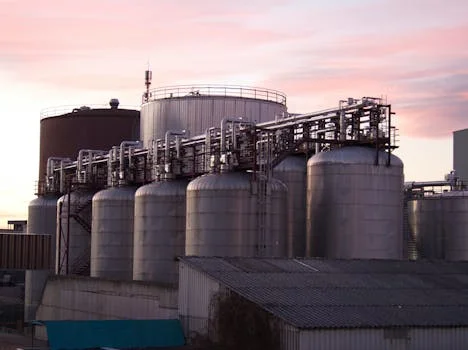
Facility managers in Bahrain ask about penalties, unit cost, reuse, and incentives before anything else. The answers below pair the ranges in this guide with the official tariff page checked for this update. Each answer is a decision rule, not a slogan.
What are the penalties for non-compliance with Bahrain's industrial wastewater standards?
Fines reach BD 10,000 ($26,500) per violation under the enforcement note cited in this guide, and repeated offenses can bring an operational shutdown. In 2023, 12 facilities were fined specifically for exceeding oil and grease limits. A failed test normally gets a correction window before a project is halted, and the legal hook behind the fine schedule is the 1996 environmental decree-law. Budget the compliance line, not only the equipment line.
How much does it cost to treat 1 m³ of industrial wastewater in Bahrain?
Treating 1 m³ runs from $0.50 on a simple DAF handling low-strength waste to $4.00 on an MBR handling high-strength waste with reuse targets. DAF OPEX is $0.50–$1.50/m³, SBR sits at $0.80–$2.50/m³, and MBR at $1.20–$4.00/m³. CAPEX anchors are about $50,000 for a small DAF unit and over $2 million for a large MBR plant. Quote a real site only after the outfall limit is named.
Can treated industrial wastewater be reused in Bahrain?
Yes, once effluent meets the reuse targets used in this guide: <10 mg/L BOD, <20 mg/L COD, <5 mg/L TSS, and <10⁴ CFU/100mL fecal coliforms, with no detectable E. coli for unrestricted irrigation and turbidity under 1 NTU. Common outlets are irrigation, cooling towers, and process water. Plants reaching 80% recovery may qualify for the 30% equipment subsidy, which should be confirmed in writing first.
What is the best wastewater treatment technology for oil & gas facilities in Bahrain?
A DAF plus MBR hybrid is the proven pattern for Bahrain refineries. DAF takes oil, grease, and suspended solids down first, then MBR polishes organics and pathogens to reuse quality. BAPCO runs this configuration and recovers 95% of water for cooling tower reuse. For a 50 m³/h train, budget $150,000–$300,000 for the DAF and $300,000–$600,000 for the MBR.
Are there government incentives for industrial wastewater treatment in Bahrain?
The 2024 Green Incentives note in this guide offers a 30% subsidy on treatment equipment for facilities recovering 80% or more of their water. The EWA tariff page updated 2 August 2026 does not restate that offer, so confirm it with the licensing body in writing before it enters CAPEX. The Tender Board also favors ISO 14001 holders on wastewater tenders, a procurement screen rather than an effluent limit.
How Does MBR vs DAF System Cost Bahrain Refinery Compare?
A Bahrain refinery usually spends less capital on DAF than on MBR, then pays MBR to reach reuse quality. For a 50 m³/h train, the cost table puts DAF CAPEX at $150,000–$300,000 and MBR at $300,000–$600,000. DAF OPEX is $0.50–$1.50/m³ against MBR at $1.20–$4.00/m³. BAPCO's DAF plus MBR line recovered 95% of water for cooling towers in the 2024 note. Most refinery DAFs we size run near 0.1–0.3 kWh/m³ when oil is free.
What Do EWA Wastewater Reuse Guidelines Bahrain 2025 Require?
EWA's published pages cover tariffs, not a 2025 reuse table. The reuse targets used in this guide are <10 mg/L BOD, <20 mg/L COD, <5 mg/L TSS, and <10⁴ CFU/100mL fecal coliforms, with no detectable E. coli and turbidity under 1 NTU for unrestricted irrigation. Confirm the enforceable values for your outfall with the environmental regulator before design freeze. Hitting the coliform line usually adds a disinfection step after biology.
What Is the Bahrain Industrial Wastewater Reuse Subsidy Equipment Cost?
The equipment subsidy used in this guide is 30% of capital once a plant recovers 80% or more of its wastewater. That figure comes from the guide's 2024 Green Incentives note, not from the EWA tariff page updated on 2 August 2026. That page prices non-domestic water at a flat 775 fils/m³ and publishes no equipment subsidy. Confirm the 30% offer with the licensing body before you freeze CAPEX.
What Is SBR Wastewater Treatment CAPEX Bahrain Food Processing?
SBR wastewater treatment CAPEX for Bahrain food plants sits near $80–$300/m³/day, or $100,000–$250,000 for a 50 m³/h unit in the comparison table. A wider band in the text, $30,000–$300,000, covers 10–100 m³/h SBR packages. Food sites pair that reactor with DAF because fryer and dairy waste carries FOG. Payback of 2–4 years in the Al Khabeer note assumes reuse, not discharge only.