Municipal Sewage Treatment Plants in Italy: 2026 Decision Snapshot
Municipal sewage treatment plants in Italy operate under Directive 91/271/EEC day-to-day limits, while Directive (EU) 2024/3019 entered into force on 1 January 2025 and replaces the 1991 framework from 1 August 2027. Earlier counts cited 3,656 plants at about 78 million p.e.; WISE Freshwater (EEA) reports 3,591 urban plants. Coastal peaks and North–South nutrient gaps drive upgrades.
According to the European Commission urban-wastewater overview (2025), the recast Directive requires Member States to collect and treat wastewater in urban areas above 1,000 inhabitants, tighten tertiary nutrient removal, add quaternary micropollutant treatment where required, and move plants toward energy neutrality by 2045. Italian utilities therefore plan upgrades for both legacy UWWTD non-compliance and the longer recast timeline.
| Region/Metric | Total WWTPs | Nutrient Removal (%) | Avg. Treatment Efficiency (BOD5) | Compliance Risk (UWWTD 2027) |
|---|---|---|---|---|
| Northern Italy (Lombardy/Veneto) | 1,420 | 70% | 92-95% | Low/Moderate |
| Central Italy (Tuscany/Lazio) | 980 | 55% | 88-91% | Moderate |
| Southern Italy & Islands | 1,256 | 30% | 75-82% | High |
| National Average | 3,656 | 45% | 85% | High |
Seasonal surge remains a hard constraint on coastal works. Lignano Sabbiadoro is sized for about 8,000 p.e. in winter yet faces peaks near 250,000 daily visitors in summer—roughly a 30-fold hydraulic and organic load swing that threatens bathing-water status if headworks and aeration cannot follow the peak. Northern regions such as Lombardy and Emilia-Romagna have upgraded about 70% of plants for nutrient removal; Sicily and Calabria remain near 30% on many local audits.
For engineers benchmarking dense nutrient-removal fleets, Germany’s 9,300+ municipal sewage treatment plants: engineering specs and cost benchmarks remain a useful reference set against Italian coastal peak-load design.
EU Urban Waste Water Rules for Italian Plants: 91/271/EEC Limits and Directive 2024/3019
Italian municipal discharges still operate day-to-day against Directive 91/271/EEC sensitive-area limits of 10 mg/L total nitrogen and 1 mg/L total phosphorus in most coastal zones and the Po basin, with standard-area limits of 15 mg/L TN and 2 mg/L TP. Earlier text referred to “EU Directive 2024/548” and a single 2027 package of 98% collection plus 95% biological coverage; the published recast is Directive (EU) 2024/3019, in force from 1 January 2025, with phased obligations rather than that single pair of percentages.
Water reuse under EU Regulation 2020/741 still drives tertiary polishing in Sicily, Puglia, and Sardinia, where utilities target at least 50% agricultural reuse of treated effluent in water-stressed zones by 2027. Meeting Class A/B pathogen targets usually needs stable biology plus disinfection. Plants serving saline coastal catchments increasingly specify EU-compliant chlorine dioxide disinfection for Italian WWTPs to secure 4-log virus inactivation while limiting brominated by-products common with free chlorine in brackish waters.
| Parameter | Standard Area Limit | Sensitive Area Limit (2027) | Monitoring Frequency |
|---|---|---|---|
| BOD5 (Biological Oxygen Demand) | 25 mg/L | 15 mg/L | Weekly |
| COD (Chemical Oxygen Demand) | 125 mg/L | 75 mg/L | Weekly |
| Total Nitrogen (TN) | 15 mg/L | 10 mg/L | Monthly/Quarterly |
| Total Phosphorus (TP) | 2 mg/L | 1 mg/L | Monthly/Quarterly |
| E. coli (for Reuse) | N/A | <100 CFU/100 mL | Daily (during reuse) |
Engineering Specs for Italian Municipal WWTPs: Process Design Benchmarks
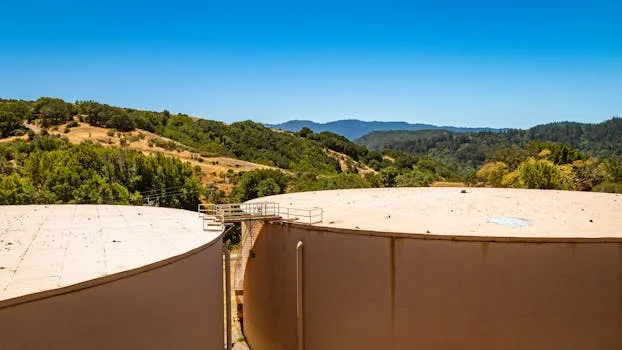
Process trains for Italian WWTPs are selected for reuse quality and seasonal peaks, not brochure features. The Anoxic/Oxic (A/O) configuration remains the workhorse at large sites such as Firenze WWTP (600,000 p.e.), with dedicated denitrification zones sized to the 10 mg/L TN sensitive-area limit. Where footprint is tight or irrigation reuse is mandatory, MBR systems for EU-compliant nutrient removal and water reuse hold Mixed Liquor Suspended Solids (MLSS) at 8,000–12,000 mg/L and deliver filtrate turbidity below 0.2 NTU under stable membrane flux.
Design criteria should follow Italian Standard UNI EN 12255-6. Food-to-Microorganism (F/M) ratios of 0.05–0.15 kg BOD/kg MLSS/day support stable nitrification; Solids Retention Time (SRT) of 5–15 days is the band most Mediterranean plants we size settle into when balancing sludge age against blower energy. Large works such as Regi Lagni use anaerobic digestion for energy recovery; mid-size plants still win most euros by pushing cake dryness. A sludge dewatering to 25% DS for Italian WWTPs with anaerobic digestion cut transport mass and keeps agricultural outlet options open where land application remains lawful.
| Design Parameter | Conventional (CAS) | MBR (Membrane) | SBR (Batch) |
|---|---|---|---|
| MLSS (mg/L) | 3,000 – 5,000 | 8,000 – 12,000 | 2,500 – 4,500 |
| HRT (Hours) | 6 – 12 | 4 – 8 | 12 – 24 |
| SRT (Days) | 10 – 20 | 15 – 30 | 15 – 25 |
| F/M Ratio | 0.1 – 0.3 | 0.05 – 0.15 | 0.05 – 0.2 |
| Effluent Turbidity (NTU) | < 5.0 | < 0.2 | < 3.0 |
How should aeration equipment be designed and procured?
Aeration design for municipal wastewater treatment plants should start from peak summer oxygen demand, not average winter BOD, then lock turndown for night-time low load. Specify fine-bubble diffusers or surface aerators with Variable Frequency Drive (VFD) blowers sized for diurnal swings of roughly 0.5–1.5× average airflow at 20 degC wastewater temperature. Procurement packages must cover design oxygen-transfer rate, alpha-factor assumptions for saline coastal influent, spare diffuser grids, and a maintenance contract for diffuser cleaning intervals of 12–24 months under typical Italian coastal grit loads.
Cost Benchmarks for Italian Municipal WWTPs: CAPEX, OPEX, Regional Spread
Capital cost for a 50,000 p.e. works in Southern Italy (Campania or Puglia) typically sits at €30M–€40M (2025 €), while a similar plant in Lombardy can reach €50M once tertiary polishing for Po River protection is included. Utility-scale rebuilds at Firenze or Regi Lagni have landed in the €400M–€500M band for about 600,000 p.e. when anaerobic digestion and biogas recovery are in scope.
Operating cost is still dominated by power and sludge haulage. Conventional activated sludge averages €0.15–€0.30 per m³ treated; MBR trains often run €0.25–€0.40 per m³ because of membrane scour air. The Italian National Recovery and Resilience Plan (PNRR) has allocated about €1.5B toward water infrastructure, which utilities use to fund turbo blowers and solar-assisted sludge drying. Industrial dischargers cutting FOG surcharges before the municipal gate often add DAF systems for Italian industrial pretreatment upstream of the sewer connection.
| Plant Size (p.e.) | CAPEX (2025 €) | OPEX (€/m³ treated) | Primary Cost Driver |
|---|---|---|---|
| 10,000 | €5M – €10M | €0.45 – €0.60 | Labor & Disposal |
| 50,000 | €30M – €50M | €0.25 – €0.35 | Energy & Chemicals |
| 200,000 | €120M – €200M | €0.18 – €0.25 | Sludge Management |
| 600,000+ | €400M – €500M | €0.15 – €0.22 | Process Optimization |
What do disinfection upgrades typically cost for tanks and equipment?
Disinfection of piping, tanks, structures, and equipment is usually priced as a package of contact tank civil works, dosing skid, residual analyzer, and commissioning, not a single catalogue item. For Italian municipal plants converting from gas chlorine to ClO₂ or UV, the dominant cost drivers are contact time at peak summer flow, redundant dosing pumps, and analyzer calibration labour. Where reuse requires E. coli below 100 CFU/100 mL during irrigation season, budget daily residual checks and spare injectors rather than relying on summer-only temporary dosing.
Equipment Selection for Italian WWTPs: Matching Tech to Local Conditions
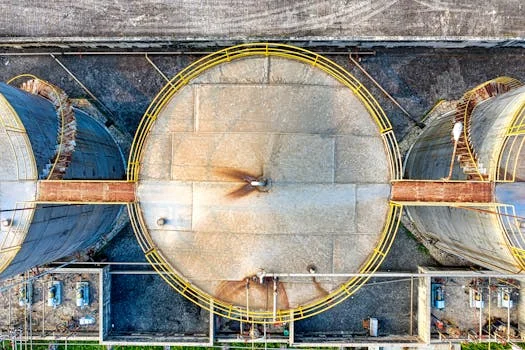
Equipment selection for municipal sewage treatment plants in Italy must handle tourist grit peaks and coastal salinity. Headworks need stainless steel bar screens for Italian WWTP headworks with high solids loads so pumps and membranes do not clog during July–August surges; multi-rake or rotary fine screens (about 3 mm) outperform static bars when peak factor exceeds 3× dry-weather flow.
Choosing Conventional Activated Sludge (CAS) versus MBR hinges on the effluent end use. Discharge to the Mediterranean under UWWTD sensitive-area limits often favours CAS plus tertiary filtration on CAPEX. Sicily or Sardinia reuse mandates more often justify MBR filtrate quality. For campsites, ports, and small coastal communes, modular trains such as the Underground Package Sewage Treatment Plant (WSZ Series) can be staged with occupancy; comparable modular references appear in small-scale WWTP solutions for Italian tourist areas.
| Equipment Category | Selection Criteria | Recommended Tech (Italy) |
|---|---|---|
| Pre-treatment | High grit/solids load | Rotary Fine Screens (3mm) + Aerated Degritter |
| Biological | Nutrient removal & Reuse | A/O with Post-Denitrification or MBR |
| Dewatering | Volume reduction | High-Pressure Filter Press or Decanter Centrifuge |
| Disinfection | Pathogen control | Chlorine Dioxide (ClO₂) or UV Irradiation |
Compliance Checklist for Italian Municipal WWTPs: UWWTD, Reuse, Energy
Plant operators and EPC contractors should audit against the 2025–2027 operating window while mapping Directive 2024/3019 transposition work. Use this checklist for procurement prioritisation:
- UWWTD / national discharge compliance:
- Verify collection coverage for each agglomeration against current national programmes.
- Confirm secondary biological treatment for collected influent at or above the plant’s licensed p.e.
- Confirm Total Nitrogen (<10 mg/L) and Total Phosphorus (<1 mg/L) in designated sensitive areas.
- Keep quarterly sampling for COD, BOD, TSS, N, and P with certified laboratory validation.
- Water reuse (EU 2020/741):
- Target minimum 50% reuse for irrigation in water-stressed regions (Sicily, Sardinia, Puglia) by 2027.
- Hold effluent near BOD5 <10 mg/L, TSS <10 mg/L, E. coli <100 CFU/100 mL during reuse periods.
- Run weekly pathogen checks and monthly nutrient tracking when irrigating food crops.
- Energy efficiency (EU 2023/1791 context):
- Complete annual energy audits for plants above 10,000 p.e.
- Target energy intensity below 0.5 kWh/m³ for CAS and below 0.8 kWh/m³ for MBR under design load.
- Fit VFDs on blowers and pumps to track diurnal and seasonal load swings.
Who this is for: Italian water utilities, EPC contractors, and municipal engineers sizing upgrades for coastal peaks, Po-basin nutrient limits, or agricultural reuse. Who should look elsewhere: buyers seeking only industrial zero-liquid-discharge packages unrelated to municipal sewerage. Next step: send peak p.e., effluent permit limits, and sludge outlet constraints via the request-quote form for this municipal Italy project so process and equipment options can be sized against your agglomeration data.
Frequently Asked Questions
What are the nitrogen and phosphorus limits for Italian WWTPs under UWWTD rules?
Sensitive-area plants still target 10 mg/L Total Nitrogen and 1 mg/L Total Phosphorus under Directive 91/271/EEC practice, while standard areas use 15 mg/L TN and 2 mg/L TP. Most Italian coasts, lake catchments, and the Po basin are treated as sensitive. Directive (EU) 2024/3019, in force from 1 January 2025, adds a longer tertiary/quaternary schedule that utilities must plan beside these operating limits.
How much does a 50,000 p.e. WWTP cost to build in Italy?
CAPEX typically ranges from €30M to €50M in 2025 euros. Southern regions often land nearer €30M–€40M on labour and land; northern sites more often reach €40M–€50M when Po River tertiary stages and reuse polishing are included. Always separate civil works, process mechanical packages, and sludge lines when comparing bids.
Which biological process fits Italian coastal municipal plants best?
A/O remains the cost-effective choice for large coastal works that only need sensitive-area nutrient limits, as at Firenze-scale plants. MBR is preferred where land is scarce or irrigation reuse needs turbidity below 0.2 NTU and stable pathogen control after disinfection. Most plants we size for Adriatic resorts run A/O with tertiary filtration first, then upgrade to membranes only if reuse contracts require it.
How can Italian WWTPs cut energy cost without losing compliance?
Install VFDs on blowers and pumps for about 20–30% aeration energy reduction at plants with strong diurnal swings, then consider turbo blowers and anaerobic digestion with CHP. Large sites such as Firenze have reported recovering nearly 50% of site power from biogas-fired CHP when digesters are fed co-substrates within permit limits. Track kWh/m³ monthly against the 0.5–0.8 kWh/m³ bands above.
What water reuse targets apply to Italian municipal effluent?
EU Regulation 2020/741 drives water-stressed Italian regions toward at least 50% agricultural reuse of treated effluent by 2027. Typical Class A/B practice needs BOD and TSS near or below 10 mg/L and E. coli below 100 CFU/100 mL during irrigation. MBR or tertiary filtration followed by UV or ClO₂ is the usual train that holds those numbers through summer peaks.