Hobart industrial wastewater discharge compliance guide decisions follow a fixed order. EPA Tasmania’s Environmental Protection Policy (EPP) 2024 lists pH 6–9, TSS < 350 mg/L, FOG < 100 mg/L, and cadmium/lead < 1 mg/L (EPA Tasmania’s Trade Waste Guidelines, 2024). TasWater still requires written consent, or a negotiated industrial contract, before that flow enters the sewer.
Hobart Industrial Wastewater Discharge Compliance Guide
A Hobart industrial discharge is lawful only when the EPA Tasmania effluent band and the TasWater consent are both met. Local permits still cite pH 6–9, TSS < 350 mg/L and FOG < 100 mg/L under the EPP 2024. Any flow above 5,000 L/day, or a high pollutant load, needs a trade waste permit first.
Non-compliance with Hobart’s industrial wastewater regulations can stop the discharge and bring a fine. These limits protect local waterways and TasWater’s sewerage infrastructure. Food plants hit the FOG cap first. Metal shops hit the 1 mg/L metals cap first.
Meeting a sewer limit is a different job from meeting a river limit. EPA Tasmania’s guidelines often set the broader environmental band. TasWater’s Trade Waste Policy sets the parameters that protect pipes and the treatment plant. Most plants we size for Hobart run closer to the TSS < 350 mg/L ceiling than to the metals cap.
What Volume Triggers a Hobart Trade Waste Permit?
A permit threshold of 5,000 L/day, or any high pollutant load, is the volume trigger stated for Hobart industrial users. That flow is 5 kL/day. Across a full year it exceeds TasWater’s commercial catchment bands of up to 499 kL per annum and 500 to 1,500 kL per annum. Volume is only one risk input, and composition plus pre-treatment still move the category.
Hobart Industrial Wastewater Fines and Penalty Risks
Hobart industrial wastewater fines and penalty risks start at the permit condition, not at a court headline. EPA Tasmania can impose fines up to $120,000 AUD annually. Repeated violations may lead to permit revocation, and the site then stops discharging until it complies. A Hobart food processor faced an $85,000 AUD fine in 2023 for persistent FOG violations.
Missing a permit condition can trigger those penalties. TasWater can also apply non-compliance charges, or ask an owner to disconnect, under the Water and Sewerage Industry Act 2008. On the 2026-27 commercial schedule, a major non-compliance fee reaches $4,925.61 for Category 2C (TasWater). Category 3 and 4 sites sit on negotiated contracts, so the bill is the contract charge plus any EPA penalty.
Earlier notes slated the Selfs Point Sewer Transformation for completion in 2025. TasWater’s update of 27 January 2026 said the project was more than 50 per cent complete and due for completion in late 2026. The new plant is described as able to process up to 25 megalitres of wastewater daily. By that date, crews had poured 6,500 cubic metres of concrete and placed 2,500 tonnes of reinforcing steel.
The Macquarie Point pump station was more than 50 per cent complete on that update and will replace the Macquarie Point sewage treatment plant. A 4.3-kilometre sewer pipeline links the sites, including 300 metres through the Cornelian Bay Oval. The emergency outfall was, as of 27 January 2026, on track for early 2026. TasWater expects about 3,420 jobs, $1.1 billion of economic activity, and service for the next 50 years.
The upgrade raises scrutiny on industrial discharges into the Hobart network. Expect tighter monitoring, more inspections, and surcharges where a site sends a high pollutant load. Inspectors ask first for pretreatment results and a clean sample file. Most plants we review have the tank, and a thin folder.
| Regulatory Body | Key Policy/Limit | Typical Industrial Effluent Limit | Maximum Annual Fine (AUD) |
|---|---|---|---|
| EPA Tasmania | Environmental Protection Policy (EPP) 2024 | pH 6–9, TSS < 350 mg/L, FOG < 100 mg/L | $120,000 |
| TasWater | Trade Waste Policy | Permit required for > 5,000 L/day or high load | Permit revocation, surcharges |
| TasWater | Trade Waste Permit Fees (Tiers A, B, C) | N/A | $2,000–$20,000 (annual) |
TasWater Trade Waste Permit Fees and Tiers
TasWater trade waste permit fees and tiers are no longer a single A, B and C price list. Earlier guidance categorized permits into tiers (A, B, C), with annual fees ranging from $2,000 to $20,000 AUD. From 1 July 2026, Price and Service Plan 5 (PSP5) uses Categories 0, 1, 2A, 2B and 2C for commercial sites. Industrial sites are Category 3 or Category 4 (TasWater).
Commercial customers must hold a Trade Waste Consent before the activity starts. The 2026-27 application fee is $184.78. Category 0 matches a standard dwelling or less, and carries no trade waste charge. Category 1 is low volume and low impact, handled with basic pre-treatment such as screens, at a target charge of $713.88 per year.
Category 2 needs physical pre-treatment at the source. Target charges per year are $1,170.23 for 2A, $1,642.12 for 2B, and $2,462.81 for 2C. A catchment fee sits on top: $1,489.69 up to 499 kL per annum, or $2,498.41 for 500 to 1,500 kL per annum. Bedpan macerators cost $66.26 each under PSP5, and in-sink macerators are not permitted.
Industrial customers negotiate an individual contract before discharge starts. Category 3 is medium risk from volume, composition or quality, alone or together, and Category 4 is high risk on the same test. FY2026-27 application fees are $2,445.01 for Category 3 and $3,822.37 for Category 4. Annual management fees are $1,645.08 and $2,577.23.
The same FY2026-27 table lists a volumetric charge of $1.61 per kL for both industrial categories. Pollutant lines are $1.09 for BOD, $1.40 for TSS, $2.63 for TKN, $2.19 for total phosphorus, $0.45 for sodium and $1.93 for total oil and grease. The page states the volumetric unit as per kL and prints the other lines as dollar rates. Each year the charges move with Hobart CPI from March to March.
| TasWater category (PSP5, FY2026-27) | Published fixed charge (AUD) | Who it describes |
|---|---|---|
| 0 | No trade waste charge | At or below a standard dwelling |
| 1 | $713.88 per year | Low volume, basic pre-treatment |
| 2A / 2B / 2C | $1,170.23 / $1,642.12 / $2,462.81 per year | Commercial, physical pre-treatment |
| 3 | Application $2,445.01; management $1,645.08 per year | Medium-risk industrial contract |
| 4 | Application $3,822.37; management $2,577.23 per year | High-risk industrial contract |
How Does a Category 4 Contract Differ?
A Category 4 contract covers high-risk trade waste and must be in place before the service is used. The FY2026-27 application fee is $3,822.37 against $2,445.01 for Category 3, and annual management is $2,577.23 against $1,645.08. Published volumetric and pollutant rates match Category 3, including $1.61 per kL. The class changes the fixed fees and the scrutiny, not those unit rates.
On Category 3 food plants, the annual management fee is the small line and load plus volume move the invoice. A site at 50 m³/day is discharging 50 kL/day, so the $1.61 per kL line applies before BOD or TSS is added. Ask for the contract draft before you freeze the process design. The sewer’s location decides whether TasWater can accept the load at all.
TasWater accepts liquid trade waste only if the network can collect, transport and treat it, the waste does not block recycling of by-products, and the site has applied practicable reuse. An industrial enquiry gets a reply within five business days. Give at least 30 days’ written notice before a process change, a pre-treatment change, a sale or a closure.
Sewer utilities do not share one acceptance table. A Sydney comparison sits in Industrial Wastewater Treatment in Sydney: 2026 Compliance Guide with Costs and Equipment. Use it to see another Australian consent style, then return to the TasWater category that matches your risk score.
National context for industrial waste water discharge requirements is a different page and a different limit set. Do not paste those figures onto a Hobart consent. The numbers you must hit are the ones written on the TasWater consent or the Category 3 or 4 contract.
The label industrial wastewater discharge belongs to that same national standards page. Keep the Hobart file on category, samples and pretreatment duty. Mixing the two names is how a specification cites the wrong limit.
A separate city file of industrial wastewater management reviews shows how Auckland wrote its engineering note. It is not a TasWater document. Hobart decisions still turn on the consent, the EPP 2024 band and a pretreatment result you can show an inspector.
Hobart’s Industrial Wastewater Treatment Requirements: Effluent Limits and Pretreatment Standards
Hobart’s industrial wastewater treatment requirements use two columns that often match and sometimes do not. EPA Tasmania may specify Biological Oxygen Demand (BOD) limits of < 250 mg/L and Chemical Oxygen Demand (COD) < 500 mg/L for general industrial discharges. TasWater’s policy focuses on sewer and plant protection, including TSS < 350 mg/L. Food processing facilities face Fats, Oils, and Grease (FOG) limits of < 100 mg/L, while metalworking must hold cadmium and lead below 1 mg/L.
Hitting these limits takes a multi-stage pretreatment train. Primary treatment removes large solids and evens the flow with coarse and fine screens. Stainless steel bar screens for Hobart’s industrial pretreatment protect downstream equipment and stop blockages. Secondary treatment hits dissolved and colloidal load with biology or DAF, and tertiary filtration or disinfection is added only when the consent is tighter.
EPA Tasmania’s 2024 Pretreatment Manual is the selection reference cited for these process choices. Hobart sites that discharge to TasWater must complete an Industrial User Survey of flow, concentration and existing pretreatment. Submit that file by the stated deadline, usually through TasWater’s online portal, and keep a copy. The survey is what the inspector compares with your meter.
Common Hobart violations are FOG exceedances at food plants, pH swings at chemical and manufacturing sites, and poor sludge handling. Any one of those can start an inspection. Sludge leaving the site still has to match the disposal path named in the survey. A clean effluent sample does not excuse a bad skip.
| Parameter | EPA Tasmania Guideline (mg/L) | TasWater Trade Waste Limit (mg/L) | Typical Industry Impacted |
|---|---|---|---|
| pH | 6–9 (range) | 6–9 (range) | Chemical, Manufacturing |
| Total Suspended Solids (TSS) | < 350 | < 350 | All industrial, Food Processing |
| Fats, Oils, Grease (FOG) | < 100 | < 100 | Food Processing, Restaurants |
| Biological Oxygen Demand (BOD) | < 250 | < 250 | Food Processing, Breweries |
| Chemical Oxygen Demand (COD) | < 500 | < 500 | Manufacturing, Chemical |
| Heavy Metals (e.g., Cadmium, Lead) | < 1 | < 1 | Metalworking, Electroplating |
How to Select the Right Wastewater Treatment Equipment for Hobart Facilities
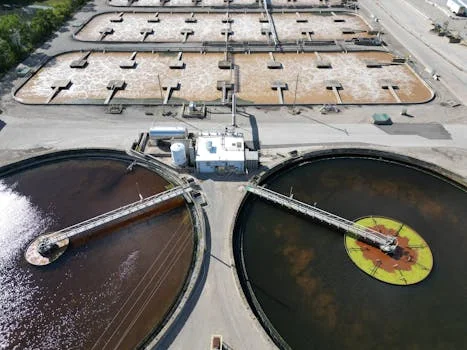
Selecting wastewater treatment equipment for a Hobart facility starts from the sample set, not from a catalogue. Influent character, pollutant type, site space and operating cost decide the train. The right train holds TasWater and EPA Tasmania limits on a normal week and on a peak day. Most food plants we size sit at the low end of flow for five days, then double FOG on one production day.
Step 1: Assess influent characteristics. Measure average and peak flow before you pick a model. A small food processor at 50 m³/day still needs the peak, not only the average. Log FOG, suspended solids, BOD, COD and heavy metals across a representative period, because that log is the sizing file and one grab sample is not.
Step 2: Match equipment to the pollutant. High FOG and TSS, typical of food processing, is a flotation job, and Hobart-approved DAF systems for FOG and TSS removal are quoted at 90–95% TSS removal, with a large cut in FOG. High BOD and COD, typical of breweries and pharmaceutical plants, is a biological job, and MBR systems for high-BOD/COD industrial wastewater in Hobart are quoted at 95–99% BOD removal.
pH correction and heavy-metal precipitation need PLC-controlled chemical dosing for Hobart’s pH and heavy metal compliance. Solids from DAF, membrane bioreactor (MBR) and dosing still need a dewatering path. Our note on sludge dewatering options for Hobart facilities compares those duty points. Size the skip and the polymer before you size the civil pad.
Step 3: Evaluate suppliers who can work in Tasmania. Australian or Tasmania-based suppliers shorten installation and spare-parts time. Look for vendors who already know TasWater consent paperwork. Custom systems often need 8–12 weeks of lead time, and installation skill plus a local spare kit matter more than a distant reference list.
Step 4: Fit the plant to the pad and the roster. Space-constrained Hobart sites often use an Underground Package Sewage Treatment Plant (WSZ Series) or a modular, trailer-mounted DAF. PLC dosing and remote alarms cut manual rounds and hold a steadier dose. Automated sites still need a skilled technician, and most underground packages we place are chosen because the yard was already full.
| Equipment Type | Primary Pollutant Target | Typical Removal Efficiency | Pros | Cons |
|---|---|---|---|---|
| Dissolved Air Flotation (DAF) | FOG, TSS, some BOD | 90-95% TSS, 70-80% FOG | High efficiency for FOG/TSS, compact footprint | Requires chemical addition, sludge handling |
| Membrane Bioreactor (MBR) | BOD, COD, TSS, Pathogens | 95-99% BOD, 99% TSS | High effluent quality, small footprint (biological) | Higher capital cost, membrane fouling risk |
| Chemical Dosing System | pH adjustment, Heavy Metals, Phosphorus | Variable (specific to pollutant) | Precise control, effective for specific issues | Chemical costs, sludge generation |
| Rotary Bar Screen | Large Solids, Debris | > 90% physical removal | Protects downstream equipment, low maintenance | Only for primary screening, no dissolved pollutant removal |
Which Pretreatment Step Should You Buy First?
The first pretreatment purchase is the screen, then the step that matches the dominant pollutant. A rotary bar screen at > 90% physical removal of large solids protects every later unit. DAF at 90-95% TSS and 70-80% FOG is the usual second step on food plants, and an MBR at 95-99% BOD and 99% TSS follows when the consent is a BOD or COD number. Chemical dosing covers pH, metals or phosphorus, and it does not replace the screen.
Cost Breakdown: Industrial Wastewater Treatment Systems in Hobart (2025 Data)
Industrial wastewater treatment costs in Hobart split into capital, installation and the yearly bill. The 2025 equipment bands below are planning ranges, not a fresh 2026 equipment quote. Compliance fines of $50,000–$120,000 AUD still dwarf a skipped service visit. Price the consent category before the hardware.
Basic DAF systems fall between $50,000 and $200,000 AUD. More advanced MBR systems typically range from $200,000 to $500,000 AUD. Installation, covering civil works, piping, electrical work and commissioning, generally adds another 20–30% to the equipment cost. Turnkey packages can range from $50,000 to $500,000 AUD or more for complex, high-capacity plants.
Simpler chemical dosing systems for pH adjustment or heavy metal precipitation usually fall between $20,000 and $80,000 AUD. Most Hobart DAF jobs we price land in the lower half of the $50,000 and $200,000 AUD band, until civil works push them up. Reagent cost belongs on the operating sheet, not as a leftover in the capital sum.
Electricity in Tasmania is often budgeted at $0.15–$0.30 AUD/kWh for this duty. Chemical costs for dosing, coagulation or disinfection can range from $5–$15 AUD/m³ of treated wastewater, depending on influent quality and chemical type. Maintenance, including spares, routine service and repairs, typically averages $5,000–$20,000 AUD per year. Manual plants may need 1–2 full-time equivalent (FTE) staff, while automated plants need fewer rounds and a more skilled technician.
Payback Period = Capital Cost / (Annual Savings + Avoided Fines). A $250,000 MBR that avoids $100,000 in annual fines and cuts surcharges by $20,000 has a payback of about 2 years. The comparison band of $50,000–$120,000 AUD is the figure that moves that result. Tasmanian Government’s Wastewater Treatment Grants and Clean Energy Finance Corporation loans may be open, but confirm the round before the board paper.
| System Type | Typical Capital Cost (AUD) | Installation Cost (Approx.) | Key Operational Costs |
|---|---|---|---|
| Dissolved Air Flotation (DAF) | $50,000–$200,000 | 20-30% of equipment | Energy, Chemicals, Sludge disposal |
| Membrane Bioreactor (MBR) | $200,000–$500,000 | 20-30% of equipment | Energy, Membrane cleaning, Sludge disposal |
| Chemical Dosing System | $20,000–$80,000 | 20-30% of equipment | Chemicals, Energy, Maintenance |
| Turnkey Solution (e.g., Package Plant) | $50,000–$500,000+ | Included/Integrated | Energy, Chemicals, Maintenance, Labor |
Industrial Wastewater Pretreatment Checklist Tasmania
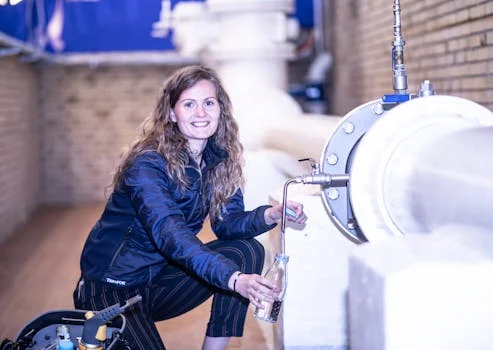
An industrial wastewater pretreatment checklist for Tasmania starts with the consent, not with the purchase order. Commercial sites need a Trade Waste Consent before discharge, and the 2026-27 application fee is $184.78. Industrial Category 3 and 4 sites need a signed contract instead. Work the ten steps below against that document, because the step that slips most often is the five-year file, not the tank.
- Conduct an Industrial User Survey. Submit wastewater generation, characteristics and existing treatment to TasWater by the stated deadline. Keep the submission and every reply.
- Test influent and effluent quality regularly. Monitor pH, TSS, BOD, COD, FOG and heavy metals. High-risk sites test monthly. Other sites follow the quarterly schedule in the permit.
- Install and optimize pretreatment equipment. Fit screens and DAF so they are installed correctly and maintained. Record removal efficiency against the consent.
- Train staff on operation and maintenance. Cover operation, maintenance, troubleshooting, spill response and emergency steps for every person who touches the plant.
- Maintain comprehensive records. Keep wastewater documents for a minimum of 5 years. Include test results, maintenance logs, calibration records, permit applications and renewals.
- Schedule annual inspections. Prepare for inspections by EPA Tasmania and TasWater. Use the visit to clear ambiguous conditions and to show the sample file.
- Monitor Selfs Point project updates. Sign up for TasWater alerts on the Selfs Point Sewer Transformation. The 27 January 2026 note moved completion from the earlier 2025 date to late 2026. Expect monitoring or surcharge changes as that plant comes online.
- Review permit conditions annually. Read the TasWater trade waste permit once a year. Check flow limits, pollutant caps and reporting dates, and change the roster if a cap has moved.
- Implement a spill prevention plan. Keep a spill prevention, control and countermeasure (SPCC) plan current. Staff should know the containment steps and how to report a spill to sewer.
- Calculate ROI for upgrades. Re-run the sum when you add equipment. Use Payback Period = Capital Cost / (Annual Savings + Avoided Fines) so the avoided fine is visible to the people who sign the order.
Where pH or metals set the consent, add chemical dosing and log each dose against the effluent pH or metal result. A dose log with no matching lab sheet will not satisfy an inspector.
Who This Guide Is For
Hobart plant engineers, EPC contractors and procurement managers who discharge trade waste to TasWater are the people this guide is written for. It fits food processing, manufacturing, metal finishing, breweries and hospital or laboratory streams that are not domestic sewage. A Category 0 site at or below a normal dwelling load does not need this industrial train. A one-off domestic extension is a plumber’s job, not a consent redesign.
Next step: send average flow, peak flow, FOG, BOD, TSS and metals with the category you expect, and request a Hobart pretreatment sizing review. Bring the last four lab sheets. A quote without those sheets is a guess.
Frequently Asked Questions
Hobart facility managers usually ask five questions before they freeze a pretreatment design.
What are the three types of industrial wastewater treatment?
Industrial wastewater treatment uses three stages: primary, secondary and tertiary. Primary treatment removes large solids by screening, grit removal and sedimentation. Secondary treatment breaks down dissolved organics, and an MBR on this duty is quoted at 95–99% BOD removal. Tertiary filtration or disinfection is added when a Hobart permit is tighter than secondary effluent, which is common on food and metal sites.
Where does Hobart, Tasmania get its water?
TasWater draws Hobart drinking water mainly from the Derwent River catchment, including Meadowbank Lake and Bryn Estyn. Lake Fenton and local groundwater add supply. A sewer discharge does not enter those reservoirs directly, but a spill or a failed pretreatment step can still reach the Derwent. EPA Tasmania’s EPP 2024 limits, including FOG < 100 mg/L, are there to protect that receiving water.
Is only 27% of industrial wastewater safely treated?
No. The 27% figure is a global UN Water (2023) estimate, not a Hobart result. Permitted industrial discharges in Hobart are estimated at about 85% compliance under EPA Tasmania and TasWater pretreatment rules. A Hobart plant is sized to its consent, not to that world average. The local test remains the permit limit, such as TSS < 350 mg/L, on the effluent you actually discharge.
What is industrial wastewater called?
In Hobart, and throughout Australia, industrial wastewater is called trade waste. TasWater defines trade waste as any non-domestic wastewater from commercial or industrial premises. The definition covers food processing plants, manufacturing facilities, hospitals and other non-residential sources. Discharge needs a Trade Waste Consent, or a Category 3 or Category 4 contract, before that flow enters the sewer.
How do I choose between DAF and MBR for my facility?
Choose a DAF when FOG and TSS dominate, and an MBR when BOD and COD dominate. Food and rendering wastewater usually fits the DAF case, quoted at 90-95% TSS and 70-80% FOG removal. Breweries, dairies and pharmaceutical wastewater usually fits the MBR case, quoted at 95-99% BOD removal. Mixed plants often place DAF first, and published DAF system performance figures only cross-check local Hobart samples.
Further Reading
Explore these in-depth articles on related wastewater treatment topics: