In Ireland, wastewater treatment plant cost varies widely by scale and technology. Residential systems (1–20 PE) run from about €8,500 for a basic septic tank to €20,000+ for advanced packaged plants. Commercial and municipal projects (50–500+ PE) can exceed €500,000. Main drivers are population equivalent (PE), EPA nutrient limits for nitrogen and phosphorus, and site constraints such as soil percolation rates. This guide sets out 2025 capital bands, compliance thresholds, and ROI factors used when sizing Irish projects.
Why Irish On-Site and Package Plant Budgets Keep Climbing
Irish wastewater plant capital rose through 2025 as nutrient rules tightened, materials inflated, and skilled installers stayed scarce. Sensitive catchments such as Lough Derg and Dublin Bay often face 15 mg/L Total Nitrogen and 2 mg/L Total Phosphorus under the EPA Urban Waste Water Treatment Report 2024. Tertiary stages for those limits raise both capital and operating spend.
Material inflation compounds the regulatory push. Central Statistics Office (CSO) Ireland construction price data shows HDPE tanks, stainless internals, and membrane media costing about 8–12% more by early 2025 than in 2022. Engineers Ireland’s 2024 workforce report also flags shortages in civil and specialised installation trades. Those shortages lengthen programmes and lift day rates on both package installs and municipal civils.
Most plants we size for 100–200 PE commercial sites in the Greater Dublin area now land 10–15% above 2022 quotes for the same PE. A 200 PE commercial works in Dublin showed a 15% uplift versus a 2022 twin specification. Mandatory phosphorus tertiary treatment and dearer civil packages drove most of that gap. Budget contingencies of 10–15% on equipment and civils remain prudent for 2025–2026 tenders.
What Drives a Water Treatment Plant Cost Breakdown?
A water treatment plant cost breakdown in Ireland splits first by population equivalent (PE) and then by effluent class. Residential, commercial, and municipal bands use different technologies, civil scopes, and licence paths. Lump-sum quotes without a PE and discharge target are not comparable across counties or catchment types.
| Project Scale (PE Range) | Typical Application | Estimated Capital Cost (2025) | Key Cost Drivers |
|---|---|---|---|
| Residential (1–20 PE) | Single homes, small clusters, guest houses | €8,500–€25,000 | Basic septic tank with percolation bed vs. advanced packaged treatment plant (e.g., secondary + tertiary) |
| Commercial (20–200 PE) | Hotels, schools, small factories, nursing homes | €25,000–€250,000 | Effluent quality, site complexity, modular system scalability. Ecoflo units, for example, range from €2,500–€20,000 per base unit, with multiple units combined for larger capacities. |
| Municipal (200–1,000+ PE) | Housing estates, industrial parks, small towns | €500,000–€5M+ | Advanced nutrient removal, extensive civil works, land acquisition, integration with existing infrastructure. Irish Water's 2024 capital expenditure report highlights significant investments in upgrades. |
For residential work, a basic septic tank with percolation bed still installs near €8,500 where soil and catchment rules allow it. Where effluent quality or percolation fails those tests, a packaged plant—often a fully automated underground sewage treatment system for residential and commercial projects—commonly exceeds €20,000 installed. Those packages add secondary biology and, where needed, tertiary filtration before discharge or polishing.
Commercial schemes from 20 to 200 PE usually need harder-wearing packaged trains. A 50 PE hotel system often sits at €50,000–€80,000. A 200 PE school or light-industrial plant can reach €250,000 when nutrient removal is mandatory. Modular trains let owners stage capacity as occupancy grows without rebuilding the whole works in one season.
Municipal schemes for estates, parks, or small towns (200–1,000+ PE) routinely clear €500,000 and can run to several million euros. Large aeration, sludge handling, and long civil packages dominate those budgets. Irish Water’s 2024 capital expenditure reporting reflects the same scale of upgrade spend on agglomeration works across the network.
Hidden line items still catch many first budgets. Soil and percolation testing typically costs €500–€2,000. Planning fees run about €2,000–€10,000 by scale and local authority. Annual maintenance contracts sit near €500–€5,000 per year, rising with PE and automation level. Power upgrades and temporary works during install often sit outside the equipment quote and should be listed explicitly.
When comparing quotes, separate equipment, civils, electrics, and commissioning. A low package price that excludes rock excavation or a long rising main will lose any apparent saving once the contractor’s variation lands. Ask each bidder to state exclusions in euros, not as footnotes.
For hotels and nursing homes, PE based on bedrooms alone understates peak laundry and kitchen loads. Skipping that uplift is a common cause of blower overload in year one.
How Much Does a House Treatment Plant Cost in Ireland?
A house treatment plant in Ireland for about 6 PE typically costs €15,000–€25,000 installed for a packaged secondary or tertiary unit. A septic tank plus percolation area for the same home usually sits at €8,500–€12,000. The gap reflects biology, controls, and discharge hardware rather than tank volume alone.
Homeowners in EPA-sensitive catchments rarely keep a septic-only option. Poor T-values or shallow groundwater push the same decision even outside mapped sensitive zones. When we price rural Cork and Galway houses, the packaged plant is the default once percolation fails or nutrient limits apply on the planning file.
Selection checklist before you lock a house-scale budget:
- Confirm PE from bedrooms and occupancy, not floor area alone.
- Obtain a site characterisation and percolation (T-value) test early.
- Check whether the discharge point sits in an EPA-sensitive catchment.
- Decide secondary-only versus tertiary N/P removal before tendering.
- Include planning fees, electrics, and year-1 servicing in the capital total.
- Compare 10-year desludging and membrane or blower replacement paths.
- Verify installer warranty and spare-parts lead times for pumps and blowers.
Owners who skip the percolation test and buy a septic package first often pay twice. Rework to a mechanical plant after a refused discharge route can add another full civil dig plus planning delay measured in months, not weeks.
IPA-style Level 0 cost estimates—order-of-magnitude bands before design freeze—should still carry a wide contingency in Ireland. At house and small commercial scale, use the PE tables above as Level 0 guidance only. Move to site-specific Level 1 once percolation, discharge route, and nutrient class are known.
Wastewater Treatment Plant Cost Drivers: Engineering Parameters
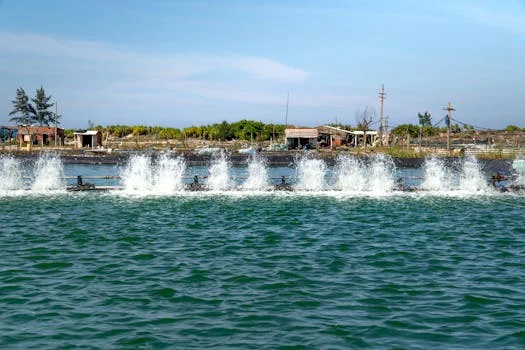
Population Equivalent (PE) remains the primary sizing metric for Irish domestic and small commercial works. Under the EU definition, 1 PE equals an organic load of 60 g BOD5 per day. That load sets tank volume, aeration duty, and whether a compact package or a multi-stage works is justified on a given plot.
| Engineering Parameter | Description & Impact on Cost | Typical Range/Requirement |
|---|---|---|
| Population Equivalent (PE) | Directly scales system size, flow rates, and treatment capacity. Higher PE means larger tanks, more robust equipment. | 1 PE = 60 g BOD5/day (EU Standard) |
| Influent Quality (BOD5, TSS, TN, TP) | Higher concentrations of pollutants require more intensive and advanced treatment stages (e.g., tertiary for N/P removal). | Typical raw sewage: BOD5 200-350 mg/L, TSS 200-350 mg/L, TN 40-70 mg/L, TP 5-10 mg/L |
| Required Removal Efficiency | Mandated percentage reduction of pollutants (e.g., 95% BOD5 removal for secondary treatment) dictates technology choice. | Secondary Treatment: >90% BOD5, >90% TSS; Tertiary Treatment: N/P removal to <15 mg/L TN, <2 mg/L TP |
| Hydraulic Retention Time (HRT) | The average time wastewater spends in a reactor, influencing tank volume. Longer HRT means larger tanks. | Aerobic systems: 24–48 hours; Anaerobic: 10–20 days |
| Site Constraints | Poor soil percolation, high groundwater, or limited footprint necessitate specialized solutions (e.g., membrane filtration, pumping stations), increasing civil works and equipment costs. | Soil T-value > 100 requires alternative disposal; groundwater separation >1.2m is ideal (EPA 2025 percolation test guidelines) |
Influent strength moves spend almost as much as PE. Typical raw sewage sits near BOD5 200–350 mg/L, TSS 200–350 mg/L, TN 40–70 mg/L, and TP 5–10 mg/L. Stronger hotel or food-service loads need more aeration energy and often a longer aerobic HRT. That enlarges tanks and civil digs before any tertiary chemical stage is added.
Hydraulic retention time (HRT) sets reactor volume directly. Aerobic packaged plants—including a fully automated underground sewage treatment system for residential and commercial projects—usually target 24–48 hours HRT. Anaerobic stages, where used, run much longer at 10–20 days and change the civil footprint accordingly on constrained sites.
Site limits add step-change costs. T-values above 100, groundwater closer than about 1.2 m, or a tight plot often force pumped discharge, membrane polishing, or both under EPA 2025 percolation guidance. Those options raise equipment and civil lines far more than upsizing a tank by one PE band. Early borehole and trial-pit data therefore protect the capital estimate better than adding a flat contingency alone.
Septic Tank vs Packaged Plant: Ireland 2025 Cost Comparison
Septic tank versus packaged plant choice shapes wastewater treatment plant cost over a 10-year compliance horizon, not only install-day price. Upfront septic capital is lower. Sensitive-area rules and poor soils increasingly remove that option before planning consent is granted.
| Feature | Septic Tank System (e.g., for 6 PE) | Wastewater Treatment Plant (e.g., for 6 PE) |
|---|---|---|
| Upfront Capital Cost (Installed) | €8,500–€12,000 (tank + percolation area) | €15,000–€25,000 (packaged plant + discharge) |
| Effluent Quality | Primary treatment (solids separation), variable quality after percolation | Secondary (BOD5, TSS) or Tertiary (N/P) treatment, consistently high quality |
| Compliance with EPA Standards | May not meet standards in sensitive areas or for poor percolation sites; risk of non-compliance fines. | Designed to meet EPA standards, including nutrient removal for sensitive areas, reducing compliance risk. |
| Maintenance & Servicing | Desludging every 1-3 years (€200–€400/event); percolation area checks. | Annual servicing (€500–€1,500/year); desludging (less frequent, ~€300–€500/event); potential membrane replacement (€3,000–€10,000 every 5–10 years for MBRs). |
| Lifespan (Major Components) | 20–30 years (tank); percolation area lifespan variable based on soil. | 15–25 years (plant); components like blowers/pumps 5–10 years. |
| Energy Consumption | None (passive system) | Low to moderate (pumps, blowers, controls) |
For a typical 6 PE household, a septic tank with percolation still clusters around €8,500 installed. A packaged plant for the same PE usually lands at €15,000–€25,000. That delta buys secondary biology and a more stable effluent, not a larger concrete hole in the garden.
Compliance separates the options faster than price. Septic tanks are often ruled out in EPA-designated sensitive areas such as the Lough Derg catchment. They do not reliably strip nitrogen and phosphorus, as shown on EPA 2024 sensitive-area maps. Poor percolation sites face the same fork even outside those maps.
Maintenance profiles diverge over a decade. Septic desludging every 1–3 years costs about €200–€400 per visit. Packaged plants need annual technician visits at €500–€1,500 per year, plus less frequent desludging near €300–€500. MBR membranes, where specified, can add €3,000–€10,000 every 5–10 years depending on flux and cleaning discipline.
A 10-year comparison for a 10 PE rural Cork site illustrates the cash gap. A septic path near €18,000 all-in (about €8,500 capital, five desludgings at €300, and a prorated percolation rebuild) undercuts a €20,000 plant with €800/year service and one €400 desludge (~€28,400). Add an €5,000 membrane change at year 8 on an MBR and the plant path nears €32,000. Owners still pick the plant when consent or catchment rules leave no septic path that will pass inspection.
Ireland’s 2025 Wastewater Compliance Before You Budget

Ireland’s 2025 wastewater compliance framework sets design targets before any capital line is credible. The Urban Waste Water Treatment Directive 91/271/EEC, as applied by the EPA, requires secondary treatment for agglomerations above 2,000 PE. The municipal programme aligns to 2027 milestones. That baseline shapes both Irish Water upgrades and private works that discharge to the same receiving waters.
Sensitive waters add tertiary nutrient stripping. Dublin Bay, the Shannon Estuary, and named lake catchments commonly face TN below 15 mg/L and TP below 2 mg/L under EPA 2025 discharge practice. Chemical precipitation or biological nutrient removal then becomes a capital line, not an optional polish. Clinics and small medical sites may also need pathogen control via a compact ozone-based treatment system for clinics and small medical facilities when licence conditions demand it.
Planning consent sits on the critical path. Some domestic systems under about 10 PE can be exempt in narrow cases. Commercial and municipal works need approval under the Planning and Development Regulations 2024. Expect site studies, environmental documentation, and fees from about €2,000 to €10,000+ depending on authority and scale.
Discharges above 50 m³/day to surface water or groundwater need an EPA discharge licence. Application packs cover process design, environmental assessment, and public notice. Fees run from about €1,000 for smaller discharges to over €10,000 for complex industrial or municipal licences. Budget the licence path in parallel with equipment selection, not after fabrication starts.
Discharge to a watercourse instead of a percolation area changes both civil scope and monitoring. Continuous or frequent sampling, alarm telemetry, and standby pumps appear on many licences above modest flows. Those O&M lines belong in the ROI model beside energy and desludging.
Sludge handling is easy to omit from residential budgets and hard to ignore later. Packaged plants still need periodic tanker access and a paved or reinforced route for the vehicle. Sites that only budget the tank often discover access works when the first desludge is booked.
Non-compliance risk is not theoretical for commercial operators. Enforcement can halt discharge and trigger redesign while a site is already occupied. Front-loading catchment checks and PE calculations costs far less than a mid-build change order on tanks and tertiary dosing skids.
ROI: Justifying Treatment Plant Spend in Ireland
ROI for an Irish wastewater works rests on avoided EPA penalties, energy and water savings, and reuse value. It does not rest on selling treated effluent as a utility product in most private cases. Serious EPA enforcement actions can reach fines up to €500,000 per the EPA 2024 enforcement reporting context. Avoided non-compliance is often the largest single risk line on a commercial balance sheet.
| ROI Component | Description | Typical Annual Value/Impact | Notes |
|---|---|---|---|
| Avoided Fines & Penalties | Eliminates risk of EPA non-compliance fines. | Up to €500,000 (per incident) | Significant risk reduction, especially for larger discharges. |
| Operational Savings (Energy) | Reduced energy consumption through efficient technologies. | 10%–30% of energy costs | High-efficiency MBR system for nitrogen/phosphorus removal in sensitive areas, like HydropureWater WSZ series, can reduce energy consumption by up to 30% compared to conventional activated sludge. |
| Operational Savings (Water Reuse) | Savings from reusing treated effluent for non-potable uses. | €0.50–€2.00/m³ (based on Irish Water 2025 water tariffs) | Applicable for irrigation, industrial cooling, toilet flushing. |
| Reduced Water Abstraction Costs | Lower dependence on municipal water supply. | Variable, based on current water charges | Direct savings on metered water consumption. |
| Enhanced Reputation & ESG | Positive public image, improved environmental, social, and governance (ESG) standing. | Intangible, but can impact brand value and investor relations. | Important for corporate responsibility and market perception. |
Energy and reuse create the measurable operating side. A high-efficiency MBR system for nitrogen/phosphorus removal in sensitive areas, including HydropureWater WSZ-class trains, can cut energy use by up to 30% versus conventional activated sludge under comparable PE and aeration duty. Where non-potable reuse is allowed, Irish Water 2025 tariff bands imply about €0.50–€2.00 saved per m³ for irrigation, cooling, or toilet flushing.
A practical framing is: ROI = (Net Annual Savings + Annual Revenue from Water Reuse) / (Initial Capital Cost + Annual Operating & Maintenance Costs). Procurement teams usually model that in a spreadsheet with PE, tariff, and fine-risk inputs. A published single calculator rarely matches site-specific consent conditions.
Take a 100 PE hotel in Galway spending €250,000 on a new plant for discharge limits and reuse. If municipal water displacement saves €30,000/year, a conservative avoided-fine allowance is €10,000/year, and energy saves €20,000/year against €15,000/year O&M, net annual benefit lands near €45,000–€60,000. That path supports a roughly five-year simple payback before ESG intangibles. Hotels that already meter irrigation and cooling see the reuse line first; others should start with fine avoidance and energy only.
Where nitrogen and phosphorus limits both apply, sequence matters. Biological nutrient removal can cut chemical spend but needs stable loads and longer HRT. Chemical precipitation is faster to retrofit on an existing secondary plant yet adds sludge mass and reagent cost every year of operation.
Cross-border equipment priced in sterling still needs Irish certification, commissioning travel, and spare-parts lead times in the landed cost. A 10–15% UK list-price advantage can disappear after those lines. Keep freight, duty, and first-year spares inside the capital comparison, not in a separate “ops” tab that finance ignores.
Main Irish tender cost drivers include PE accuracy, nutrient class, percolation outcome, tertiary scope, difficult civils, power upgrades, and year-1 service terms. Rank those seven items before comparing vendor list prices alone.
Procurement managers should also fix currency and indexation rules in the tender. Multi-month Irish programmes exposed to HDPE and stainless indices need a clear fluctuation clause. Fixed-price packages shorter than twelve weeks are easier to hold without indexation than phased municipal civils lasting more than a year.
Finally, align the O&M contract with the performance guarantees. A plant sold on <15 mg/L TN and <2 mg/L TP is only as good as the sampling schedule and spare-blower commitment written into the service agreement. Guarantees without response times rarely survive the first peak season.
Who This Is For / Next Step
This guide suits homeowners, hotel and school operators, and small municipal or industrial clients budgeting Irish on-site or package works from about 1 to 1,000+ PE. It is less useful for large Irish Water agglomeration tenders that already have framework rates and full EIA teams. If you have PE, influent data, and a discharge target, request a sized quote with those figures so capital and O&M bands can be checked against the tables above.
Frequently Asked Questions
How many wastewater treatment plants are there in Ireland?
According to EPA 2024 reporting cited in industry summaries, Ireland operates over 1,100 wastewater treatment plants. That count covers Irish Water municipal works plus industrial and privately owned plants. Totals shift as small private units are added or retired. Use the figure as an order-of-magnitude baseline when comparing market scale, not as a live inventory for a single county.
How much does a sewage treatment plant cost in the UK vs. Ireland?
Comparable packaged sewage plants in the UK often price about 10–15% below Irish installs. Larger UK supply chains, denser installer networks, and different labour and certification costs drive most of that gap. Cross-check freight, commissioning travel, and local EPA or planning conditions before assuming a UK quote transfers one-for-one into an Irish planning file.
How much does it cost to set up a sewage treatment plant?
Setup cost in Ireland runs from about €8,500 for a basic residential septic package to more than €5 million for large municipal or industrial works. Mid-band commercial plants at 20–200 PE commonly fall between €25,000 and €250,000 in 2025 capital terms. Final figures still hinge on PE, nutrient limits, civils, and whether tertiary treatment is mandatory on the discharge consent.
Do wastewater treatment plants make money?
Municipal plants are usually cost centres funded through public charges, not profit centres. Commercial and industrial owners recover value through avoided EPA fines, lower energy use, and non-potable reuse that cuts metered water bills. Model those lines explicitly. Do not assume tariff income from selling treated effluent unless a reuse customer and consent already exist.
What should I budget beyond the treatment plant itself?
Beyond equipment, budget soil testing at €500–€2,000, planning fees at €2,000–€10,000, and annual servicing at €500–€5,000 depending on PE and complexity. Licence fees for discharges above 50 m³/day can add €1,000 to over €10,000. Most delayed projects we see under-counted civils, power supply, and year-1 maintenance rather than the tank price alone.