Wastewater treatment plant costs in Cork vary widely based on capacity, technology, and compliance requirements. For example, Uisce Éireann’s €7.3M upgrade of the Killeens plant (serving ~5,000 population equivalents) sets a benchmark for municipal projects, while small-scale systems for industrial or residential use range from €4,500 to €8,000 for septic tank percolation areas (per Sepcon data). Key cost drivers include treatment technology (e.g., MBR vs. activated sludge), energy efficiency, and regulatory compliance with Ireland’s Urban Waste Water Directive 91/271/EEC. This guide provides a 2025 engineering breakdown with local data, a cost calculator, and ROI framework to help decision-makers evaluate options.
The €7.3M Killeens Upgrade: What It Reveals About Cork’s Wastewater Treatment Costs
Uisce Éireann’s €7.3M investment in the Killeens wastewater treatment plant upgrade, north of Cork city, serves approximately 5,000 population equivalents (PE) and provides a tangible baseline for municipal project costs in the region. This significant upgrade, announced in 2025, is a critical component of Uisce Éireann’s Small Towns and Villages Growth Programme, directly supporting both current population needs and future economic development in the Killeens area (Uisce Éireann, 2025). The project scope is extensive, encompassing the construction of a new 1,100-meter-long rising main to the high point of the pipeline and a 1,793-meter gravity sewer main connecting to the main collection point. This infrastructure expansion is vital for increasing the capacity of existing sewers and improving overall plant performance.
A primary driver for the Killeens upgrade, and similar projects across Ireland, is stringent compliance with environmental legislation. The plant’s design and operation must adhere to the Irish Urban Waste Water Directive 91/271/EEC and the overarching EU Water Framework Directive 2000/60/EC. These directives mandate specific effluent quality standards, such as biochemical oxygen demand (BOD) below 25 mg/L and total suspended solids (TSS) below 35 mg/L, to protect receiving water bodies. The Killeens project is specifically designed to improve the health and integrity of the environment by reducing the risk of sewer flooding and significantly enhancing water quality in the River Blarney, thereby contributing to habitat conservation (Echo Live, 2025). The phased implementation of such projects, from initial planning and design to civil works and plant commissioning, typically spans 18-36 months, demonstrating how long-term strategic planning and phased execution directly influence overall project budgets and timelines.
Wastewater Treatment Plant Cost Factors in Cork: A 2025 Engineering Breakdown
Wastewater treatment plant costs in Cork are heavily influenced by a confluence of technical, environmental, and regulatory factors, with plant capacity being a primary determinant. The capital cost per cubic meter per day (m³/day) generally decreases with scale, ranging from approximately €1,500–€3,000/m³/day for smaller industrial or commercial plants to €500–€1,200/m³/day for large municipal facilities. This economy of scale reflects shared infrastructure and equipment costs over higher treatment volumes.
Treatment technology choice significantly impacts both capital and operational expenditures. Conventional activated sludge systems typically have a capital cost of €800–€1,500/m³/day, with energy consumption ranging from 0.3–0.6 kWh/m³. Membrane Bioreactor (MBR) systems, while offering superior effluent quality and a smaller footprint, command a higher capital cost of €1,200–€2,500/m³/day and increased energy consumption of 0.8–1.2 kWh/m³. Dissolved Air Flotation (DAF) systems, often used for pretreatment, fall in the mid-range at €600–€1,200/m³/day for capital costs. The specific energy consumption benchmarks highlight a critical operational cost component, especially with rising energy prices in Ireland.
Influent quality is another crucial factor; high BOD/COD loads, common in industries like food processing, necessitate advanced pretreatment steps such as DAF, which can add €200–€500/m³/day to overall project costs. Site conditions in Cork also play a role, with soil percolation tests (typically €500–€1,500) and groundwater levels influencing civil works expenses, potentially adding €100–€300/m³ for excavation and waterproofing. strict compliance requirements from the Irish EPA, including discharge limits for ammonia (< 5 mg/L) and phosphorus (< 1 mg/L for sensitive areas), often mandate tertiary treatment (e.g., sand filtration, UV disinfection), which can add an additional €150–€400/m³/day to the capital investment. Local labor rates in Cork, averaging €40–€60/hour for skilled trades, and fluctuating material costs for concrete and steel, also contribute to project variability compared to global cost-per-gallon benchmarks for wastewater treatment.
| Cost Factor | Typical Range (2025 Cork) | Impact on Project |
|---|---|---|
| Capacity (Capital Cost) | €500–€3,000 per m³/day | Economy of scale: lower unit cost for larger plants. |
| Treatment Technology (Capital Cost) | Activated Sludge: €800–€1,500/m³/day MBR: €1,200–€2,500/m³/day DAF: €600–€1,200/m³/day |
MBR for high quality/small footprint; DAF for industrial pretreatment. |
| Energy Consumption (O&M) | Activated Sludge: 0.3–0.6 kWh/m³ MBR: 0.8–1.2 kWh/m³ |
MBR has higher energy demand due to membrane filtration. |
| Influent Quality (Pretreatment) | Additional €200–€500/m³/day | High BOD/COD requires specialized pretreatment (e.g., DAF). |
| Site Conditions (Civil Works) | Soil Tests: €500–€1,500 Excavation/Waterproofing: €100–€300/m³ |
Challenging ground or high groundwater increases costs. |
| Compliance Requirements (Tertiary Treatment) | Additional €150–€400/m³/day | Meeting strict EPA limits (Ammonia, Phosphorus) requires advanced stages. |
| Local Labor Rates | €40–€60/hour (skilled trades) | Impacts installation and ongoing maintenance costs. |
Cost Breakdown by Plant Size: From Small Industrial Systems to Municipal Plants
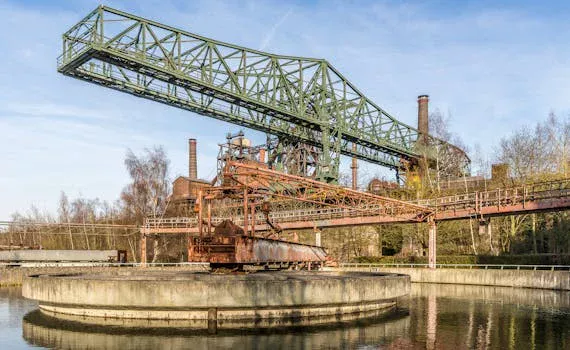
The capital investment for a wastewater treatment plant in Cork varies significantly based on its intended capacity and application, ranging from small-scale domestic systems to extensive municipal infrastructure. For small-scale systems treating 1–50 m³/day, typical for individual homes, small businesses, or remote industrial facilities, costs can start at €4,500–€8,000 for a standard septic tank with a percolation area, as per Sepcon data. More advanced small-scale solutions, such as compact underground sewage treatment plants for small-scale Cork projects, often referred to as package plants like the WSZ series, can range from €20,000 to €100,000, offering higher treatment efficiency and a smaller footprint.
Medium-scale systems, designed for capacities of 50–500 m³/day (serving small communities or medium-sized industrial operations), typically incur capital costs between €150,000 and €1.2M. These systems often utilize activated sludge or high-efficiency DAF systems for industrial wastewater pretreatment in Cork, with costs including civil works, equipment procurement, and automation. For larger municipal plants, such as the Killeens upgrade, handling 500–5,000 m³/day, investments typically range from €2M to €15M. These projects involve significant sewer infrastructure development, extensive civil engineering, and advanced treatment processes to meet stringent compliance requirements.
When considering cost per population equivalent (PE), small plants can range from €1,000–€2,500/PE, while large municipal plants benefit from economies of scale, costing €500–€1,200/PE. Beyond capital outlay, operational costs are a critical consideration for long-term project viability. Based on 2025 benchmarks, energy consumption typically accounts for €0.10–€0.30/m³, chemical usage for €0.05–€0.15/m³, and routine maintenance for €0.02–€0.08/m³. Labor costs, including skilled operators and technicians, can add €30,000–€100,000 annually for larger facilities. modular designs, such as containerized MBR systems, can offer a cost advantage by reducing capital expenditure by 20–30% compared to traditional, site-built concrete structures due to faster installation and reduced civil works.
| Plant Size Category | Capacity (m³/day) | Capital Cost Range (2025 Cork) | Cost per PE | Typical Operational Costs (per m³) |
|---|---|---|---|---|
| Small-Scale Systems | 1–50 | €4,500–€100,000 | €1,000–€2,500 | Energy: €0.15–€0.30 Chemicals: €0.08–€0.15 Maintenance: €0.05–€0.08 |
| Medium-Scale Systems | 50–500 | €150,000–€1.2M | €800–€1,500 | Energy: €0.12–€0.25 Chemicals: €0.06–€0.12 Maintenance: €0.03–€0.06 |
| Large-Scale Municipal Plants | 500–5,000+ | €2M–€15M+ | €500–€1,200 | Energy: €0.10–€0.20 Chemicals: €0.05–€0.10 Maintenance: €0.02–€0.04 |
Treatment Technology Comparison: MBR vs. DAF vs. Activated Sludge for Cork Projects
Selecting the optimal wastewater treatment technology for a Cork project involves a careful evaluation of capital cost, operational expenditure, land footprint, effluent quality requirements, and suitability for local conditions. Activated sludge systems represent the lowest capital cost option, typically ranging from €800–€1,500/m³/day of capacity. While cost-effective, they require a larger land footprint, generally 0.5–1.0 m²/m³/day, making them suitable for municipal plants like the Killeens upgrade where space is less constrained. Activated sludge is robust and less sensitive to temperature fluctuations, which is beneficial given Cork’s climate, characterized by high rainfall and moderate temperatures.
Membrane Bioreactor (MBR) systems, such as the MBR system for space-constrained or reuse-quality projects in Cork, command a higher capital cost of €1,200–€2,500/m³/day. However, their primary advantage lies in a significantly smaller footprint (up to 60% less than activated sludge) and superior effluent quality, often achieving near-reuse standards with TSS below 1 mg/L and BOD below 5 mg/L. This makes MBR ideal for industrial sites or urban areas in Cork where land is at a premium or where high-quality discharge or water reuse is a goal. While MBR systems can be more sensitive to lower temperatures, modern designs mitigate this impact.
Dissolved Air Flotation (DAF) systems, including the high-efficiency DAF system for industrial wastewater pretreatment in Cork, represent a mid-range capital investment of €600–€1,200/m³/day. DAF excels in removing fats, oils, grease (FOG), and suspended solids, achieving 90–98% removal efficiency. This technology is particularly well-suited as a pretreatment step for industries with high-strength influent, such as food processing or pulp and paper manufacturing in Cork, significantly reducing the load on subsequent biological treatment stages. The choice of technology must also consider Cork’s climate, as consistent rainfall can impact hydraulic loads, and moderate temperatures influence biological activity, making robust and adaptable systems paramount.
| Technology | Capital Cost (€/m³/day) | Removal Efficiency (BOD/TSS) | Energy Consumption (kWh/m³) | Footprint (m²/m³/day) | O&M Costs (€/m³) | Suitability for Cork |
|---|---|---|---|---|---|---|
| Activated Sludge | €800–€1,500 | BOD >90%, TSS >90% | 0.3–0.6 | 0.5–1.0 | €0.10–€0.20 | Large municipal plants (e.g., Killeens), robust, less sensitive to temperature. |
| MBR | €1,200–€2,500 | BOD >98%, TSS >99% (near reuse quality) | 0.8–1.2 | 0.2–0.4 | €0.15–€0.30 | Industrial sites, urban areas, high-quality effluent needs, space-constrained projects. |
| DAF | €600–€1,200 | FOG >90%, TSS 90–98% (pretreatment) | 0.2–0.5 | 0.3–0.6 | €0.08–€0.18 | Industrial pretreatment (food processing, pulp/paper), high FOG/SS influent. |
ROI Calculator: How to Justify Your Wastewater Treatment Plant Investment in Cork
Justifying an investment in a new or upgraded wastewater treatment plant in Cork requires a comprehensive return on investment (ROI) analysis that extends beyond initial capital outlay to encompass operational savings, avoided costs, and potential revenue streams. The capital cost, as detailed in previous sections, can range significantly; for example, a 500 m³/day MBR plant might have a capital cost of approximately €1.2M. However, this investment generates substantial long-term value.
Operational savings are a key component of ROI. Implementing an efficient wastewater treatment system can lead to significant avoided fines, which for non-compliance with Irish EPA limits can range from €10,000 to €50,000 or more per year. for industrial operations, water reuse presents a substantial saving opportunity, as treated effluent can replace fresh process water, costing €0.50–€2.00/m³ (HydropureWater, 2025). This is particularly relevant in industries with high water demands.
Revenue opportunities, while less common for municipal projects, can be significant for industrial sites. Treated effluent meeting specific quality standards can be sold for agricultural irrigation (€0.10–€0.30/m³) or industrial reuse (€0.50–€1.50/m³), converting a waste stream into a valuable resource. The payback period for a wastewater treatment plant investment can be calculated using the formula: Payback = Capital Cost / (Annual Savings + Annual Revenue). For instance, a €1.2M MBR plant with €50,000 in avoided fines and €150,000 in water reuse savings annually would have a payback period of 6 years (€1,200,000 / €200,000). Additionally, government grants, such as those available through Uisce Éireann’s Small Towns and Villages Growth Programme, can reduce initial capital costs by 20–50%, significantly shortening the payback period and enhancing ROI. Understanding how package plants are used in similar EU regulatory environments can provide further insights into cost-effective deployment.
For a detailed analysis tailored to your specific project, you can download our interactive Excel ROI Calculator template here (link to be added).
Compliance Checklist: Irish and EU Regulations for Wastewater Treatment in Cork
Compliance with Irish and EU regulations is a non-negotiable aspect of wastewater treatment plant design and operation in Cork, directly impacting engineering specifications and project costs. The primary legislative framework is the Irish Urban Waste Water Treatment Directive 91/271/EEC, which sets stringent effluent limits for discharge to receiving waters. Key parameters include Biochemical Oxygen Demand (BOD) at less than 25 mg/L, Total Suspended Solids (TSS) at less than 35 mg/L, ammonia at less than 5 mg/L, and phosphorus at less than 1 mg/L for discharges into sensitive areas, such as sections of the River Blarney. These limits dictate the level of treatment required, often necessitating tertiary stages.
Complementing this, the EU Water Framework Directive 2000/60/EC mandates the achievement and maintenance of good ecological status for all receiving waters, requiring ongoing monitoring and assessment of the environmental impact of discharges. The Irish Environmental Protection Agency (EPA) is the principal licensing authority, with an application process that typically costs €5,000–€20,000 and can take 6–12 months for approval. Local Cork County Council requirements also apply, often involving additional permits for discharge to municipal sewers or direct to watercourses, which can incur fees of €1,000–€5,000. MBR systems, with their ability to produce exceptionally high-quality effluent (e.g., BOD < 5 mg/L, TSS < 1 mg/L), can significantly simplify the compliance process and reduce the risk of fines, especially in sensitive areas or for reuse applications, mirroring industrial wastewater treatment strategies for high-strength influent in other regions. Required documents for EPA licensing typically include an Environmental Impact Assessment (EIA), detailed site plans, and comprehensive treatment process diagrams.
Irish EPA Licensing & Compliance Checklist:
- Compliance with Urban Waste Water Treatment Directive 91/271/EEC:
- BOD < 25 mg/L
- TSS < 35 mg/L
- Ammonia < 5 mg/L (for relevant discharges)
- Phosphorus < 1 mg/L (for sensitive areas)
- Adherence to EU Water Framework Directive 2000/60/EC:
- Ecological status monitoring for receiving waters.
- Irish EPA Discharge Licensing:
- Application fee (€5,000–€20,000)
- Application timeline (6–12 months)
- Required documentation: Environmental Impact Assessment (EIA), Detailed Site Plans, Treatment Process Diagrams, Effluent Monitoring Program.
- Cork County Council Permits:
- Permits for discharge to sewers or watercourses (€1,000–€5,000).
- Local planning permissions and building control compliance.
- Continuous Monitoring & Reporting:
- Regular effluent quality testing.
- Annual environmental reports to EPA.
Frequently Asked Questions
How much does it cost to set up a sewage treatment plant in Cork?
The cost to set up a sewage treatment plant in Cork varies significantly, ranging from €4,500 for a small septic tank system with a percolation area to over €15M for large municipal plants like the Killeens upgrade. Key variables influencing this cost include the plant's capacity (m³/day or population equivalent), the chosen treatment technology (e.g., MBR vs. activated sludge), influent quality, site conditions, and the specific compliance requirements dictated by Irish and EU regulations. Refer to the cost breakdown tables in this guide for detailed estimates based on plant size and technology.
How much is a septic tank in Ireland?
A standard septic tank with a percolation area in Cork typically costs between €4,500 and €8,000, according to Sepcon data. This price covers the tank and basic groundworks. Additional costs include soil percolation tests (€500–€1,500) and mandatory EPA registration (€50). For industrial or commercial properties requiring higher treatment standards, more advanced package plants are necessary, with costs ranging from €20,000 to €100,000 depending on capacity and features.
What are the ongoing costs of a wastewater treatment plant in Cork?
Operational costs for a wastewater treatment plant in Cork are a significant long-term expense. These typically include energy (€0.10–€0.30/m³), chemicals (€0.05–€0.15/m³ for dosing and sludge conditioning), and maintenance (€0.02–€0.08/m³ for routine servicing and spare parts). Labor costs for skilled operators and technicians can add €30,000–€100,000 per year for larger facilities. MBR systems, while offering superior effluent quality, generally have higher energy costs (0.8–1.2 kWh/m³) due to membrane filtration, but often incur lower sludge disposal costs due to reduced sludge volume.
Can I reuse treated wastewater in Cork?
Yes, treated wastewater can be reused in Cork, but it requires additional treatment steps to meet specific Irish EPA reuse standards, which vary depending on the intended application. MBR systems are highly effective in producing near-reuse-quality effluent (TSS < 1 mg/L, BOD < 5 mg/L), significantly reducing the need for further extensive treatment. Common reuse applications include agricultural irrigation, industrial process water (e.g., cooling towers, washdowns), and non-potable uses like toilet flushing. Implementing water reuse can lead to substantial operational savings and enhanced environmental sustainability.
Related Equipment
- compact underground sewage treatment plant for small-scale Cork projects — view specifications, capacity range, and technical data
- high-efficiency DAF system for industrial wastewater pretreatment in Cork — view specifications, capacity range, and technical data
- MBR system for space-constrained or reuse-quality projects in Cork — view specifications, capacity range, and technical data
Need a customized solution? Request a free quote with your specific flow rate and pollutant parameters.