Sewage Treatment Equipment Suppliers in Pune: 2025 Engineering Buyer’s Guide with Costs, Compliance & ROI Data
Pune’s sewage treatment equipment market spans ₹5L compact STPs for small clinics to ₹50Cr+ industrial ETPs for pharma parks. Key suppliers offer Clariflocculators (500 m³/hr) and MBR systems, but costs vary 300% based on technology, automation, and MPCB compliance. For example, a 500 m³/day SBR plant costs ₹80L–₹1.2Cr, while an equivalent MBR system runs ₹1.2Cr–₹1.8Cr—yet MBR’s 99% pathogen removal and 60% smaller footprint justify the premium for hospitals and high-density townships. This guide compares specs, costs, and ROI for Pune’s top suppliers, with a decision framework to match equipment to your effluent limits and budget.
Why Pune’s Sewage Treatment Equipment Market is Unique in 2025
Pune’s industrial water demand has grown by 40% since 2020, according to PMC 2023 data, leading to a scenario where 30% of industrial water in the region is now sourced from recycled STP effluent. This shift is primarily driven by acute water scarcity in zones like Chakan and Hinjewadi, forcing procurement managers to move beyond basic primary treatment toward high-efficiency systems like Membrane Bioreactors (MBR) and Dissolved Air Flotation (DAF) to ensure water reuse capability.
The Maharashtra Pollution Control Board (MPCB) has significantly intensified its oversight in 2024. An enforcement blitz resulted in 127 industrial units across Pune being fined between ₹2L and ₹50L for failing to meet discharge standards, specifically BOD (<30 mg/L), COD (<250 mg/L), and TSS (<100 mg/L) limits (source: MPCB 2024 compliance report). For facility heads, this means that selecting a sewage treatment equipment supplier in Pune is no longer just about the lowest bid; it is about guaranteeing these specific parameters to avoid legal shutdowns.
Industry-specific effluent challenges further complicate the selection process. Pharma parks in Hinjewadi require specialized equipment for removing API (Active Pharmaceutical Ingredient) residues, while textile clusters in Bhosari face stringent color removal requirements. hospitals in the Pune municipal area must now achieve a 99% pathogen kill rate to align with WHO 2023 guidelines, a feat rarely possible with conventional secondary treatment. This has necessitated the adoption of Pune hospital wastewater treatment standards and costs that prioritize tertiary disinfection and membrane filtration.
Space constraints are the final deciding factor for 60% of Pune’s industrial zones located within or near urban limits. Traditional Sequencing Batch Reactors (SBR) require approximately 1.2 m² of land per m³ of treated water, whereas modular STP systems for Pune’s urban sites utilizing MBR technology reduce that footprint to just 0.5 m²/m³, making them the preferred choice for high-density residential townships and brownfield industrial expansions.
MPCB Compliance Checklist: How to Match Equipment to Pune’s Discharge Limits
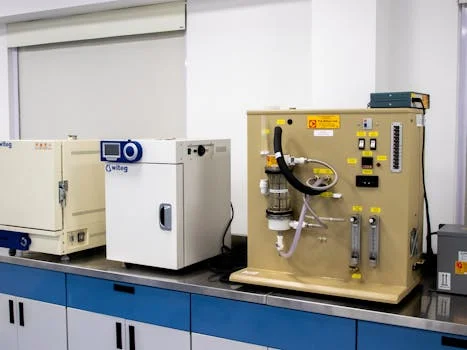
MPCB’s 2024 effluent standards for Class I cities like Pune mandate strict adherence to BOD <30 mg/L, COD <250 mg/L, and TSS <100 mg/L (Notification No. MPCB/2024/12). Failure to match equipment specifications to these limits often leads to the rejection of the "Consent to Operate" (CTO), a risk that can be mitigated by ensuring the chosen equipment technology aligns with the specific pollutants generated by the facility.
Beyond standard parameters, certain industries must account for specialized add-ons. Pharmaceutical units are now being monitored for API levels below 1 mg/L, while textile units must ensure color levels stay below 30 Pt-Co units. Food processing facilities in areas like Hadapsar must prioritize Fats, Oils, and Grease (FOG) removal to levels below 10 mg/L to prevent sewer line blockages and MPCB penalties. These requirements necessitate a shift from generic STPs to specialized wastewater treatment plants (WWTPs) equipped with advanced oxidation or DAF units.
| Parameter | MPCB Standard (Pune) | Recommended Equipment Tech | Removal Efficiency |
|---|---|---|---|
| BOD (Biological Oxygen Demand) | <30 mg/L | SBR or MBR | 90–98% |
| COD (Chemical Oxygen Demand) | <250 mg/L | MBR + Ozone (if required) | 85–95% |
| TSS (Total Suspended Solids) | <100 mg/L | DAF or MBR | 95–99% |
| Fecal Coliform | <100 MPN/100mL | MBR or UV Disinfection | 99.9% |
| Color (Textile Specific) | <30 Pt-Co | DAF + Activated Carbon | 90% |
A recent 2024 case study from a Pune-based textile unit demonstrated that a DAF system combined with advanced oxidation reduced color from 500 Pt-Co to less than 25 Pt-Co, successfully meeting the new MPCB guidelines (HydropureWater 2024 case study). For procurement managers, verifying that a supplier’s equipment can handle these specific loads is the first step in the due diligence process. Referencing a Maharashtra’s 2025 wastewater treatment compliance guide can help ensure all local nuances are covered during the design phase.
Sewage Treatment Technologies Compared: MBR vs DAF vs SBR vs Conventional STP
Membrane Bioreactor (MBR) technology has become the gold standard for Pune industries requiring high-quality recycled water. By utilizing 0.1 μm filtration, MBR systems achieve 99% pathogen removal and produce effluent that is often suitable for cooling tower makeup water without further processing. In Pune, the capital cost for MBR equipment typically ranges from ₹2.4L to ₹3.6L per m³/day of capacity (HydropureWater 2024 project data), making compact MBR systems for Pune hospitals and industries a high-value investment for space-constrained sites.
Dissolved Air Flotation (DAF) is the superior choice for industries with high concentrations of suspended solids and grease, such as food processing and metalworking. DAF systems achieve 95% FOG removal and 90% TSS reduction by using micro-bubbles to float contaminants to the surface for skimming. For Pune-based factories, DAF systems for Pune’s food processing and textile units cost between ₹1.5L and ₹2.5L per m³/day, providing a robust solution for pre-treatment before biological stages.
| Feature | MBR (Membrane Bioreactor) | DAF (Dissolved Air Flotation) | SBR (Sequencing Batch Reactor) | Conventional ASP |
|---|---|---|---|---|
| Effluent Quality | Ultra-High (Reuse ready) | High (Pre-treatment focus) | Moderate to High | Basic |
| Footprint | Very Small (0.5 m²/m³) | Medium | Large (1.2 m²/m³) | Very Large |
| Pathogen Removal | 99.9% | Low | 70–80% | Low |
| Pune CAPEX (per m³) | ₹2.4L – ₹3.6L | ₹1.5L – ₹2.5L | ₹1.6L – ₹2.4L | ₹80K – ₹1.5L |
| Best Use Case | Hospitals, Pharma | Food, Textiles | Townships, General Mfg | Rural/Large Land Sites |
Sequencing Batch Reactors (SBR) remain popular for large residential townships in Pune due to their operational flexibility and ability to handle fluctuating flow rates. While SBR systems have a lower capital cost than MBR, they require tertiary treatment—such as sand filters and UV disinfection—to meet the same fecal coliform limits. For a 500 m³/day hospital STP in Pune, MBR is often the only viable option that meets MPCB’s fecal coliform limit without an oversized tertiary disinfection stage, which would otherwise drive up the total project footprint.
Cost Breakdown: How Much Does Sewage Treatment Equipment Cost in Pune?
The total cost of sewage treatment equipment in Pune is influenced by four primary drivers: treatment capacity, technology type, level of automation, and the scope of civil work. While equipment costs are relatively predictable, civil work can account for 30% to 50% of the total project budget, particularly in rocky terrains common in the Deccan trap region of Pune. Automation using Programmable Logic Controllers (PLC) typically adds 15–20% to the equipment cost but significantly reduces the risk of human error in compliance monitoring.
Based on 2024 market data, a 100 m³/day SBR system for a small industrial unit typically costs between ₹16L and ₹24L. In contrast, a 500 m³/day MBR system, which provides higher water quality for reuse, ranges from ₹1.2Cr to ₹1.8Cr. For heavy industrial applications, a 1,000 m³/day DAF system can cost between ₹1.5Cr and ₹2.5Cr depending on the complexity of the influent. Integrating PLC-controlled chemical dosing for MPCB compliance is essential for these larger systems to maintain consistent effluent quality.
| Capacity (m³/day) | Technology | Equipment Cost Range (Pune) | Estimated OPEX (per m³) |
|---|---|---|---|
| 100 | SBR | ₹16L – ₹24L | ₹1.2 – ₹1.8 |
| 500 | SBR | ₹80L – ₹1.2Cr | ₹1.0 – ₹1.5 |
| 500 | MBR | ₹1.2Cr – ₹1.8Cr | ₹1.8 – ₹2.5 |
| 1,000 | DAF + Biological | ₹1.5Cr – ₹2.5Cr | ₹1.5 – ₹2.2 |
Operating expenses (OPEX) in Pune generally range from ₹0.8 to ₹2.5 per m³ of treated water. While MBR systems have higher OPEX due to energy consumption and membrane replacement every 5–7 years, they offer lower sludge disposal costs and higher water recovery rates. Hidden costs often overlooked by buyers include MPCB approval fees (₹50K–₹2L), civil work delays during the monsoon season, and the cost of tertiary treatment equipment like a chlorine dioxide generator for final disinfection, which can add ₹5L to ₹15L to the total budget.
How to Choose a Supplier: 7 Questions to Ask Before Signing a Contract
Selecting a sewage treatment equipment supplier in Pune requires a rigorous due diligence process that goes beyond looking at the price tag. Because MPCB enforcement is localized, a supplier's familiarity with Pune’s specific regulatory environment is critical for a smooth commissioning process. Use the following seven questions to evaluate potential partners:
- Does your system have an MPCB-approved design certificate? Ask for the specific certificate number and verify it on the MPCB portal. Systems without prior approval may face significant delays during the "Consent to Operate" phase.
- Do you have a Pune-based service team? Wastewater treatment is a continuous process. A response time of more than 24 hours for critical component failures (like blower or pump breakdowns) is a major risk for non-compliance fines.
- What effluent quality guarantees do you offer? Ensure the contract includes specific performance guarantees for BOD, COD, and TSS. Look for penalty clauses that hold the supplier accountable if the system fails to meet these limits under design load conditions.
- Can you share three Pune-based references with similar capacity? Call these references to verify actual uptime, ease of maintenance, and whether the system consistently meets MPCB limits during surprise inspections.
- What is the detailed warranty coverage? For MBR systems, membranes should ideally have a 5-year pro-rata warranty. Pumps and blowers should carry at least a 2-year warranty from the date of commissioning.
- What are the payment terms and milestones? Avoid suppliers demanding more than 50% upfront. Standard industry milestones should include delivery, installation, and final performance testing (proving effluent quality).
- Can the system be upgraded for future regulatory changes? Ask if the design allows for the modular addition of tertiary treatment, such as UV or Ultrafiltration, if MPCB tightens discharge limits in the future.
ROI Calculator: How to Justify the Cost of Sewage Treatment Equipment
Building a business case for high-quality sewage treatment equipment requires shifting the focus from "cost" to "return on investment." The payback period for advanced systems like MBR is often shorter than expected when considering the rising cost of tanker water in Pune and the heavy financial impact of MPCB non-compliance fines. The basic formula for payback is: (Total Capital Cost) / (Annual Savings + Annual Avoidance Costs).
Avoidance costs are a critical part of the calculation. In Pune, MPCB fines for non-compliance range from ₹2L to ₹50L per violation. during peak summer months, industries in Chakan often pay ₹100–₹150 per m³ for tanker water. A system that allows for 80% water recovery can save an industrial unit millions of rupees annually. Additionally, some industries have begun selling excess treated water to nearby construction sites or using it in their own cooling towers, reducing freshwater intake by 30–50%.
| Cost Category | Typical Annual Value (Pune 500 m³/day) | Impact on ROI |
|---|---|---|
| Water Bill Savings (Recycling) | ₹15L – ₹25L | Direct Reduction in OPEX |
| MPCB Fine Avoidance | ₹5L – ₹20L (Projected Risk) | Risk Mitigation |
| Tanker Water Avoidance | ₹10L – ₹15L (Summer Peak) | Supply Security |
| Sludge Disposal Reduction | ₹2L – ₹4L | Process Efficiency |
For example, a ₹1.2Cr MBR system that saves ₹25L per year in water bills and avoids a projected ₹10L in MPCB fines and tanker costs results in a payback period of approximately 3.4 years. Beyond the numbers, high-quality treatment equipment protects the company's reputation, which is vital for pharmaceutical and textile exporters who face strict environmental audits from international buyers.
Frequently Asked Questions
How much does it cost to set up a sewage treatment plant in Pune?For a 500 m³/day capacity, an SBR plant typically costs ₹80L–₹1.2Cr, while an MBR system costs ₹1.2Cr–₹1.8Cr based on 2024 Pune market data. These prices include the main equipment but can vary based on the level of automation and the specific effluent parameters required by MPCB.
What is the difference between STP and WWTP?An STP (Sewage Treatment Plant) is designed to treat domestic wastewater from toilets and kitchens (common in townships and hospitals). A WWTP (Wastewater Treatment Plant) or ETP treats industrial effluent containing chemicals, oils, or heavy metals (common in pharma and textiles). WWTPs usually require more complex equipment like DAF units or chemical dosing systems.
How much does it cost to install a sewage treatment plant in Pune?Installation costs—including civil work, piping, and electrical integration—typically add 30% to 50% to the base equipment cost. For instance, a ₹1Cr equipment package may require an additional ₹40L for civil construction and onsite assembly. Monsoon-related delays can further increase these costs by 20%.
What are the MPCB penalties for non-compliance in Pune?MPCB fines currently range from ₹2L to ₹50L per violation. In severe cases of repeat non-compliance or hazardous discharge, the board has the authority to issue "closure notices," effectively shutting down the facility until a compliant treatment system is commissioned.
Which sewage treatment technology is best for hospitals in Pune?MBR is considered the best technology for hospitals because it provides 99.9% pathogen removal and meets MPCB’s strict fecal coliform limits (<100 MPN/100mL) within a very small footprint. A typical 200-bed hospital in Pune might install a 150 m³/day MBR system for approximately ₹45L–₹60L.