In France, wastewater treatment plant costs vary sharply by scale and technology. A small residential system, such as the Tricel FR6/3000, costs €4,000 to €5,000 for the tank, with annual operational expenses around €350. A municipal plant serving 10,000 population equivalent runs from €5M to €15M in capital expenditure and €150K to €400K per year to operate. Industrial plants in food processing regularly exceed €20M in capital expenditure because pretreatment is mandatory before discharge. Regulatory compliance, including SPANC assessments and EU Urban Waste Water rules under Directive 91/271/EEC and its successor Directive (EU) 2024/3019, adds 10-20% to total project cost. The ROI framework below can be used to compare MBR, DAF, and conventional activated sludge for a specific site.
Cost France: What Drives Plant Pricing in 2025
Cost in France for a wastewater treatment plant is set by three forces: EU compliance deadlines, electricity pricing, and civil works in dense urban or coastal areas. Directive 91/271/EEC still sets the baseline for agglomerations above 2,000 population equivalent.Those deadlines are pushing retrofits across France. French Ministry of Ecological Transition figures from 2024 show project demand and unit costs are 15-25% higher than pre-2022 baselines, mainly because nutrient removal now needs anoxic zones and tighter instrumentation.
Energy is the second force. Electricity now accounts for 30-40% of operational expenditure at French treatment plants, up from about 20% in 2020 according to 2024 EDF industrial tariff benchmarks. The FP2E 2023 workforce report flags a labor shortage that is inflating operations and maintenance costs by 8-12% per year. For small sites, the Service Public d'Assainissement Non Collectif has tightened site evaluations, which adds €200 to €500 to upfront cost. A 5,000 population equivalent plant in Brittany closed out at €11M in 2024 once advanced nutrient removal and material inflation were added.
CAPEX vs OPEX Breakdown by Plant Size
Capital expenditure tracks closely to required effluent quality and population equivalent. Small systems benefit from package designs; municipal and industrial plants need custom civil engineering. For decentralized projects, an underground package sewage treatment plant cuts civil works cost because the unit ships pre-assembled and buries directly.
Industrial facilities in food processing and pharma cannot discharge to municipal sewers without pretreatment. Integrating a high-efficiency DAF system adds 20-30% to upfront investment but is required to strip FOG and high COD loads before the biological stage. An automatic chemical dosing system is typically paired with DAF or tertiary phosphorus removal to hold permit limits without extra operator hours.
| Plant Scale | Capacity (PE) | Estimated CAPEX Range | Estimated OPEX (Annual) | Key Cost Drivers |
|---|---|---|---|---|
| Small / Residential | 1–50 | €4,000 – €20,000 | €350 – €1,200 | Tank material, SPANC fees, desludging |
| Medium / Municipal | 500 – 10,000 | €2M – €15M | €150K – €400K | Civil works, aeration energy, labor |
| Large / Industrial | 10,000+ | €15M – €100M+ | €500K – €2M+ | Advanced pretreatment, sludge management |
Across most French builds we have seen, civil engineering and earthworks absorb 40-50% of capital expenditure, electromechanical equipment 30-40%, and permitting plus engineering studies the remaining 10-20%. On hazardous sludge streams, specialized disposal can add up to 15% to operational expenditure.
Regulatory Compliance Costs: SPANC, EU Directives, and Local Requirements
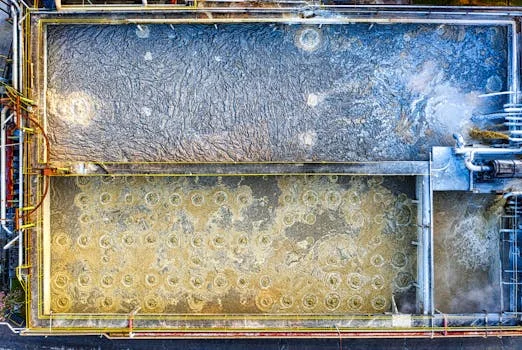
Compliance is a hard floor on every French wastewater budget. The mandatory SPANC visit for non-collective systems costs €200 to €500 and confirms soil and hydrology are compatible with discharge. A failed SPANC assessment usually means a redesign to membrane-based treatment, which pushes the project to the upper end of the cost range.
EU urban wastewater rules drive tertiary treatment. Hitting nitrogen and phosphorus limits adds 10-15% to capital expenditure through anoxic zones or chemical precipitation. Directive (EU) 2024/3019 replaces Directive 91/271/EEC from 1 August 2027 and extends collection duties down to 1,000 PE. French Water Law layers stricter standards on plants discharging into sensitive zones, including coastal areas and protected watersheds; monitoring and reagent use rise 5-10% on operational expenditure. Hospitals must treat pharmaceutical residues and pathogens through a compact medical wastewater treatment system to meet health-sector permits. Larger industrial sites fall under Industrial Emissions Directive 2010/75/EU (integrated pollution prevention and control), where Best Available Techniques add €500K to €2M to capital expenditure for heavy metal and toxic compound control.
Technology Comparison: MBR vs DAF vs Conventional Activated Sludge for French Projects
The right technology balances upfront cost against land and energy. Land in French urban and coastal regions is expensive, so footprint matters as much as sticker price. Conventional Activated Sludge is the lowest capital expenditure route, but its footprint and sludge yield often rule it out for space-constrained municipalities.
Membrane Bioreactor adoption is rising despite higher capital cost. An MBR system cuts required land by up to 60% versus Conventional Activated Sludge and produces effluent that qualifies for water reuse, a priority for the French Water Agency during summer droughts. For industrial streams with high solids or grease, a high-efficiency DAF system is the most cost-effective shield for downstream biology.
| Technology | Relative CAPEX | Relative OPEX | Footprint | Effluent Quality (TSS) |
|---|---|---|---|---|
| MBR | High (€5M–€20M) | Moderate/High | Very Small | < 2 mg/L |
| DAF | Moderate (€1M–€5M) | High (Chemicals) | Small | 10–50 mg/L |
| CAS | Low (€3M–€10M) | Moderate | Large | 15–30 mg/L |
Selection rules used by French engineers on recent bids:
- Choose MBR when space is tight or the project targets water reuse for irrigation or industrial process supply.
- Choose DAF for industrial pretreatment where FOG or suspended solids would swamp a biological system.
- Choose CAS for large municipal projects on available land with a budget focused on minimizing upfront capital expenditure.
ROI Calculator: How to Justify Your Wastewater Treatment Plant Investment
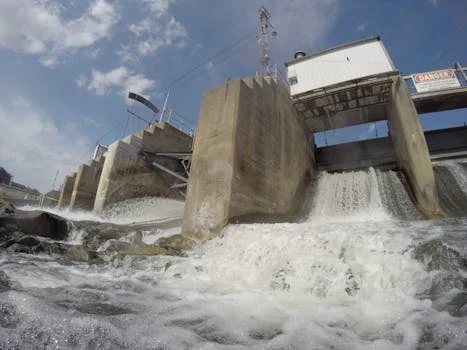
A modern plant pays back through energy recovery and water reuse, not just compliance. The standard payback formula in this sector is:
(Annual Savings + Revenue) / (CAPEX + Annual OPEX) = Payback Period (Years)
Take a 5,000 population equivalent municipal plant at €8M capital expenditure. High-efficiency aeration and sludge-to-energy can save roughly €120K per year. Selling treated effluent to local agriculture at €0.30/m³ adds a second revenue line. French Water Agency guidance indicates water reuse improves project ROI by 20-30% in water-stressed catchments.
| Project Type | CAPEX | Annual Savings/Revenue | Est. Payback Period |
|---|---|---|---|
| Municipal (MBR + Reuse) | €10M | €650K (Energy + Water Sale) | 12–15 Years |
| Industrial (DAF + Recovery) | €4M | €400K (Resource Recovery) | 8–10 Years |
| Small Package Plant | €15K | €500 (Reduced maintenance) | N/A (Compliance-driven) |
Procurement teams should benchmark these numbers against global wastewater treatment cost per gallon benchmarks. French unit prices run higher than cost benchmarks for wastewater treatment plants in Africa, but higher automation and reuse integration typically lower total cost of ownership over a 20-year lifecycle. For international portfolios, the engineering guide for package wastewater treatment plants in Latin America shows that French projects prioritize long-term durability and regulatory resilience.
Selection Checklist for French Wastewater Plant Buyers
Use this list when sizing or comparing bids:
- Population equivalent or design flow with peak factor (typically 2.5x average for municipal)
- Required effluent quality, including nitrogen, phosphorus, and TSS for the receiving water body
- Sensitive zone status under French Water Law, which sets monitoring frequency and reagent use
- Land availability, since footprint can swing the MBR versus CAS decision
- Energy mix and tariff, because electricity is 30-40% of operational expenditure
- Sludge handling route, including hazardous disposal cost on industrial sites
- Water reuse opportunity, since reuse can lift ROI by 20-30%
Who This Is For and Next Step
This breakdown fits municipal engineers sizing 500 to 10,000 PE plants, EPC contractors bidding French industrial pretreatment, and procurement teams comparing MBR, DAF, and CAS packages. It does not cover residential septic selection beyond the cost reference. For a sized proposal with CAPEX, OPEX, and ROI tied to your influent data, request a project quote with your design flow and effluent target.
Frequently Asked Questions
What is the cost of a septic tank in France?
A standard septic tank runs €3,000 to €8,000 for full installation depending on soil and tank size, with annual maintenance of €150 to €400 covering pumping every 4 to 5 years. Mandatory SPANC site assessments add €200 to €500 to upfront cost. Most residential installs we see in 2024-2025 land between €4,500 and €7,000 once the SPANC fee is included.
How much does a 10,000 population equivalent municipal plant cost in France?
Capital expenditure for a 10,000 PE municipal plant in France ranges from €5M to €15M, with annual operational expenditure of €150K to €400K. The wide range reflects civil works, nutrient removal scope, and whether tertiary treatment is required under French Water Law. Plants with water reuse add €1M to €3M to capital expenditure but recover part of that through energy and reuse revenue.
Which wastewater technology is most cost-effective for French sites?
For space-constrained sites, MBR is most cost-effective over a 20-year lifecycle because it cuts footprint by up to 60% and produces reuse-quality effluent. For industrial pretreatment with high FOG or suspended solids, DAF is the cost-effective shield for downstream biology. Conventional Activated Sludge wins only where land is cheap and capital expenditure is the binding constraint.
What regulatory fees apply to a French wastewater project?
SPANC assessment costs €200 to €500 for non-collective systems. Compliance with Directive 91/271/EEC, and with Directive (EU) 2024/3019 from 1 August 2027, adds 10-15% to capital expenditure for nutrient removal. Industrial Emissions Directive 2010/75/EU Best Available Techniques add €500K to €2M at large industrial sites. Sensitive zone designation under French Water Law raises operational expenditure by 5-10% through monitoring and reagent use.
How is ROI calculated for a wastewater treatment plant in France?
Payback period equals (Annual Savings plus Revenue) divided by (CAPEX plus Annual OPEX). For a 5,000 PE municipal plant at €8M capital expenditure, high-efficiency aeration saves about €120K per year and water reuse at €0.30/m³ adds further revenue, putting payback in the 12-15 year range. French Water Agency data shows water reuse improves ROI by 20-30% in water-scarce catchments.