Package Wastewater Treatment Plants in Iowa USA: 2025 Engineering Guide with Costs, Compliance & Supplier Checklist
Iowa’s 2025 package wastewater treatment plants deliver 90–98% BOD₅ removal and 92–99% TSS reduction in a footprint as small as 40 m², meeting Iowa DNR NPDES limits (e.g., 10 mg/L Total Nitrogen, 1 mg/L ammonia-N). Prefabricated systems cost $120K–$2.1M (vs. $3M–$15M for conventional plants) and require 6–12 months for permitting and installation, with modular designs allowing future capacity expansions.
"We’ve patched this 1960s trickling filter for the last time; the DNR won’t grant another variance, and we don't have $10 million for a new lagoon system," noted one Iowa city manager during a 2024 infrastructure planning session.
This frustration is common across Iowa, where aging infrastructure meets increasingly stringent water quality standards. For municipal engineers and industrial facility managers, the choice between a massive civil works project and a modular solution often comes down to the speed of compliance and long-term operational costs. Package plants offer a middle ground, providing high-intensity biological treatment within a prefabricated steel or reinforced plastic hull.
Package vs. Conventional Wastewater Treatment Plants: Iowa-Specific Trade-offs
Package wastewater treatment plants are prefabricated, modular systems that integrate biological treatment, sedimentation, and disinfection into a single or multi-tank configuration. Unlike conventional activated sludge systems that require extensive on-site concrete pouring and basin excavation, these systems—such as the Iowa-optimized WSZ Series package plants for municipal and industrial wastewater—arrive on-site ready for utility connection. These units typically handle capacities ranging from 1 to 80 m³/h, making them ideal for small municipalities, housing developments, or industrial sites.
In terms of physical footprint, package plants require only 40–200 m² of land, whereas conventional systems often demand 500–5,000 m² to accommodate large clarifiers and aeration basins (per Iowa DNR 2024 site data). This is a critical factor for facilities in land-locked industrial zones or historic Iowa towns where expansion space is non-existent. the 2023 EPA Clean Watersheds Needs Survey indicates that conventional builds for small-to-mid-sized communities now range from $3M to $15M, while package systems remain within the $120K–$2.1M bracket, including installation.
The permitting timeline also favors modularity. An Iowa DNR NPDES permit for a conventional plant can take 18–36 months due to complex environmental impact assessments and multi-stage engineering reviews. Package plants, utilizing standardized designs, typically clear the process in 6–12 months. Additionally, these systems offer 20–30% capacity expansion potential simply by adding modules, whereas conventional plants require the construction of entirely new basins.
| Feature | Package Plant (Modular) | Conventional Activated Sludge |
|---|---|---|
| Footprint | 40–200 m² | 500–5,000 m² |
| Capital Cost | $120K – $2.1M | $3M – $15M |
| Installation Time | 2–4 months | 12–24 months |
| Permitting Window | 6–12 months | 18–36 months |
| Scalability | High (Add modules) | Low (Requires new civil works) |
Iowa DNR Compliance Requirements for Package Wastewater Treatment Plants
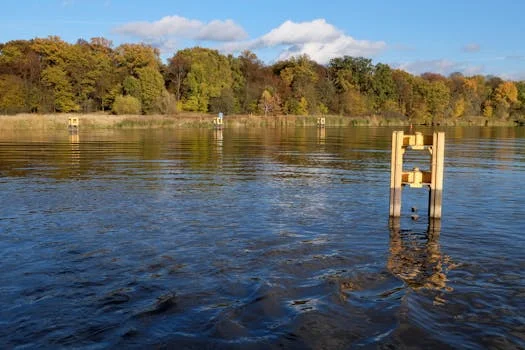
Iowa DNR NPDES discharge limits for municipal and industrial wastewater generally mandate 30 mg/L for both BOD₅ and TSS, though high-quality receiving streams often require 10 mg/L Total Nitrogen and 1 mg/L ammonia-N. To secure a permit, an owner must submit a comprehensive site plan and an engineering report prepared by a licensed Iowa Professional Engineer. This is followed by a public notice period and a formal 90-day DNR technical review (per Iowa DNR 2024 guidelines).
Industrial users, particularly those in food processing or metal finishing, must also address pretreatment requirements. Local limits, such as those seen in the Perry, IA wastewater upgrades, often require the removal of heavy metals, fats, oils, and grease (FOG) before the effluent enters the biological stage of the package plant. Failure to pretreat can lead to biomass "washouts" and subsequent NPDES violations. Monitoring is equally rigorous; monthly Discharge Monitoring Reports (DMRs) must be filed electronically, documenting flow rates, pH, and nutrient concentrations.
Future-proofing is essential for Iowa buyers. The Iowa Nutrient Reduction Strategy is projected to lower nitrogen limits further, potentially reaching 5 mg/L by 2027 for many dischargers. Investing in a system with integrated Denitrification (A/O or MBR) today prevents the need for a costly retrofit in three years. For those evaluating regional differences, you can learn how Alabama’s industrial wastewater compliance compares to Iowa’s to understand the stringency of Midwestern nutrient standards.
| Parameter | Standard Iowa NPDES Limit | Enhanced Nutrient Limit (2025+) |
|---|---|---|
| BOD₅ | 30 mg/L | <10 mg/L |
| TSS | 30 mg/L | <10 mg/L |
| Total Nitrogen | 10 mg/L | 5 mg/L |
| Ammonia-N | 1 mg/L (Summer) | 0.5 mg/L |
| E. coli | 126 CFU/100mL | 126 CFU/100mL |
Technical Specifications for Package Wastewater Treatment Plants in Iowa
BOD₅ and TSS removal efficiencies for Iowa package plants typically range from 90–98% for municipal waste and 85–95% for industrial streams, according to 2023 EPA Technology Fact Sheets. For facilities targeting the North Raccoon River or other sensitive watersheds, nitrogen removal becomes the priority. Anoxic/Aerobic (A/O) systems achieve 60–80% nitrogen removal, while Membrane Bioreactor (MBR) configurations can reach 95%, as evidenced by the goals of the Perry WWTP project. These high removal rates are achieved in a footprint of 0.5–2 m² per m³/day of capacity, often utilizing underground installation to save surface space.
Energy efficiency is a major differentiator in 2025. Package plants consume between 0.2 and 0.5 kWh/m³ of treated water, significantly lower than the 0.4–0.8 kWh/m³ typical of older, conventional activated sludge plants (per EPA 2024 Energy Benchmarking). Sludge management is handled via integrated thickening or external dewatering. For high-solids applications, using high-efficiency sludge dewatering for Iowa package wastewater treatment plants can reduce disposal volume by up to 75%, lowering tipping fees at regional landfills.
Disinfection is the final critical technical hurdle. While chlorine tablets were once the standard, many Iowa permits now favor Chlorine Dioxide (ClO₂) or UV to avoid toxic residual chlorine. EPA-compliant ClO₂ generators for Iowa wastewater disinfection provide stable pathogen inactivation without the carcinogenic byproducts associated with traditional bleach. This is particularly relevant for sites considering water reuse for irrigation or industrial cooling.
| Specification | WSZ Series (Standard) | MBR Modular (High-Spec) |
|---|---|---|
| BOD₅ Removal | 92–95% | 98%+ |
| Total Nitrogen Removal | 70% | 90–95% |
| Energy Use (kWh/m³) | 0.25 | 0.45 |
| Sludge Yield | 0.25 kg TSS/kg BOD | 0.15 kg TSS/kg BOD |
| Automation Level | PLC/SCADA Integrated | Remote Monitoring/AI |
Cost Breakdown for Package Wastewater Treatment Plants in Iowa: 2025 Benchmarks
Equipment costs for 2025 range from $80K for small 10 m³/day units to $1.5M for high-capacity 500 m³/day systems. However, the purchase price is only one component of the total project budget. Installation costs—including site preparation, electrical wiring, plumbing, and civil pads—typically add $40K to $600K. Permitting fees and engineering reports generally account for another $10K to $50K depending on the complexity of the DNR review process. For a broader perspective on how these figures align with other regions, you can compare Iowa wastewater treatment costs with other U.S. markets.
Operating and maintenance (O&M) costs in Iowa fluctuate between $0.10 and $0.30 per cubic meter. This includes electricity, chemicals for phosphorus removal or disinfection, and labor. A unique "Iowa factor" is the necessity for cold-weather adjustments. To maintain biological activity during sub-zero winters, tanks must often be insulated or equipped with heat tracing, adding 10–15% to the initial capital expenditure. However, this is far more cost-effective than the heating requirements of large-scale open-air lagoons.
The Return on Investment (ROI) for a package plant is often realized within 5–7 years when compared to the debt service and high O&M of a conventional plant. A 100 m³/day package plant might have a 10-year Total Cost of Ownership (TCO) of approximately $1.1M, whereas a conventional system of the same capacity, including the massive initial civil investment, could exceed $4.5M.
| Cost Category | Package Plant (100 m³/day) | Conventional (100 m³/day) |
|---|---|---|
| Equipment/Civil Capital | $450,000 | $3,200,000 |
| Installation & Permitting | $120,000 | $800,000 |
| Annual O&M | $18,000 | $55,000 |
| 10-Year TCO | $750,000 | $4,550,000 |
Supplier Selection Checklist for Iowa Package Wastewater Treatment Plants
When selecting a supplier, technical expertise regarding Iowa DNR NPDES limits is the most critical factor. A supplier should be able to provide case studies from similar climates, such as installations in Burlington or the Iowa Great Lakes Sanitary District. It is also vital to confirm that the vendor provides comprehensive permitting assistance, including the technical documentation required for the 90-day DNR review. For international comparisons, you might see how Iowa’s package plant requirements differ from international markets like Mexico, where regulatory focus may shift from nutrients to pathogens.
Service and support are equally important. Evaluate the supplier's response time for spare parts and their ability to provide on-site training for local operators. A standard warranty should include at least 1 year for mechanical equipment and 5 years for the structural integrity of the tanks. Finally, insist on cost transparency; any quote should be itemized to show equipment, installation, and projected O&M separately to avoid "hidden" costs during the commissioning phase.
| Evaluation Criteria | Requirement for Iowa Projects |
|---|---|
| DNR Experience | Must have successfully permitted 3+ plants in Iowa. |
| Cold Weather Design | Verified insulation and heat-loss calculations for -20°F. |
| Nutrient Removal | Guaranteed compliance with <10 mg/L TN and <1 mg/L NH3. |
| Warranty | Minimum 5-year structural / 1-year mechanical. |
| Local Support | Technician availability within 24–48 hours. |
Frequently Asked Questions
How long does it take to install a package plant in Iowa?
From the initial engineering report to final commissioning, the process typically takes 6 to 12 months. The physical installation on-site usually requires only 8 to 12 weeks, as most of the construction happens in a controlled factory environment.
Can package plants handle Iowa’s extreme winter temperatures?
Yes. Modern package plants use insulated tank walls and submerged aeration to maintain a consistent internal temperature. For extreme northern Iowa locations, supplemental heat tracing or housing the unit in a simple pole building is recommended to ensure biological activity remains high during January and February.
Are package plants suitable for industrial food processing waste?
Absolutely. However, industrial waste often requires a pretreatment module (such as a DAF system or fine screen) to remove high FOG and solids before entering the biological package plant. This prevents the system from becoming overloaded and ensures compliance with NPDES discharge limits.
What is the typical lifespan of a prefabricated package plant?
With proper maintenance and cathodic protection (for steel tanks), a package plant has a design life of 20 to 25 years. Reinforced polymer or stainless steel options can extend this lifespan even further, rivaling the longevity of traditional concrete structures.