Executive Summary: 2025 Budget & Performance Benchmarks
Industrial pH adjustment system manufacturers offer skid-mounted neutralisation systems from 1 to 10,000 GPM; 2025 budget prices run $3–12 per GPM of capacity, with CO₂-based systems cutting chemical cost 35–60% versus caustic soda. For procurement engineers, the median CAPEX for a standard continuous flow system in 2025 sits at approximately $5.50 per GPM for systems exceeding 500 GPM, while smaller batch-based systems often command a premium of $10–12 per GPM due to the increased structural steel and instrumentation requirements per unit of volume treated. These figures represent the total equipment cost, including PLC-based control panels, redundant sensor arrays, and chemical injection manifolds (HydropureWater field data, 2025).
In addition to CAPEX, 2025 maintenance budgets should allocate approximately 3-5% of the initial equipment cost annually for consumables such as pH probes, pump diaphragms, and calibration buffers. High-reliability systems now frequently incorporate triple-modular redundancy (TMR) for sensors in critical discharge points to prevent accidental non-compliance penalties, which can exceed $10,000 per day in strictly regulated jurisdictions. Furthermore, the integration of digital twin technology in high-end models allows for predictive maintenance, potentially extending the mean time between failures (MTBF) for dosing pumps by up to 25% compared to 2020-era equipment.
Performance benchmarks for 2025 emphasize discharge precision and chemical efficiency. Leading two-stage systems now guarantee a discharge stability of ±0.2 pH units even under fluctuating influent loads. Delivery timelines have stabilized since the supply chain disruptions of previous years, with standard skid-mounted units currently quoting a 10–14 week lead time FOB from major industrial hubs in Ohio or California. Below is a summary of the 2025 budgetary and performance landscape for industrial pH adjustment:
| Parameter | Batch Systems (0–100 GPM) | Continuous Systems (100–10,000 GPM) | CO₂ Sparge Systems |
|---|---|---|---|
| 2025 CAPEX Range | $15,000 – $85,000 | $45,000 – $450,000+ | $35,000 – $120,000 |
| Cost per GPM | $8 – $12 | $3 – $7 | $4 – $9 |
| Chemical OPEX | High (Caustic/Acid) | Moderate (Bulk) | Lowest (35-60% Savings) |
| Footprint | Compact (Skid) | Large (Multi-Tank) | Moderate |
| Lead Time | 10 Weeks | 12–16 Weeks | 10–12 Weeks |
How to Choose Between Batch, Continuous and Hybrid pH Systems
Influent variability, specifically the rate of pH change and the presence of buffering agents, dictates whether a batch, continuous, or hybrid system architecture is required for a specific industrial application. Selecting the wrong architecture often leads to "pH hunting," where the system oscillates between over-dosing acid and base, resulting in chemical waste and potential compliance violations. For facilities where the inlet pH swings more than 4 units in less than 30 minutes—typical in metal finishing dump rinses—a batch system is the industry standard. Batch systems hold the entire volume until the target pH is reached, ensuring 100% compliance before discharge, regardless of how aggressive the initial waste stream was.
Beyond flow rates, the "dead time"—the delay between chemical injection and the sensor detecting a change—is a critical design constraint for 2025 installations. High-efficiency impellers and static mixers are being utilized to reduce this dead time to under 30 seconds, allowing for tighter control loops and reduced chemical overshoot. For processes with high solids content, such as ceramic manufacturing or mining runoff, batch systems are often preferred regardless of flow rate to prevent clogging of sensitive continuous-flow manifolds and to allow for settling time if combined with heavy metal precipitation stages.
Conversely, continuous flow systems are preferred when volumes exceed 200 GPM and the influent pH is relatively stable, varying by fewer than 2 units. This is common in food processing CIP (Clean-in-Place) operations. While continuous systems have a lower CAPEX per GPM, they require sophisticated PLC-controlled chemical dosing packages for pH neutralisation to manage the residence time effectively. The "Residence Time Rule" for 2025 designs suggests a minimum of 5–7 minutes per pH unit shift for strong acid/strong base reactions to allow for full molecular dissociation and probe stabilization. Hybrid systems, utilizing a continuous first stage for bulk adjustment and a batch "polish" stage, are increasingly used when local discharge limits are extremely narrow, such as a 6.5–7.5 pH window.
| Selection Factor | Batch Treatment | Continuous Flow | Hybrid (Two-Stage) |
|---|---|---|---|
| Flow Rate | Best for <50 GPM | Best for >200 GPM | Variable / High Flow |
| pH Variability | Extreme (pH 1 to 13) | Moderate (±2 units) | High Variability |
| Chemical Usage | Optimized (Buffering) | Higher (Risk of Over-dose) | Highly Efficient |
| Reaction Time | Unlimited | Fixed (Tank Volume) | Multi-stage Retention |
| Best Application | Batch Metal Finishing | Food/Beverage Processing | Complex Chemical Mfg |
Manufacturer Comparison Table: 2025 Specs & Regional Footprint
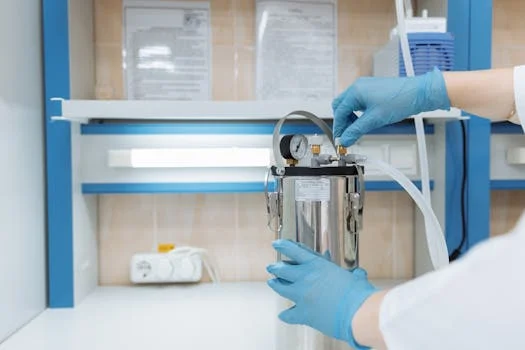
Leading manufacturers of pH neutralization systems provide standardized skid-mounted platforms that range from 1 to 10,000 GPM with varying degrees of automation and material compatibility. When shortlisting vendors, procurement engineers must weigh regional support against specific technical capabilities, such as CO₂ integration or explosion-proof certifications. In the current market, most top-tier vendors offer UL-listed control panels and remote PLC access as standard features, but specific material choices like 316SS wetted parts or Hastelloy sensors vary by manufacturer specialization.
Modern manufacturers are also increasingly integrating Industrial Internet of Things (IIoT) capabilities into their standard offerings. This allows for real-time data logging and cloud-based alerts, which are essential for meeting the stringent reporting requirements of the 2025 regulatory landscape. Many Tier 1 vendors now include cellular gateways as a standard option, enabling remote diagnostics that can resolve up to 70% of control logic issues without a site visit, significantly reducing long-term service costs and downtime for facilities in remote locations.
The following table compares the four dominant architectural approaches found in the 2025 industrial market. These systems are typically evaluated based on their ability to handle aggressive chlorides or high-temperature effluents while maintaining a compact footprint for existing facility integration. For international projects, it is vital to check China industrial effluent limits 2025 update or relevant local standards to ensure the manufacturer's control logic meets specific regional reporting requirements.
| Manufacturer Type | Primary Region | Flow Range (GPM) | Core Technology | Key Advantage |
|---|---|---|---|---|
| Midwest Tier 1 Vendor | Cleveland, OH | 1 – 10,000 | Two-stage continuous | 316SS standard construction |
| Western Multi-Family Provider | Utah / Colorado | 0.5 – 10,000 | Batch & Continuous | Diverse product families (Lab to Large Scale) |
| Custom 'As-Built' Specialist | Illinois | 10 – 2,000 | Integrated Sludge/pH | IECEx ratings for offshore/hazardous sites |
| Carbonic Acid Specialist | Los Angeles, CA | 50 – 5,000 | CO₂ Sparge Systems | Lowest OPEX for alkaline neutralization |
Total Cost of Ownership: CO₂ vs Caustic Soda Neutralisation
Transitioning from caustic soda to carbon dioxide for alkaline neutralization can reduce annual chemical expenditures by up to 60% while improving discharge safety. While 50% caustic soda (NaOH) prices in early 2025 range from $550–$600 per tonne in the Midwest, food-grade CO₂ remains significantly more economical at $120–$150 per tonne. Beyond the unit price, the stoichiometry of the reaction favors CO₂; approximately 0.9 kg of CO₂ is required to neutralize the same amount of acid as 2.2 kg of 50% caustic soda, further widening the cost gap (HydropureWater field data, 2025).
Storage infrastructure also impacts the 10-year TCO significantly. Caustic soda (50%) crystallizes at temperatures below 15°C (60°F), necessitating heat-traced tanks and insulated piping in colder climates, which increases electrical utility costs. Conversely, CO₂ storage requires refrigerated bulk tanks or high-pressure cylinder manifolds, which have higher initial rental or purchase costs but require virtually no energy for freeze protection. When factoring in the reduced frequency of mandatory hazardous material handling training for staff and the elimination of secondary containment inspections required for caustic, the soft-cost savings of CO₂ often outweigh the initial hardware premium within the first 18 to 24 months of operation.
The 10-year Total Cost of Ownership (TCO) also accounts for safety and insurance premiums. Caustic soda is a Tier 1 hazardous material requiring specialized containment, PPE, and emergency wash stations. CO₂ systems, which form mild carbonic acid in situ, eliminate the risk of chemical burns and can often reduce a facility’s insurance risk category. For companies tracking ESG metrics, replacing caustic soda with CO₂ offers a Scope 3 reduction of approximately 0.8 tonnes of CO₂ equivalent offset per tonne of caustic replaced, potentially qualifying the facility for carbon credits.
| Cost Category (10-Year Horizon) | 50% Caustic Soda (NaOH) | CO₂ (Carbon Dioxide) |
|---|---|---|
| Average Chemical Cost/Tonne | $575 | $135 |
| Relative Consumption Rate | 100% (Baseline) | 41% (By Weight) |
| Annual Chemical Spend (500 GPM) | $78,000 | $30,000 |
| Safety/PPE Requirement | High (Level 1) | Low (Level 3) |
| Carbon Footprint Impact | High (Manufacturing) | Net Negative (Sequestration) |
Sizing Worked Example: 300 GPM Metal Finishing Effluent
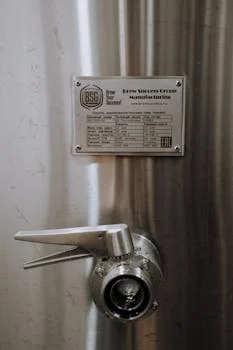
Sizing a 300 GPM metal finishing effluent system requires a minimum 15-minute hydraulic retention time (HRT) to ensure complete chemical reaction and prevent "pH hunting" in the control loop. In this scenario, a facility generates 300 GPM of continuous waste with an influent pH of 2.5, primarily consisting of 500 mg/L sulfuric acid (H₂SO₄) at 25 °C. The target discharge limit is a pH range of 6.5–8.5, as per local municipal requirements.
The presence of dissolved metals like copper or nickel in the metal finishing stream also acts as a buffer, requiring more precise titration curves than pure water. For 2025 designs, engineers are utilizing computational fluid dynamics (CFD) modeling to ensure that the reaction tanks eliminate "short-circuiting," where untreated effluent bypasses the mixing zone. This ensures that every drop of the 300 GPM flow experiences the full 15-minute residence time, maintaining a consistent discharge quality even during peak production surges or shifts in chemical concentrations from upstream process baths.
The engineered solution utilizes a two-stage approach for maximum stability. In Stage 1, a lime slurry or magnesium hydroxide is dosed via an automatic chemical dosing system to raise the pH to 5.5, which increases the effluent alkalinity to approximately 420 mg/L as CaCO₃. In Stage 2, a CO₂ sparge system is employed to fine-tune the pH to 7.2. This specific configuration consumes roughly 38 kg of CO₂ per day. To achieve the required HRT, two 1.9 m³ reaction tanks are specified, resulting in a skid footprint of 3.0 x 1.5 meters. For this application, 316SS piping and EPDM seals are mandatory to protect against chloride pitting and acidic corrosion over a 20-year service life.
Frequently Asked Questions
What is the typical lifespan of pH sensors in industrial wastewater?
In most industrial applications, pH sensors last 6 to 12 months. However, in streams containing oils, fats, or heavy scaling minerals, sensors may require cleaning weekly and replacement every 3 to 4 months. Utilizing a PLC automation guide for wastewater systems can help set up automated cleaning cycles to extend this lifespan.
Can CO₂ systems be used for acidic wastewater?
No, CO₂ is used only for neutralizing alkaline (high pH) wastewater. When dissolved in water, CO₂ forms carbonic acid, which lowers the pH. For acidic wastewater, a base such as caustic soda, lime, or magnesium hydroxide must be used to raise the pH level to the desired neutral range.
How does temperature affect pH measurement accuracy?
Standard pH readings are highly temperature-dependent. Modern 2025 systems use Automatic Temperature Compensation (ATC) to adjust the slope of the pH electrode based on the effluent temperature. In high-temperature applications like textile dyeing or steam condensate return, failing to use an ATC-enabled probe can result in measurement errors of up to 0.5 pH units, potentially leading to regulatory fines.
Are skid-mounted systems truly "plug-and-play"?
While the internal piping and wiring are complete, "plug-and-play" usually excludes the main influent/effluent plumbing, main power drops to the control panel, and the bulk chemical storage tank connections. Expect 2–4 days of on-site commissioning by a qualified technician to calibrate sensors and tune the PID loops for your specific site chemistry.
How do I handle "pH hunting" in my existing system?
pH hunting is usually caused by insufficient tank mixing or a dosing pump that is oversized for the flow rate. Reducing the pump stroke or adding a variable frequency drive (VFD) to the mixer can often stabilize the control loop without requiring a full system replacement. Modern controllers also offer "fuzzy logic" settings that can adapt to these oscillations automatically.