Wet scrubbers and dry scrubbers both control acidic gases and particulate matter in industrial exhaust, but they differ in capture mechanism, utilities, footprint, and waste form. A wet scrubber dry scrubber comparison starts with pollutant load and gas temperature. Humidity, water and solids handling, and the stack emission limit complete the screening.
Wet systems commonly reach 95–99% removal of particulate matter and acidic gases such as SO₂ and HCl when liquid contact is adequate, and they suit high-temperature or high-humidity streams. Dry systems that use dry sorbents or spray dryer absorption often deliver about 80–90% removal with lower fan energy and no scrubber wastewater, but they need tighter gas-condition control. Capital cost ranges in the original engineering data are about $500K–$5M for wet units versus $300K–$3M for dry units. Operating costs are about $0.50–$2.00 per 1,000 m³ wet versus $0.30–$1.20 per 1,000 m³ dry. Wet trains often need 2–3× more plot space than dry trains at the same gas flow.
Wet Scrubber Dry Scrubber Comparison: Key Engineering Trade-offs
Wet scrubbers remove soluble gases and particles by gas-liquid contact. They typically reach 95–99% SO₂, HCl, and fine PM removal when L/G, chemistry, and mist elimination are controlled. Dry scrubbers use dry sorbents or evaporating slurry and need a downstream particulate collector. Choose wet for hot, moist, high-acid loads; choose dry when space, water, or wastewater permits are limited.
Pressure drop drives fan power: wet scrubbers typically show 5–25 cm H₂O, while dry scrubbers generally show 1–5 cm H₂O (Mach Engineering, 2023). Wet units can treat streams from about 100–1,000°C at 10–100% humidity. Dry units usually need cooler, drier gas, often below 200°C and under 10% humidity, to limit caking and keep sorbent reactive (DoverMEI, 2021).
How Wet and Dry Scrubbers Work: Mechanisms and Process Flows
Wet scrubbers transfer soluble gases and particulate matter from the exhaust into a scrubbing liquid in spray towers, packed beds, or venturi vessels. Liquid-to-gas ratios of 0.5–2.0 L/m³ are widely used for many industrial absorbers, as referenced to EPA AP-42 practice, so droplets or wetted packing present enough surface for absorption and reaction. Gas enters the vessel, contacts water or reagent slurry such as lime, then exits through a demister. Spent liquid is collected for treatment or disposal.
Dry scrubbers use dry reagents without a continuous wet blowdown. In dry sorbent injection, powdered hydrated lime or sodium bicarbonate enters the hot duct. The powder reacts with SO₂ and HCl. Solids are then captured in a downstream high-efficiency baghouse for dry scrubber PM control. Spray dryer absorption atomizes alkaline slurry into hot gas so water evaporates and dry particles continue the acid-gas reaction. Stoichiometric ratios of about 1.1–1.5 moles Ca(OH)₂ per mole SO₂ are typical design targets for dry acid-gas control.
| Parameter | Wet Scrubber | Dry Scrubber |
|---|---|---|
| Pollutant Capture Mechanism | Gas-liquid contact (absorption, impaction) | Dry sorbent reaction (adsorption, chemical reaction) |
| Liquid-to-Gas Ratio (L/G) | 0.5–2.0 L/m³ (EPA AP-42) | N/A (no liquid waste) |
| Stoichiometric Ratio (Sorbent) | N/A (liquid reagent) | 1.1–1.5 moles Ca(OH)₂ per mole SO₂ |
| Pressure Drop | 5–25 cm H₂O (Mach Engineering, 2023) | 1–5 cm H₂O (Mach Engineering, 2023) |
| Max Operating Temperature | 1,000°C | 200°C (DoverMEI, 2021) |
| Humidity Tolerance | 10–100% | <10% (DoverMEI, 2021) |
Pollutant Removal Efficiency: What Each System Captures
Wet scrubbers generally deliver higher removal for acidic gases and fine particulate matter because liquid-phase reactions proceed quickly when contact and solubility are adequate. The SO₂ + Ca(OH)₂ reaction to calcium sulfite in a wet absorber is a common example. A Flue Gas Desulfurization (FGD) Scrubber System is typically selected when stack SO₂ and PM limits are tight and gas moisture is high.
According to US EPA flue gas desulfurization fact sheets, wet scrubbers typically achieve greater than 90% SO₂ removal. Dry scrubbers typically achieve less than 80% SO₂ removal under the conditions summarized there. Earlier industry ranges used in this article list dry SO₂ removal at 80–95% (CECO Enviro, 2023). Treat the EPA fact-sheet range as the more conservative planning band for dry systems. Dry scrubbers can lose performance on fine PM₂.₅ and on high-moisture gas that cakes sorbent (CECO Enviro, 2023). Neither wet nor dry scrubbers replace SCR or SNCR for substantial NOₓ control.
| Pollutant | Wet Scrubber Removal Efficiency | Dry Scrubber Removal Efficiency |
|---|---|---|
| SO₂ | 90–99% (EPA AP-42) | 80–95% (CECO Enviro, 2023) |
| HCl | 95–99% (EPA AP-42) | 90–98% (Mach Engineering, 2023) |
| Particulate Matter (PM₂.₅) | 95–99% (Mach Engineering, 2023) | 80–90% (CECO Enviro, 2023) |
| NOₓ | 10–30% | 5–20% |
| Heavy Metals (Hg, Cd) | 90–98% (EPA AP-42) | 50–80% |
One coal-fired plant case in the source material moved from dry sorbent injection to wet FGD. High SO₂ loading and a ≤35 mg/m³ stack target made dry performance unreliable above about 98% removal demand. That pattern matches plants that need wet chemistry for high SO₂ duty.
Can a Wet Scrubber Remove Dust and Gas Together?
A wet industrial scrubber can remove dust and acid gas in one vessel when the design provides both particulate capture and chemical absorption. Venturi and packed or spray absorbers combine impaction of particles with absorption of SO₂ or HCl into the same liquid. Plants still size L/G, pressure drop, and mist elimination for the harder pollutant, and they plan wastewater treatment for the combined solids and dissolved salts.
Dry trains usually split the duties: sorbent reacts with acid gas, then a baghouse or ESP collects solids. If your exhaust carries both heavy PM and high acid-gas load, a combined wet scrubber often reduces equipment count, provided water and effluent treatment capacity exist.
Engineering Parameters: Gas Flow Rates, Footprint, and Utility Requirements
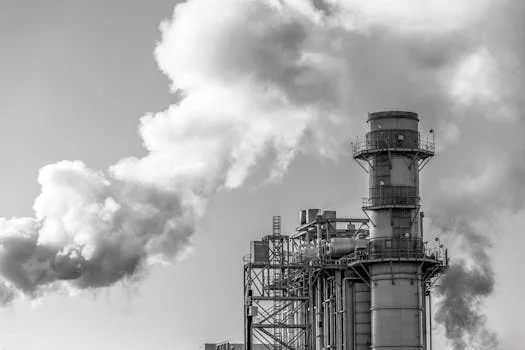
Wet scrubbers commonly cover about 1,000–500,000 m³/h, which fits large power and chemical trains. Dry scrubbers are often applied from about 500–300,000 m³/h and stay more compact when duct and silo layout allow.
Footprint guidance from HydropureWater field data (2025) is about 2–10 m² per 1,000 m³/h for wet systems versus 0.5–3 m² per 1,000 m³/h for dry systems. At 50,000 m³/h, that is roughly 100–500 m² wet versus 25–150 m² dry. Space alone can decide the technology when real estate is limited.
Wet scrubbers use about 0.5–2.0 L water per m³ of gas. They need clarifiers, pH control, and sludge handling. Many sites evaluate treating wet scrubber wastewater in industrial facilities. They also review wastewater treatment solutions for wet scrubber effluent. Power use is typically 0.5–2.0 kWh per 1,000 m³ because of fan and pump duty. Reagent feed is often 1.1–1.5× stoichiometric. Dry scrubbers use no scrubbing water but need silos and conveyors; power is often 0.2–1.0 kWh per 1,000 m³, with reagent nearer 1.0–1.2× stoichiometric. Automated wet reagent feed is commonly handled by HydropureWater's automatic chemical dosing systems.
Gas velocity also differs: wet absorbers often run at 1–3 m/s for contact time, while dry systems may run at 10–20 m/s (Mach Engineering, 2023), which supports the smaller vessel diameter.
| Parameter | Wet Scrubber | Dry Scrubber |
|---|---|---|
| Gas Flow Rate Capacity | 1,000–500,000 m³/h | 500–300,000 m³/h |
| Footprint per 1,000 m³/h | 2–10 m² (HydropureWater field data, 2025) | 0.5–3 m² (HydropureWater field data, 2025) |
| Water Consumption | 0.5–2.0 L/m³ | 0 |
| Reagent Consumption | 1.1–1.5× stoichiometric | 1.0–1.2× stoichiometric |
| Power Consumption | 0.5–2.0 kWh per 1,000 m³ | 0.2–1.0 kWh per 1,000 m³ |
| Typical Gas Velocity | 1–3 m/s (Mach Engineering, 2023) | 10–20 m/s (Mach Engineering, 2023) |
Cost Comparison: CAPEX, OPEX, and ROI for Wet vs Dry Scrubbers
For a 100,000 m³/h system, original cost bands place wet CAPEX at about $2.5M–$5M. Dry CAPEX is about $1.5M–$3M (CECO Enviro, 2023; industry benchmarks, 2025). Wet cost drivers include corrosion-resistant alloys or FRP and integrated wastewater treatment. Dry cost drivers include reagent storage, conveying, and the downstream PM collector.
Annual OPEX in the same data set is about $500K–$1.2M for wet systems and $300K–$800K for dry systems (CECO Enviro, 2023; industry benchmarks, 2025). Reagents often take about 40% of OPEX, energy about 30%, and maintenance about 20%, with wastewater treatment adding about 10% on wet trains. Dry trains shift more spend to reagent and less to liquid handling (Mach Engineering, 2023).
At 200,000 m³/h, simple payback in the source material was about 5 years wet versus about 3 years dry when CAPEX and energy dominate. Permitting still matters: wet systems need wastewater discharge approvals, while dry systems need solid-waste disposal approvals for spent sorbent, which can be hazardous depending on captured metals.
| Cost Category | Wet Scrubber (100,000 m³/h system) | Dry Scrubber (100,000 m³/h system) |
|---|---|---|
| Capital Expenditure (CAPEX) | $2.5M–$5M (2025 USD) | $1.5M–$3M (2025 USD) |
| Annual Operating Expenditure (OPEX) | $500K–$1.2M (2025 USD) | $300K–$800K (2025 USD) |
| OPEX Breakdown (Approximate) | Reagents (40%), Energy (30%), Maintenance (20%), Wastewater Treatment (10%) | Reagents (40-50%), Energy (30-40%), Maintenance (10-20%) |
| Key CAPEX Drivers | Corrosion-resistant materials, wastewater treatment system | Reagent storage & handling, downstream PM control |
| Typical ROI (200,000 m³/h) | ~5 years | ~3 years |
Regulatory Compliance: Meeting EPA, EU, and China Emission Standards
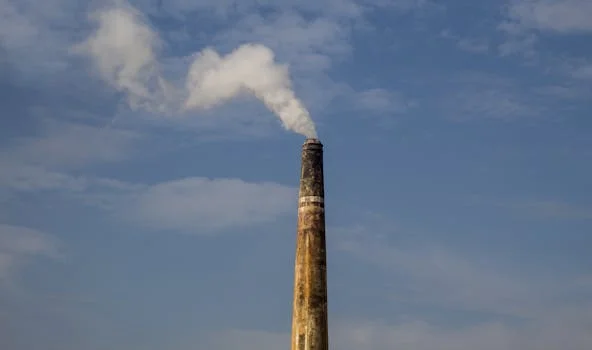
Emission limits often decide whether a wet or dry train is workable without secondary polishing. Wet scrubbers usually provide the higher SO₂ and PM removal margin when limits are low (Mach Engineering, 2023). EU Industrial Emissions Directive practice often pushes SO₂ toward about 50 mg/m³ or lower on demanding sources. Dry systems that must meet PM of about 5–10 mg/m³ generally need a high-efficiency baghouse after the reactor (DoverMEI, 2021).
According to GB 13223-2011 Table 1 (China MEE), coal-fired boiler soot is limited to 30 mg/m³. SO₂ limits are 100 mg/m³ for new units and 200 mg/m³ for existing units. NOₓ is limited to 100 mg/m³, or 200 mg/m³ under listed exceptions. Table 2 special limits for key regions tighten coal-fired soot to 20 mg/m³. They also set SO₂ at 50 mg/m³. Earlier guidance in this article listed China ULE figures of 35 mg/m³ SO₂, 50 mg/m³ NOₓ, and 5 mg/m³ PM. Keep those as tighter planning targets used in many retrofit discussions. The published 2011 tables above remain the formal GB 13223-2011 values. Flue Gas Desulfurization (FGD) Scrubber System designs are routinely checked against the applicable regional limit, not a single global number.
| Pollutant | EPA NSPS (Typical) | EU IED (Typical) | China GB 13223-2011 (ULE) |
|---|---|---|---|
| SO₂ | 30 mg/m³ | 50 mg/m³ | 35 mg/m³ |
| NOₓ | 100 mg/m³ | 150 mg/m³ | 50 mg/m³ |
| PM | 10 mg/m³ | 5 mg/m³ | 5 mg/m³ |
| HCl | 20 mg/m³ | 10 mg/m³ | 30 mg/m³ |
What Makes a High-Efficiency Wet Scrubber for Industrial Air Pollution?
A high-efficiency wet scrubber for industrial air pollution pairs adequate L/G with correct reagent chemistry and controlled pH. Effective mist elimination keeps SO₂, HCl, and fine PM within permit limits. Designers also specify materials for chloride and acid attack and size the wastewater train for solids and dissolved salts. Efficiency claims above 95% for acid gases usually assume steady reagent quality and demister performance, not nameplate alone.
Selection checklist for plant engineers and EPC teams:
- List primary pollutants and required removal percent at maximum continuous rating.
- Record gas flow (m³/h), temperature (°C), and humidity (%) at scrubber inlet.
- Confirm plot area against 2–10 m² vs 0.5–3 m² per 1,000 m³/h.
- Verify water supply, wastewater permits, and solids disposal routes.
- Estimate 5-year TCO from CAPEX, reagents, energy, and waste handling.
- Match the stack limit table for your jurisdiction and add secondary PM control if needed.
- Decide reagent logistics: slurry pumps and clarifiers versus lime silos and baghouse ash.
Decision Framework: How to Choose Between Wet and Dry Scrubbers
Scrubber selection should follow pollutant profile, gas conditions, utilities, footprint, TCO, and the exact permit limit. Wet scrubbers fit high SO₂ or PM loads and hot or saturated gas. Dry scrubbers fit moderate acid-gas loads, limited water, and tight plot space when a particulate collector is available.
- Step 1: Pollutant Profile Assessment. Identify SO₂, HCl, PM₂.₅, and metals, then compare required removal with the efficiency table. Wet scrubbers usually win on high SO₂ and fine PM; dry scrubbers suit moderate acid-gas duty.
- Step 2: Gas Stream Conditions Evaluation. Dry scrubbers are limited near 200°C and under about 10% humidity; wet scrubbers handle up to about 1,000°C and saturated gas. Confirm flow capacity up to 500,000 m³/h wet or 300,000 m³/h dry.
- Step 3: Space Constraints Analysis. Use 2–10 m² per 1,000 m³/h wet versus 0.5–3 m² per 1,000 m³/h dry. Limited real estate often favors dry equipment.
- Step 4: Utility Availability Assessment. Wet systems need 0.5–2.0 L/m³ water plus wastewater treatment; dry systems need reagent storage and conveying. Power is typically 0.5–2.0 kWh per 1,000 m³ wet versus 0.2–1.0 kWh per 1,000 m³ dry.
- Step 5: Cost Analysis and TCO. Build a 5-year TCO from the CAPEX and OPEX table, including permits for liquid or solid waste.
- Step 6: Regulatory Compliance Verification. Compare EPA, EU IED, and China limits for your site. Add a baghouse after dry scrubbing when PM limits fall to about 5–10 mg/m³.
Start: Pollutant Profile > High SO₂/PM or High Temperature/Humidity?
- YES (High SO₂/PM or High Temp/Humid): Consider Wet Scrubber.
- > Space Available? (2-10 m²/1000m³/h)
- > Water/Wastewater Treatment Capacity? (0.5-2.0 L/m³)
- > Meets Compliance?
- > Acceptable TCO?
- >> SELECT WET SCRUBBER
- NO (Moderate Pollutants, Low Temp/Humidity): Consider Dry Scrubber.
- > Space Available? (0.5-3 m²/1000m³/h)
- > Reagent Storage/Handling Capacity?
- > Meets Compliance (potentially with baghouse)?
- > Acceptable TCO?
- >> SELECT DRY SCRUBBER
Who this is for: plant engineers, EPC contractors, and procurement teams comparing acid-gas and PM control options with quantified utilities and limits. Who should look elsewhere: buyers seeking only NOₓ control, or sites that need odor or VOC oxidation as the primary duty. Next step: send inlet gas data, pollutant concentrations, and the applicable stack limit so a wet or dry train can be sized against the decision matrix above.
Frequently Asked Questions
Are wet or dry scrubbers better?
Neither technology is universally better; the better choice depends on pollutant load, gas temperature and humidity, utilities, and the stack limit. Wet scrubbers typically reach 95–99% removal for acidic gases and fine PM on hot or moist streams. Dry scrubbers suit moderate acid-gas loads where plot space is tight, energy must stay low, and no scrubber wastewater is preferred. Match the decision framework to site data before locking CAPEX.
What is the main disadvantage of wet scrubbers?
The main disadvantage of wet scrubbers is the wastewater stream that must be treated and permitted. That stream raises OPEX and utilities demand. Operating cost bands in the source data run about $0.50–$2.00 per 1,000 m³, and footprint is often 2–3× a dry train. A 100,000 m³/h wet package also carries higher CAPEX, about $2.5M–$5M, because of corrosion-resistant materials and water treatment equipment.
What are the advantages of a wet scrubber?
Wet scrubbers can remove SO₂, HCl, and PM₂.₅ at up to about 99% when contact and chemistry are controlled, and they accept high-temperature gas up to about 1,000°C plus high humidity. One vessel can handle both gaseous and particulate pollutants, which simplifies trains with mixed loads. That performance margin is why wet FGD is common when stack SO₂ targets approach the low tens of mg/m³.
When should a dry scrubber be considered?
A dry scrubber should be considered when inlet gas stays below about 200°C and under about 10% humidity, plot space is limited to roughly 0.5–3 m² per 1,000 m³/h, and acid-gas loading is moderate. Benefits include lower fan energy and no scrubber wastewater. CAPEX is near $1.5M–$3M for a 100,000 m³/h system when a baghouse already exists or can be added for PM control.
How does a wet scrubber system differ from dry sorbent injection?
A wet scrubber system contacts exhaust with circulating liquid and produces a treated liquid blowdown. Dry sorbent injection feeds powder into the duct and collects dry solids downstream. Wet systems usually deliver higher acid-gas removal and tolerate hotter, wetter gas. Dry injection needs less water infrastructure but depends on sorbent dispersion and a particulate collector to meet fine PM limits.